
The biting winds of the Arctic, a constant, unforgiving presence, have long held a fascination for humanity. This vast, frozen expanse, with its potential for both discovery and peril, beckoned explorers of great courage and ambition. Among the most storied expeditions to brave its icy embrace was that of Sir John Franklin. His quest, aimed at charting the elusive Northwest Passage, ultimately led to one of the most enduring mysteries of maritime history: the disappearance of HMS Erebus and HMS Terror, and the fate of their crews. This is the story of their abandonment, a tale woven from ambition, circumstance, and the stark realities of an unforgiving environment.
The dream of a navigable Arctic sea route, connecting the Atlantic and Pacific Oceans, had captivated minds for centuries. For European powers, particularly Great Britain, the Northwest Passage represented not only a significant scientific achievement but also a potent economic and strategic prize. The potential to bypass the arduous and perilous journeys around the southern tip of Africa and South America was immense. It promised shorter trade routes, increased access to resources, and a bolstering of national prestige.
A Legacy of Exploration
By the 19th century, Great Britain had established itself as a preeminent naval power, and its navy was at the forefront of Arctic exploration. Numerous expeditions had already ventured into the frigid waters, charting vast swathes of coastline and pushing the boundaries of human endurance. These earlier voyages, while often fraught with hardship, had provided invaluable knowledge about Arctic conditions, ice formations, and survival techniques. However, the ultimate goal of a continuous, open passage remained just out of reach, a tantalizing enigma.
Franklin’s Previous Ventures
Sir John Franklin, a seasoned naval officer with a distinguished career in Arctic exploration, was no stranger to these challenges. He had participated in earlier expeditions, including those led by Sir John Ross and Sir David Buchan. His previous experiences had undoubtedly shaped his understanding of the Arctic and instilled in him a deep respect for its power. Despite the inherent risks, Franklin possessed a burning desire to complete the task that had eluded so many before him.
The decision by Sir John Franklin to abandon the HMS Erebus and HMS Terror during his ill-fated Arctic expedition has long been a subject of intrigue and speculation. Recent research has shed light on the environmental challenges faced by the crew, particularly the impact of severe weather conditions and dwindling supplies. For a deeper understanding of how ancient climate patterns can influence human endeavors, you can explore the article on archaeological evidence of past droughts, which provides context on how environmental factors can shape exploration and settlement. For more information, visit this link.
The Grand Expedition of 1845
The expedition of 1845 was conceived as the definitive attempt to conquer the Northwest Passage. It was meticulously planned and equipped, reflecting the accumulated knowledge and resources of the Royal Navy. The two ships chosen for this monumental undertaking were HMS Erebus and HMS Terror, both strengthened for Arctic service and fitted with advanced equipment for the time, including steam engines – a novel addition intended to aid navigation through the ice.
The Ships: Erebus and Terror
HMS Erebus and HMS Terror were veteran vessels, having previously served in Antarctic explorations. Their hulls had been reinforced with extra timbers and iron plating to withstand the crushing pressure of Arctic ice. The inclusion of steam engines was a significant innovation. While limited in their capacity and reliant on coal, these engines offered the hope of independent propulsion, reducing their dependence on sails alone in the unpredictable Arctic winds and currents. The ships were provisioned with an extensive supply of canned food, a relatively new technology considered a more reliable and less perishable option than the traditional salted provisions.
The Crew: A Carefully Selected Cadre
Franklin handpicked his officers and crew with great care. He sought men with experience in polar navigation, shipbuilding, and survival. Many of the crew members were seasoned sailors, accustomed to the rigors of naval life. The expedition comprised 134 men in total, a substantial number for an Arctic endeavor. The hope was that this large complement would provide sufficient manpower for any eventualities, from arduous overland treks to the maintenance of the ships.
The Objectives and Expectations
The primary objective of the expedition was to discover and chart a navigable Northwest Passage. Secondary objectives included scientific observations, geographical surveys, and the collection of natural history specimens. The expedition was widely expected to succeed, supported by the technological advancements and the experience of its commander. There was a palpable sense of optimism surrounding their departure, a belief that this time, the passage would be found.
The Descent into the Ice: The Fateful Turn

The expedition began auspiciously. Erebus and Terror departed Greenhithe on May 19, 1845, and were last sighted by a whaling ship, the Prince of Wales, on July 26, 1845, in Baffin Bay. The initial progress was good, and the ships successfully navigated through the ice-laden waters of Lancaster Sound, entering the vast unknown that lay ahead. However, as the season wore on, the Arctic began to assert its dominance.
The Initial Progress and the Grim Reality
The early stages of the expedition saw the ships making good progress, navigating through channels and making soundings. Franklin and his men were diligently charting the coastline, pushing westward. However, by the late summer of 1846, the ice conditions became increasingly challenging. The expedition found itself trapped in the ice, a fate that had befallen many Arctic explorers before them. The reinforced hulls and steam engines proved insufficient against the sheer, unyielding power of the frozen ocean.
The First Winter and the Growing Despair
The first winter of 1846-1847 was spent trapped in the ice. The ships were frozen in, and the crew faced the monotonous reality of Arctic isolation. While the initial provisions and the novelty of the situation might have offered some solace, the prolonged confinement and the dwindling hope of immediate escape would have begun to take their toll. The carefully curated canned provisions, intended to be a boon, would later be revealed to have a fatal flaw, contributing to the crew’s decline.
The Unforeseen Circumstances
Several unforeseen circumstances conspired against the expedition. The initial plan had relied on finding open water channels that, in a typical year, would have allowed them to proceed. However, the ice conditions in these crucial years were exceptionally severe. Furthermore, the limited range of their steam engines and the immense consumption of coal meant they could not rely on them for extended periods, often forcing them back into the mercy of the winds and currents.
The Decision to Abandon: A Desperate Gamble

As the second winter of 1847-1848 set in, the situation had become dire. The ships remained ice-bound, and the provisions were running critically low. The hope of reaching the open sea and completing the passage had long since evaporated. Faced with the grim prospect of starvation or a slow demise, Sir John Franklin, along with his second-in-command, Captain Francis Crozier, made the agonizing decision to abandon their ships.
The Crumbling Provisions and the Threat of Starvation
The extensive supply of canned food, initially hailed as a marvel of modern preservation, proved to be a tragic Achilles’ heel. Evidence later discovered, particularly from archaeological investigations of Inuit campsites and the recovered remains of crew members, strongly suggests that lead poisoning from the soldered cans played a significant role in the crew’s deterioration. The slow leaching of lead into the food would have caused debilitating neurological damage, impairing judgment and physical capacity, exacerbating the effects of malnutrition and scurvy.
The Council of War and the Weight of Responsibility
The decision to abandon the ships was not taken lightly. It would have been the subject of intense debate and agonizing deliberation among the officers. The weight of responsibility for the lives of 134 men would have rested heavily on Franklin and Crozier. To abandon the ships meant leaving behind their lifeline, their only means of escape and a symbol of their expedition’s purpose. It was a decision born of desperation, a last-ditch effort to save what little they could.
The March Towards the Unknown
The plan was to march south, across the ice-covered land, in the hope of reaching one of the Hudson Bay Company’s trading posts or encountering Inuit communities that could offer assistance. This was a perilous undertaking, with no guarantee of finding sustenance or shelter. The men, already weakened by hunger, scurvy, and potentially lead poisoning, faced an arduous journey over unforgiving terrain.
Franklin’s decision to abandon the Erebus and Terror during his ill-fated Arctic expedition has long puzzled historians and enthusiasts alike. Many theories suggest that the harsh environmental conditions and dwindling supplies forced the crew to make desperate choices. For a deeper understanding of the strategic implications of exploration and abandonment in extreme conditions, you can explore a related article that discusses the role of modern missions in lunar defense, which sheds light on the challenges faced by explorers throughout history. This article can be found here.
The Enduring Mystery and the Legacy of Loss
| Reasons for Franklin’s Abandonment of Erebus and Terror |
|---|
| 1. Harsh Arctic conditions |
| 2. Lack of food and supplies |
| 3. Sickness and death among crew members |
| 4. Inability to navigate through ice |
| 5. Search for help and rescue |
The abandonment of Erebus and Terror marked the beginning of the end for Franklin’s expedition. The subsequent fate of the men remains shrouded in the mists of Arctic legend and historical inquiry. For years, the Royal Navy and private expeditions searched for any trace of the lost ships and their crews, fueling public fascination and a deep sense of national loss.
The Inuit Testimony and the Scattered Clues
Initial accounts from the Inuit, who were the first to encounter the survivors of the expedition, provided fragmented but crucial information about the unfolding tragedy. Their oral histories spoke of starving white men, of abandoned ships, and of desperate attempts to find sustenance. These testimonies, often dismissed or misinterpreted by early search parties, have proven invaluable to modern researchers.
The Archaeological Discoveries: Unearthing the Truth
The 21st century has witnessed a remarkable resurgence in Arctic exploration, driven by new technologies and a renewed interest in the Franklin expedition. The discovery of the wrecks of HMS Erebus and HMS Terror in 2014 and 2016, respectively, by Parks Canada, was a monumental achievement. Subsequent archaeological dives and investigations have begun to piece together the final days of the expedition, yielding artifacts and human remains that offer poignant insights into the crew’s suffering and their desperate struggle for survival.
The Enduring Enigma of the Northwest Passage
While the Franklin expedition failed in its primary objective to chart a navigable Northwest Passage, its tragic story has irrevocably shaped our understanding of Arctic exploration. The immense loss of life served as a stark reminder of the formidable power of the Arctic environment and the limits of human endeavor against its forces. The mystery of their abandonment, the decisions made in the face of overwhelming adversity, and the ultimate fate of the men continue to captivate and inspire awe, serving as a timeless testament to human courage, ambition, and the profound fragility of life.
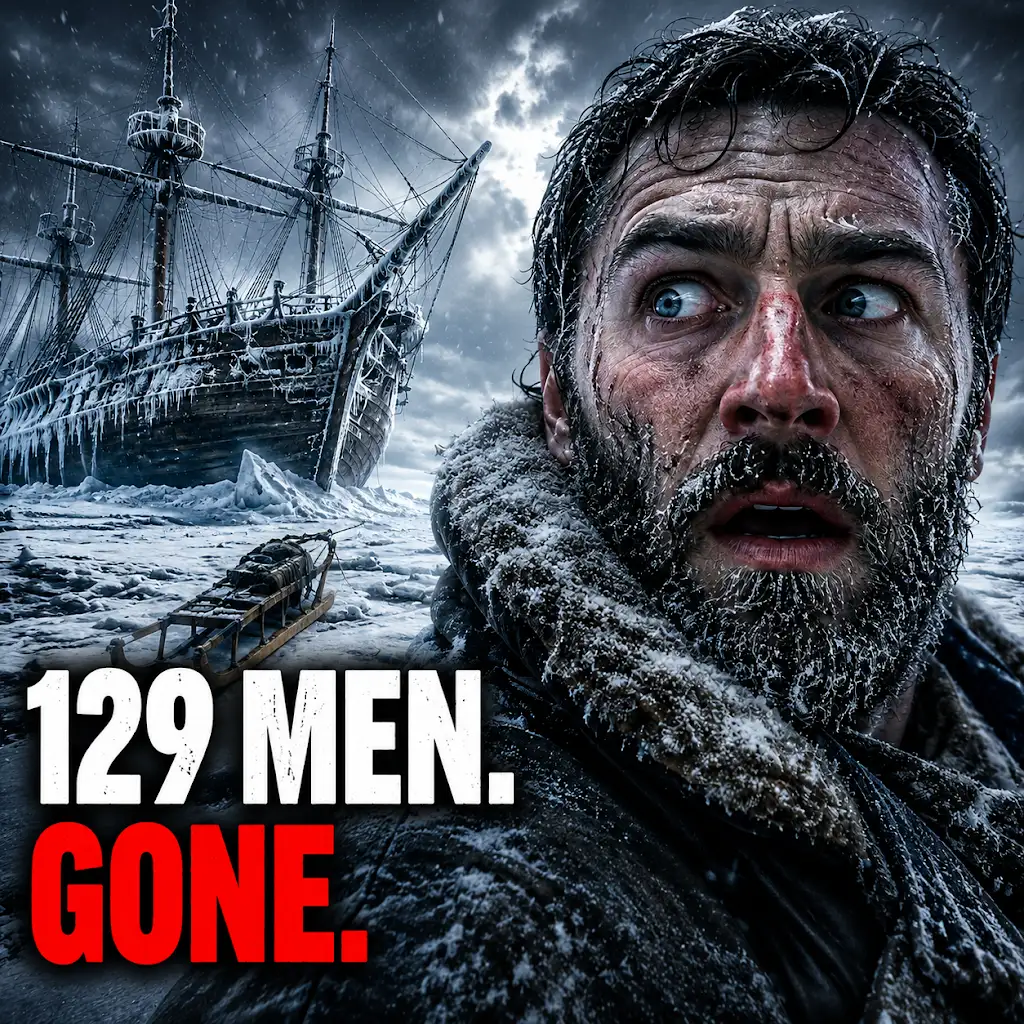
129 Men Vanished in the Arctic. Then We Found Their Ships.
FAQs
1. What were the Erebus and Terror?
The Erebus and Terror were two ships that were part of Sir John Franklin’s ill-fated expedition to find the Northwest Passage in the Arctic.
2. Why did Franklin abandon the Erebus and Terror?
Franklin abandoned the Erebus and Terror after they became trapped in ice during their expedition. The crew eventually abandoned the ships and attempted to trek overland to safety, but tragically, none of them survived.
3. When did Franklin abandon the Erebus and Terror?
Franklin abandoned the Erebus and Terror in April 1848 after the ships became trapped in ice for over a year. The crew left a note in a cairn on King William Island, detailing their situation and their plans to trek overland.
4. What happened to the crew of the Erebus and Terror after they abandoned the ships?
After abandoning the ships, the crew attempted to trek overland to safety. However, they faced harsh conditions and ultimately perished. The exact fate of the crew remained a mystery for many years until the discovery of their remains and artifacts in the Arctic.
5. What led to the discovery of the Erebus and Terror in recent years?
The discovery of the Erebus and Terror in recent years was the result of extensive search efforts by modern explorers and researchers. The wreck of the Erebus was found in 2014, and the Terror was located in 2016, shedding new light on the fate of Franklin’s expedition.