
The icy grip of the Arctic has long held secrets, and few are as compelling or tragic as the disappearance of the Franklin Expedition. In 1845, Sir John Franklin set sail with two ships, HMS Erebus and HMS Terror, on a quest to chart the elusive Northwest Passage, a fabled sea route connecting the Atlantic and Pacific oceans through the Canadian Arctic archipelago. This ambitious undertaking, fueled by British imperial pride and scientific curiosity, would ultimately lead to the loss of all 129 men, their ships, and an enduring mystery that has captivated historians and adventurers for over a century and a half. The story of the Franklin Expedition is not merely a tale of a failed voyage; it is a complex tapestry woven with threads of bravery, desperation, scientific endeavor, and the unforgiving power of nature.
The mid-19th century was an era of intense exploration, with European powers vying for dominion over uncharted territories and the discovery of vital trade routes. The Northwest Passage, in particular, represented a significant prize, promising a shorter and more direct maritime link between Europe and Asia. For Britain, the prospect of completing this elusive route was a matter of national prestige. Sir John Franklin, a seasoned naval officer with prior Arctic experience, was chosen to lead the expedition. His previous voyages, though not without hardship, had earned him respect within the Royal Navy. The selection of Franklin, a man in his late fifties, was seen by some as a safe, albeit perhaps less daring, choice compared to younger, more untested officers.
The expedition was meticulously planned, with a significant investment of resources and a spirit of optimism pervading its departure. The two ships, HMS Erebus and HMS Terror, were state-of-the-art vessels, specially strengthened and equipped for polar exploration. They were fitted with steam engines, a relatively new innovation, in an attempt to overcome the challenges posed by ice-filled waters and unpredictable winds. Provisions were ample, including an extensive library, scientific instruments, and even a rudimentary canned food supply, a relatively novel technology at the time. The crew comprised a mix of experienced seamen, officers, scientists, and support staff, all chosen for their skills and suitability for the arduous journey. The initial departure from Greenhithe, England, on May 19, 1845, was met with public fanfare and a sense of national pride. The expedition was expected to return within a few years, having achieved a significant geographical and navigational feat.
The Lure of the Northwest Passage
The Northwest Passage had captivated explorers for centuries. Its allure lay not only in the potential for economic benefits through a new trade route but also in the intellectual challenge it presented. Geographers and cartographers had spent generations piecing together fragments of information about the Arctic, driven by a desire to complete the map of the world. The passage, if it existed as a navigable waterway, would unlock vast potential for trade, exploration, and scientific discovery. It was an ultimate test of human ingenuity and perseverance against the raw forces of nature.
The Royal Navy’s Involvement
The Royal Navy played a crucial role in funding, equipping, and organizing Arctic expeditions. For decades, the navy had been the primary engine of British exploration, utilizing its vast resources and maritime expertise to achieve national objectives. The Franklin Expedition was no exception, representing a significant commitment of naval assets and personnel. The navy provided the ships, the experienced officers and crew, and the logistical support necessary for such a perilous undertaking. The success of the expedition was seen as a reflection of the navy’s enduring strength and its commitment to pushing the boundaries of human knowledge.
Technological Innovations for Polar Exploration
The Franklin Expedition was at the forefront of technological adoption for polar exploration. The inclusion of steam engines in both HMS Erebus and HMS Terror was a significant innovation, offering the potential to break through ice barriers and navigate more effectively than sail-powered vessels alone. The development and use of canned provisions also represented a forward-thinking approach to long-term voyages, aiming to mitigate the risks of scurvy and other nutritional deficiencies that had plagued earlier expeditions. These technological advancements were intended to give Franklin’s ships a distinct advantage in the unforgiving Arctic environment.
The mystery surrounding the lost expedition of the Northwest Passage continues to captivate historians and adventurers alike, as researchers delve into the challenges faced by explorers in the harsh Arctic environment. For those interested in understanding the broader implications of exploration and the legal frameworks that protect against financial crimes in such ventures, a related article can be found at this link. This article discusses emergency asset seizure legislation, highlighting the importance of safeguarding resources during expeditions and the potential risks involved in navigating uncharted territories.
The Voyage into the Unknown: Early Successes and Foreboding Signs
The initial stages of the Franklin Expedition were met with relative success. The ships sailed north, reaching Greenland and taking on provisions and additional crew members. They encountered whalers in Baffin Bay who provided them with vital intelligence about ice conditions. Captain Robert Huish, a master mariner, noted the ships in Lancaster Sound in August 1845, marking the last confirmed sighting of the expedition by Europeans. After this point, the expedition sailed into the vast and largely unknown expanse of the Arctic, its fate shrouded in growing uncertainty.
As months turned into years without any word from Franklin, a creeping sense of unease began to settle in Britain. Initial optimism gradually gave way to concern, and then to alarm. The Royal Navy, accustomed to regular reports from its voyages, initiated search efforts. However, the sheer scale of the Arctic and the limited technology for long-range communication made locating the expedition an immense challenge.
Last Known Sightings and Communication
The last direct contact with the Franklin Expedition occurred in the summer of 1845. Whalers reported seeing HMS Erebus and HMS Terror sailing westward into the Arctic’s embrace. These were the final confirmed sightings by individuals outside the expedition. Subsequent attempts to glean information from Inuit communities, who possessed invaluable knowledge of the Arctic landscape, became a crucial, albeit often misinterpreted, source of clues. Early Inuit accounts, when eventually relayed back to European authorities, were often fragmented and lacked the precise context that later archaeological discoveries would provide.
The Enigmatic Ice Drift
The true nature of the expedition’s demise likely began with the entrapment of the ships in ice. It is now understood that HMS Erebus and HMS Terror became locked in the ice off King William Island in the autumn of 1846, a fate that would seal their doom. The ships were likely immobilized, their timbers groaning under the immense pressure of the frozen sea. The hope of breaking free with the spring thaw would have dwindled as the ice held firm, turning their advanced vessels into prison cells. This prolonged entrapment, far from any hope of rescue, would have been the beginning of a desperate struggle for survival.
Growing Public Concern and Initial Search Efforts
As the years passed without any sign of Franklin’s return, public concern in Britain escalated. The absence of news was deeply unsettling, and the possibility of disaster began to loom large. The Royal Navy, responding to public pressure and its own sense of responsibility, launched a series of increasingly ambitious search expeditions. These early searches, while brave and determined, were hampered by the vastness of the Arctic, the harshness of the environment, and the limited understanding of where to look. Many of these expeditions focused on known routes and areas, failing to grasp the extent to which Franklin’s ships had ventured into uncharted territory.
The Grim Reality Unveiled: Inuit Testimonies and Skeletal Remains

The first concrete evidence of the expedition’s fate began to emerge not from official searches, but from the testimonies of the Inuit people who lived in the region. For years, they had been aware of the fate of the “white men” and their ships, their accounts slowly filtering back to European explorers and officials through intermediaries. These stories spoke of starvation, scurvy, and desperate attempts to escape by foot.
The first significant official discovery came in 1854 when explorer John Rae encountered Inuit on King William Island who described finding the remains of European sailors and their belongings. Rae meticulously documented these accounts, which spoke of starvation and men resorting to cannibalism to survive. His report, though initially met with disbelief and controversy due to its grim revelations, provided the first tangible evidence of the expedition’s tragic end. Subsequent searches, guided by these and other Inuit testimonies, led to the discovery of scattered graves, personal effects, and eventually, in 2014 and 2016, the remarkably preserved wrecks of HMS Erebus and HMS Terror.
The Whispers of the Inuit: Early Clues
The Inuit, as the true inhabitants of the Arctic, possessed an intimate understanding of the land and its dangers. Their knowledge of the seasonal ice, the animal migration patterns, and the survival techniques necessary for the region was unparalleled. For years, they had encountered the remnants of the Franklin Expedition, observing the abandoned ships, the scattered provisions, and the tragic evidence of the men’s final days. Their accounts, passed down through generations and eventually relayed to European explorers, painted a stark and somber picture of the expedition’s demise. These were not tales of grand discovery, but of desperate survival and ultimate failure.
John Rae’s Revelations and the Controversy
John Rae, a Scottish explorer and surgeon, played a pivotal role in uncovering the truth. During his 1854 expedition, he encountered Inuit on King William Island who described finding a large number of starving European men who had attempted to walk south. They also spoke of finding bodies and remnants of their equipment. Rae, with his scientific rigor and empathy, meticulously collected artifacts and recorded the Inuit testimonies. His report, published in 1854, was the first official confirmation of the expedition’s fate and the horrific circumstances surrounding it. However, the revelations of starvation and cannibalism were deeply disturbing to Victorian sensibilities and clashed with the idealized image of heroic explorers. This led to a controversy, with some prominent figures, including Lady Jane Franklin (Sir John’s devoted wife), initially rejecting Rae’s findings and continuing to search for survivors.
The Discovery of the Wrecks: A Frozen Tomb
The discovery of the wrecks of HMS Erebus and HMS Terror in 2014 and 2016, respectively, marked a monumental moment in the search for the Franklin Expedition. The ice-bound vessels, resting on the seabed off King William Island, served as a silent testament to the crew’s final days. The pristine condition of the wrecks, preserved by the frigid Arctic waters, offered an unprecedented opportunity for underwater archaeology. These underwater museums have yielded a wealth of artifacts, from personal belongings and scientific instruments to the very tools and provisions that the men used in their final desperate struggle.
The Scientific and Environmental Factors: A Deadly Equation

The ultimate failure of the Franklin Expedition was not a single catastrophic event, but a confluence of environmental challenges and, potentially, factors related to the expedition’s own planning and equipment. The Arctic, while a source of fascination, is a realm of extreme conditions where even the most well-prepared expeditions can fall victim.
The Tyranny of the Ice
The most significant adversary faced by the Franklin Expedition was undoubtedly the Arctic ice. The ships were intended to navigate through these waters, but they became trapped by the persistent and unforgiving ice pack. This immobilization meant that the expedition was effectively cut off from resupply and escape. The slow, grinding pressure of the ice could crush even the strongest wooden hulls, and the lack of open water meant that any hope of sailing free was extinguished. The ice also made overland travel perilous, forcing the men to trek across treacherous frozen landscapes in search of survival.
The Scourge of Scurvy and Lead Poisoning
Scurvy, a disease caused by Vitamin C deficiency, was a constant threat to long sea voyages in the 19th century. While the expedition carried some canned goods, their long-term efficacy and nutritional value are now debated. More disturbingly, scientific analysis of the bones of the deceased sailors has revealed significant levels of lead poisoning. This poisoning is believed to have stemmed from the solder used in the expedition’s canned food, which leached lead into the provisions over time. The cumulative effects of malnutrition and slow poisoning would have severely weakened the crew, diminishing their physical and mental capacity to cope with the extreme conditions.
Navigational Challenges and Unforeseen Obstacles
Despite being equipped with advanced navigational tools for their time, the Arctic presented unique challenges. The vastness of the region, the constant shifts in ice, and the limited visibility due to fog and blizzards made accurate navigation incredibly difficult. The chosen route, while seemingly the most direct, may have led them into areas with particularly dense and impassable ice. The expedition was also sailing into the unknown, with incomplete charts and a limited understanding of the prevailing currents and ice drift patterns.
The mystery surrounding the lost expedition of the Northwest Passage continues to captivate historians and adventurers alike, shedding light on the challenges faced by explorers in the harsh Arctic environment. This historical intrigue is further enriched by contemporary discussions on geopolitics and exploration, as highlighted in a recent article that examines the implications of international agreements like the Artemis Accords. For those interested in how modern space exploration parallels historical expeditions, you can read more about it in this insightful piece on the geopolitical impact of the Artemis Accords.
The Enduring Legacy: Lessons Learned and Unanswered Questions
| Expedition | Outcome | Year |
|---|---|---|
| Franklin’s Lost Expedition | Lost | 1845 |
| John Rae’s Expedition | Discovered evidence of the fate | 1854-1859 |
| McClintock’s Expedition | Discovered written records | 1859-1860 |
The tragedy of the Franklin Expedition serves as a stark reminder of the power of nature and the limits of human endeavor. It has left an indelible mark on the history of exploration, shaping our understanding of the Arctic and the challenges of polar survival. The extensive search efforts, though initially fraught with difficulty, led to a greater appreciation of Inuit knowledge and the development of new methodologies for Arctic exploration.
The mystery of what precisely transpired in those final years continues to fuel fascination. While the general outline of their demise is understood, the day-to-day experiences of the men, their hopes, their fears, and the specific decisions that led to their fate remain subjects of ongoing research and speculation. The artifacts recovered from the wrecks and the continued archaeological investigations offer the promise of further revelations, shedding more light on this enduring and poignant chapter of British exploration history. The lost expedition of Sir John Franklin, though a tale of profound loss, has ultimately contributed invaluable knowledge to our understanding of the Arctic and the indomitable, yet fragile, spirit of human exploration.
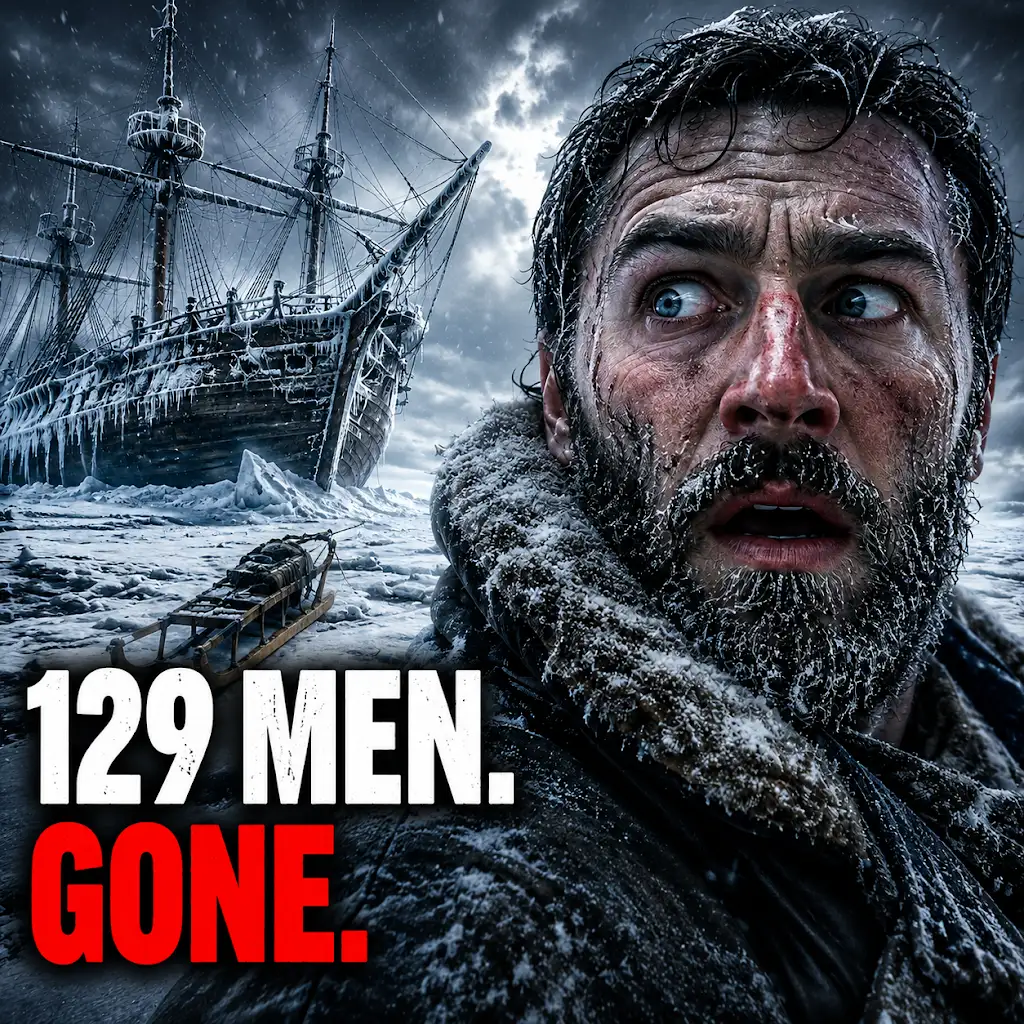
129 Men Vanished in the Arctic. Then We Found Their Ships.
FAQs
What is the Northwest Passage lost expedition?
The Northwest Passage lost expedition refers to the ill-fated attempt by Sir John Franklin and his crew to navigate the Northwest Passage in the Arctic in 1845. The expedition’s ships, the HMS Erebus and HMS Terror, disappeared without a trace, leading to one of the greatest mysteries in maritime history.
What happened to the Northwest Passage lost expedition?
After the expedition’s disappearance, numerous search missions were launched to find the missing ships and crew. It wasn’t until 2014 and 2016 that the wrecks of the HMS Erebus and HMS Terror were finally discovered, shedding light on the fate of the expedition.
What caused the failure of the Northwest Passage lost expedition?
The failure of the Northwest Passage lost expedition is attributed to a combination of factors, including harsh Arctic conditions, lack of proper provisions, and lead poisoning from poorly sealed food cans. These factors likely contributed to the demise of the crew and the loss of the ships.
What significance does the Northwest Passage lost expedition hold?
The Northwest Passage lost expedition holds significant historical and cultural importance, as it represents the quest for exploration and discovery in the Arctic. The discovery of the wrecks has provided valuable insights into the challenges faced by early explorers and the impact of their expeditions on the region.
What is the legacy of the Northwest Passage lost expedition?
The legacy of the Northwest Passage lost expedition includes ongoing research and exploration efforts in the Arctic, as well as commemorative events and memorials to honor the crew and their contributions to maritime history. The story of the lost expedition continues to capture the imagination of people around the world.