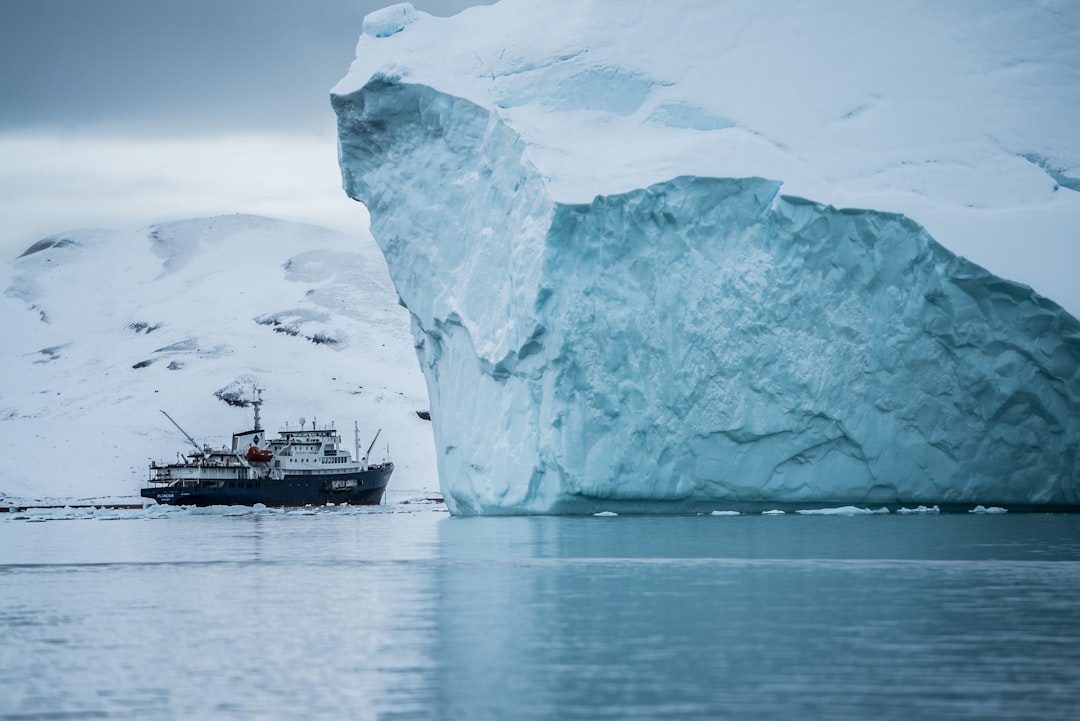
Unraveling the British Arctic Exploration Mystery
For centuries, the allure of the Arctic has captivated the human imagination. Its vast, icy expanses, shrouded in mystery and danger, have beckoned explorers, scientists, and adventurers alike. Among the most ambitious and ultimately tragic endeavors in this pursuit were the British Arctic expeditions, a series of ambitious voyages launched in the 19th century with the primary goal of discovering the Northwest Passage. These expeditions, fueled by national pride, scientific curiosity, and the promise of lucrative trade routes, are etched into the annals of exploration history, not only for their daring exploits but also for the enduring enigmas that surround their ultimate fates. The story of British Arctic exploration is a complex tapestry woven with threads of heroism, scientific endeavor, tragic loss, and unanswered questions, a mystery that continues to fascinate and perplex to this day.
The concept of a navigable sea route connecting the Atlantic and Pacific Oceans through the Arctic had been a subject of speculation for centuries. European powers, particularly Great Britain, saw the potential for immense economic and strategic advantages should such a passage be discovered. This dream, initially born from early explorations of the North American coastline, intensified in the 19th century as the Royal Navy, at the height of its global power, turned its formidable resources towards conquering this final geographical frontier.
Early Stirrings of Interest
Before the major expeditions of the 19th century, there were earlier, albeit less systematic, attempts to probe the Arctic’s mysteries. These voyages, often driven by the fur trade or by a desire to find whales, provided valuable, albeit sometimes accidental, geographical information. Explorers like Martin Frobisher and John Davis, in the late 16th and early 17th centuries, made significant incursions into Baffin Bay and the surrounding straits, charting coastlines and encountering indigenous populations. While they did not find the passage, their efforts laid the groundwork for future, more organized endeavors.
The Royal Navy’s Ascendancy
By the 19th century, the Royal Navy had become the preeminent maritime force in the world. This naval dominance, coupled with a surge in geographical and scientific interest, created the perfect conditions for a concerted effort to find the Northwest Passage. The Admiralty, eager to maintain its reputation for naval prowess and to secure potential trade benefits, began to fund increasingly ambitious expeditions. These voyages were not merely adventurous forays; they were meticulously planned military and scientific operations, equipped with the latest technology and manned by experienced naval officers and crews.
The mystery surrounding British Arctic exploration has captivated historians and adventurers alike, shedding light on the challenges faced by early explorers in their quest for knowledge and territory. A related article that delves into the complexities of exploration and the technological advancements that have emerged since those early days can be found here: Securing Lunar Power Grid Development. This piece explores how modern exploration efforts, including those in extreme environments, continue to evolve, drawing parallels to the daring expeditions of the past.
The Era of Grand Expeditions: Ambition and Discovery
The 19th century witnessed a golden age of British Arctic exploration, characterized by a series of major expeditions that pushed the boundaries of human endurance and navigational knowledge. These voyages, though often fraught with peril, yielded significant geographical discoveries and provided invaluable scientific data, even as they failed to definitively achieve their ultimate goal.
The Search for Davies’ Inlet and Beyond
Early in the 19th century, a renewed focus was placed on exploring areas suggested by earlier navigators. Expeditions like those led by Captain William Parry in the 1820s were particularly groundbreaking. Parry’s voyages were notable for their scientific rigor and their ability to navigate through formidable ice conditions. He made substantial progress, reaching latitudes previously unreached and charting significant portions of the Canadian Arctic Archipelago. His expeditions demonstrated the increasing sophistication of navigation and the growing understanding of Arctic ice dynamics.
Parry’s Remarkable Voyages
Sir William Parry, a seasoned explorer, led three significant expeditions between 1819 and 1827. His first voyage, aboard HMS Hecla and HMS Griper, achieved remarkable success, penetrating the ice-choked waters of the Parry Channel and reaching 110° west longitude, a significant achievement at the time. The expeditions were also characterized by their scientific observations, meticulously recording data on tides, magnetism, and the local flora and fauna. Parry’s ability to maintain discipline and morale in the harsh Arctic environment was a testament to his leadership.
The Sterling Legacy of Sir John Ross
Sir John Ross, an experienced naval officer, also led notable expeditions into the Arctic. His first expedition in 1818, seeking a passage north of Baffin Island, was met with skepticism and accusations of premature return. However, his second expedition in the 1830s, during which he wintered for an extended period, provided crucial information about the Boothia Peninsula and the western coast of Baffin Island. His discoveries helped to refine the understanding of the region’s geography and the potential for a passage.
The HMS Investigator‘s Ordeal
A significant portion of Ross’s second expedition involved the exploration of the Boothia Peninsula, a vast and inhospitable territory. His ship, HMS Investigator, became trapped in ice for several years, forcing the crew to endure extreme hardship and isolation. Despite the immense challenges, the expedition managed to map a considerable amount of new territory and gather valuable scientific data. The survival of the crew under such dire circumstances was a remarkable feat of resilience.
The Tragic Culmination: Franklin’s Lost Expedition

The most infamous and enduring mystery of British Arctic exploration is undoubtedly the disappearance of Sir John Franklin’s expedition in 1845. This ambitious venture, intended to finally complete the Northwest Passage, set sail with two ships, HMS Erebus and HMS Terror, and a crew of 129 men. Their fate became a national obsession, sparking decades of searching and fueling a wealth of speculation.
The Fateful Departure
In May 1845, Sir John Franklin, a veteran of Arctic exploration with a distinguished career, set sail from Greenhithe, England, with his two well-equipped ships. The expedition was seen as the culmination of Britain’s long-standing quest for the Northwest Passage, and the nation eagerly awaited news of its success. Provisions were ample, and the crews were composed of seasoned sailors. The initial optimism was palpable.
The Silence and the Search
The expedition was last sighted by whalers off the coast of Baffin Island in July 1845. After that, there was no further word. As months turned into years, and the ships failed to return, a sense of unease grew into widespread alarm. The Royal Navy, reluctant at first to admit the potential loss of such a well-provisioned expedition, eventually launched a massive search operation. This search, which continued for decades, involved numerous ships, considerable financial investment, and the tireless efforts of countless individuals.
The Admiralty’s Response
The Admiralty’s initial response to the lack of communication was cautious. They organized relief expeditions, but the vastness of the Arctic and the challenging conditions made locating the missing ships incredibly difficult. The search efforts, while brave and determined, were often hampered by a lack of information and the sheer scale of the undertaking. The public’s anxiety only grew with each unsuccessful attempt to find a trace of Franklin and his men.
Piecing Together the Puzzle: Evidence and Theories
The mystery of Franklin’s lost expedition has been a subject of intense scrutiny for over a century and a half. Through a combination of archaeological discoveries, Inuit testimony, and forensic analysis, a clearer, albeit still incomplete, picture of the expedition’s demise has begun to emerge. However, many questions continue to linger, fueling ongoing debate and research.
Inuit Testimony: The Whispers of the North
Crucial insights into the fate of Franklin’s expedition came from the indigenous Inuit people who inhabited the Arctic. Their oral histories, gathered by various search parties and ethnographers, spoke of starving white men, found frozen on the ice, and of cannibalism. While initially met with skepticism by some, these testimonies consistently pointed towards a catastrophic outcome for the expedition.
The Crucial Accounts of Iyellitok and Toolooah
The accounts of Inuit individuals like Iyellitok and Toolooah, interviewed by search parties, provided the first direct evidence of the expedition’s tragic end. They described encountering Europeans with their ships stuck in the ice, and later, the skeletal remains of the crew. These accounts, though fragmented and gathered years after the event, offered a chilling glimpse into the final days of Franklin and his men.
The Discovery of Artifacts and Remains
The ongoing search for clues has led to the discovery of various artifacts and human remains. The excavation of a gravesite on Beechey Island yielded the remains of three crew members, whose cause of death was later attributed to lead poisoning. The discovery of the ill-fated camps and the fragmented remains of the crew further corroborated the Inuit accounts of starvation and desperation.
The Grim Reality of HMS Erebus and HMS Terror
In recent years, the discovery of the wrecks of HMS Erebus and HMS Terror has been a monumental breakthrough. These remarkably preserved ships, found in the Arctic seabed, offer an unprecedented opportunity to study the expedition’s final moments. The artifacts recovered from the wrecks are providing invaluable insights into the equipment, provisions, and daily life of the crew, shedding light on the challenges they faced.
The Lead Poisoning Hypothesis
One of the most persistent theories regarding the expedition’s demise centers on lead poisoning. The canned food supplies, a staple of naval expeditions, were found to have high levels of lead. Furthermore, the expedition’s water distillation system may have also leached lead into their drinking water. Forensic analysis of the crew’s bones has indeed shown elevated levels of lead, suggesting that this may have contributed to their physical and mental deterioration.
The Role of Botulism
Another contributing factor may have been botulism, a severe form of food poisoning. The conditions in the Arctic, combined with the methods of food preservation, could have created an environment ripe for the growth of the bacteria. Botulism can cause paralysis and respiratory failure, symptoms that could have exacerbated the crew’s already dire situation.
The enduring mystery of British Arctic exploration continues to captivate historians and adventurers alike, as new findings emerge that challenge our understanding of these treacherous journeys. Recent discoveries have shed light on the challenges faced by explorers in the harsh Arctic environment, revealing insights into their survival strategies and the impact of climate on their expeditions. For those interested in the broader implications of such explorations, an intriguing article discusses how ancient mysteries are being unraveled through modern research, providing a fascinating context for the challenges faced by Arctic explorers. You can read more about these revelations in the article here.
The Enduring Legacy of Arctic Exploration
| Explorer | Expedition | Year | Outcome |
|---|---|---|---|
| John Franklin | Lost Expedition | 1845 | Disappeared without a trace |
| Roald Amundsen | Northwest Passage | 1903-1906 | Successfully navigated the passage |
| Robert Falcon Scott | Terra Nova Expedition | 1910-1913 | Reached the South Pole but died on the return journey |
The British Arctic expeditions, despite their tragic outcomes, left an indelible mark on history, science, and our understanding of the planet. They pushed the boundaries of human endeavor, fostered advancements in navigation and survival techniques, and provided a wealth of scientific knowledge that continues to be studied today. The enduring mysteries, while heartbreaking, also serve as a powerful reminder of the courage and determination of those who ventured into the unknown.
Scientific Advancements and Geographical Knowledge
The expeditions meticulously recorded data on ice formations, ocean currents, magnetic variations, and Arctic weather patterns. This scientific data, gathered over years of arduous exploration, contributed significantly to the burgeoning fields of oceanography, meteorology, and glaciology. The charting of vast swathes of the Arctic coastline and archipelago expanded the world’s geographical knowledge and laid the groundwork for future scientific research.
The Importance of Meteorological Records
The detailed meteorological records kept by the explorers provided invaluable data for understanding Arctic climate patterns. These observations, gathered in an environment where such data was scarce, have been used by scientists for decades to study long-term climate change and its impacts. The dedication of the explorers to meticulous record-keeping has proven to be a lasting scientific legacy.
The Human Element: Courage, Sacrifice, and Resilience
Beyond the scientific and geographical achievements, the British Arctic explorations are a testament to the extraordinary courage, sacrifice, and resilience of the individuals involved. They faced unimaginable hardships, including extreme cold, starvation, scurvy, and the constant threat of ice and storms, yet they persevered with remarkable determination. The stories of their bravery and their ultimate sacrifices continue to inspire awe and respect.
The Spirit of Exploration
The drive to explore the unknown, to push the boundaries of what is possible, is a fundamental aspect of the human spirit. The British Arctic explorers embodied this spirit, driven by a thirst for knowledge, a sense of adventure, and a desire to contribute to human understanding. Their efforts, though sometimes ending in tragedy, represent a crucial chapter in the human story of exploration.
The Unfinished Chapter: Modern Research and Future Discoveries
While the era of grand, state-sponsored expeditions has largely passed, the mystery of British Arctic exploration continues to be unraveled through modern research, advanced technology, and a renewed appreciation for the scientific and historical significance of these voyages. The discovery of the Franklin wrecks has opened a new chapter, promising further revelations.
Technological Advancements in Archaeology and Conservation
Modern underwater archaeology and advanced conservation techniques are playing a crucial role in studying the Franklin wrecks and the artifacts recovered from them. Sophisticated sonar, remotely operated vehicles (ROVs), and digital imaging technologies allow researchers to explore the shipwrecks in detail without disturbing the fragile environment. Conservation efforts are also ensuring that these invaluable pieces of history are preserved for future generations.
The Potential of DNA Analysis
Advances in DNA analysis offer the possibility of identifying individuals from fragmented remains and understanding familial relationships within the crew. This could provide a more intimate understanding of the human cost of the expedition and offer closure to descendants of those who were lost.
Ongoing Scientific Investigation and Interpretation
The scientific investigation of the Franklin expedition is far from over. Researchers continue to analyze samples, interpret historical documents, and collaborate with Inuit communities to gain a more complete understanding of the expedition’s demise. New theories are constantly being formulated and tested, building upon the existing evidence.
The Importance of Interdisciplinary Collaboration
The ongoing unraveling of the British Arctic exploration mystery relies heavily on interdisciplinary collaboration. Archaeologists, historians, forensic scientists, Inuit elders, and naval historians are all contributing their expertise to piece together the puzzle. This collaborative approach is essential for tackling such a complex historical enigma. The ongoing quest to understand the fate of Franklin’s expedition serves as a powerful reminder that even in the age of advanced technology, there are still profound mysteries waiting to be uncovered, pushing the boundaries of our knowledge and our understanding of the past.

129 Men Vanished in the Arctic. Then We Found Their Ships.
FAQs
What is the British Arctic exploration mystery?
The British Arctic exploration mystery refers to the disappearance of the Franklin Expedition in 1845, led by Sir John Franklin, while attempting to navigate the Northwest Passage.
What happened to the Franklin Expedition?
The fate of the Franklin Expedition remained a mystery for many years. It is now known that the ships became trapped in ice and the crew eventually abandoned them. The entire expedition perished, likely due to a combination of exposure, starvation, and lead poisoning from poorly preserved food.
What were the consequences of the Franklin Expedition’s disappearance?
The disappearance of the Franklin Expedition led to numerous search missions and contributed to the mapping and exploration of the Arctic. It also sparked public interest and debate about the Northwest Passage and the exploration of the Arctic.
What were the key discoveries related to the Franklin Expedition?
In recent years, the wrecks of the expedition’s ships, HMS Erebus and HMS Terror, were discovered in the Canadian Arctic. These discoveries have provided valuable insights into the final days of the expedition and have helped solve some of the mysteries surrounding its disappearance.
What is the significance of the Franklin Expedition in British history?
The Franklin Expedition is significant in British history as it represents a major chapter in the exploration of the Arctic and the quest for the Northwest Passage. The expedition’s tragic fate has captured the public imagination and continues to be a subject of historical and archaeological interest.