
King William Island: The Survivors of Franklin’s Expedition
The frigid winds of the Canadian Arctic howl across King William Island, a desolate yet profoundly significant landscape. For centuries, this land of ice and snow has held its secrets close, none more poignant than the fate of Sir John Franklin’s ill-fated expedition. The disappearance of HMS Erebus and HMS Terror in 1845, with their 129 souls, has captivated and haunted the maritime and historical world for generations. While the expedition’s ultimate demise is a tragedy, the story of King William Island is also a testament to the resilience and survival of those who endured the Arctic’s unforgiving embrace. This island, more than any other single location, became the silent witness and the final resting place for many of Franklin’s crew, and its Inuit inhabitants, in their interactions with the survivors, became crucial witnesses to the unfolding tragedy.
The British Arctic Expedition of 1845, led by the seasoned but perhaps overly confident Sir John Franklin, was intended to be the triumphant culmination of Britain’s long-standing quest for the Northwest Passage. The Royal Navy, with its vast resources and naval prowess, was determined to find a navigable sea route through the Arctic archipelago, connecting the Atlantic and Pacific Oceans. Franklin, a veteran of polar exploration, was handpicked for the command.
The Ambition of Discovery
The lure of the Northwest Passage was not merely about geographical discovery. It represented immense strategic and economic potential. A passage through the Arctic would drastically shorten trade routes between Europe and Asia, revolutionizing global commerce. For Britain, it was also a matter of national prestige, a chance to solidify its dominance in exploration and maritime power.
The Ships and Their Crew
Two state-of-the-art vessels, HMS Erebus and HMS Terror, were meticulously prepared for the arduous journey. These were not ordinary ships; they were heavily reinforced and equipped with the latest technologies of the era, including steam engines for auxiliary power, a significant innovation for polar exploration at the time. The crews, comprising experienced sailors, scientists, and officers, were a formidable group, ready to face the challenges of the Arctic. Among them were highly skilled navigators, naturalists, and engineers, each contributing to the expedition’s scientific and exploratory goals. The optimism was palpable as the two ships, provisioned for three years, set sail from Greenhithe, England, on May 19, 1845.
The Long Silence
Initially, communication from the expedition was sporadic but reassuring. Reports indicated progress and the crew’s well-being. However, as the months turned into years, and the expedition failed to return, an unsettling silence descended. The Royal Navy, initially patient, began to grow concerned. Search parties were launched, initially with the hope of finding a delayed but successful expedition, but these hopes gradually diminished as the years wore on, replaced by a growing dread.
The story of the Franklin survivors on King William Island is a poignant chapter in Arctic exploration history, highlighting the resilience and determination of those who faced unimaginable hardships. For a deeper understanding of the broader implications of survival and societal collapse, you may find it interesting to explore the article titled “The Fall of Ancient Economies: A Historical Analysis.” This piece delves into how economic factors influence survival strategies in extreme conditions, drawing parallels with the challenges faced by the Franklin expedition. You can read the article here: The Fall of Ancient Economies: A Historical Analysis.
The Frozen Trap: The Last Known Movements
The last confirmed sightings of HMS Erebus and HMS Terror place them in the harrowing waters of the Canadian Arctic. The precise sequence of events leading to their entrapment remains pieced together from fragmented evidence, Inuit testimony, and later archaeological discoveries. King William Island, with its treacherous ice floes and shallow, unpredictable waters, soon became the inescapable prison for the expedition.
Entering the Arctic Labyrinth
After entering Lancaster Sound in August 1845, Franklin’s expedition successfully navigated through Wellington Channel and explored parts of the Arctic archipelago. However, as they attempted to sail south through the Parry Channel, their progress was hampered by unusually heavy ice. The ships were forced to winter in 1846-47 in an unknown location, likely near Beechey Island.
The Fatal Turn South
It was during the summer of 1847, or perhaps even earlier, that the expedition made a fateful decision to attempt passage through the Victoria Strait, aiming for the waters west of King William Island. This route, though seemingly a direct path south, was known to be particularly perilous due to shifting ice and strong currents. The ships became locked in the ice, likely in the autumn of 1847, or more definitively in the autumn of 1848, in the vicinity of King William Island.
The Ice Claims Its Victims
The vessels, once symbols of British maritime might, were rendered immobile. The harsh reality of an Arctic winter, amplified by the unyielding ice, began to take its toll. The crew, initially hopeful of breaking free with the spring thaw, found themselves increasingly desperate as the ice refused to release its grip. The island, a silent sentinel, watched as the expedition’s hopes slowly evaporated. The inability to move the ships meant they were cut off from any possibility of rescue or return, sealing their fate in the frozen embrace of the Arctic.
The Island’s Witnesses: Inuit Encounters with the Survivors
The indigenous Inuit people of King William Island were the first and, for a long time, the only witnesses to the unfolding tragedy of Franklin’s expedition. Their intimate knowledge of the Arctic landscape and their encounters with the starving survivors provided the most crucial, albeit often heartbreaking, information about the expedition’s final days.
The First Encounters
In the spring of 1848, Inuit hunters encountered small groups of starving European sailors on the western shores of King William Island. These were the first survivors who had abandoned the trapped ships, attempting to walk south to safety. The Inuit, despite their own struggles for survival in the harsh environment, displayed remarkable compassion and offered what little sustenance they could. They reported seeing groups of Europeans, many of them very ill and weak, struggling against the elements.
Accounts of Desperation
The Inuit testimonies, collected over the years by subsequent explorers and ethnographers, painted a grim picture. They spoke of emaciated men, some resorting to cannibalism, a taboo even in the extreme conditions of the Arctic. The descriptions of the sailors’ physical state, their tattered clothing, and their desperate pleas for food all underscored the horrific suffering they endured. Stories described seeing men dragging sledges, their strength failing, their eyes filled with a desperate, hollow look.
The Search for Truth
The inconsistencies and sometimes confusing nature of oral traditions, combined with the cultural and linguistic barriers, meant that the full picture took decades to emerge. However, the core narratives from the Inuit were remarkably consistent: the ships were trapped, the men perished, and the island bore witness to their final struggles. Figures like Ouligbuck, Eeltyee, and Tattanoe, whose testimonies were recorded by explorers, became invaluable sources of information, bridging the gap between the lost expedition and the world that sought answers. They described the debris found, the graves dug in the frozen earth, and the remnants of the ships that washed ashore.
The Long Road to Discovery: Archaeological Investigations and the Wreck Sites
For over a century and a half, the resting place of HMS Erebus and HMS Terror remained a mystery. The search for the ships and definitive proof of the expedition’s fate consumed countless resources and lives. It was only in the 21st century that the persistent efforts of modern archaeologists finally brought closure to this enduring maritime enigma.
The Tragic Legacy of Inuit Testimony
The foundational knowledge for the search was largely provided by the Inuit accounts. For generations, their stories pointed to King William Island and the surrounding waters as the location of the expedition’s demise. Explorers like Sir Francis McClintock, in the late 19th century, diligently collected these testimonies, gathering crucial clues from the island’s inhabitants. McClintock himself found a record left by the expedition, detailing their desperate march south.
The Modern Quest for the Wrecks
The 21st century brought new technologies and a renewed determination to find the lost ships. In 2008, the Arctic Research Foundation, in collaboration with Parks Canada, launched a significant search. This marked a new era of exploration, utilizing advanced sonar equipment and underwater mapping technologies to scour the seabed. The search was arduous, hampered by vast expanses of icy water and the challenging underwater terrain.
The Moment of Revelation
In 2014, a breakthrough occurred. Parks Canada announced the discovery of HMS Erebus in the waters of Nunavut’s Queen Maud Gulf, off the southern coast of King William Island. The ship was remarkably well-preserved in the cold, oxygen-poor Arctic waters. This monumental discovery provided tangible evidence of the expedition’s fate and validated the centuries of Inuit testimony.
The Discovery of HMS Terror
The search continued, and in 2016, another incredible discovery was made. HMS Terror was found submerged in Terror Bay, on the northern coast of King William Island. Like Erebus, it was in an astonishing state of preservation, offering an unparalleled glimpse into the final moments of the ill-fated voyage. The discovery of both wrecks marked the culmination of an almost 170-year-long quest for answers.
The harrowing tale of the Franklin expedition and the survival of its crew on King William Island has captivated historians and adventurers alike, shedding light on the extreme conditions faced by those stranded in the Arctic. For a deeper understanding of how survival strategies can be influenced by environmental challenges, you might find it interesting to read about the implications of over-teaching in various contexts. This article explores how excessive instruction can hinder learning, much like the harsh realities of survival can impede rational decision-making in dire situations. You can check it out here.
Echoes of Survival: The Enduring Human Spirit
| Survivor Name | Age | Role | Status |
|---|---|---|---|
| John Franklin | 59 | Expedition Leader | Deceased |
| Francis Crozier | 47 | Second-in-command | Deceased |
| Harry Goodsir | 29 | Surgeon and Naturalist | Deceased |
| John Irving | 29 | Assistant Surgeon | Deceased |
| John Hartnell | 25 | Assistant Paymaster | Deceased |
While the story of Franklin’s expedition is primarily one of tragedy, the remnants of the survivors’ journey on King William Island speak to an extraordinary capacity for endurance against unimaginable odds. The limited evidence suggests that a small number of men, though ultimately unsuccessful, managed to survive for an extended period in the Arctic’s unforgiving environment.
The Abandonment of the Ships
Following the realization that HMS Erebus and HMS Terror were permanently ice-bound, a decision was made to abandon the ships in the spring of 1848. The surviving officers and crew, numbering around 105 men, set out on foot, hoping to reach the Canadian mainland. They carried what little they could, including provisions, equipment, and crucially, records detailing their plight.
The Desperate March South
The journey south across the ice and land was an epic struggle for survival. The men were ill-equipped for the extreme cold and lacked adequate knowledge of Arctic survival. Their rations dwindled, and hunger became a constant companion. The harsh environment, coupled with scurrying starvation and disease, took a devastating toll. The accounts of their progress, pieced together from Inuit testimony and archaeological finds, reveal a desperate and ultimately doomed attempt to escape.
The Tragic Legacy of King William Island
King William Island became the primary scene of this final, harrowing chapter. The shores and interior of the island bear silent witness to the survivors’ last days. Archaeological investigations have uncovered numerous artifacts, including human remains, camp sites, and remnants of their equipment, all hinting at the desperate measures taken to survive. The island served as both their prison and their final resting ground, a stark reminder of the human cost of polar exploration. The resilience of the human spirit, even in the face of inevitable death, is palpable in the scattered remnants of their final, desperate journey. Their story, though tragic, serves as a profound testament to the enduring will to survive.
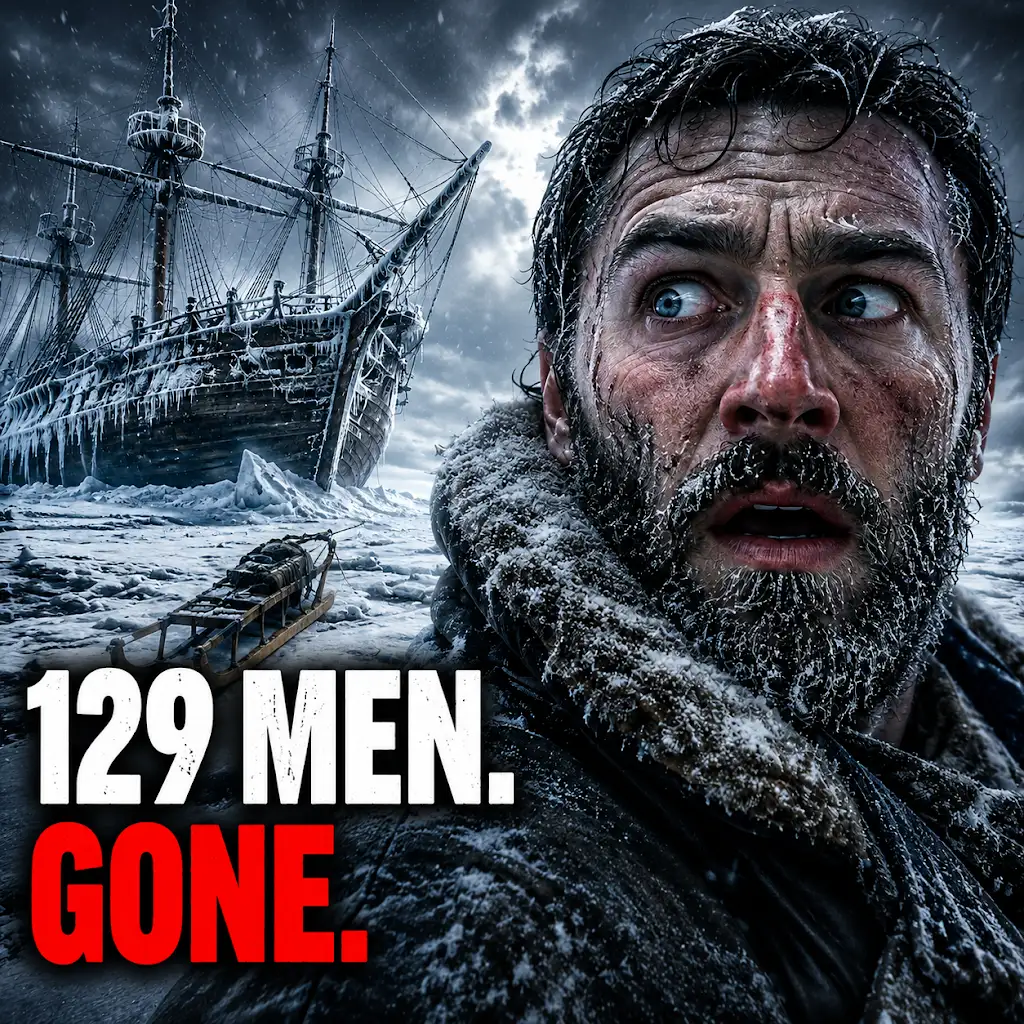
129 Men Vanished in the Arctic. Then We Found Their Ships.
FAQs
1. Who were the survivors of the Franklin expedition on King William Island?
The survivors of the Franklin expedition on King William Island were members of Sir John Franklin’s ill-fated 1845 expedition to find the Northwest Passage. After their ships became trapped in ice, the crew abandoned the vessels and attempted to trek to safety. Some of the crew members made it to King William Island, where they ultimately perished.
2. How many survivors were there on King William Island?
There were no confirmed survivors on King William Island. However, there is evidence that some crew members made it to the island and attempted to survive, but ultimately succumbed to the harsh Arctic conditions.
3. What happened to the survivors on King William Island?
The survivors on King William Island faced extreme hardships, including starvation, exposure, and disease. Evidence suggests that some resorted to cannibalism in a desperate attempt to survive. Ultimately, all of the crew members who reached the island perished.
4. What is the significance of the Franklin expedition and the survivors on King William Island?
The Franklin expedition and the fate of its crew members have been the subject of much historical and archaeological interest. The discovery of the remains of the crew members and artifacts on King William Island has provided valuable insights into the challenges faced by Arctic explorers in the 19th century.
5. What is the current status of research and exploration related to the Franklin survivors on King William Island?
Research and exploration related to the Franklin survivors on King William Island continue to be ongoing. Archaeologists, historians, and scientists are working to uncover more information about the fate of the crew members and to preserve the historical significance of the Franklin expedition.