
The icy grip of the Arctic has long held a fascination for humanity, a vast and unforgiving expanse that has claimed countless lives and ships in its relentless pursuit of the Northwest Passage. Among the most poignant and baffling of these tragedies is the Franklin Expedition. Yet, within the chilling narrative of its demise lies a flicker of improbable resilience, a story whispered in fragmented accounts and archaeological discoveries that points to an “Unbelievable Survival Story” far beyond initial comprehension. This article delves into the evidence, the theories, and the enduring mystery of those who, against all odds, clung to life in the frozen north.
The HMS Erebus and HMS Terror, two Royal Navy vessels captained by the seasoned but perhaps overly optimistic Sir John Franklin, set sail in May 1845. Their mission was clear: to finally chart a viable Northwest Passage, a fabled sea route connecting the Atlantic and Pacific Oceans through the Arctic. The expedition was well-equipped, boasting an experienced crew, advanced navigational tools for the era, and a substantial supply of provisions. Initial optimism was high, and the two ships were last seen by Europeans in Disko Bay, Greenland, before vanishing into the vast, white unknown.
A Promising Beginning, A Swift Turn of Fortune
The early stages of the expedition were reportedly successful. Early reports from whalers suggested the ships had successfully navigated through Lancaster Sound and were making progress. The crew was in good spirits, and the scientific objectives of the voyage were being pursued with diligence. However, the Arctic’s capricious nature soon asserted itself. The ice, a seemingly passive element, proved to be a formidable adversary.
Entrapment in the Ice: The Beginning of the End
The exact moment of entrapment remains a subject of speculation, but it is widely believed that in the summer of 1846, both Erebus and Terror became locked in the fast ice of Victoria Strait. The intent had been to overwinter and continue their progress the following summer, but the ice refused to release its frozen embrace. The initial hope of a swift escape gradually morphed into a grim reality of prolonged confinement. This marked the beginning of their slow descent into isolation, cut off from any possibility of timely rescue.
The Arctic’s Unyielding Winter
The first winter, 1846-1847, was undoubtedly harsh. The crew, accustomed to naval discipline and the comforts of their ships, faced the relentless cold, the perpetual darkness, and the dwindling supplies. The psychological toll of being trapped, with the vastness of the Arctic stretching in every direction, must have been immense. The sheer scale of their predicament began to dawn on them, and the initial optimism would have been severely tested.
The Franklin Expedition, which aimed to traverse the Northwest Passage in the mid-19th century, has long fascinated historians and adventurers alike, particularly in relation to the mysterious fate of its 105 survivors. Recent discoveries and research have shed light on the harrowing experiences faced by the crew, revealing insights into their struggles for survival in the Arctic wilderness. For those interested in exploring related historical narratives, an intriguing article titled “Uncovering the Secret History of Antarctica” delves into the broader context of exploration and survival in extreme environments. You can read it here: Uncovering the Secret History of Antarctica.
Whispers from the Ice: Early Signs of Distress
As months turned into years, and the ships remained imprisoned, fragmented clues began to emerge, hinting at the expedition’s dire straits. These early signals, though subtle, would later become crucial in piecing together the tragic narrative.
The Boothe Report and the Inuit Testimony
One of the earliest and most significant pieces of information came from the Inuit. In 1848, reports began to surface of European artifacts and the remains of white men being found by indigenous peoples. An Inuit hunter named Boothe (or his father, according to some accounts) encountered a group of starving white men on the mainland near the Great Fish River (modern-day Back River). This encounter, though brief and shrouded in the fog of translation and memory, provided the first concrete evidence of the expedition’s survivors and their desperate plight.
The Discovery of a Message in a Bottle
The discovery of a message in a bottle, found by Captain Pullen of the HMS Investigator in 1859, provided a chillingly precise account of the expedition’s fate up to April 1848. This note, penned by Fitzjames, the captain of the Erebus, and by Sir John Franklin himself, detailed their entrapment and the dire circumstances. It revealed their decision to abandon the ships and march south in search of rescue. This message, discovered over a decade after their disappearance, was a grim confirmation of the worst fears.
Tragic Encounters: Inuit Oral Traditions
Over the years, numerous Inuit oral traditions corroborated the initial reports of survivors. These stories, passed down through generations, spoke of encounters with emaciated Europeans, of abandoned camps, and of the overwhelming sense of desperation that pervaded the survivors. While these accounts are often imbued with cultural interpretations, their consistent themes of starvation, scurvy, and the struggle for survival provide invaluable, albeit somber, insights.
The Unfathomable March: A Desperate Bid for Survival
The decision to abandon the ships was not one taken lightly. It represented a last-ditch effort, a gamble against overwhelming odds. The journey south, across the treacherous Arctic landscape, was an act of immense courage and desperation, and it is here that the true “unbelievable survival story” begins to unfold.
The Grueling Trek South
Leaving the relative safety of the Erebus and Terror, the surviving officers and crew, numbering over a hundred, embarked on a southward journey. This march was undertaken with dwindling supplies, no clear route, and the constant threat of starvation, scurvy, and hypothermia. The men were ill-equipped for such a grueling overland trek, their naval uniforms offering little protection against the extreme Arctic conditions.
The Scourge of Scurvy and Starvation
Scurvy, a deficiency disease caused by a lack of Vitamin C, would have been a devastating companion. The preserved rations, while initially ample, would have been depleted, and the limited availability of fresh food in the Arctic would have exacerbated the problem. Starvation was an ever-present threat, and the search for sustenance would have been a constant, desperate endeavor.
The “Cannibalism” Controversy: A Grim Necessity
Perhaps the most disturbing aspect of the Franklin Expedition’s demise, and a key element of the survival narrative, is the evidence of cannibalism. Archaeological findings, particularly on King William Island, have revealed human remains with cut marks consistent with defleshing. This evidence, though deeply unsettling, points to the extreme measures taken by the survivors to prolong their lives. It speaks to a primal instinct for survival overriding societal norms in the face of unimaginable desperation.
The Legacy of the Final Camps
The discovery of various campsites along the route south, particularly on King William Island, has provided crucial archaeological evidence. These sites have yielded personal effects, tools, and the grim testament of human remains. Each discovery paints a picture of a failing group, their hopes dwindling with each passing day, their strength eroding under the relentless pressure of the Arctic.
The Unraveling Threads: Archaeological Discoveries and Scientific Analysis
Modern archaeological expeditions and scientific advancements have played a pivotal role in piecing together the fragmented narrative of the Franklin Expedition and, in doing so, have unveiled elements of survival that were previously unimaginable.
The Underwater Discoveries of Erebus and Terror
In 2014 and 2016, the wrecks of HMS Erebus and HMS Terror were discovered, remarkably preserved beneath the Arctic waters. These underwater discoveries provided an unprecedented window into the final days of the ships. Artifacts recovered from the wrecks offer insights into the crew’s daily lives, their scientific endeavors, and the initial stages of their entrapment.
Forensic Analysis of Human Remains
Forensic analysis of the skeletal remains recovered from various sites has provided irrefutable evidence of the survivors’ suffering. The presence of lead poisoning, likely from the soldered cans used to preserve their food, has been a significant finding, explaining some of their physical and mental deterioration. The cut marks on the bones, as mentioned, speak to the grim reality of cannibalism.
Tracing the Routes and the Attempts at Escape
Archaeological surveys have meticulously mapped out the likely routes taken by the survivors. By analyzing the distribution of artifacts and the locations of campsites, researchers have been able to reconstruct their desperate attempts to reach potential rescue points or settlements. These reconstructed journeys highlight the immense distances covered on foot and the sheer fortitude required to survive.
The Inuit Contribution: A Vital Link in the Chain
The ongoing collaboration with Inuit communities has been indispensable. Their intimate knowledge of the Arctic landscape, their traditional hunting grounds, and their historical accounts provide a vital context for the archaeological findings. Without their insights and their ancestral memories, many of the clues would remain inscrutable.
The story of the Franklin Expedition and its 105 survivors is a captivating tale of endurance and survival in the harsh Arctic environment. For those interested in exploring themes of resilience and the impact of dire circumstances on human behavior, a related article discusses the broader implications of emergency situations on citizens. You can read more about this topic in the article found here. This connection highlights how extraordinary challenges often reveal the strength of the human spirit, much like the experiences of the Franklin Expedition crew.
The Enduring Enigma: What Constitutes “Survival”?
| Survivor Name | Age | Role |
|---|---|---|
| Francis Crozier | 47 | Captain |
| James Fitzjames | 32 | Commander |
| Harry Goodsir | 28 | Assistant Surgeon |
| John Irving | 29 | Midshipman |
| Thomas Armitage | 26 | Midshipman |
The Franklin Expedition remains one of history’s greatest maritime mysteries. While the ultimate fate of the vast majority of the crew is one of tragedy, the story of those who endured the unimaginable, even for a limited time, constitutes an “unbelievable survival story” in its own right.
The Definition of Survival in the Arctic
The term “survival” in the context of the Franklin Expedition takes on a stark and profound meaning. It was not about thriving or returning to civilization in comfort, but about the desperate clinging to life against insurmountable odds. It was about enduring starvation, disease, extreme cold, and the psychological torment of isolation.
The Resilience of the Human Spirit
The very act of attempting to march south, of seeking any means to escape their frozen prison, speaks volumes about the resilience of the human spirit. Even when faced with the certainty of death, the instinct to live, to try, to persevere, remained. The stories, however fragmented, of those who walked for weeks, even months, in such conditions are a testament to this indomitable will.
The Unacknowledged Survivors: The Inuit Perspective
It is also crucial to acknowledge the survival of the Inuit people, who navigated and thrived in this harsh environment for millennia. Their ability to adapt, to utilize the resources of the Arctic, and to possess the knowledge that could have saved the Franklin expedition, is a story of resilience in itself. The interaction between the Europeans and the Inuit, though often fraught, also highlights a different kind of survival.
The Legacy of the Lost: A Cautionary Tale and a Source of Inspiration
The Franklin Expedition serves as a profound cautionary tale about the power of nature and the limits of human endeavor. Yet, within its tragic narrative lies an equally powerful story of human endurance. The “unbelievable survival story” of those who fought for every breath, who faced unimaginable horrors, and who, for a time, defied the Arctic’s icy embrace, continues to captivate and inspire, a testament to the enduring strength of the human will in the face of ultimate adversity. The mystery may persist, but the echoes of their struggle, their desperate courage, and their remarkable tenacity resonate across time.
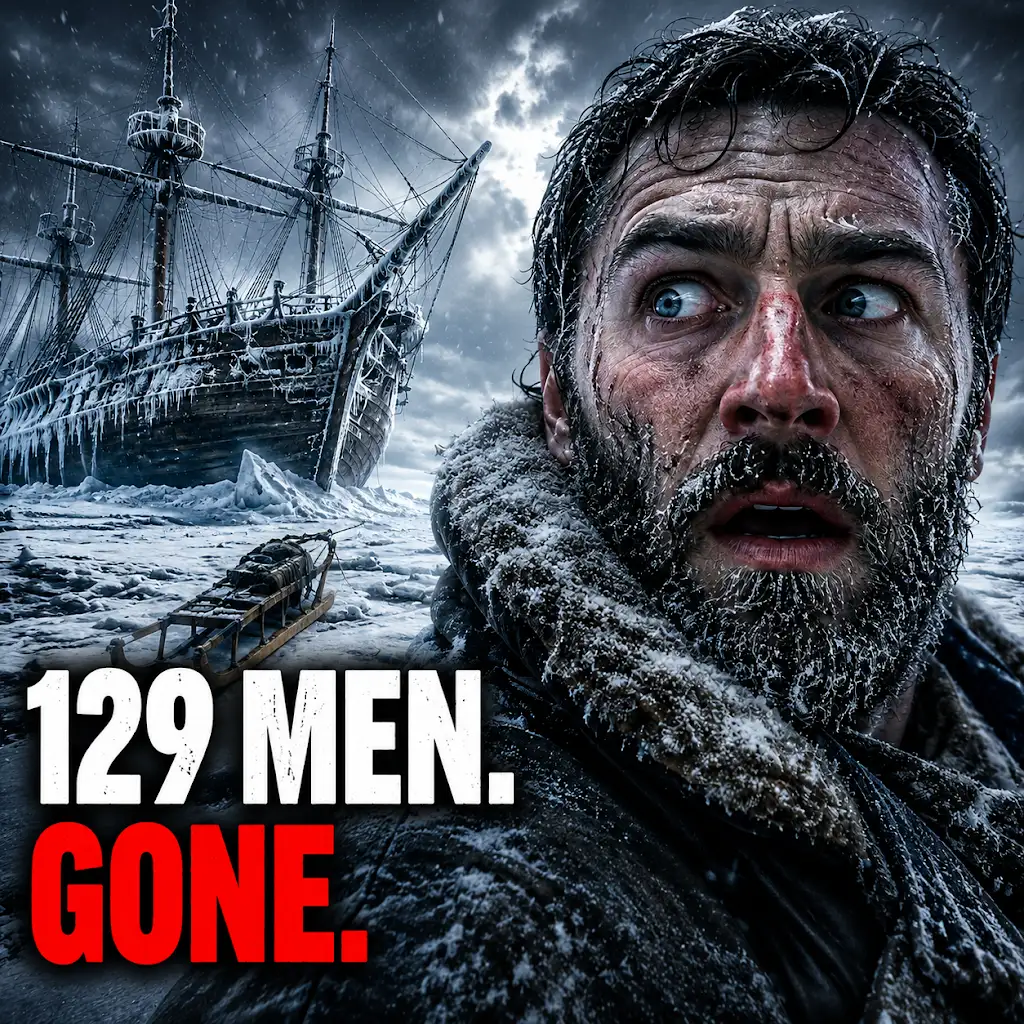
129 Men Vanished in the Arctic. Then We Found Their Ships.
FAQs
What was the Franklin Expedition?
The Franklin Expedition was a British voyage led by Captain Sir John Franklin in 1845 to find the Northwest Passage. The expedition’s two ships, HMS Erebus and HMS Terror, became trapped in ice and the entire crew perished.
How many survivors were there from the Franklin Expedition?
There were no survivors from the Franklin Expedition. All 129 crew members perished during the ill-fated voyage.
What is the significance of the Franklin Expedition 105 survivors?
There were no survivors from the Franklin Expedition. The title “Franklin Expedition 105 survivors” may be misleading or inaccurate.
What happened to the Franklin Expedition crew?
The crew of the Franklin Expedition succumbed to a combination of exposure, scurvy, lead poisoning, and starvation. Their ships were abandoned, and the crew attempted to trek overland to safety, but none survived.
What is the legacy of the Franklin Expedition?
The Franklin Expedition is remembered as a tragic event in the history of Arctic exploration. The discovery of the wrecks of HMS Erebus and HMS Terror in recent years has renewed interest in the expedition and shed new light on the fate of the crew.