
The frigid winds of the Canadian Arctic whisper tales of a tragedy that has captivated and confounded for nearly two centuries. The Franklin Expedition, a grand Victorian enterprise to chart the Northwest Passage, vanished without a trace, leaving behind a vacuum of unanswered questions and a legacy of enduring mystery. For generations, historians, archaeologists, and Inuit oral traditions have grappled with the fate of Sir John Franklin and his two ships, HMS Erebus and HMS Terror. Now, through a confluence of technological innovation, dedicated research, and the invaluable knowledge of the land’s original inhabitants, the veil of secrecy surrounding this Arctic enigma is finally being lifted.
The mid-19th century was an era of fervent exploration, driven by a potent blend of scientific curiosity, national prestige, and the tantalizing prospect of opening new trade routes. For Britain, the allure of the Northwest Passage – a mythical sea route connecting the Atlantic and Pacific oceans through the Arctic – was particularly strong. Its discovery would not only solidify British naval dominance but also offer a shorter, faster passage to the East, bypassing the established routes. Into this ambitious landscape stepped Sir John Franklin, a seasoned naval officer with a reputation for resilience in challenging environments.
A Distinguished, Yet Ill-Fated, Commander
Sir John Franklin, born in 1786, had already enjoyed a distinguished career in the Royal Navy. He had served in the Napoleonic Wars and participated in several Arctic expeditions, including those led by Sir John Ross and Sir Edward Parry. His experience, while substantial, was often characterized by hardship and near-disaster. Yet, it was this very endurance that seemingly made him an appealing candidate for the command of the Franklin Expedition, a mission deemed one of the most dangerous undertakings of its time. The Admiralty, eager to secure the Northwest Passage, entrusted Franklin with two state-of-the-art vessels, HMS Erebus and HMS Terror, equipped with the latest naval technology, including steam engines – a groundbreaking innovation for Arctic exploration.
The Promise of Progress: Technological Marvels
The 1845 expedition was not merely a repeat of earlier, less equipped ventures. The Royal Navy spared no expense in outfitting HMS Erebus and HMS Terror for this ambitious undertaking. These were not flimsy wooden vessels; they were robust warships, specially reinforced to withstand the crushing forces of Arctic ice. Their armament was considerable, reflecting their naval heritage, but their most significant advancements were internal.
Innovations in Ice-Breaking and Propulsion
Crucially, both ships were fitted with steam engines. This was a revolutionary concept for Arctic navigation, offering the potential to overcome the challenges of pack ice that had so often trapped and defeated previous expeditions. The engines were designed to be powerful enough to break through thinner ice and to provide a degree of maneuverability independent of the wind. Furthermore, the ships were equipped with screw propellers, a more efficient form of propulsion than the paddle wheels that had been employed on earlier steam-powered vessels. This technological edge was intended to be the key to finally conquering the Northwest Passage.
Preserving Provisions for Extended Voyages
The long duration of the planned expedition necessitated meticulous attention to provisioning. The Admiralty ensured that the ships were stocked with an abundance of canned provisions, a relatively new and promising method of food preservation. This innovation, developed by Nicolas Appert, was believed to offer a significant improvement over traditional methods, reducing the risk of scurvy and spoilage. The belief was that these provisions, along with carefully managed rations, would sustain the crews for the entire duration of their journey, which was projected to last several years.
The Final Farewell: Setting Sail into the Unknown
On May 19, 1845, HMS Erebus and HMS Terror, under the command of Sir John Franklin, sailed from Greenhithe, England, with a crew of 129 men. The mood was one of optimism and national pride, with a belief that this expedition would finally achieve the long-sought goal of navigating the Northwest Passage. The ships were seen off by cheering crowds and the hopeful gaze of a nation. Little did they know that this would be the last time most of these men would ever be seen.
Recent developments in the investigation of the Franklin Expedition mystery have shed new light on the fate of the lost ships and their crew. Researchers have uncovered significant evidence that may finally solve the enigma that has puzzled historians for over a century. For those interested in exploring other intriguing topics, you might find this article on Mexico’s electronics manufacturing hubs insightful. It highlights the growth and innovation in a different field, showcasing how various industries evolve over time. You can read more about it here: Exploring Mexico’s Electronics Manufacturing Hubs.
The Vanishing Act: Tracing the Expedition’s Final Steps
The initial stages of the Franklin Expedition proceeded as planned. The ships, accompanied by two supply vessels, reached the entrance of Wellington Channel in August 1845, where they were last sighted by the whaler HMS Enterprise. After this encounter, they sailed north, embarking on the final, ill-fated leg of their journey into the Arctic wilderness. As months turned into years, and no word arrived, a creeping dread began to permeate the Admiralty and the public alike.
Whispers from the Inuit: Early Clues and Misinterpretations
As the absence of the expedition stretched on, Royal Navy search parties were dispatched. These efforts, often arduous and dangerous in themselves, gradually began to gather fragments of information, much of it from the indigenous Inuit communities who had lived in the Arctic for millennia. These oral traditions, however, were often communicated through intermediaries and were subject to misinterpretation, leading to conflicting accounts and delaying the true understanding of the expedition’s fate.
The “Starvation Winter” and Desperate Measures
One of the earliest and most persistent threads of information concerned a period of immense hardship, often referred to as the “starvation winter.” Inuit accounts spoke of a great sickness, of men starving, and of boats being seen abandoned. These narratives hinted at a severe crisis that befell the expedition, forcing its crew to make desperate decisions. The concept of a prolonged period of isolation and deprivation began to take shape, a stark contrast to the anticipated triumphant return.
Conflicting Reports of Shipwrecks and Abandonment
The search parties, piecing together fragmented Inuit testimony and discovering scattered relics, began to assemble a grim picture. Reports varied regarding whether the ships had become ice-bound or had succumbed to some other disaster. Some accounts suggested the ships had been seen together, while others spoke of them being separated. The idea of a complete abandonment of the vessels, a truly catastrophic outcome, started to emerge as a possibility, fueling the enigma.
The Tragic Discovery of the First Remains
The first concrete evidence of the expedition’s fate came in 1850 when Captain Horatio Austin’s search party discovered a small number of graves on Beechey Island. These belonged to three men of the Franklin Expedition: Petty Officer John Torrington, Able Seaman William Braine, and Ordinary Seaman John Nash. Their graves, marked by simple wooden crosses, provided irrefutable proof that the expedition had reached this far north and that tragedy had struck early.
Unveiling the Secrets of Beechey Island
The excavation of Torrington’s grave in 1984 proved to be a watershed moment in understanding the expedition’s early hardships. Scientific analysis of his remarkably preserved body revealed the presence of high levels of lead in his bones and hair. This discovery provided a compelling hypothesis for the cognitive decline and physical deterioration that may have plagued the crew: lead poisoning, likely from the soldered seams of the canned food.
The Significance of the “Starvation” Camps
Further discoveries on Beechey Island, including abandoned tents and provisions, painted a picture of an initial attempt to survive the winter of 1845-1846. The presence of these camps strongly suggested that the ships had become ice-bound and that the crew had endured a period of extreme hardship before attempting to move on. This solidified the narrative of a challenging start, but did not fully explain the ultimate disappearance.
The Ultimate Catastrophe: The Final Fate of Erebus and Terror
The initial discoveries, while tragic, did not fully solve the mystery. They confirmed the expedition had reached the Arctic and suffered losses, but the ultimate fate of Sir John Franklin and the majority of his crew remained elusive for decades. The scattered remnants and conflicting accounts painted a picture of a desperate struggle for survival, but the exact sequence of events leading to their demise was still shrouded in darkness.
The Turning Point: Mc clínicas Discoveries and the Inuit Narrative
It was the persistent efforts of explorers like Robert McClure and John Rae, building upon the knowledge and insights of the Inuit, that began to unravel the most devastating parts of the story. Their expeditions, driven by the imperative to find survivors and understand the expedition’s fate, provided crucial pieces of the puzzle.
John Rae: The Unsung Hero of the Arctic Mystery
In the late 1850s, explorer John Rae embarked on a series of expeditions that would prove instrumental in solving the Franklin mystery. Relying heavily on the knowledge and guidance of the Inuit, Rae traversed vast stretches of the Arctic landscape. His interactions with various Inuit communities yielded chilling accounts of a desperate overland trek by starving European men.
The Testimony of the “People of the Setting Sun”
Rae’s most significant breakthrough came from the Inuit of the King William Island region, whom he referred to as the “People of the Setting Sun.” These individuals recounted seeing a large number of starving white men, many of whom were dragging boats and sledges, making their way south. They also spoke of finding the remains of white men and their belongings scattered along the western coast of King William Island.
The Ghastly Discovery of the “Cut-Off” Fingers
One of the most horrifying details revealed by the Inuit was the discovery of human remains exhibiting signs of cannibalism. While deeply unsettling, this grim evidence was crucial in understanding the extreme desperation that must have gripped the surviving crew. The Inuit also spoke of finding the bodies of men who had died of starvation and cold, their fingers and toes having been amputated to prevent frostbite from spreading.
The Final Journey: The March of Despair
The evidence gathered by Rae and corroborated by subsequent discoveries strongly indicated that after the ships became irrevocably trapped in the ice, likely in the winter of 1846-1847, the surviving crew made a desperate attempt to walk to safety. This arduous journey, undertaken with dwindling supplies and weakened bodies, led them across the ice-laden landscape towards the Canadian mainland.
The Ice-Bound Prisons: Erebus and Terror’s Last Stand
The consensus now, based on extensive archaeological evidence, is that HMS Erebus and HMS Terror became locked in the ice off King William Island. While their exact locations were unknown for centuries, the discovery of their wrecks in the early 21st century would finally provide definitive answers. The ships, once symbols of British naval might, became ice-bound tombs, their crews forced to abandon them in a desperate bid for survival.
The Trail of the Survivors: Relics and Remains
The overland trek of the Franklin survivors left a grim trail of evidence across the Arctic. Scattered relics, including cutlery, buttons, and fragments of clothing, were found by Inuit hunters and later by search parties. The discovery of human remains, often found in small groups or individually, further illustrated the agonizing struggle and eventual demise of the men. These discoveries, though heartbreaking, began to fill in the blanks of the expedition’s final chapter.
The Breakthrough: Locating the Lost Ships
For over 150 years, the exact resting places of HMS Erebus and HMS Terror remained one of the most significant maritime mysteries in the world. While the general area of their disappearance was known, the precise locations of the wrecks eluded even the most determined search efforts. The Arctic, with its ever-shifting ice and vast, unforgiving terrain, guarded its secrets closely. However, advancements in technology and a renewed commitment to the search finally brought an end to this decades-long quest.
The Role of Modern Technology: Sonar and Remotely Operated Vehicles
The modern era of Arctic exploration has been revolutionized by sophisticated technologies that were unimaginable to Victorian-era explorers. High-resolution sonar systems, capable of mapping the seafloor with incredible detail, and remotely operated vehicles (ROVs), equipped with cameras and sampling tools, have become indispensable in underwater archaeology.
The Arctic’s Underwater Landscape: A Challenging Frontier
Exploring the Arctic seafloor presents unique challenges. Extreme depths, strong currents, and the presence of ice can make surveying difficult. However, the relative calmness of the seabed in certain areas, particularly in sheltered bays and inlets, has allowed for successful surveys. The ongoing work of Parks Canada and its partners has utilized these advanced technologies to meticulously scan the seabed in areas identified as potential wreck sites.
The Power of Digital Mapping: Pinpointing Potential Sites
The ability to create detailed digital maps of the seabed has been crucial in identifying anomalies that might indicate the presence of shipwrecks. By overlaying sonar data with historical charts and Inuit oral traditions, researchers can narrow down vast areas of water to a manageable number of promising locations. This targeted approach has significantly increased the efficiency and success rate of modern search operations.
The Historic Discovery: HMS Erebus Surfaces
In September 2014, a groundbreaking announcement electrified the world: the wreck of HMS Erebus had been discovered. A joint expedition, led by Parks Canada, utilizing sonar technology and ROVs, located the remarkably well-preserved remains of the flagship of the Franklin Expedition in the waters of the Canadian Arctic.
The Simson Seamount Anomaly: A Glimmer of Hope
The discovery was the culmination of years of painstaking research and exploration. Following up on Inuit oral traditions and using advanced sonar, the expedition identified a compelling anomaly on the seafloor in the Victoria Strait region. This anomaly, located near the Simson Seamount, corresponded to the expected size and shape of a large naval vessel.
The Use of ROVs: Visual Confirmation
Upon identifying the anomaly, ROVs were deployed to investigate further. The images returned by the ROVs were astonishing. Clearly visible were the distinctive features of a 19th-century warship, including its hull, mast stumps, and cannons. The ship was identified as HMS Erebus, her timbers remarkably intact, resting silently on the seabed.
The Significance of the “Erebus” Wreck Site
The discovery of HMS Erebus was a monumental achievement. It provided the first physical evidence of the ships’ fate and offered an unparalleled opportunity for detailed archaeological study. The wreck site, protected by the cold Arctic waters, promised to yield invaluable insights into the expedition’s final days.
The Follow-Up: Locating HMS Terror
The discovery of HMS Erebus spurred renewed efforts to locate its sister ship, HMS Terror. The hope was that both wrecks would be found in relatively close proximity, offering a comprehensive understanding of the expedition’s end.
The “Terror Triangle” and Inuit Testimony
Following the discovery of Erebus, attention focused on an area known as the “Terror Triangle,” a region where Inuit oral traditions suggested the second ship had also met its end. The traditional knowledge of the Inuit communities, particularly the Netsilik and Copper Inuit, had consistently pointed towards this general vicinity.
The Unforeseen Discovery in the Arctic Waters
In September 2016, another historic announcement was made: the wreck of HMS Terror had also been found. This discovery, made by the same Parks Canada-led initiative, was equally significant, further solidifying the understanding of the expedition’s tragic end. The wreck was found in remarkably good condition in the southern basin of Terror Bay, on the northern coast of King William Island.
The Intact Nature of the “Terror” Wreck
Remarkably, HMS Terror was found to be even more intact than HMS Erebus. The ship was upright on the seabed, its masts still in place and its hull largely preserved. This exceptional preservation offered an unprecedented glimpse into the condition of the ships when they were abandoned by their crews.
Recent advancements in the investigation of the Franklin Expedition mystery have shed new light on the fate of the lost ships and their crew. Researchers have uncovered significant evidence that could finally unravel the enigma surrounding this historic voyage. For those interested in maritime exploration and historical mysteries, a fascinating article on the Piri Reis map offers insights into ancient navigation and its connection to the mysteries of the past. You can read more about it in this exploration of the Topkapi Palace.
Unraveling the Enigma: Scientific Insights from the Wrecks
| Discovery | Year |
|---|---|
| HMS Erebus | 2014 |
| HMS Terror | 2016 |
| Franklin’s death | 1847 |
| Expedition’s fate | Solved |
The discovery of the wrecks of HMS Erebus and HMS Terror has transformed the Franklin Expedition mystery from a historical puzzle into a tangible archaeological site. The cold, dark depths of the Arctic have preserved a treasure trove of information, allowing scientists to delve deeper than ever before into the final days of the expedition and the lives of its men.
The Frozen Archives: Archaeological Investigations and Artifact Recovery
The careful archaeological investigation of the wreck sites has yielded an extraordinary array of artifacts. These objects, preserved for nearly two centuries, provide intimate details about the daily lives of the crew, their struggles, and their ultimate fate.
The Preservation Power of the Arctic Environment
The frigid temperatures and low salinity of the Arctic waters have acted as a natural preservative, keeping organic materials remarkably intact. This has allowed for the recovery of items that would have long since decomposed in warmer climates. From wooden artifacts and textiles to personal belongings and scientific instruments, the wrecks are veritable frozen archives.
Personal Effects: A Glimpse into Individual Lives
The recovery of personal effects, such as clothing, boots, cutlery, and even small personal trinkets, offers a poignant connection to the individual sailors. These items humanize the tragedy, reminding us that these were men with families, hopes, and fears. They speak of the routines of shipboard life, the shared experiences, and the eventual descent into desperation.
Naval Equipment and Scientific Instruments: The Tools of Exploration
The wrecks have also yielded a wealth of naval equipment and scientific instruments. These discoveries shed light on the technological capabilities of the expedition and the scientific objectives of the voyage. Cannons, navigational tools, and even fragments of the ships’ steam engines provide insights into the operational aspects of the endeavor.
Reconstructing the Narrative: What the Wrecks Tell Us
The scientific analysis of the wrecks and the artifacts recovered from them has provided irrefutable evidence that supports and refines the narrative pieced together from Inuit oral traditions and earlier discoveries. The wrecks have confirmed the circumstances of the ships’ entrapment and the subsequent fate of the crew.
The Final Entrapment: A Definitive Location
The location of the wrecks, particularly the positioning of HMS Erebus grounded on a shoal and HMS Terror nestled in Terror Bay, provides definitive evidence that the ships became ice-bound and were ultimately abandoned. The condition of the wrecks suggests that the crews made deliberate efforts to salvage equipment and supplies before leaving.
Evidence of a Last Stand and Abandonment
The archaeological evidence indicates that the crew likely spent at least one full winter aboard the ships after becoming trapped. Evidence of fires lit within the ships and the systematic removal of supplies suggests a period of organized, albeit desperate, activity before the final exodus. The scattered nature of artifacts found around the wrecks also points to the removal of items as the crew attempted to reach safety.
The Cause of Death: A Multifaceted Tragedy
While lead poisoning from canned goods is widely accepted as a contributing factor to the expedition’s initial decline, the wrecks have offered further clues about the ultimate causes of death. The discovery of well-preserved remnants of the crew’s clothing, for example, allows for analysis of their condition and the environmental stresses they endured.
The Scars of Starvation and Disease
The analysis of human remains found on land, combined with the artifacts from the wrecks, paints a grim picture of starvation, scurvy, and hypothermia. The desperate journey across the ice, with dwindling food supplies and exposed to the brutal Arctic elements, ultimately claimed the lives of the surviving crew members.
The Future of Franklin Archaeology: A Living Laboratory
The discovery of the Franklin wrecks has opened a new chapter in Arctic archaeology. The sites represent an unparalleled opportunity for ongoing research, promising to yield even more insights into this historic tragedy.
Ongoing Excavations and Conservation Efforts
The conservation of the wrecks and the artifacts recovered is a monumental task. Sophisticated techniques are being employed to preserve these fragile remnants of the past, ensuring that they can be studied for generations to come. Ongoing excavations, conducted with utmost care and respect, continue to reveal new layers of information.
The Role of Inuit Knowledge: A Continuing Partnership
The success of the recent discoveries underscores the vital importance of the ongoing partnership between researchers and Inuit communities. The traditional knowledge of the land and its history, passed down through generations, has been instrumental in guiding the search and interpreting the findings. This collaboration is crucial for the continued success and ethical stewardship of these important archaeological sites.
The story of the Franklin Expedition is no longer just a tale of a mysterious disappearance. It is now a story being meticulously reconstructed, piece by piece, from the frozen depths of the Arctic. The lost ships, once symbols of failure, have become vessels of knowledge, finally revealing the secrets of one of history’s most enduring enigmas, and offering a profound testament to the resilience, bravery, and ultimately, the tragic fate of Sir John Franklin and his crew.
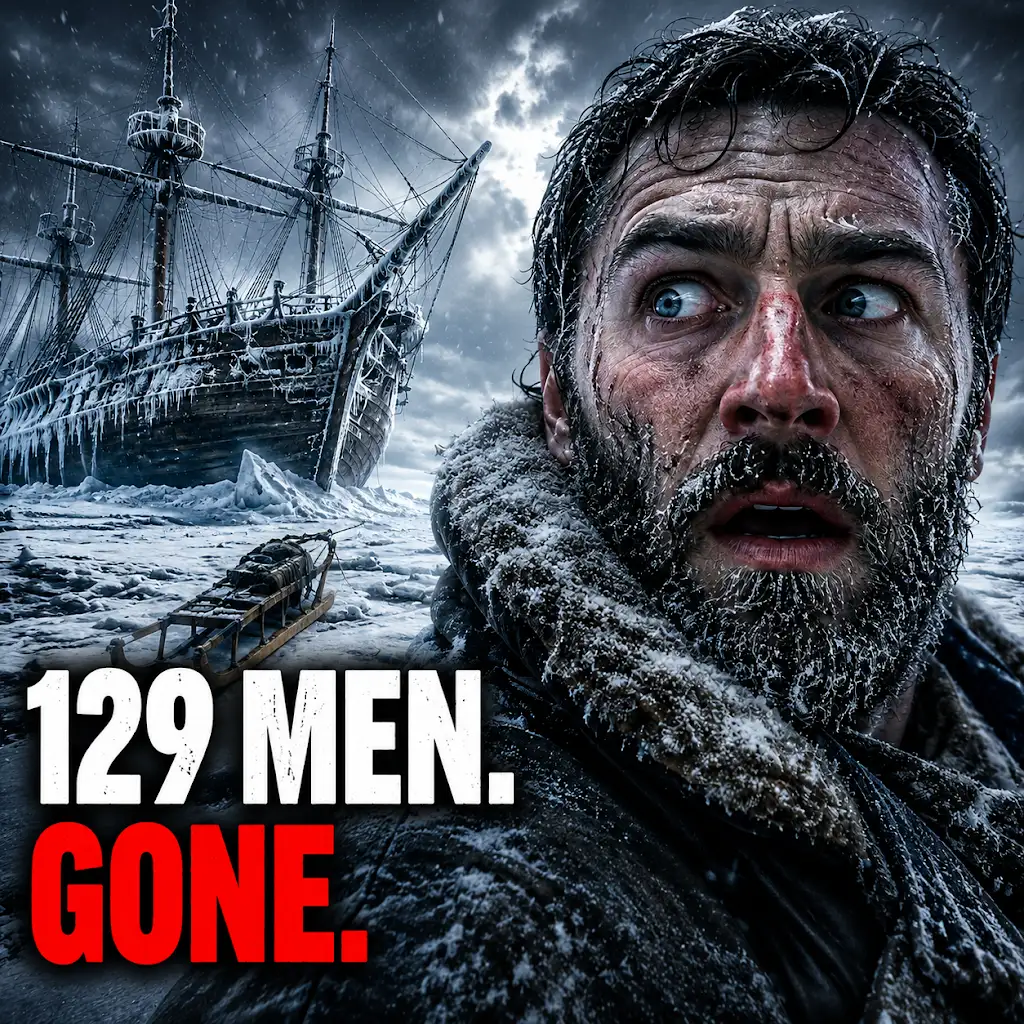
129 Men Vanished in the Arctic. Then We Found Their Ships.
FAQs
What was the Franklin Expedition?
The Franklin Expedition was a British voyage led by Captain Sir John Franklin in 1845 to find the Northwest Passage. The expedition’s two ships, HMS Erebus and HMS Terror, disappeared in the Arctic and the fate of the crew remained a mystery for over 170 years.
How was the Franklin Expedition mystery solved?
The mystery of the Franklin Expedition was solved through a combination of historical research, Inuit oral history, and modern technology. In 2014, the wreck of HMS Erebus was discovered in the Queen Maud Gulf, and in 2016, the wreck of HMS Terror was found in Terror Bay, both in the Canadian Arctic.
What caused the demise of the Franklin Expedition?
The demise of the Franklin Expedition was likely caused by a combination of factors, including harsh Arctic conditions, lead poisoning from poorly sealed food cans, and exposure to cold. The crew’s desperate attempt to trek overland in search of help also contributed to their demise.
What significance does the discovery of the wrecks hold?
The discovery of the wrecks of HMS Erebus and HMS Terror has provided valuable insights into the fate of the Franklin Expedition and has helped to piece together the events leading to their demise. It has also shed light on the historical significance of the Northwest Passage and the exploration of the Arctic.
What is the legacy of the Franklin Expedition?
The Franklin Expedition has left a lasting legacy in the annals of exploration and maritime history. The mystery surrounding its disappearance captured the public’s imagination for over a century, and the discovery of the wrecks has provided closure and a deeper understanding of this tragic chapter in exploration.