
Göbekli Tepe Unearths Ancient Mysteries
For millennia, the windswept plains of southeastern Anatolia held their secrets close. Beneath layers of earth and time lay a revelation that would shatter conventional understandings of human civilization. Göbekli Tepe, meaning “Potbelly Hill” in Turkish, is not just another archaeological site; it is a gateway to a past far older, far more sophisticated, and far more mysterious than previously imagined. This extraordinary complex of megalithic structures, dating back an astonishing 11,000 years, predates Stonehenge by seven millennia and the pyramids of Egypt by four. It challenges the very narrative of human development, suggesting that settled life and complex societal organization may have emerged not from agriculture, but from shared ritual and spiritual belief.
The discovery of Göbekli Tepe was a slow burn, a decades-long excavation that began in the 1960s but only truly revealed its monumental significance in the 1990s under the tireless leadership of German archaeologist Klaus Schmidt. Initial surveys and limited digs in the mid-20th century had largely dismissed the site as a medieval cemetery, its enigmatic stone structures overlooked or misinterpreted. It was Schmidt’s keen insight and persistent investigation that began to peel back the layers of misconception, revealing the true antiquity and astonishing complexity of what lay beneath.
The Accidental Discovery and Early Investigations
The story of Göbekli Tepe’s discovery is a testament to both serendipity and scientific rigor. Early archaeological work in the region, including surveys in the 1960s, noted the presence of man-made mounds and scattered stone fragments. However, these findings were largely attributed to later periods, with the focus of research often directed towards known Bronze Age and Roman settlements in the vicinity. The sheer scale and unusual nature of the stone circles were not fully appreciated in these initial explorations, leaving the true potential of the site unrecognized for decades.
Klaus Schmidt’s Visionary Pursuit
Klaus Schmidt arrived at Göbekli Tepe in 1994 with a specific hypothesis and an unwavering determination. He suspected that the unusual geological formations might actually be artificial and that the site could hold clues to the origins of settled life and monumental architecture in the Fertile Crescent. His systematic excavations, commencing in 1995, quickly confirmed his suspicions. The discovery of the T-shaped limestone pillars, some weighing up to 20 tons, adorned with intricate carvings of animals, was a watershed moment. It became clear that this was no ordinary settlement, but a place of profound symbolic and ritualistic importance, built by people with a sophisticated understanding of engineering and artistry.
The Unveiling of the Monumental Scale
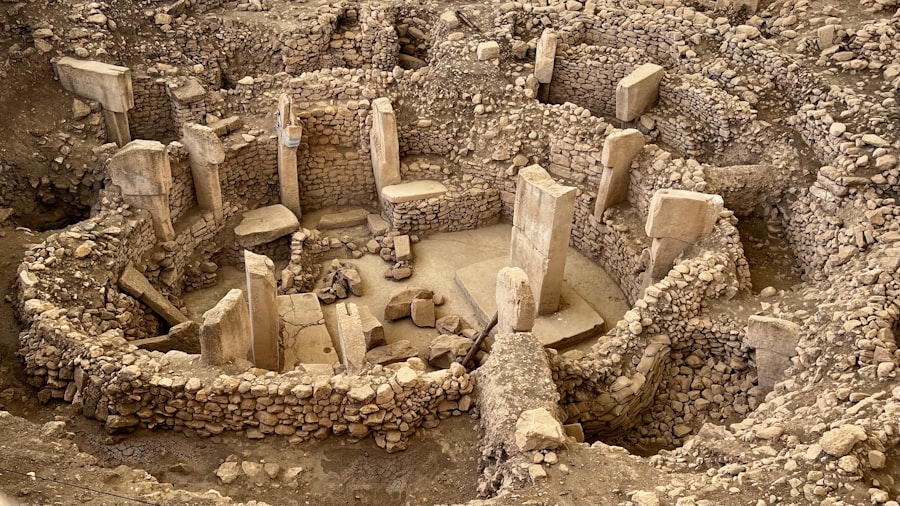
As excavations progressed, the sheer scale of Göbekli Tepe became increasingly apparent. It was revealed to be not a single structure, but a collection of at least twenty distinct circular and oval enclosures, spread over an area of approximately 22 acres. The builders had deliberately buried these enclosures, perhaps as an act of reverence or to preserve them for future generations. This deliberate infilling is what has contributed to the remarkable state of preservation of the site, offering an unparalleled glimpse into the Neolithic past. The ongoing work continues to uncover more enclosures, suggesting that the full extent of Göbekli Tepe is yet to be revealed.
Recent archaeological discoveries at Göbekli Tepe have shed light on the complexities of early human civilization, revealing that this ancient site may have played a crucial role in the development of social structures and religious practices. For a broader perspective on how ancient cultures have influenced modern societies, you might find the article on Chinese companies exploiting loopholes in Mexico particularly interesting, as it highlights the ongoing impact of historical practices on contemporary economic systems. You can read more about it here: Chinese Companies Exploiting Mexico Loophole.
Pillars of the Past: The Enigmatic Monoliths
The most striking features of Göbekli Tepe are its massive T-shaped limestone pillars, arranged in circular enclosures. These monoliths, meticulously quarried and transported, stand as silent sentinels to a lost world. Their sheer size and the effort required to erect them speak volumes about the organizational capabilities and collective will of the people who built them. The symbolism and meaning embedded within their forms continue to fuel debate and wonder among archaeologists and historians.
The Enigmatic T-Shaped Pillars
The iconic T-shaped pillars are the defining characteristic of Göbekli Tepe. Carved from local limestone, they range in height from 10 to 20 feet and are often joined by a low wall. The human-like form of these pillars, with their broad “arms” extended, suggests they may represent stylized human figures, or perhaps deities, spirits, or ancestral beings. Their placement in circular enclosures further enhances this interpretation, hinting at communal gatherings and ritualistic practices. The effort to quarry, transport, and erect these massive stones, weighing as much as 20 tons, is a testament to the advanced organizational skills and communal labor of these ancient people.
The Artistry of the Carvings
Beyond their imposing physical presence, the pillars are adorned with a remarkable array of relief carvings. These intricate depictions of animals – including lions, bulls, foxes, boars, snakes, birds, and scorpions – are rendered with striking naturalism and artistic skill. The choice of animals is not random; it appears to reflect the fauna of the region, but their specific selection and arrangement may also carry symbolic or totemic meaning. The absence of depictions of humans in the early phases, with the exception of the stylized T-shaped pillars themselves, is particularly noteworthy and raises questions about their worldview and spiritual beliefs.
Decoding the Symbolic Language
The precise meaning of the animal carvings and the overall layout of Göbekli Tepe remains one of its greatest mysteries. Scholars have proposed various interpretations, ranging from hunting magic and shamanic journeys to cosmological maps and representations of celestial events. The repetitive motifs and the presence of what might be symbols for death or rebirth suggest a complex spiritual and mythological system at play. The act of carving these figures onto monumental stones implies a desire to communicate something enduring and significant, a form of ancient storytelling or record-keeping that predates written language.
The Builders: A Revolution in Human History
Göbekli Tepe fundamentally challenges the long-held theory that settled agriculture was the prerequisite for the development of complex societies and monumental architecture. The evidence at Göbekli Tepe suggests a reverse causality: that the shared undertaking of building and maintaining these ritualistic sites may have been the catalyst for people to abandon their nomadic lifestyles and gather in one place, eventually leading to the development of agriculture to sustain these burgeoning communities.
Pre-Agricultural Megalithic Construction
Perhaps the most groundbreaking aspect of Göbekli Tepe is its age. Radiocarbon dating places its earliest layers around 9600-8200 BCE, a period considered the Early Neolithic. At this time, according to prevailing theories, hunter-gatherer societies were still the norm, and the domestication of plants and animals was in its nascent stages. The construction of Göbekli Tepe, a feat of engineering and organization requiring significant labor and planning, flies in the face of this assumption. It suggests that hunter-gatherers, long before the advent of settled farming, were capable of complex social organization and sophisticated material culture.
The Social and Economic Implications
The existence of Göbekli Tepe implies a society that was not primarily focused on subsistence farming but on communal ritual and shared belief. The immense effort involved in building and maintaining the site would have required a surplus of labor and resources, potentially supported by hunting and gathering. This suggests that early human societies may have been more socially complex and cooperative than previously understood. The need for a central gathering place for ceremonies and rituals could have served as a powerful unifying force, fostering social cohesion and the development of shared identities.
Challenging the “Neolithic Revolution” Paradigm
The traditional narrative of the “Neolithic Revolution” posits that the development of agriculture led to settled life, which in turn facilitated the growth of larger populations, social stratification, and eventually, the construction of monumental structures. Göbekli Tepe offers compelling evidence to the contrary. It suggests that the impetus for settled life and the development of complex societies may have originated from spiritual and ritualistic needs, with agriculture developing later to support these new social structures. This paradigm shift has profound implications for our understanding of human cultural evolution.
Ritual and Religion: The Heart of the Matter
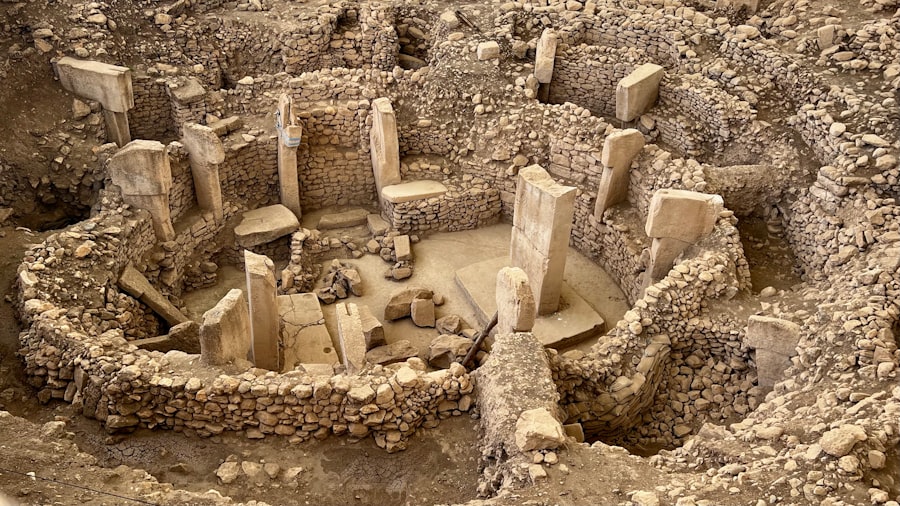
The overwhelming evidence points to Göbekli Tepe being a sacred site, a place of pilgrimage and ritual rather than a residential settlement. The absence of domestic structures, hearths, and food processing areas in the earliest layers supports this interpretation. The monumental architecture, the animal carvings, and the careful deposition of the structures all suggest a profound spiritual dimension to the lives of its builders.
A Temple, Not a Town
The lack of evidence for everyday domestic life is a key indicator that Göbekli Tepe was not a village or a town. There are no signs of housing, cooking areas, or the usual paraphernalia associated with permanent settlements in the earliest phases. Instead, the focus is entirely on the monumental enclosures and their elaborate decorations. This suggests that the primary purpose of the site was not habitation but something else entirely, most likely ritual and religious observance. The scale of construction implies that people traveled to this location from surrounding areas, perhaps seasonally, for important ceremonies.
Evidence of Ritualistic Practices
While direct evidence of specific rituals is elusive, the context strongly suggests their importance. The arrangement of the pillars, the carvings of powerful animals, and the deliberate burying of the enclosures all point to a profound spiritual connection. Scholars speculate about possible rituals involving animal sacrifice, feasting, shamanic practices, or celestial observations. The deliberate infilling of the enclosures, where large amounts of animal bones were found, has been interpreted as a form of ritualistic feasting or a ceremonial closure of the sacred spaces.
The Nature of Early Belief Systems
Göbekli Tepe offers a tantalizing glimpse into the nature of early human belief systems, predating known organized religions. The focus on animal symbolism suggests a worldview deeply connected to the natural world and its forces. The monumental scale of the undertaking implies a powerful shared belief system that could mobilize large groups of people towards a common spiritual goal. It raises questions about the origins of religion, the role of shamanism, and the human need for meaning and connection to something larger than themselves.
Recent discoveries at Göbekli Tepe have sparked significant interest in the origins of human civilization, revealing complex rituals and advanced architectural techniques that predate known history. These findings align with discussions in a related article that explores the possibility of pre-flood civilizations and their contributions to our understanding of ancient societies. For more insights on this intriguing topic, you can read about it in the article on unearthing pre-flood civilization clues.
Enduring Mysteries and Future Discoveries
| Discovery Date | Location | Age | Significance |
|---|---|---|---|
| 1963 | Şanlıurfa, Turkey | Approximately 11,000 years old | Earliest known temple complex, reshaping understanding of human history |
Despite decades of intensive research, Göbekli Tepe continues to hold many secrets. The vast majority of the site remains unexcavated, promising future discoveries that could further rewrite our understanding of human history. The ongoing work is crucial for unraveling the remaining enigmas and for preserving this irreplaceable testament to our ancient past.
The Unexcavated Majority
The true extent of Göbekli Tepe is still largely unknown. The current excavations have revealed only a fraction of the estimated 20 or more enclosures. This means that countless more pillars, carvings, and potential clues to the lives and beliefs of its builders await discovery. Future excavations will undoubtedly shed further light on the chronology of the site, the diversity of its structures, and the evolving nature of its use over time.
The Question of the Builders’ Fate
The reasons behind the eventual abandonment and deliberate burial of Göbekli Tepe remain a subject of speculation. Was it due to environmental changes, societal shifts, or simply a natural end to its period of significance? Understanding this transition is crucial for piecing together the complete narrative of this ancient complex and the people who created it. Did the rise of agriculture and more settled communities draw people away from this ritual center, or was there a more dramatic event that led to its desertion?
The Ongoing Quest for Knowledge
Göbekli Tepe is not a static artifact but a dynamic site of ongoing research. Archaeologists, anthropologists, and scientists from various disciplines continue to collaborate, employing cutting-edge technologies to analyze the findings. From paleoenvironmental studies to advanced dating techniques, every new piece of information adds to the intricate puzzle of this ancient civilization. The quest for knowledge at Göbekli Tepe is a testament to humanity’s enduring curiosity about its origins and the profound mysteries that still lie buried beneath the earth. The whispers of the past at Göbekli Tepe are growing louder, and with each unearthed stone, humanity inches closer to understanding its own ancient story.

The World Beyond Göbekli Tepe Is Far Bigger Than We Thought
FAQs
What is Göbekli Tepe?
Göbekli Tepe is an archaeological site located in southeastern Turkey, dating back to the Neolithic period, around 9600 BCE. It is considered one of the oldest known man-made structures and is believed to have been a religious site.
What were the major discoveries at Göbekli Tepe?
The major discoveries at Göbekli Tepe include large stone pillars arranged in circles, some of which are decorated with intricate carvings of animals and symbols. These pillars are believed to have been part of a series of ritual structures.
What is the significance of Göbekli Tepe?
Göbekli Tepe is significant because it challenges previous assumptions about the development of early human societies. The site suggests that complex religious and social structures may have emerged earlier than previously thought, and it has sparked new debates and research in the field of archaeology.
Who built Göbekli Tepe?
The builders of Göbekli Tepe are believed to have been early hunter-gatherers who lived in the region during the Neolithic period. The exact identity of the builders is still a subject of debate among archaeologists.
What is the current status of Göbekli Tepe?
Göbekli Tepe is a UNESCO World Heritage Site and is currently undergoing excavation and preservation efforts. The site is open to visitors and has become a popular destination for tourists and researchers interested in ancient history and archaeology.