The dawn of civilization has long been envisioned as a slow, deliberate march, beginning with settled agriculture and culminating in the monumental achievements of early societies. Yet, nestled in the Anatolian plains of southeastern Turkey, Göbekli Tepe has shattered this narrative, revealing a staggering testament to humanity’s earliest ambitions and organizational prowess. For decades, this enigmatic site, often referred to as the world’s oldest temple, has captivated archaeologists and historians, consistently pushing back the perceived boundaries of human ingenuity. Now, recent excavations are peeling back further layers of its profound mystery, offering tantalizing glimpses into the lives and beliefs of the people who erected these awe-inspiring megaliths over 11,000 years ago. These new discoveries promise to rewrite not just chapters, but entire volumes of our understanding of the Neolithic Revolution and the very origins of complex society.
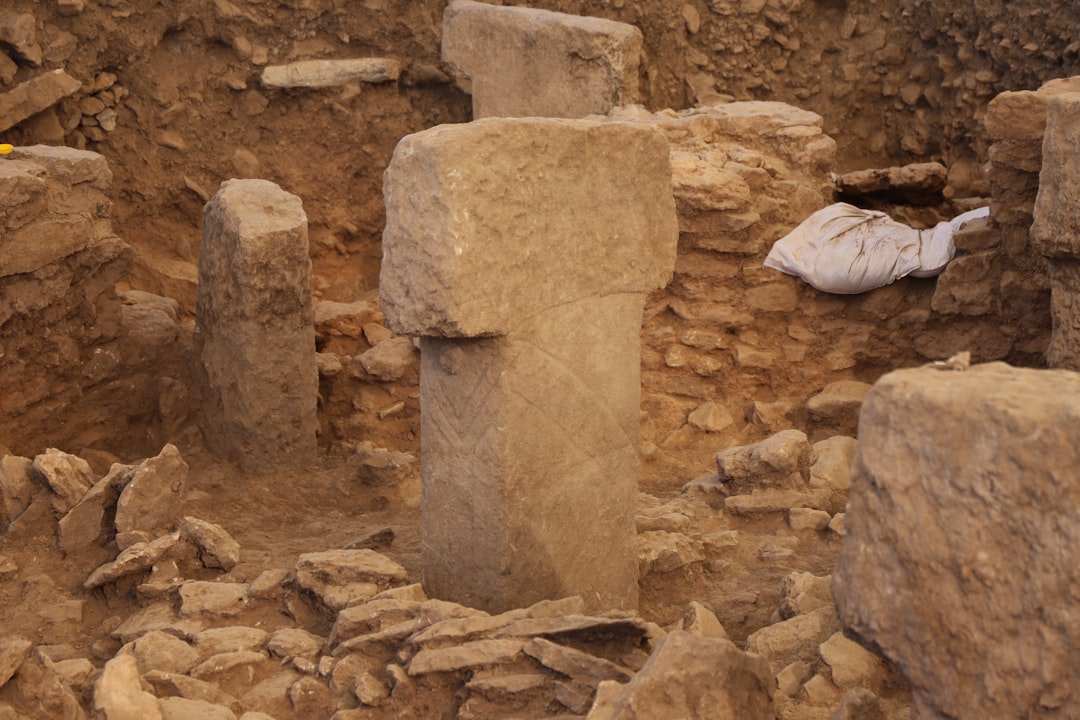
Göbekli Tepe, meaning “Potbelly Hill” in Turkish, is a vast archaeological complex that predates Stonehenge by some 6,000 years and the Egyptian pyramids by over 7,000. Its discovery in the 1960s, followed by systematic excavations led by the German archaeologist Klaus Schmidt from 1995 until his passing in 2014, has been nothing short of revolutionary. The site consists of multiple circular and oval enclosures, each dominated by massive, T-shaped limestone pillars, some weighing up to 20 tons and reaching heights of 5.5 meters. These pillars are intricately carved with a menagerie of animals, including lions, foxes, boars, snakes, and birds, alongside abstract symbols and human-like figures.
The Significance of the T-Shaped Pillars
The sheer scale and artistic sophistication of these pillars immediately defied conventional wisdom about hunter-gatherer societies. It was long believed that only settled agricultural communities possessed the organizational capacity, labor force, and social structure to undertake such monumental construction projects. Göbekli Tepe, however, appears to have been constructed by nomadic or semi-nomadic hunter-gatherers.
The Symbolic Language of the Megaliths
The carvings on the pillars are not mere decorations; they are a sophisticated visual language, rich with meaning. While their precise interpretation remains a subject of intense debate, it is clear they were intended to convey important information and beliefs. The prevalence of animals, often depicted in dynamic poses, suggests a deep connection to the natural world and a sophisticated understanding of animal behavior.
Engineering Feats of the Ancient World
The quarrying, transportation, and erection of these colossal stones, without the aid of metal tools or domesticated animals, represent an extraordinary feat of engineering for their time. This accomplishment alone points to a high degree of social cohesion and complex decision-making processes within these early communities.
Early Interpretations and Shifting Paradigms
Initially, Göbekli Tepe was theorized to be a cemetery or a settlement. However, the absence of evidence for domestic structures and the deliberate infilling of the enclosures with debris led to the prevailing theory that it served a ritualistic or religious purpose, likely a central gathering place for different groups. This paradigm shift challenged the traditional view of the Neolithic Revolution, suggesting that complex ritual and social organization might have preceded, rather than followed, the development of agriculture.
Recent excavations at Göbekli Tepe have revealed fascinating insights into the ancient site’s purpose and the advanced knowledge of its builders. These findings have sparked discussions about the potential use of control technologies in prehistoric societies. For a deeper understanding of how such technologies may have influenced ancient civilizations, you can read the related article on this topic at Unearthing Ancient Control Technology.
The Latest Excavations: Digging Deeper into the Past
Recent excavations at Göbekli Tepe, continuing the legacy of Klaus Schmidt and under the guidance of new leadership, are employing advanced technologies and interdisciplinary approaches to unlock even more of the site’s secrets. These ongoing efforts are not just adding to the known structures but are also providing crucial context for understanding the site’s formation, use, and eventual abandonment. The focus has broadened to include not only the monumental architecture but also the surrounding landscape and any potential evidence of human activity beyond the immediate ceremonial areas.
Expanding the Excavation Areas
Archaeologists are meticulously expanding their digs to encompass new areas of the sprawling Göbekli Tepe complex. This systematic approach is revealing previously unknown enclosures and structures, suggesting the site was far larger and more complex than initially conceived. Each new discovery adds another piece to the intricate puzzle of its history.
Discovering New Enclosures and Features
The unearthing of additional circular and oval enclosures, similar in design to those already documented, indicates a phased development and a sustained commitment to the site over centuries. These new areas often reveal variations in the size, arrangement, and artistic motifs of the pillars, hinting at evolving traditions or regional differences.
Geophysical Surveys and Remote Sensing
Modern excavation techniques, including ground-penetrating radar (GPR) and magnetometry, are playing a crucial role in identifying buried features and mapping the extent of the archaeological layers without the need for extensive disturbance. This allows for more targeted and efficient excavation, maximizing the scientific yield of every effort.
Unearthing Evidence of Daily Life and Ritual
While Göbekli Tepe is primarily known for its monumental architecture, new excavations are also yielding artifacts and environmental data that shed light on the daily lives and ritual practices of its builders. These finds help to paint a more nuanced picture of the people who inhabited this remarkable place.
Artifacts of Ritual and Craftsmanship
The discovery of a wider array of tools, bone fragments, and small carved objects provides insights into the craftsmanship and the types of activities undertaken at the site. These artifacts, even if seemingly mundane, offer tangible connections to the individuals who walked these grounds millennia ago.
Paleobotanical and Zooarchaeological Analysis
The careful collection and analysis of plant remains (paleobotany) and animal bones (zooarchaeology) are revealing the diet of the people associated with Göbekli Tepe, as well as their relationship with the local fauna. This data is crucial for understanding their subsistence strategies and the environmental context of the site.
The Builders of Göbekli Tepe: A Glimpse into Hunter-Gatherer Society
The most profound impact of Göbekli Tepe has been on our understanding of prehistoric societies, particularly the capabilities of hunter-gatherer groups. The sheer scale of the undertaking at Göbekli Tepe suggests a level of social organization, coordination, and shared belief systems that were previously thought to be the exclusive domain of settled agriculturalists.
Challenging the Agricultural Imperative
The prevailing theory for millennia has been that agriculture was the catalyst for civilization, leading to surplus food, settled villages, and eventually complex social structures. Göbekli Tepe presents a compelling counter-argument, suggesting that shared ritual and social gathering might have preceded and even spurred the adoption of agriculture.
Social Cohesion and Collective Labor
The construction of Göbekli Tepe required the mobilization of a significant workforce over extended periods. This implies a high degree of social cohesion, shared purpose, and effective leadership among hunter-gatherer bands, enabling them to cooperate on a scale never before imagined.
The Role of Ritual in Social Development
It is increasingly believed that the primary driving force behind Göbekli Tepe was not survival, but spiritual and social needs. The site may have served as a central pilgrimage destination, a place for important ceremonies, and a means of reinforcing social bonds and shared identity among disparate groups.
The Mystery of the Builders’ Identity
Despite the wealth of evidence, the exact identity of the people who built and used Göbekli Tepe remains elusive. They were hunter-gatherers, but their specific culture, their origins, and their ultimate fate are subjects of ongoing investigation.
Nomadic or Semi-Nomadic Lifestyle
Evidence suggests that the builders were not permanently settled in the immediate vicinity of Göbekli Tepe. Their lifestyle likely involved seasonal movements, following game and gathering resources, with the site serving as a focal point for periodic gatherings.
Artistic Expression and Symbolism
The sophisticated carvings suggest a rich symbolic world and a developed aesthetic sense. The recurring motifs and stylistic consistency across different enclosures hint at a shared cultural framework and a complex belief system that bound these early people together.
Interpreting the Purpose: What Was Göbekli Tepe For?
The central question surrounding Göbekli Tepe continues to be its precise function. While most archaeologists agree it was a ritualistic or ceremonial center, the specifics of its use and its role in the lives of its creators are still being debated. New discoveries often offer fresh perspectives on these enduring questions.
A Temple for the Gods?
The most widely accepted theory posits Göbekli Tepe as a religious sanctuary. The monumental nature of the structures, the absence of domestic dwellings, and the presence of carved animals that might represent deities or spirit animals all support this interpretation.
The Great Assembly Point
Some scholars suggest that Göbekli Tepe served as a vast assembly point for numerous hunter-gatherer groups from the surrounding region. It could have been a neutral territory where different clans or tribes met for ceremonies, trade, and the exchange of information.
Astronomical Observations and Alignments
The possibility of astronomical significance is also being explored. Some pillars and enclosures exhibit alignments with celestial events, suggesting that the builders possessed a sophisticated understanding of the cosmos and may have used the site for calendrical or divinatory purposes.
Beyond Religion: Social and Political Hubs
While religious functions are paramount, Göbekli Tepe may have served multiple purposes. It could have been a hub for social and even nascent political activities, solidifying alliances and resolving disputes through shared ritual.
The Cradle of Early Social Complexity
The site stands as a testament to early human social complexity, demonstrating that advanced organizational skills and collective endeavors were possible long before the advent of agriculture and settled village life.
A Place of Storytelling and Knowledge Transmission
The carved narratives on the pillars may have served as a form of visual storytelling, transmitting myths, legends, and ancestral knowledge across generations, reinforcing cultural identity and shared values.
Recent excavations at Göbekli Tepe have unveiled fascinating insights into the prehistoric site, shedding light on the complex social structures of ancient societies. These findings not only enhance our understanding of early human civilization but also raise intriguing questions about the economic systems that may have existed at the time. For a broader perspective on how ancient resources have shaped modern economies, you might find it interesting to read about the economic implications of lunar resources in this article on lunar helium-3.
The Future of Göbekli Tepe Research: Unlocking Further Secrets
| Excavation Area | Findings | Date |
|---|---|---|
| Main excavation area | New stone pillars and T-shaped monoliths | 2021 |
| Northwest excavation area | Animal reliefs and sculptures | 2020 |
| South excavation area | Decorated limestone blocks | 2019 |
The ongoing work at Göbekli Tepe is a testament to the enduring power of archaeological inquiry. With each new season of excavation, our understanding of this extraordinary site expands, pushing the boundaries of what we thought possible for our ancient ancestors. The future of research promises to build upon the current successes, employing even more advanced technologies and interdisciplinary collaborations.
Continued Excavation and Preservation Efforts
The meticulous excavation of remaining areas of Göbekli Tepe will continue to be a priority. Alongside excavation, a strong emphasis will be placed on the preservation of the site’s delicate structures and artifacts for future generations.
Protecting the Monumental Architecture
The delicate limestone pillars and surrounding structures are vulnerable to environmental factors. Advanced conservation techniques are being employed to protect them from erosion, weathering, and other forms of degradation.
Digitization and 3D Modeling
The creation of detailed 3D models of the site and its artifacts is crucial for documentation, research, and public outreach. These digital representations allow for virtual exploration and analysis, transcending the limitations of physical access.
Interdisciplinary Collaboration and Technological Advancement
The complex nature of Göbekli Tepe necessitates a multidisciplinary approach, bringing together experts from various fields to interpret the findings. The integration of new technologies will continue to revolutionize how the site is studied.
Integrating Genetics and Anthropology
Future research may involve the analysis of ancient DNA from any human remains found at or near the site to understand the genetic makeup of the builders and their relationships to other prehistoric populations.
Advanced Imaging and Analysis Techniques
The use of AI-driven image analysis for identifying patterns in carvings, isotopic analysis of materials to determine their origin, and advanced dating techniques will continue to refine our understanding of the site’s timeline and the movement of its people.
Göbekli Tepe is not just an archaeological site; it is a profound challenge to our preconceived notions of human history. The new excavations are not merely adding to the known facts but are fundamentally reshaping our narrative of the human journey. They reveal a world where sophisticated ritual, complex social organization, and a deep connection to the spiritual realm may have been the true precursors to settled life and the agricultural revolution. As we continue to peel back the layers of this ancient enigma, Göbekli Tepe consistently reminds us that the story of humanity is far richer, more complex, and more astonishing than we have ever dared to imagine.

The World Beyond Göbekli Tepe Is Far Bigger Than We Thought
FAQs
What is Göbekli Tepe?
Göbekli Tepe is an archaeological site in Turkey, dating back to the Neolithic period, around 10,000 BC. It is considered one of the oldest known man-made structures and is believed to have been a religious center.
What are the new excavations at Göbekli Tepe uncovering?
The new excavations at Göbekli Tepe are uncovering additional layers of the site, revealing more about the complex and sophisticated nature of the ancient structures and the rituals and beliefs of the people who built them.
Why are the new excavations significant?
The new excavations at Göbekli Tepe are significant because they are providing further insights into the religious and cultural practices of the people who lived in the region during the Neolithic period. They are also shedding light on the development of early human societies.
What have researchers learned from the new excavations?
Researchers have learned that Göbekli Tepe was likely a place of communal gatherings and religious ceremonies, with intricate carvings and stone pillars that may have been used in rituals. The new excavations have also revealed evidence of early forms of agriculture and animal domestication.
What are the future plans for the Göbekli Tepe site?
The future plans for the Göbekli Tepe site include continued excavations to further uncover and study the ancient structures and artifacts. Preservation efforts are also underway to protect the site for future generations.