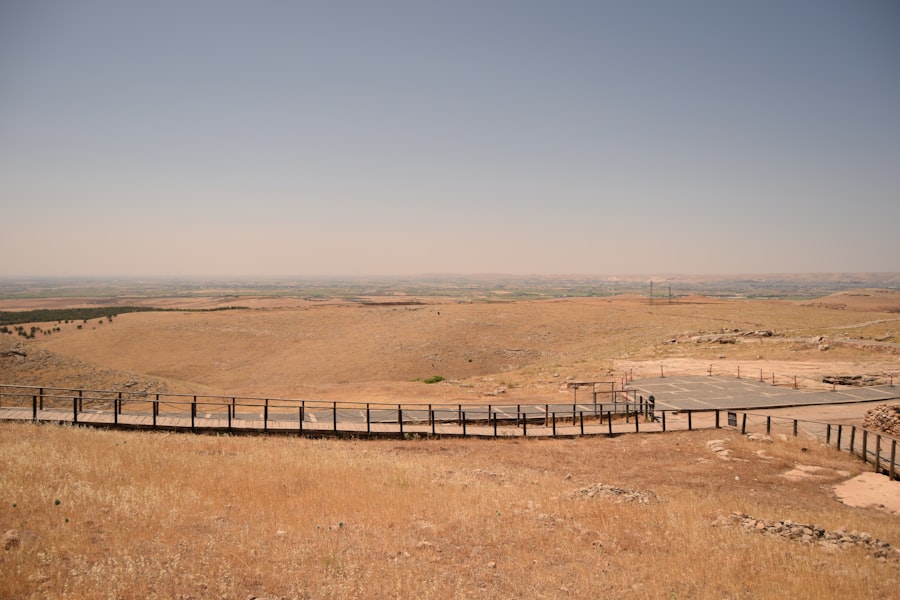
The vast, wind-swept plains of southeastern Turkey hold a secret that has rewritten the textbooks of human history. For millennia, buried beneath layers of soil and sediment, lay Göbekli Tepe, a sprawling archaeological site that challenges our fundamental understanding of early civilization. At its heart stand the enigmatic T-shaped pillars, massive limestone monoliths etched with intricate carvings, their purpose and creators shrouded in profound mystery. These monumental structures, dating back to an astonishing 10,000 BCE, predate the advent of agriculture, pottery, and even the wheel, forcing a radical re-evaluation of when and how complex societies emerged.
Göbekli Tepe is not merely an ancient ruin; it is a testament to a level of organization, sophistication, and belief that was previously thought impossible for hunter-gatherer societies. The sheer scale of construction, the precision of the stonework, and the symbolic richness of the carvings suggest a communal effort of immense magnitude. The site’s discovery in the 1990s, spearheaded by German archaeologist Klaus Schmidt, peeled back the veil on a world that existed long before the established timelines of human civilization.
Unearthing a Prehistoric Enigma
The story of Göbekli Tepe’s unearthing is as remarkable as the site itself. For decades, local shepherds had reported unusual stone formations in the area, but it wasn’t until Schmidt began his systematic excavations that the true significance of the site began to unfold. What emerged from the earth was not a simple settlement, but a complex of at least twenty circular and oval enclosures, each dominated by imposing T-shaped pillars arranged in deliberate patterns. These structures, predating Stonehenge and the Egyptian pyramids by thousands of years, were not domestic dwellings. Their purpose remained elusive, sparking intense debate and scholarly intrigue.
The Enigmatic T-Shaped Pillars: A Defining Feature
The most striking feature of Göbekli Tepe is undoubtedly its T-shaped pillars. Carved from limestone, these monoliths typically stand between 3 and 6 meters (10 to 20 feet) tall, with some reaching up to 9 meters (30 feet). They are arranged in concentric circles, with larger, more elaborately decorated pillars often found at the center of each enclosure. The T-shape itself is highly symbolic, with scholars suggesting it represents an anthropomorphic form, a stylized human figure, or perhaps a totem. The faces of these figures are not depicted; instead, the broad upper part of the T is thought to be the head, and the narrower shaft the body.
Beyond Human Hands: The Age of Göbekli Tepe
The radiocarbon dating of Göbekli Tepe has consistently placed its construction and use in the Pre-Pottery Neolithic period, specifically between 10,000 and 8,000 BCE. This timeframe is revolutionary because it means these monumental structures were erected by hunter-gatherers, a societal model traditionally associated with mobile bands and limited material culture. The effort required to quarry, transport, shape, and erect these massive stones would have demanded a level of social organization, cooperation, and shared ideology that was previously believed to have emerged much later, with the rise of settled agricultural communities.
Göbekli Tepe, known for its enigmatic T-shaped pillars, has captivated archaeologists and historians alike, shedding light on early human civilization and ritual practices. For those interested in the broader implications of ancient structures on modern society, a related article discussing Mexico’s growing role in global trade can provide intriguing insights into how historical developments shape contemporary economic landscapes. To explore this connection further, you can read the article here: Mexico’s Growing Role in Global Trade.
The Artistic Language of the Ancients
The T-shaped pillars of Göbekli Tepe are not merely inert stones; they are canvases bearing a rich tapestry of artistic expression. The carvings adorning their surfaces offer glimpses into the beliefs, cosmology, and perhaps even the anxieties of the people who created them. These depictions are not random; they are carefully composed and strategically placed, suggesting a deliberate narrative or symbolic language that continues to puzzle researchers.
A Bestiary of the Wild
Dominating the carvings are depictions of wild animals, rendered with remarkable naturalism and dynamism. Lions, boars, foxes, snakes, birds, and insects are all represented, often in powerful and evocative poses. The lions, in particular, are frequently shown with sharp claws and bared teeth, conveying a sense of raw power and untamed nature. The boars, with their bristly manes and formidable tusks, are equally imposing. These animals are not depicted in passive scenes of hunting; rather, they are often shown in active, even aggressive, stances, suggesting they held significant symbolic importance.
The Significance of Predators
The prevalence of predators like lions and boars is particularly noteworthy. In many ancient cultures, these animals symbolize strength, ferocity, and the primal forces of nature. Their prominent placement on the T-shaped pillars could indicate a reverence for these powerful creatures, or perhaps an attempt to harness or appease their energy. It is also possible that these animals represent spiritual beings or deities that were central to the belief system of Göbekli Tepe’s creators.
The Subtle Language of Other Creatures
Beyond the formidable predators, subtler creatures also populate the stone canvases. Snakes, often depicted coiled or in motion, might symbolize transformation, rebirth, or chthonic forces. Birds, soaring or perched, could represent messengers between the earthly and spiritual realms, or perhaps aspirations for freedom and transcendence. The inclusion of insects, though less frequently discussed, adds another layer of complexity, hinting at a detailed observation of the natural world and perhaps a belief in the significance of even the smallest beings.
Abstract Symbols and Geometric Patterns
Interspersed with the animal carvings are a variety of abstract symbols and geometric patterns. These range from enigmatic lines and dots to more complex arrangements of shapes. The meaning of these symbols is even more obscure than that of the animal depictions, but they clearly played a role in the overall symbolic language of Göbekli Tepe. Some scholars propose they might represent constellations, celestial events, or abstract concepts related to the cosmology of the time.
Unraveling the Enigmatic Glyphs
The abstract glyphs remain a significant challenge for interpretation. Are they a form of proto-writing, an early attempt to record information? Or are they purely symbolic, conveying spiritual or ritualistic meaning? The lack of any decipherable script or context makes this a question that may remain unanswered. However, their consistent presence suggests they were an integral part of the visual vocabulary of Göbekli Tepe.
The Absence of Human Representation
Interestingly, the T-shaped pillars, while often interpreted as anthropomorphic, do not depict clear human faces or bodies in the way we typically understand figurative art. There are no scenes of daily life, no portraits of individuals, and no clear representations of deities in human form. This absence is as significant as the presence of the animal carvings, hinting at a worldview that may have prioritized the spiritual or symbolic over the individual and the mundane.
Ritual, Religion, and the Sacred Landscape

The monumental scale and deliberate arrangement of the T-shaped pillars strongly suggest a purpose beyond mere shelter or utility. The site’s enduring mystery lies in deciphering the beliefs and rituals that animated these ancient structures, transforming them into a sacred landscape for a forgotten people.
A Place of Worship or Gathering?
The prevailing theory is that Göbekli Tepe served as a ceremonial center, a place where a community congregated for religious rituals, social gatherings, or both. The circular enclosures, with their central, imposing pillars, evoke the image of an assembly space designed to focus attention and facilitate communal experience. The presence of multiple such enclosures, built and rebuilt over millennia, suggests a continuity of tradition and a deep-seated importance attached to this location.
The Enclosures: Circles of Power
The circular and oval layouts of the enclosures are themselves symbolically potent. Circles are often associated with the cosmos, eternity, and unity. Their arrangement at Göbekli Tepe might reflect a cosmology that emphasized balance and cyclical renewal. The differing sizes and complexities of the enclosures could indicate a hierarchy of purpose or significance, with some perhaps reserved for elite rituals or important festivals.
The Role of Sacrifice and Offerings
While no direct evidence of human sacrifice has been found at Göbekli Tepe, the context of many ancient ceremonial sites suggests the possibility of animal sacrifices or offerings. The presence of numerous animal carvings could be linked to such practices, perhaps as representations of the sacrifices themselves or as a way to invoke the power of these animals. The discovery of animal bones at the site further supports the idea that feasting and communal meals played a role in its use.
Echoes of Neolithic Beliefs
Understanding the potential religious beliefs of Göbekli Tepe’s builders requires looking at broader patterns in Neolithic societies. The veneration of nature, animism, and ancestor worship were common themes. It is plausible that the T-shaped pillars were imbued with spiritual significance, representing ancestors, totemic spirits, or deities connected to the natural world.
The Mystery of the Missing Inhabitants
One of the most perplexing aspects of Göbekli Tepe is the absence of clear evidence of permanent habitation. There are no large domestic structures, no evidence of agriculture within the enclosures, and limited findings of tools typically associated with daily life. This leads to the question: who built and used Göbekli Tepe, and where did they live?
A Nomadic Pilgrimage Site?
One hypothesis suggests that Göbekli Tepe was a pilgrimage site, visited periodically by mobile hunter-gatherer groups from surrounding regions. These groups would have converged at the site for specific rituals or ceremonies, leaving behind only the monumental structures that attest to their shared beliefs and social organization. This would explain the lack of permanent settlement while still accounting for the immense collective effort involved in its construction.
Challenging Conventional Narratives of Civilization
The discovery and ongoing excavation of Göbekli Tepe have fundamentally challenged the long-held “Neolithic Revolution” narrative. For decades, the prevailing theory was that settled agriculture was the catalyst for the development of complex societies, leading to surplus resources, specialization of labor, and ultimately, monumental architecture and organized religion. Göbekli Tepe flips this script, suggesting that complex social organization and symbolic thought may have preceded, and perhaps even driven, the adoption of agriculture.
The ‘Garden of Eden’ Theory: A New Perspective
Klaus Schmidt famously referred to Göbekli Tepe as a “Garden of Eden,” not in a literal sense, but in the sense that it represented a paradise lost, a time when humanity lived in a more spiritually connected and socially cohesive state, before the perceived “fall” into the complexities and burdens of settled agriculture. This perspective suggests that the hunter-gatherer lifestyle might have been more sophisticated and organized than previously assumed.
Social Complexity Preceding Sedentism
The evidence from Göbekli Tepe strongly supports the idea that advanced social organization, shared ideology, and collaborative monumental construction were possible among hunter-gatherer groups. This implies that the drive for complex social structures and symbolic expression might have been a primary human motivation, leading people to gather and build together even before the necessity of food production dictated settled life.
The ‘Man the Hunter’ Reimagined
The traditional image of early humans as primarily focused on survival and rudimentary social structures is being profoundly re-examined. Göbekli Tepe suggests a more nuanced understanding, where sophisticated cognitive abilities, abstract thought, and a rich spiritual life were present much earlier in human history. The energy and resources dedicated to constructing Göbekli Tepe indicate a profound commitment to something beyond immediate survival.
The Impact on Archaeological Theory
The implications of Göbekli Tepe are far-reaching for the field of archaeology. It forces a re-evaluation of existing models for the emergence of civilization and necessitates a more open-minded approach to interpreting evidence from prehistoric periods. The site serves as a potent reminder that our understanding of the past is constantly evolving and that the earth still holds secrets capable of reshaping our perception of ourselves.
The T-shaped pillars of Göbekli Tepe have fascinated archaeologists and historians alike, as they provide insight into the early human civilization that constructed this monumental site. These pillars, intricately carved and arranged in circular formations, are believed to have played a significant role in the religious and social practices of the people who inhabited the region. For those interested in exploring how ancient civilizations approached monumental architecture and its implications for modern society, a related article discusses the innovative development of sustainable energy solutions, which can be found here. This connection between the past and present highlights the enduring human quest for progress and sustainability.
The Enduring Mystery and Future Discoveries
| Aspect | Details |
|---|---|
| Number of T-shaped pillars | Approximately 200 pillars have been discovered at Göbekli Tepe |
| Height of the pillars | Ranging from 3 to 6 meters tall |
| Weight of the pillars | Some pillars weigh up to 10 tons |
| Carvings on the pillars | Various animal and abstract symbols are carved on the pillars |
| Function of the pillars | Believed to have had a ritual or religious significance |
Despite decades of intensive research, Göbekli Tepe continues to guard many of its secrets. The full extent of the site remains largely unexplored, and the interpretation of its carvings and structures is an ongoing process. The future promises further revelations that will undoubtedly continue to reshape our understanding of humanity’s earliest chapters.
Unearthing the Unknown: The Unexcavated Layers
Only a fraction of Göbekli Tepe has been excavated. Beneath the exposed structures lie vast areas of buried monumental architecture, hinting at an even more extensive and complex site than what is currently visible. Future excavations are likely to uncover more enclosures, more pillars, and potentially new types of structures, offering further clues to the lives and beliefs of its creators.
The Importance of Preservation
The delicate nature of the site and its ancient artifacts necessitates careful preservation efforts. Archaeologists are working to protect the structures from environmental damage and to ensure that future research can be conducted in a sustainable manner, respecting the historical integrity of Göbekli Tepe.
Ongoing Debates and Evolving Interpretations
The interpretation of Göbekli Tepe is a dynamic field. Scholars continue to debate the precise meaning of the carvings, the function of the enclosures, and the social structure of the people who built and used the site. New theories emerge as more data is collected and analyzed, leading to a continuous refinement of our understanding.
The Pursuit of Meaning in Symbols
The abstract symbols and animal depictions remain a fertile ground for interpretation. Researchers are employing various methodologies, from comparative mythology to cognitive archaeology, in an attempt to decipher their meaning. The sheer ingenuity of these ancient artists and their ability to imbue stone with such potent symbolism is a source of continuous fascination.
Göbekli Tepe’s Legacy: A New Dawn for Prehistory
Göbekli Tepe has irrevocably altered our perception of prehistoric humanity. It has demonstrated that the capacity for complex social organization, symbolic thought, and monumental construction existed far earlier than previously believed, challenging the very definition of “civilization.” The enigmatic T-shaped pillars stand as silent witnesses to a lost world, a testament to the profound and enduring human drive to create, to connect, and to seek meaning in the universe. As excavations continue and research deepens, Göbekli Tepe will undoubtedly continue to yield its secrets, offering humanity a more complete and awe-inspiring understanding of its own ancient origins.

The World Beyond Göbekli Tepe Is Far Bigger Than We Thought
FAQs
What are the T-shaped pillars at Göbekli Tepe?
The T-shaped pillars at Göbekli Tepe are large, carved stone pillars that are a defining feature of the archaeological site. They are believed to have been used in the construction of the monumental stone enclosures at the site.
How old are the T-shaped pillars at Göbekli Tepe?
The T-shaped pillars at Göbekli Tepe are estimated to be around 11,000 years old, making them some of the oldest known examples of monumental architecture in the world.
What is the significance of the T-shaped pillars at Göbekli Tepe?
The T-shaped pillars at Göbekli Tepe are significant because they provide evidence of advanced architectural and construction techniques during the prehistoric period. They also suggest the presence of a complex and organized society at the time.
What do the carvings on the T-shaped pillars at Göbekli Tepe depict?
The carvings on the T-shaped pillars at Göbekli Tepe depict various animals, including wild boars, foxes, birds, and other creatures. These carvings are thought to have held symbolic or religious significance for the people who built and used the site.
What is the current understanding of the purpose of the T-shaped pillars at Göbekli Tepe?
The purpose of the T-shaped pillars at Göbekli Tepe is still a subject of debate among archaeologists and researchers. Some believe that they were used in religious or ceremonial rituals, while others suggest they may have had a more practical function in supporting the roofs of the stone enclosures.