The silent sentinels of time, ancient stone structures stand as enigmatic testaments to civilizations long past. From the windswept plains of Anatolia to the sun-baked sands of Egypt, these colossal constructions whisper tales of ingenuity, belief, and a profound connection to the cosmos. Among them, a select group holds a special allure: those that predate conventional historical timelines, hinting at a human story far older and more complex than commonly understood. The discovery and ongoing exploration of these 12,000-year-old mysteries offer a tantalizing glimpse into the dawn of human civilization, challenging our assumptions and pushing the boundaries of archaeological and historical inquiry.
The unassuming hills of southeastern Turkey have yielded a discovery that has fundamentally reshaped our understanding of early human history. Göbeklitepe, meaning “Potbelly Hill” in Turkish, is an archaeological site that has rewritten the textbooks, pushing back the timeline for monumental architecture and organized religion by millennia. Dated to approximately 12,000 years ago, this sprawling complex of megalithic structures predates the invention of pottery, metallurgy, and even agriculture as we understand it. Its existence poses a profound question: how did hunter-gatherer societies, at the very cusp of settled life, possess the organizational capacity, the artistic skill, and the architectural knowledge to erect such elaborate and enduring monuments?
Unveiling the Pillars of the Past
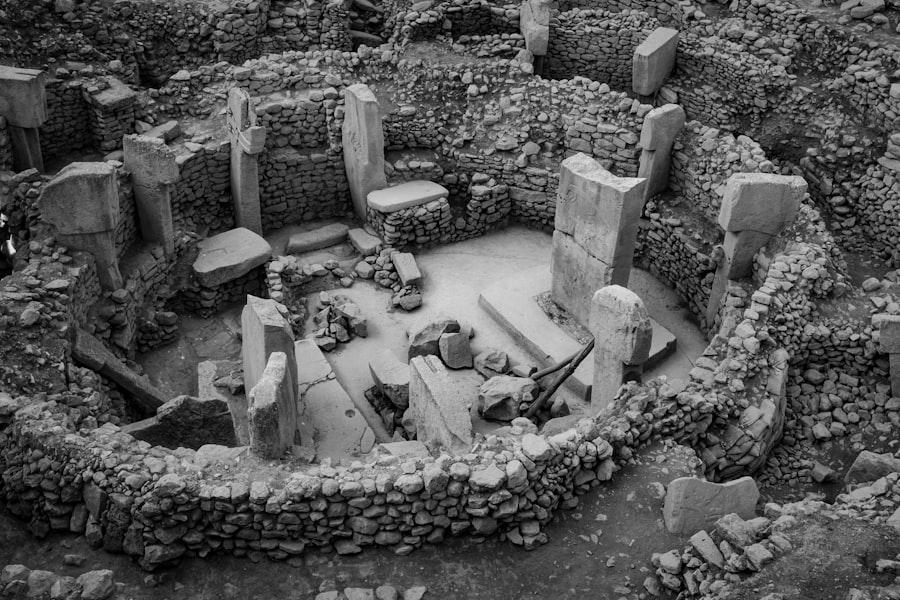
Göbeklitepe’s most striking features are its massive T-shaped limestone pillars, many weighing several tons and standing up to 18 feet tall. These monoliths are arranged in circular enclosures, with the pillars often intricately carved with a remarkable array of animal reliefs. Lions, boars, foxes, cranes, snakes, and even insects are depicted with a vividness and sophistication that belies their age.
The Symbolic Language of the Animals
The precise meaning of these animal carvings remains a subject of intense debate. Scholars propose various interpretations, from totemic representations of clan symbols to depictions of mythological beings or astral phenomena. Some theories suggest a shamanic or animistic belief system, where animals played a central role in the spiritual lives of the community. The lack of human figures in most carvings is also notable, prompting speculation about the focus of their spiritual or social narratives.
Architectural Prowess Beyond Expectation
The sheer scale and precision of Göbeklitepe’s construction are astounding. The massive pillars were quarried, transported, and erected without the aid of wheels, domesticated animals for heavy lifting, or advanced tools. This suggests a level of social organization and communal effort that was previously thought to be impossible for hunter-gatherer societies. The careful planning and execution of these structures imply a sophisticated understanding of engineering and geometry.
The Hunter-Gatherer Revolution
The existence of Göbeklitepe fundamentally challenges the prevailing narrative of human societal development. It suggests that the drive for monumental construction and complex ritualistic practices may have predated, and perhaps even catalyzed, the transition to settled agriculture. Instead of agriculture being the precursor to complex societies, it is now theorized that the demands of building and maintaining sites like Göbeklitepe might have incentivized early humans to develop more organized food production and social structures.
Rethinking the Neolithic Revolution
The traditional “Neolithic Revolution” model posited a linear progression from hunter-gatherer life to agriculture, leading to sedentary villages and then to complex societies. Göbeklitepe flips this paradigm, suggesting that the desire for communal, ritualistic spaces might have been a primary driver for innovation and social change, influencing the development of agriculture rather than being a consequence of it.
The Social Fabric of Early Builders
The construction of Göbeklitepe would have required a significant labor force, indicating a level of social cohesion and coordination among dispersed groups. This implies the existence of leadership structures, specialized roles, and a shared cultural or religious ideology that could mobilize and direct such an undertaking.
Recent discoveries of 12,000-year-old stone structures have sparked intrigue among archaeologists and historians alike, as they challenge our understanding of early human civilization. These ancient edifices, believed to have been constructed by prehistoric societies, offer valuable insights into the architectural capabilities and social organization of our ancestors. For a deeper exploration of ancient mysteries and their implications on our history, you can read the article on the enigmatic glacier formations and their reflections on human existence at this link.
Beyond Göbeklitepe: A Global Pattern of Ancient Stone Marvels
While Göbeklitepe stands as a monumental discovery, it is not an isolated phenomenon. Evidence suggests that other ancient sites around the world, though perhaps not as precisely dated or as grand in scale, also hint at a shared human impulse to create enduring stone structures at very early periods. These discoveries, often in remote or challenging locations, are gradually piecing together a more comprehensive picture of humanity’s earliest creative and communal endeavors.
The Megalithic Builders of Europe
Across Europe, from the British Isles to Brittany, lie countless megalithic monuments that evoke a sense of awe and mystery. While many of these, such as Stonehenge, are typically dated to the later Neolithic and Bronze Ages, earlier traditions of megalithic construction are increasingly being recognized. The sheer number and geographical spread of these structures suggest a widespread cultural phenomenon that spanned millennia.
The Silent Stones of Carnac
The Carnac stones in Brittany, France, comprise one of the most extensive and impressive collections of megalithic alignments in the world. Thousands of granite standing stones are arranged in long rows, stretching for miles across the landscape. While the exact age and purpose of these alignments are debated, some of the earliest phases of construction are thought to date back to the 5th millennium BCE, placing them in a very ancient context.
The Unanswered Questions of Stonehenge’s Ancestors
While Stonehenge is often associated with later periods, archaeological evidence suggests that the site may have had earlier, less monumental phases of construction. Investigations into the surrounding landscape have revealed subtle earthworks and post-holes that hint at human activity and possibly the erection of wooden or stone structures predating the iconic sarsen stones.
The Echoes of Stone in the Americas
The Americas also hold their share of ancient stone structures, though their dating and interpretation often present unique challenges. In some cases, the age of these sites is still being determined, with ongoing research potentially pushing back their origins to periods comparable to Göbeklitepe.
The Enigmatic Sites of the Andes
The mountainous regions of the Andes have yielded impressive stone constructions, such as those found at sites like Puma Punku in Bolivia. While the precise dating of its highly precise stonework is complex, some researchers suggest pre-Inca origins that could extend back thousands of years. The fitting of massive, intricately shaped stones without mortar is a testament to advanced stonemasonry.
Early American Earthworks and Stone Circles
Beyond monumental architecture, the Americas also possess a rich history of earthworks and smaller stone circles created by early indigenous populations. The dating of these sites is crucial for understanding the timeline of complex human activity and belief systems in the New World.
Decoding the Purpose: Ritual, Astronomy, and Social Cohesion
The persistent question that surrounds these ancient stone structures is their purpose. Why did early humans dedicate such immense effort and resources to their construction? The prevailing theories revolve around a combination of spiritual beliefs, astronomical observation, and the need for social cohesion.
The Sacred Landscape and Ritualistic Practices
Many scholars believe that these structures served as focal points for religious ceremonies, rituals, and communal gatherings. The sheer scale and durability of the monuments suggest a deep spiritual significance, perhaps linked to ancestral worship, fertility rites, or appeasement of deities. The careful placement of these sites within the landscape, often on elevated ground or near natural features, further supports their sacred nature.
The Celestial Clockwork of the Ancients
A significant body of evidence suggests that many ancient stone structures were aligned with celestial events, such as solstices, equinoxes, and the rising and setting of prominent stars. This indicates a sophisticated understanding of astronomy and a desire to integrate human activity with the rhythms of the cosmos. Such alignments could have served practical purposes, such as timekeeping for agricultural cycles, or more profound spiritual purposes, linking the earthly realm with the divine.
The Role of the Sun and Moon
The precise orientations of megalithic monuments to the sun and moon are a recurring theme. For instance, Stonehenge’s alignment with the summer solstice sunrise is well-established. Similar astronomical connections are being uncovered at other ancient sites, suggesting a shared fascination with celestial bodies and their influence on human life.
The Pillars of Society: Unifying Communities
Beyond their spiritual and astronomical functions, these monumental constructions likely played a crucial role in fostering social cohesion. The shared endeavor of building and maintaining such structures would have required cooperation, communication, and the establishment of social hierarchies. They could have served as central gathering places for dispersed groups, reinforcing identity, resolving disputes, and facilitating trade and cultural exchange.
The Communal Labor Force
The construction of megalithic sites demanded significant communal labor, transcending individual or familial efforts. This collective undertaking would have forged strong bonds between individuals and groups, creating a sense of shared purpose and identity.
The Transmission of Knowledge and Tradition
These structures likely served as repositories of knowledge and tradition, passed down through generations. The carvings, alignments, and spatial arrangements could have encoded stories, myths, and practical information, ensuring the continuity of cultural memory.
The Challenge of Dating: Unlocking the True Age

Accurately dating ancient stone structures, particularly those of extreme antiquity, is a complex and ongoing scientific endeavor. Traditional methods have limitations, and new techniques are constantly being developed to push back the boundaries of our knowledge. The accuracy of dating is paramount to understanding the developmental trajectory of human civilization.
Radiocarbon Dating and its Limitations
Radiocarbon dating, a cornerstone of archaeological chronology, relies on measuring the decay of radioactive carbon-14. While effective for organic materials, its application to inorganic stone structures is indirect, often relying on dating associated organic remains found within or around the structures. For very ancient sites, the concentration of C-14 can be extremely low, making dating difficult or impossible.
Dating Associated Materials
Archaeologists often date the organic materials found in layers associated with the stone structures, such as charcoal from hearths, bone fragments, or plant matter. The assumption is that these materials were deposited around the same time as the construction or use of the monument.
The Challenge of Recycled Materials
In some cases, ancient stones may have been quarried from much older geological formations, or reused from even older structures. This complicates direct dating of the stone itself and necessitates careful analysis of the context and associated artifacts.
Optically Stimulated Luminescence (OSL) Dating
OSL dating offers a valuable alternative for dating sedimentary materials, including sediments that might surround or underlie stone structures. This technique measures the last time the mineral grains in the sediment were exposed to sunlight. By analyzing the accumulated dose of radiation, OSL can provide a date for when the sediment was buried, offering insights into the age of the archaeological layers.
Dating Sediments and Buried Layers
OSL dating is particularly useful for dating contexts where organic materials are scarce or absent. It can provide a chronological framework for the construction and occupation of sites by dating the sediments that were in place at the time of activity.
Precision and Potential
While OSL dating offers great potential for dating ancient sites, it requires careful sample collection and sophisticated laboratory analysis to achieve accurate results. Ongoing research is refining its application and increasing its precision.
Thermoluminescence (TL) Dating
Similar to OSL, thermoluminescence dating is used to determine when a material, such as pottery or burnt stone, was last heated. If ancient fires were used in the construction process or during rituals associated with the stone structures, TL dating of associated burnt materials can provide valuable chronological information.
Dating Burnt Materials
TL dating is applied to materials that have been subjected to high temperatures, such as burnt flint tools or fragments of burnt clay. The process involves heating the sample and measuring the light emitted, which is proportional to the radiation dose it has received since it was last heated.
Context is Key
As with all dating methods, the interpretation of TL dates is heavily dependent on the archaeological context. Understanding how the burnt material relates to the stone structure is crucial for drawing valid conclusions.
Recent discoveries of 12,000-year-old stone structures have sparked significant interest among archaeologists and historians alike. These ancient edifices challenge our understanding of early human civilization and suggest that complex societies may have existed far earlier than previously thought. For those intrigued by the implications of these findings, a related article explores the evidence of ancient advanced civilizations and their remarkable achievements. You can read more about it in this insightful piece here.
The Future of Exploration: Unearthing More Ancient Secrets
| Location | Age | Structure |
|---|---|---|
| Göbekli Tepe, Turkey | 12,000 years old | Stone pillars, T-shaped |
| Carahunge, Armenia | Estimated 7,500 years old | Stone circles, astronomical observatory |
| Wat Phu, Laos | Over 1,000 years old | Khmer temple complex |
The exploration of 12,000-year-old stone structures is a dynamic and evolving field. New discoveries, technological advancements, and interdisciplinary collaborations are continuously pushing the boundaries of our understanding. The pursuit of these ancient mysteries promises to reveal even more about humanity’s deep past.
Technological Innovations in Archaeology
Modern archaeology is increasingly leveraging cutting-edge technologies to explore and analyze ancient sites. Remote sensing techniques, such as LiDAR (Light Detection and Ranging), allow researchers to map landscapes and identify subtle archaeological features from the air, even through dense vegetation. Ground-penetrating radar (GPR) can reveal subsurface structures without the need for excavation.
LiDAR and Landscape Archaeology
LiDAR technology has revolutionized landscape archaeology by providing highly detailed digital elevation models. This allows for the identification of ancient earthworks, pathways, and settlement patterns that might otherwise be hidden from view, offering a broader context for understanding sites like Göbeklitepe.
Geophysical Survey Techniques
GPR and magnetometry allow archaeologists to non-destructively survey the ground, detecting anomalies that could indicate buried walls, foundations, or other features. These techniques are invaluable for planning excavations and understanding the layout of ancient sites.
The Role of Interdisciplinary Research
Understanding these ancient marvels requires a multidisciplinary approach. Archaeologists work alongside geologists, astronomers, anthropologists, and computer scientists to interpret the data and piece together the puzzle of humanity’s earliest achievements.
Collaboration with Astronomers
The astronomical alignments of ancient structures necessitate close collaboration with astronomers. By analyzing celestial movements and historical star charts, they can help determine the intended orientations of these monuments.
Anthropological Insights
Anthropologists provide crucial insights into the social structures, belief systems, and daily lives of early human populations, helping to interpret the cultural context and symbolic meanings behind the stone constructions.
Preserving the Past for Future Generations
As we uncover more about these ancient wonders, the imperative to preserve them for future generations becomes paramount. Protecting these sites from environmental degradation, tourism pressures, and looting is a global responsibility.
The Importance of Site Conservation
Strict conservation measures are essential to protect the fragile remains of these ancient structures from erosion, weathering, and human impact. This often involves a careful balance between making them accessible for study and tourism while ensuring their long-term preservation.
Raising Public Awareness
Educating the public about the significance of these ancient stone structures is vital for garnering support for their protection and for fostering a deeper appreciation of humanity’s shared heritage. Engaging narratives and accessible scientific findings can inspire a global commitment to preserving these irreplaceable links to our distant past. The silent stones of 12,000 years ago continue to speak, urging us to listen and to unravel the profound mysteries they hold.

The World Beyond Göbekli Tepe Is Far Bigger Than We Thought
FAQs
What are the 12000 year old stone structures?
The 12000 year old stone structures refer to ancient stone formations or constructions that have been dated back to approximately 12000 years ago. These structures are often found in various parts of the world and are believed to have been built by early human civilizations.
Where are the 12000 year old stone structures found?
12000 year old stone structures have been found in various locations around the world, including Turkey, the Middle East, North America, and South America. Some well-known examples include Göbekli Tepe in Turkey and the stone structures found in the Amazon rainforest.
What is the significance of the 12000 year old stone structures?
The 12000 year old stone structures are significant because they challenge previous beliefs about the capabilities of early human civilizations. These structures suggest that ancient humans were capable of complex construction and organization much earlier than previously thought, and they provide valuable insights into the development of human societies.
How were the 12000 year old stone structures built?
The exact methods used to build the 12000 year old stone structures are not fully understood, as there is limited evidence remaining from that time period. However, it is believed that early humans used simple tools and techniques, such as stone tools and manual labor, to quarry and shape the stones used in the construction of these structures.
What can we learn from studying the 12000 year old stone structures?
Studying the 12000 year old stone structures can provide valuable information about the social, cultural, and technological advancements of early human civilizations. It can also help archaeologists and historians better understand the development of human societies and the ways in which ancient people interacted with their environments.