
The silent stories etched in stone whisper of a time long past, a world sculpted by ice and inhabited by creatures of colossal stature and early humans who navigated its formidable landscapes. These are not tales spun from imagination, but tangible imprints left behind, offering a profound glimpse into a vanished epoch. The discovery and study of fossilized footprints, both of Ice Age megafauna and our ancient ancestors, have revolutionized our understanding of prehistoric life, migration patterns, and the very evolution of humanity. These fossilized traces are more than mere curiosities; they are windows into a dynamic past, revealing the intricate dance between ancient hominins and the magnificent, often terrifying, animals that shared their world.
The preservation of footprints is a remarkable geological phenomenon, requiring a specific set of environmental conditions to transform ephemeral impressions into enduring records. These fossilized tracks, known as ichnofossils, provide invaluable data that goes beyond the skeletal remains often unearthed by paleontologists. While bones tell us about an organism’s anatomy, diet, and potential cause of death, footprints reveal behaviors, locomotion, population densities, and interactions in ways that are simply unattainable from fossilized ossatures alone.
The Perfect Storm of Preservation: Sedimentary Environments
The formation of fossilized footprints is intrinsically linked to the nature of the substrate in which they are made and the subsequent geological processes. Soft, yielding materials like mud, silt, and fine sand are ideal for capturing the detailed morphology of a foot or paw. When an animal or human walks across such a surface, their weight displaces the sediment, creating a depression. For this impression to become a fossil, it must then be rapidly buried by another layer of sediment before it can be eroded by wind, water, or the passage of other creatures.
- Rapid Burial: The key to successful fossilization lies in swift entombment. Volcanic ash falls, sudden floods, or sediment deposition in lakebeds and river deltas can quickly cover fresh footprints, sealing them away from the erosional forces of the surface.
- Sedimentary Lithification: Over vast stretches of geological time, the overlying sediment layers compact and cement the original impressions. Minerals dissolved in groundwater percolate through the buried footprints, precipitating and transforming the soft sediment into hard rock. This process, known as lithification, turns a temporary mark into a permanent geological record.
- Differential Erosion: The fossilized footprints are often preserved because the material forming the impression is harder or more resistant to erosion than the surrounding matrix. Alternatively, the overlying layers can be eroded away, exposing the preserved tracks on the surface, often as casts or molds.
Casts, Molds, and the Art of Interpretation
The resulting fossilized footprints can take several forms, each offering unique insights.
- Molds: A mold is the depression left by the original foot or paw. It represents the negative space of the impression.
- Casts: A cast is the infill of the mold. When sediment fills the depression and subsequently lithifies, it creates a replica of the original foot or paw. Many fossil footprints are actually casts of the original impression.
- Epirelief and Hyporelief: Ichnofossils can also be preserved in epirelief (where the track is raised above the surrounding surface) or hyporelief (where the track is an indentation below the surrounding surface). The nature of preservation dictates which type of ichnofossil is found.
Interpreting these imprints requires a deep understanding of ichnology, the study of trace fossils. Scientists analyze the shape, size, depth, and stride length of footprints to infer the type of organism, its gait, speed, and even its body weight. For ancient humans, this means discerning bipedalism from quadrupedal movement, estimating height, and understanding social behaviors like walking in groups. For Ice Age animals, it can reveal whether they were solitary hunters, herd animals, or engaged in specific activities like scavenging or territorial marking.
Recent discoveries of ancient footprints alongside Ice Age animals have shed light on the interactions between early humans and megafauna. These footprints, found in various locations, provide invaluable insights into the behaviors and movements of both species during a time when they coexisted. For a deeper understanding of how ancient societies adapted to their environments, you can explore a related article that discusses the economic implications of labor in different regions, which can be metaphorically linked to how early humans might have navigated their ecosystems. For more information, visit this article.
Giants Among Us: Footprints of the Ice Age Megafauna
The Pleistocene epoch, often referred to as the Ice Age, was a time of dramatic climatic shifts and the reign of megafauna – colossal animals that dwarf many of their modern descendants. The fossilized footprints of these magnificent beasts provide compelling evidence of their presence, their movements across vast landscapes, and their interactions with each other and with early humans. These tracks are testament to a world far wilder and more awe-inspiring than our own.
The Mammoth’s Majesty: Tracking the Great Tuskers
Woolly mammoths, with their shaggy coats, immense curved tusks, and towering stature, were iconic inhabitants of the Ice Age. Their footprints, often found in muddy riverbanks, glacial outwash plains, and ancient lakebeds, are among the most sought-after ichnofossils of this period.
- Size and Shape: Mammoth tracks are unmistakably large, typically measuring 18 to 24 inches in diameter, sometimes exceeding 30 inches for adult males. They are generally circular or slightly oval, with distinctive impressions of their broad, five-toed feet. The weight of these enormous animals pressed deeply into the substrate, creating significant impressions.
- Herd Behavior: The discovery of multiple mammoth tracks in close proximity often indicates herd movements. These social animals traveled in groups for protection and resource acquisition. The density and spacing of these tracks can reveal the size of the herd and their typical travel patterns.
- Migration Routes: By mapping the distribution of mammoth footprints across continents, paleontologists can reconstruct ancient migration routes. These migrations were often driven by seasonal changes in vegetation and the availability of water, leading mammoths to traverse vast distances in search of sustenance.
Saber-toothed Cats and Dire Wolves: Predators in the Footprint Record
The Ice Age was also home to formidable predators, whose footprints offer chilling glimpses into the dynamic food webs of the time. Saber-toothed cats, such as Smilodon, and dire wolves, Aenocyon dirus, were apex predators that left their own indelible marks.
- Saber-toothed Cat Prints: The tracks of saber-toothed cats are characterized by their large size and the distinct impression of their massive canines. Their paws were broad, and the claws were often retracted, leaving less prominent claw marks than many other carnivores. The depth of their prints suggests they were powerful animals with significant weight.
- Dire Wolf Tracks: Dire wolf footprints are similar in size to those of large modern wolves but are more robust. They often show clear impressions of the toes and, in some cases, claw marks. The presence of dire wolf tracks alongside those of prey animals provides direct evidence of hunting behaviors and predator-prey dynamics.
- Predator-Prey Interactions: The most exciting discoveries often involve the juxtaposition of predator and prey tracks. For instance, a dire wolf track found in close proximity to a bison or mammoth track can suggest a hunting scenario, while multiple predator tracks converging on a single prey track could indicate a coordinated attack or scavenging event.
Cave Bears and Other Giants: Diverse Footprints of a Lost World
Beyond mammoths and large carnivores, a multitude of other megafauna roamed the Ice Age landscapes, leaving their distinctive footprints. Cave bears, giant ground sloths, and various species of extinct bison and horses all contributed to the rich ichnofossil record.
- Cave Bear Impressions: Cave bear tracks are typically larger than those of modern bears and have a more elongated shape. They often reveal the impression of five toes, with the innermost toe often splayed outwards. The deep gouges from their formidable claws are also frequently preserved.
- Giant Ground Sloth Tracks: The footprints of giant ground sloths are quite distinct, often showing a trifid pattern or impressions from their massive claws. These herbivores, some of which were as large as elephants, left significant indentations in the soft sediments.
- Ungulate Tracks: Tracks of extinct species of bison, horses, and deer are also common. These tracks, like those of their modern relatives, vary in size and shape depending on the species. They provide crucial information about the diversity of herbivore populations and their grazing patterns.
The Human Footprint: Tracing the Steps of Our Ancestors
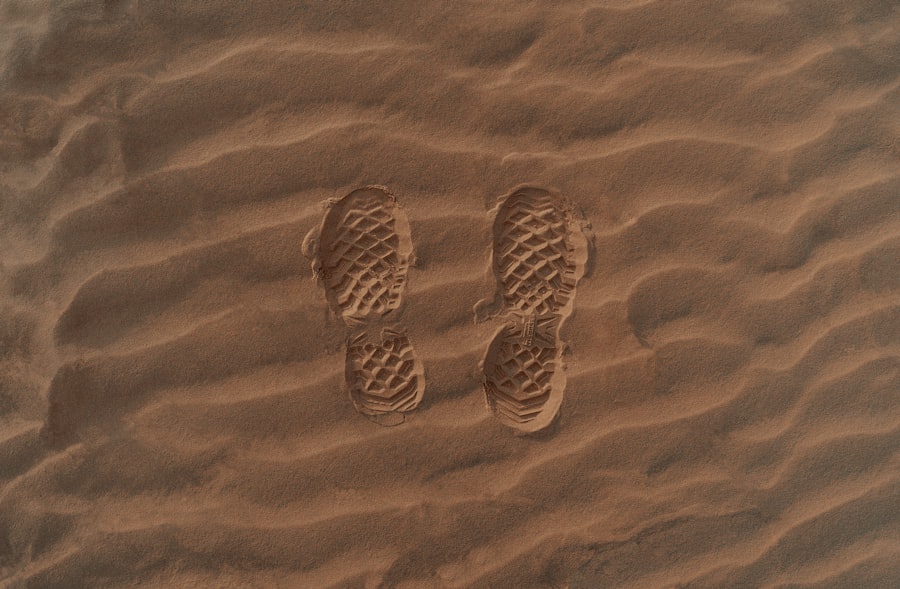
While the colossal tracks of Ice Age animals paint a picture of a wild and untamed world, the fossilized footprints of early humans offer a profoundly personal and intimate connection to our ancient past. These delicate impressions, often found in caves, ancient shorelines, and fossilized mudflats, are direct evidence of our ancestors’ existence, their movements, their behaviors, and their remarkable adaptability.
Early Hominin Wanderings: The Dawn of Bipedalism
The earliest human footprints provide crucial evidence for the evolution of bipedalism, the hallmark of hominin evolution. Discoveries like those at Laetoli in Tanzania, dating back approximately 3.6 million years, offer irrefutable proof of habitual upright walking in early hominins, likely Australopithecus afarensis.
- Laetoli: A Snapshot in Time: The Laetoli footprints, preserved in volcanic ash, are an extraordinary collection. They clearly demonstrate the distinctive heel strike, arch, and toe splay characteristic of modern human feet. The arrangement of the tracks also suggests individuals walking in single file, hinting at social interaction or a procession.
- Interpreting Gait and Stride: The spacing and depth of early hominin footprints allow scientists to infer their gait, stride length, and estimated speed. This data helps to confirm their bipedal locomotion and provides insights into their mobility and efficiency of movement.
- Population Dynamics: The presence of multiple footprints of different sizes can indicate the presence of individuals of varying ages and sexes, providing clues about family groups or social structures within early hominin communities.
Homo sapiens and the Ice Age World: Migrations and Settlements
As Homo sapiens emerged and spread across the globe, their footprints became increasingly intertwined with the landscapes shaped by the Ice Age. These tracks, found in diverse environments from Europe to the Americas, chronicle the epic migrations of our species and their encounters with the megafauna.
- European Footprints: Neanderthals and Early Sapiens: Sites like the Chauvet Cave in France, while primarily known for its stunning cave paintings, also contain fossilized human footprints, some attributed to Neanderthals and others to early Homo sapiens. These tracks within cave systems offer insights into their use of these environments, perhaps for shelter, ritual, or resource gathering. In coastal areas and river valleys, footprints reveal their foraging and hunting activities.
- The Peopling of the Americas: The discovery of human footprints in North America, particularly in New Mexico’s White Sands National Park, has provided some of the most compelling and controversial evidence for the timing of human arrival in the Americas. These footprints, dating back as far as 21,000 to 23,000 years ago, challenge older theories of a later arrival.
- White Sands: A Paradigm Shift: The White Sands footprints are exceptionally well-preserved, showing a variety of track types, including those of children and adults. The presence of human footprints alongside those of Ice Age megafauna, like mammoths and dire wolves, creates a vivid tableau of their shared existence. The dating of these tracks has been a complex process involving radiocarbon dating of associated plant seeds and optically stimulated luminescence (OSL) dating of sediment layers, leading to a robust chronology.
- Interpreting Behavior at White Sands: The patterns of the White Sands footprints suggest that early humans were actively navigating the landscape, perhaps hunting, gathering, or simply traveling. Some tracks show evidence of dragging objects, while others indicate individuals walking with heavy loads. The presence of juvenile tracks suggests family groups were present.
- Technological Adaptations: While footprints themselves don’t reveal technology directly, their presence in association with ancient tools or hunting sites can strengthen inferences about human ingenuity and adaptation. For example, footprints found near kill sites of megafauna suggest coordinated hunting strategies.
The Unseen Story: Social Dynamics and Daily Life
Beyond simply marking the presence of individuals, human footprints offer a unique window into their social dynamics and daily lives. The way they walked, the groups they formed, and the environments they chose to inhabit all leave subtle clues etched in stone.
- Group Dynamics and Social Trails: The discovery of multiple footprints made by individuals walking in close proximity can indicate social cohesion and group movement. These “social trails” reveal how early humans navigated their world together, suggesting cooperation and shared purpose.
- Children and Family Units: The presence of smaller footprints alongside larger ones is a powerful indicator of family groups, with children accompanying adults. This offers a poignant glimpse into the domestic lives and child-rearing practices of our ancient ancestors.
- Environmental Preferences: The types of substrates where human footprints are found can also reveal environmental preferences. Their presence in caves might suggest a need for shelter, while tracks on riverbanks could indicate a reliance on water sources for drinking, fishing, or transport.
The Intertwined Footprints: Humans and Megafauna in a Shared Ecosystem

The most captivating narratives in the fossil record often emerge when the footprints of ancient humans and Ice Age animals are found together. These rare instances provide concrete evidence of their co-existence, their interactions, and the complex ecological relationships that defined their world.
Predation and Evasion: The Hunt in Fossilized Tracks
The direct evidence of predator-prey interactions preserved in fossil footprints is invaluable for understanding the dynamics of Ice Age ecosystems.
- Predator Pursuit: The discovery of a large carnivore’s track following closely behind the track of a herbivore is a dramatic illustration of a hunt. The spacing and direction of the tracks can reveal the intensity of the pursuit, the speed of the animals, and the potential success or failure of the hunt.
- Scavenging Evidence: Sometimes, multiple predator tracks converging on the track of a fallen animal suggest scavenging behavior. This highlights the opportunistic nature of some Ice Age predators and the complex food webs they were part of.
- Human Hunting Strategies: When human footprints are found alongside those of megafauna, particularly at kill sites, it suggests direct human involvement in hunting. The types of footprints and their arrangement can offer clues about whether humans hunted alone or in coordinated groups, and what their preferred prey might have been.
Competition and Coexistence: Sharing the Landscape
The Ice Age was not solely defined by predation; it also involved competition for resources and a general coexistence between different species.
- Resource Competition: The presence of both human and animal tracks in areas rich in vegetation or water sources can indicate competition for these essential resources. This might have influenced migration patterns and settlement choices for both humans and animals.
- Territorial Marking: In some cases, the repetitive appearance of certain animal tracks in specific areas could suggest territorial marking behaviors. Similarly, human sites, marked by their presence, might have been defended or avoided by certain animal species.
- A Shared Environment: Ultimately, the most profound message conveyed by these intertwined footprints is the shared nature of their environment. Humans and megafauna were not isolated entities but integral parts of a dynamic and interconnected ecosystem, each influencing the other’s survival.
The “Running Man” and Other Enigmatic Tracks
Occasionally, fossilized footprints present puzzles that continue to challenge scientists. The interpretation of these enigmatic traces often sparks debate and fuels further research.
- Ambiguous Traces: Some footprints are not clearly identifiable as belonging to a specific species, leading to speculation about unknown creatures or unusual locomotion patterns.
- Anthropomorphic Interpretations: The allure of finding human-like footprints can sometimes lead to overinterpretation, blurring the lines between genuine evidence and wishful thinking. Careful scientific analysis is crucial in distinguishing between actual hominin tracks and those of other animals that might bear a superficial resemblance.
- The Importance of Context: The geological context in which footprints are found is paramount. Understanding the age of the deposits, the surrounding environment, and the presence of other fossil evidence helps to decipher the meaning of even the most ambiguous tracks.
Recent discoveries of ancient footprints alongside Ice Age animals have shed light on the interactions between early humans and megafauna. These findings provide valuable insights into the behaviors and environments of both species during that time. For those interested in exploring more about historical climates and landscapes, an intriguing article discusses how a 1513 map reveals an ice-free Antarctica, which could have influenced the migration patterns of ancient creatures. You can read more about this fascinating topic here.
Preserving the Past for the Future: Challenges and Opportunities
| Ancient Footprints | Ice Age Animals |
|---|---|
| Location | Location |
| Date of Discovery | Date of Discovery |
| Number of Footprints | Species of Animals |
| Size of Footprints | Size of Animals |
| Research Findings | Research Findings |
The study of fossilized footprints is an ongoing endeavor, fraught with challenges but brimming with the potential to unlock further secrets of our planet’s past. The preservation of these delicate records is a race against time and the forces of nature.
The Fragility of Evidence: Threats to Fossilized Footprints
Fossilized footprints, once exposed, are vulnerable to a myriad of threats. Their continued existence relies on careful management and protection.
- Erosion and Weathering: Once unearthed, footprints are subject to the same erosional forces that originally buried them. Wind, rain, and freeze-thaw cycles can quickly degrade and destroy these delicate impressions.
- Human Impact and Vandalism: Unfortunately, human activities, including unregulated tourism, construction, and even deliberate vandalism, pose a significant threat to fossil sites. The desire to collect or simply interact with these ancient traces can lead to their irreversible damage.
- Natural Disasters: Earthquakes, landslides, and extreme weather events can also damage or obliterate fossil sites, erasing invaluable scientific evidence.
Conservation Efforts and Scientific Discovery
Protecting and studying these ancient imprints requires a multi-faceted approach, combining dedicated scientific research with robust conservation strategies.
- Site Protection and Management: Establishing protected areas around significant fossil footprint sites is crucial. This involves implementing access restrictions, monitoring visitor numbers, and employing preservation techniques to mitigate erosion and environmental damage.
- Advanced Imaging and Documentation: Modern technologies, such as 3D scanning, photogrammetry, and ground-penetrating radar, are revolutionizing the way fossil footprints are documented and studied. These techniques allow for highly detailed and non-invasive capture of the data, creating digital archives that can be accessed and analyzed long after the original tracks may have degraded.
- Interdisciplinary Collaboration: The study of fossil footprints benefits immensely from the collaboration of scientists from diverse fields, including paleontology, geology, anthropology, archaeology, and computer science. This interdisciplinary approach enriches interpretation and allows for a more comprehensive understanding of the past.
- Public Engagement and Education: Raising public awareness about the importance of fossil footprints and the need for their preservation is vital. Educational programs, museum exhibits, and accessible scientific literature can foster a sense of stewardship and encourage responsible engagement with these irreplaceable historical artifacts.
The Continuing Quest: Unanswered Questions and Future Discoveries
Despite the remarkable progress made, the study of ancient human and Ice Age animal footprints continues to unveil new mysteries and offer tantalizing hints of future discoveries.
- Expanding the Geographic Reach: As exploration continues in remote and previously inaccessible regions, the likelihood of discovering new fossil footprint sites increases. These discoveries could rewrite our understanding of migration patterns, species distribution, and the timing of significant evolutionary events.
- Refining Interpretations: Ongoing research, particularly in areas like biomechanics and paleoecology, allows scientists to refine their interpretations of fossil footprints, extracting ever more detailed information about the behavior and physiology of extinct organisms.
- The Search for Early Human Ancestors: The quest to find more evidence of our earliest hominin ancestors through their footprints continues. New discoveries could push back the timeline of bipedalism or reveal previously unknown branches of the human evolutionary tree.
- A Deeper Understanding of Co-evolution: The study of intertwined human and megafauna footprints offers a unique lens through which to examine the complex co-evolutionary relationships between our species and the animal kingdom that shaped our prehistoric world.
The silent stories etched in the earth, the footprints of ancient humans and Ice Age animals, are more than just geological curiosities. They are profound testaments to life’s enduring journey, a tangible link to our distant past that continues to inspire awe, provoke questions, and deepen our understanding of who we are and where we came from. Each preserved step is a whisper from a vanished world, a reminder of the resilience of life, and a call to protect these extraordinary records for generations to come.

These Footprints Could Rewrite the Story of the First Americans
FAQs
What are the ancient footprints alongside Ice Age animals?
The ancient footprints alongside Ice Age animals are fossilized footprints of humans and animals that date back to the last Ice Age, approximately 12,000 years ago. These footprints provide valuable insights into the interactions between humans and animals during this time period.
Where were the ancient footprints alongside Ice Age animals discovered?
The ancient footprints alongside Ice Age animals were discovered in White Sands National Park in New Mexico, USA. The park is known for its large gypsum dune field, and the footprints were found preserved within the layers of gypsum.
What animals were found alongside the ancient footprints?
The ancient footprints were found alongside the footprints of Ice Age animals such as mammoths, giant ground sloths, dire wolves, and saber-toothed cats. These footprints provide evidence of the coexistence of humans and these now-extinct animals during the last Ice Age.
What do the ancient footprints reveal about human behavior during the last Ice Age?
The ancient footprints reveal that humans were actively hunting and interacting with Ice Age animals during this time period. The footprints show evidence of human hunting strategies and interactions with the environment, providing valuable insights into the behavior of ancient human populations.
Why are the ancient footprints alongside Ice Age animals significant?
The ancient footprints alongside Ice Age animals are significant because they provide a rare and valuable glimpse into the interactions between humans and Ice Age animals. They offer important insights into ancient human behavior, environmental conditions, and the coexistence of humans and now-extinct animals during the last Ice Age.