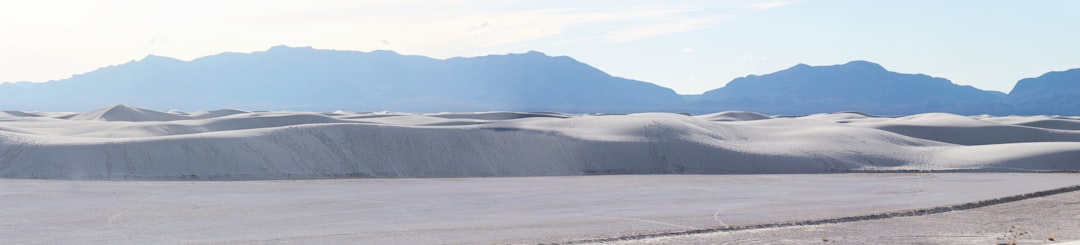
The shifting sands of White Sands National Park, New Mexico, hold secrets whispered across millennia. Among these ancient echoes, the footprint of human interaction with mammoths stands as a profound testament to a shared, yet vastly different, past. This is not a story of fossils unearthed in sterile labs, but of a dynamic, living world where colossal proboscideans roamed alongside early humans. The discovery and interpretation of these interactions offer a unique window into the complex ecological and behavioral tapestry of the Late Pleistocene.
The vastness of White Sands, a shimmering expanse of gypsum dunes, has historically been an unlikely repository for such ancient evidence. Unlike cave sites or well-preserved riverbeds, the mobile nature of sand can both obscure and, in its own way, preserve. The early recognition of megafaunal remains, including those of mammoths, within this landscape laid the groundwork for more specific investigations into human presence.
Early Glimmers of Megafauna
Initial surveys and accidental discoveries of mammoth bones and teeth in the White Sands region sparked interest among paleontologists. These finds, often disassociated and weathered, hinted at the presence of these magnificent creatures in a landscape that, to modern eyes, seems stark and inhospitable. The sheer scale of these bones underscored the challenge and opportunity of studying a world dominated by giants.
The Breakthrough: Footprints in Time
The most significant breakthrough in understanding human-mammoth interaction at White Sands came with the identification of human footprints alongside mammoth tracks. This discovery was not a single event but a gradual realization as researchers meticulously surveyed the park’s ancient lakebeds, which are now exposed and preserved under the sand. The juxtaposition of these distinct traces offered irrefutable evidence of cohabitation.
The Significance of Stratigraphy
Understanding the geological context, or stratigraphy, of these footprints was crucial. The layers of sediment, from ancient mud to gypsum, provided a timeline. When human footprints were found clearly impressed within the same layers as mammoth tracks, it solidified the argument for contemporaneous presence. This careful scientific process, involving detailed mapping and stratigraphic analysis, transformed speculation into concrete data.
The Role of Paleo-Environmental Reconstruction
Reconstructing the paleo-environment of White Sands during the Pleistocene is vital for comprehending these interactions. This region was not always the arid desert we see today. Instead, it was a landscape dotted with ephemeral lakes and marshes, supporting a richer ecosystem that could sustain large herbivores like mammoths and the humans who hunted or interacted with them.
Recent discoveries at White Sands National Park have shed light on the interactions between humans and mammoths, revealing evidence that suggests these majestic creatures coexisted with early human populations. This fascinating research not only enhances our understanding of prehistoric life but also raises questions about the social dynamics of ancient communities. For a deeper exploration of how societal factors influence human behavior and interactions with the environment, you can read the related article on the archaeology of social collapse at Unearthing the Archaeology of Social Collapse.
Echoes of Giants: Mammoths of White Sands
The mammoths that once traversed the White Sands landscape were not mere prehistoric curiosities. They were integral components of a dynamic ecosystem, and their presence shaped the environment and, consequently, the lives of the humans who shared it. Understanding the species and their behavior is key to deciphering the nature of human encounters.
The Columbian Mammoth: A Dominant Force
The primary mammoth species found at White Sands is believed to have been the Columbian mammoth (Mammuthus columbi). These were large, powerful herbivores, well-adapted to grassland and open woodland environments. Their impressive tusks and sheer size would have made them formidable animals, demanding respect and careful consideration from any human group.
Dietary Habits and Habitat Preference
The Columbian mammoth was a grazer, subsisting on grasses, sedges, and other herbaceous plants. Their presence indicates that the White Sands region, during the Pleistocene, possessed sufficient vegetation to support such large herbivores. This suggests a wetter, more temperate climate than the present-day desert.
The Impact of Mammoth Herds on the Landscape
As large grazers, mammoths played a significant role in shaping the landscape through their foraging. Their constant movement and feeding would have influenced plant communities, creating mosaic habitats that may have benefited other species, including human prey.
Other Megafauna and Shared Ecosystems
While mammoths were prominent, they were not the sole megafauna. The White Sands region likely hosted a diverse array of large animals during the Pleistocene, including horses, camels, bison, and ground sloths. This rich megafauna provided a complex ecological backdrop against which human-mammoth interactions occurred.
The Interconnectedness of the Food Web
Understanding the broader food web is crucial. Mammoths occupied a primary consumer role. Humans, as omnivores and predators, would have interacted with this web at multiple levels, potentially hunting mammoths, scavenging their kills, or competing for resources with them and other large herbivores.
Footprints of Humanity: Early Settlers and Their Lives

The human presence at White Sands is not a recent phenomenon. Archaeological evidence, including the now-famous footprints, points to a long history of human occupation dating back to the Late Pleistocene. These early inhabitants were hunter-gatherers, their lives intricately linked to the natural world around them.
The Paleo-Indian Period: A Time of Giants
The footprints found at White Sands are predominantly attributed to the Paleo-Indian period, a time when humans were first colonizing the Americas. These early Americans were remarkably adaptable, surviving in diverse environments and developing sophisticated hunting strategies. Their encounters with mammoths would have been a defining aspect of their existence.
Hunting Strategies and Tools
The hunting of mammoths by Paleo-Indians is a subject of ongoing research and debate. Evidence suggests the use of projectile points, such as Clovis points, for hunting. While direct evidence of mammoth hunts at White Sands might be scarce, the presence of both human and mammoth tracks implies a degree of interaction, which could have included hunting, opportunistic scavenging, or avoidance.
The Clovis Point and its Significance
The discovery of Clovis points in association with megafauna remains across North America has strongly linked these early hunters to the extinction of many large ice-age mammals. Whether these points were used to bring down mammoths at White Sands remains an open question, but their potential use cannot be discounted.
Debates on Hunting Techniques
Scholars continue to debate whether Paleo-Indians actively hunted adult mammoths, or if they were more likely to target young, old, or injured individuals, or scavenge from natural deaths. The sheer size and power of adult mammoths would have made them incredibly dangerous prey.
Daily Life and Survival
The lives of these early humans were dictated by the availability of resources. The presence of mammoths and other large game would have been a significant factor in their migratory patterns, settlement choices, and resource management. Their ability to survive in such a landscape speaks to their ingenuity and deep understanding of their environment.
Resourcefulness and Adaptation
These early populations were not simply passive inhabitants. They were active participants in their ecosystem, developing a profound understanding of animal behavior, plant properties, and seasonal cycles. This knowledge would have been crucial for their survival and for navigating encounters with formidable creatures like mammoths.
The Art of Coexistence: Traces of Interaction

The most compelling evidence of human-mammoth interaction at White Sands lies in the footprints themselves. The way these tracks are preserved, alongside each other, tells a story of proximity and shared space, raising questions about the nature of these encounters.
The White Sands Footprints: A Unique Archive
The remarkably well-preserved footprints at White Sands offer an unparalleled glimpse into the past. Unlike other archaeological sites, these are ephemeral traces, etched into ancient mudflats that later became fossilized. The clarity of these impressions allows for detailed analysis of gait, size, and even the possible activities of both humans and mammoths.
Human and Mammoth Tracks in Tandem
The discovery of human footprints interleaved with, or in close proximity to, mammoth tracks is the most direct evidence of their coexistence. These are not just isolated occurrences but are found in multiple locations within the park, suggesting regular interaction.
What the Tracks Reveal About Behavior
By analyzing the patterns and distances between footprints, researchers can infer aspects of behavior. Did the humans follow the mammoths? Were they attempting to hunt them? Or were they simply cohabiting the same landscape, perhaps avoiding each other? The science behind interpreting these tracks is complex and continues to evolve.
The Speed of Movement
The stride length and depth of the footprints can offer clues about the speed at which both humans and mammoths were moving. Were they fleeing? Were they in pursuit? This information can paint a more dynamic picture of their interactions.
Directional Movement and Spatial Relationships
The direction in which the footprints are heading and their spatial relationship to one another are critical for understanding the dynamics of their encounters. Did they move in parallel? Did one seem to be influencing the movement of the other?
Interpretations of Interaction: Hunting, Scavenging, or Avoidance?
The presence of both sets of footprints has led to various interpretations of how humans and mammoths interacted. While hunting is a prominent hypothesis, other possibilities, such as scavenging or simply sharing resources and avoiding conflict, are also considered.
The Hunting Hypothesis
The theory that humans actively hunted mammoths is supported by the broader archaeological context of Paleo-Indian periods and the presence of hunting tools. If humans were hunting mammoths, their footprints might be found in patterns that suggest stalking, pursuit, or driving the animals.
The Scavenging Hypothesis
It is also plausible that early humans were opportunists, scavenging carcasses of mammoths that had died of natural causes or were killed by other predators. This would involve humans approaching mammoths, potentially after their demise, for sustenance.
The Avoidance and Coexistence Model
It is equally possible that humans and mammoths primarily coexisted, with each species aware of the other’s presence and actively avoiding direct conflict. In this scenario, their footprints might appear in proximity simply because they were utilizing the same resources and territories at the same time.
Recent discoveries at White Sands have shed light on the fascinating interactions between early humans and mammoths, revealing evidence of their coexistence in North America. This intriguing research not only enhances our understanding of prehistoric life but also connects to broader themes of human adaptation and resource utilization. For a deeper exploration of how civilizations harness natural resources, you might find this article on China’s lunar resource extraction strategy particularly insightful. It highlights the lengths to which societies will go to secure essential materials, much like early humans did in their environments. You can read more about it here.
Legacy in the Dunes: Lessons from the Past
| Category | Data/Metrics |
|---|---|
| Population | Estimated human population in White Sands: 1,000 |
| Mammoths | Number of mammoth fossils found in White Sands: 100+ |
| Human-Mammoth Interaction | Evidence of human-mammoth interaction: Footprints and artifacts |
| Time Period | Time period of human-mammoth interaction: 10,000-15,000 years ago |
The study of human-mammoth interactions at White Sands offers profound insights that extend beyond the ancient past. It provides a unique lens through which to understand ecological relationships, human adaptation, and the long-term impacts of environmental change.
Understanding Paleoecology and Extinction Events
The presence of mammoths and the evidence of human interaction contribute to our understanding of Late Pleistocene paleoecology. By studying the environment in which they lived, researchers can gain a better appreciation of the factors that may have contributed to the extinction of mammoths and other megafauna.
The Role of Climate Change
Climate change played a significant role in shaping the landscapes of the Pleistocene. The retreat of glaciers and shifts in vegetation patterns would have impacted mammoth populations and, consequently, the humans who depended on them.
The Human Factor in Extinction Debates
The question of whether humans were a significant factor in the extinction of mammoths remains a complex and debated topic. The evidence from White Sands, while not definitively proving human-caused extinction, adds another piece to this intricate puzzle by demonstrating direct coexistence.
Implications for Modern Conservation and Human-Wildlife Relations
The lessons learned from these ancient interactions can have surprising relevance for modern conservation efforts and our understanding of human-wildlife relationships. Studying how early humans navigated their environment alongside large, powerful animals can offer valuable perspectives.
Learning from Ancient Adaptations
The ingenuity and adaptability of early humans in coexisting with megafauna highlight the importance of understanding ecological niches and resource management. These ancient strategies could offer inspiration for contemporary approaches to conservation.
The Enduring Power of the Natural World
The story of mammoths and humans at White Sands is a powerful reminder of the dynamic interplay between species and their environment. It underscores the resilience of life but also its vulnerability, a lesson that continues to resonate in our rapidly changing world. The sands of White Sands may shift, but the imprinted stories of these ancient encounters remain, offering an enduring testament to a shared past.

These Footprints Could Rewrite the Story of the First Americans
FAQs
What is the significance of the discovery of human and mammoth footprints at White Sands?
The discovery of human and mammoth footprints at White Sands is significant because it provides evidence of human interaction with mammoths in North America. This discovery sheds light on the timeline of human migration and the coexistence of humans and megafauna in the region.
How old are the human and mammoth footprints found at White Sands?
The human and mammoth footprints found at White Sands are estimated to be around 23,000 years old. This makes them some of the oldest evidence of human presence in the Americas, challenging previous theories about the timeline of human migration to the continent.
What do the footprints reveal about the relationship between humans and mammoths at White Sands?
The footprints reveal that humans and mammoths coexisted in the same environment at White Sands. The presence of both human and mammoth footprints in the same location suggests that humans may have been hunting or interacting with mammoths in some way.
How were the human and mammoth footprints preserved at White Sands?
The footprints were preserved at White Sands due to the unique geological conditions of the area. The combination of fine-grained sediments and the presence of a shallow lake or wetland allowed the footprints to be imprinted and preserved over thousands of years.
What does the discovery of human and mammoth footprints at White Sands tell us about early human migration in North America?
The discovery of human and mammoth footprints at White Sands challenges previous theories about the timeline of human migration in North America. It suggests that humans may have arrived in the region much earlier than previously thought and provides valuable insights into the interactions between humans and megafauna during this time period.