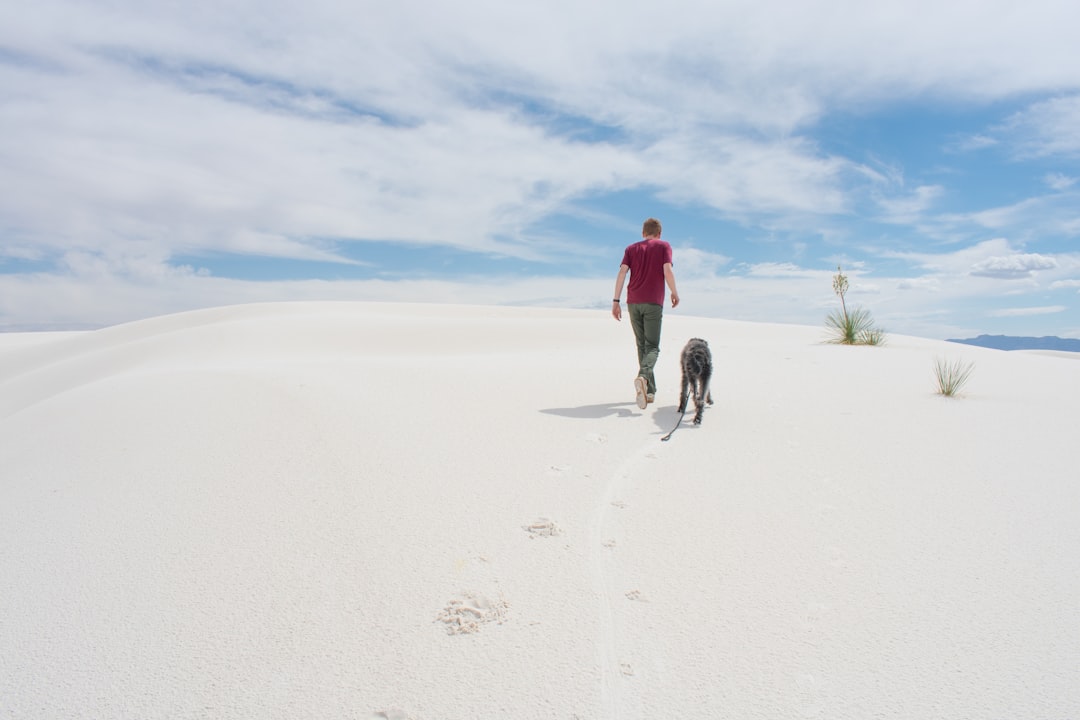
The vast, undulating dunes of White Sands National Park in New Mexico hold a secret etched into their gypsum sands, a secret that has dramatically reshaped our understanding of human arrival in the Americas. For decades, scientists have debated the timeline of early human migration across the Bering land bridge, but the discovery and ongoing study of the White Sands footprints offer a compelling, and deeply human, testament to a presence far older than previously accepted. These ancient impressions, preserved by a unique geological process, are not merely fossilized tracks; they are windows into a prehistoric world, revealing the lives, movements, and perhaps even the very essence of the people who walked this landscape millennia ago.
The story of the White Sands footprints begins not with a sudden revelation, but with years of dedicated research and the fortunate confluence of geological circumstances. The park’s distinctive white sands are composed of gypsum, a mineral that dissolves in water. This unique composition, coupled with the region’s arid climate and fluctuating water levels in ancient Lake Otero, created the perfect conditions for preserving delicate impressions in the mud.
The Discovery and Initial Excavations
The first significant discoveries of human footprints at White Sands were made in the late 20th century, but their true antiquity was not immediately recognized. Early dating methods, combined with prevailing scientific consensus, suggested a more recent human presence. However, the sheer number and clarity of the tracks, spanning across large areas of the park, hinted at a more profound story waiting to be unveiled. Subsequent, more advanced dating techniques, applied to layers of sediment found both above and below the footprints, provided the startling evidence that would rewrite history.
The Role of Geoarchaeology
Geoarchaeology, the interdisciplinary study of geological and archaeological phenomena, played a crucial role in validating the age of the White Sands footprints. Scientists meticulously examined the stratigraphic layers in which the footprints were found, analyzing the composition of the sediments, the presence of pollen, and other environmental indicators. This detailed analysis helped to establish a robust timeline for the deposition of the sediment and the subsequent preservation of the impressions.
The discovery of the 23,000-year-old footprints at White Sands has sparked significant interest in understanding the lives of early humans in North America. This remarkable finding not only sheds light on ancient human activity but also raises questions about the environmental conditions of that era. For those intrigued by ancient ecosystems and their impact on human history, a related article titled “The Silent Plague: Ancient Microbial Bloom” explores how ancient microbial life may have influenced human populations and their migrations. You can read more about it [here](https://www.realloreandorder.com/the-silent-plague-ancient-microbial-bloom/).
The Unveiling of the Timeline: 23,000 Years Ago
The groundbreaking publication in 2021 by Matthew Bennett and his colleagues presented compelling evidence that the White Sands footprints dated to between 21,000 and 23,000 years ago. This was a seismic shift in the scientific understanding of when humans first arrived in the Americas, pushing the timeline back by nearly 10,000 years from previous widely accepted estimates. This new chronometric data, derived from the analysis of seeds embedded within the footprint layers, provided an unshakeable foundation for the new paradigm.
Radiocarbon Dating of Seeds
The key to unlocking the age of the footprints lay in the careful collection and dating of ancient seeds found within the sediment layers. These seeds, trapped in the mud alongside the human tracks, represent the local flora of the time. By employing radiocarbon dating on these organic materials, scientists were able to establish a minimum and maximum age range for the deposition of the sediment, and by extension, the footprints themselves.
The Significance of Ruppia cirrhosa
One of the most important seeds identified was Ruppia cirrhosa, an aquatic plant that thrived in the freshwater environment of ancient Lake Otero. The dating of these seeds provided a crucial anchor point for the timeline. The meticulous process of collecting, cleaning, and analyzing these tiny botanical remnants underscores the dedication and precision required in this field of research.
Independent Verification and Ongoing Research
The initial findings from White Sands were met with both excitement and scientific scrutiny, as is the norm for such paradigm-shifting discoveries. However, the robust methodology and the application of multiple dating techniques, including further independent analyses, have largely solidified the 23,000-year-old date. Ongoing research continues to expand our understanding of the site, with scientists actively seeking out new footprints and refining their interpretations.
The Footprints Themselves: A Story in Every Impression
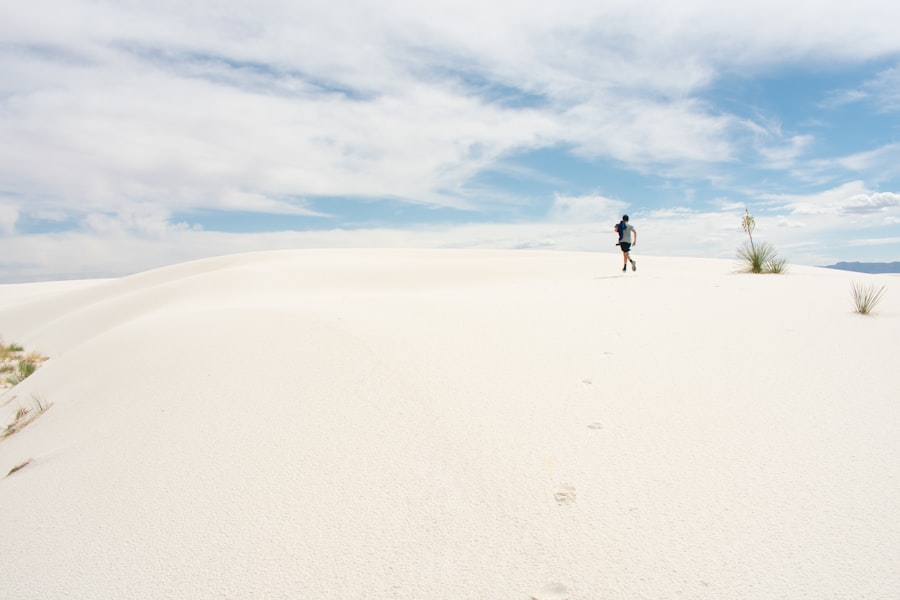
The White Sands footprints are far more than just a dating milestone; they are a direct, tangible connection to the lives of ancient humans. The size, depth, and pattern of these tracks offer invaluable insights into the individuals who made them, their activities, and the environment they inhabited. Each impression tells a story, if one knows how to read it.
Human Tracks: Adults and Children
The most compelling discoveries are the human footprints, which range in size, indicating the presence of both adults and children. Some of these tracks are deep, suggesting they were made by individuals carrying heavy loads or moving with purpose. Others are lighter, hinting at children playing or running. The presence of multiple individuals, often walking in the same direction, suggests group activity and social interaction.
The Debate on “Running Tracks”
One particularly fascinating aspect is the interpretation of certain tracks that appear to be made by individuals running. While definitive proof of running is challenging, the posture and spacing of some impressions suggest a more dynamic gait than a simple walk. This raises questions about the context of their movement – were they fleeing danger, pursuing prey, or engaging in some form of ritualistic activity?
Animal Tracks: A Shared Landscape
Interspersed with the human footprints are the tracks of various animals, painting a vivid picture of the ecosystem of ancient Lake Otero. These include the impressions of dire wolves, mammoths, and ground sloths, all of which roamed the landscape during the Pleistocene epoch. The coexistence of human and animal tracks in the same stratigraphic layers provides compelling evidence of humans interacting with this megafauna.
The Dire Wolf and Human Interaction
The discovery of human footprints alongside those of dire wolves is particularly intriguing. It suggests a degree of proximity between humans and these formidable predators, raising questions about whether they were a threat, a source of food, or simply fellow inhabitants of the same environment.
The Enigma of “U-Shaped” Impressions
Among the human footprints are unusual “U-shaped” impressions, which have sparked considerable debate among researchers. These have been interpreted as possible evidence of individuals sitting down, perhaps resting or observing their surroundings. Some theories even suggest they could be related to specific activities, such as processing food or crafting tools.
Reconstructing the Environment and Human Behavior

The wealth of information contained within the White Sands footprints allows scientists to reconstruct aspects of the ancient environment and the behavior of the people who lived there. The geological context, combined with the patterns of the footprints, provides a unique anthropological record.
The Ancient Lake Otero and its Resources
The footprints are found in the dried remnants of ancient Lake Otero, a large freshwater body that once covered much of what is now White Sands National Park. The presence of aquatic plant seeds and the types of animal tracks suggest a rich and diverse ecosystem, providing ample resources for early human survival. The lake itself would have been a vital source of water, food, and potentially a route for travel.
Paleoecological Reconstruction
By analyzing pollen samples, sediment composition, and the types of flora and fauna present, scientists can reconstruct the paleoecology of the region. This helps to understand the climate, vegetation, and animal life that characterized White Sands during the Pleistocene, offering context for the human presence.
Hunting, Gathering, and Social Dynamics
The patterns of human footprints, often found in groups and moving in specific directions, offer clues about their daily activities. Evidence of individuals carrying objects, or pausing at specific points, might indicate hunting expeditions, gathering forays, or the establishment of temporary camps. The collective nature of some trackways suggests social cohesion and coordinated activity.
The “Sit-Down” Tracks and Their Implications
The “U-shaped” impressions, interpreted as sitting or resting, suggest moments of stillness and perhaps contemplation within their daily routines. These subtle details humanize the ancient individuals, reminding us that they were not simply nomadic wanderers but beings with moments of rest and reflection.
The Question of Purpose and Mobility
The extensive nature of the footprint sites suggests sustained human presence over time. Researchers are working to understand the purpose of these gatherings. Were these seasonal camps? Hunting grounds? Or perhaps ritualistic sites? The directionality of the tracks and their distribution across the landscape can provide clues about mobility patterns and the routes taken by these early Americans.
The discovery of footprints at White Sands, dating back 23,000 years, has sparked significant interest in the study of ancient human migration and behavior. This remarkable finding not only challenges previous understandings of when humans first inhabited North America but also raises questions about the environmental conditions of that era. For those intrigued by how ancient evidence can reshape our perceptions of history, a related article explores the implications of historical findings on societal structures and corruption, which can be found here.
Rewriting the Narrative: Early American Migration Theories
| Location | White Sands |
|---|---|
| Age of Footprints | 23,000 years old |
| Discovery | 2009 |
| Number of Footprints | More than 400 |
| Significance | Evidence of human presence in North America |
The 23,000-year-old date for the White Sands footprints has profound implications for our understanding of how and when humans first populated the Americas. It challenges long-held theories and opens new avenues of research, suggesting a more complex and potentially earlier migration than previously envisioned.
Challenging the Bering Land Bridge Paradigm
For decades, the dominant theory of the peopling of the Americas centered on the Bering land bridge, a now-submerged landmass that connected Siberia and Alaska. While this remains a significant migration route, the White Sands evidence suggests that humans may have arrived in the Americas much earlier, potentially utilizing coastal routes or other, as yet undiscovered, pathways.
Coastal Migration Hypothesis
The older date of the White Sands footprints lends support to the coastal migration hypothesis, which proposes that early humans traveled down the Pacific coast of North America by boat. This route would have been accessible even when the Bering land bridge was submerged and would have offered abundant marine resources.
The Solutrean Hypothesis and its Re-evaluation
The White Sands discovery has also reignited discussions surrounding the Solutrean hypothesis, which suggests a potential migration from Europe to North America during the last glacial period. While controversial, the older timeline makes this hypothesis, which was previously considered unlikely due to the lack of evidence for a sufficiently ancient arrival, a topic of renewed scientific interest. However, genetic and archaeological evidence still overwhelmingly favors Asian origins for most Indigenous American populations.
The Importance of Interdisciplinary Research
The White Sands footprint discovery underscores the vital importance of interdisciplinary research in archaeology and paleoanthropology. The collaboration between geologists, paleontologists, botanists, and archaeologists is crucial for piecing together the complex puzzle of human migration and adaptation.
A Deeper Human Connection to the Americas
Ultimately, the White Sands footprints offer a profound and deeply human connection to the past. They are a reminder that the Americas have been home to humans for far longer than we ever imagined, and that these ancient peoples, with their joys and struggles, their movements and their observations, laid the groundwork for the diverse cultures that inhabit the continent today. The sands of White Sands, once silent witnesses, now speak volumes, inviting us to listen to their ancient stories.

These Footprints Could Rewrite the Story of the First Americans
FAQs
What is the significance of the White Sands footprints being 23,000 years old?
The discovery of 23,000-year-old footprints at White Sands, New Mexico, pushes back the date of human presence in North America by thousands of years. This finding challenges previous theories about the timeline of human migration into the Americas.
How were the footprints at White Sands preserved for so long?
The footprints at White Sands were preserved due to the unique environmental conditions of the area. The combination of fine-grained sand and the presence of a layer of wet clay beneath the surface helped to capture and preserve the footprints for thousands of years.
What do the footprints at White Sands reveal about the people who made them?
The footprints at White Sands provide valuable insights into the behavior and movement patterns of the people who made them. Analysis of the footprints suggests that the individuals were likely part of a small group, and their footprints indicate that they were likely walking and possibly hunting in the area.
How were the footprints at White Sands dated to be 23,000 years old?
The age of the footprints at White Sands was determined through a process called luminescence dating. This method measures the amount of trapped electrons in the sand grains, which can provide an estimate of when the grains were last exposed to sunlight. This allowed researchers to determine the approximate age of the footprints.
What are the implications of the 23,000-year-old footprints at White Sands?
The discovery of 23,000-year-old footprints at White Sands has significant implications for our understanding of the peopling of the Americas. It suggests that humans were present in North America much earlier than previously thought, and it challenges existing theories about the timing and routes of human migration into the continent. This finding has the potential to reshape our understanding of early human history in the Americas.