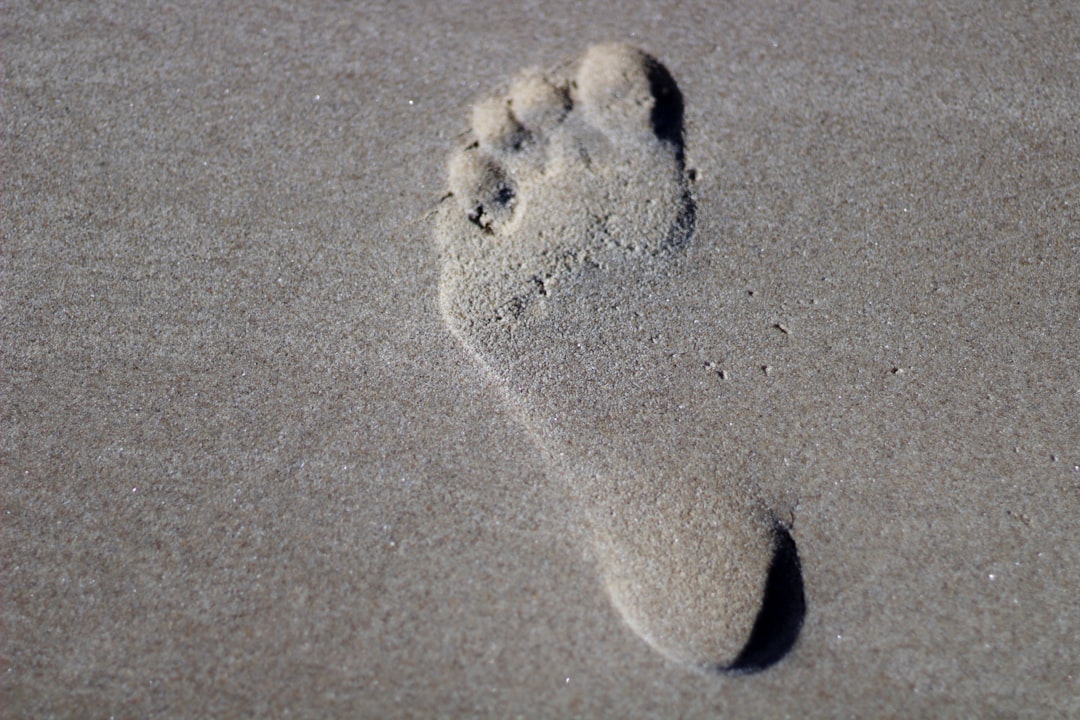
The stark, sun-baked landscapes of New Mexico, a canvas etched by millennia of wind and water, have long held secrets whispered by the earth. Now, a remarkable discovery has brought one of these profound mysteries into sharp focus: the irrefutable presence of ancient humans, preserved in the very dust of ages. In a series of groundbreaking finds, paleontologists and archaeologists have unearthed a series of human footprints, frozen in time, that are rewriting our understanding of early human migration into North America. These aren’t mere traces; they are compelling testaments to lives lived, journeys undertaken, and a deep connection to a land that has witnessed the ebb and flow of countless generations.
The initial discoveries, often serendipitous, have blossomed into a focused scientific endeavor, drawing researchers from diverse fields to a specific region in New Mexico. The geological context of these footprints is as fascinating as the prints themselves, offering crucial clues to their age and the environment in which they were made. The implications extend far beyond a single archaeological site, pushing back the timeline of human presence on the continent and sparking new debates about the routes and timing of the first Americans.
The Unveiling: A Discovery Carved in Sediment
The story of these ancient footprints begins not with grand expeditions, but often with keen observation and a touch of luck. The White Sands National Park in New Mexico, with its vast gypsum dunes, has proven to be an exceptional repository of such ancient evidence. The unique geological conditions here, characterized by fluctuating water levels and the rapid burial and subsequent erosion of sediment layers, have created an unparalleled preservation environment.
Serendipity on the Dunes
The initial discovery of human footprints at White Sands was not the result of a targeted search for ancient human evidence. Instead, park rangers and visitors, navigating the ever-shifting sands, began to notice unusual impressions that differed from animal tracks. These impressions, often found in layers of hardened mudstone, exhibited clear anatomical features indicative of human feet. Early reports, initially met with skepticism, were eventually investigated by scientists, revealing the true significance of these findings.
The Role of Environmental Factors
The exceptional preservation is largely attributed to the specific geological makeup of White Sands. The park is primarily composed of gypsum sand, which, when wet, forms a cohesive mud. This mud then dries and hardens, trapping any impressions made upon it. Subsequent layers of sand and mud can bury these impressions, protecting them from erosion. Over vast periods, weathering and erosion can then expose these hardened layers, revealing the ancient tracks. The intermittent presence of water, forming ephemeral lakes and mudflats, created ideal conditions for the creation and preservation of these delicate imprints.
Initial Investigations and Dating Challenges
Once the significance of the initial finds was recognized, scientific teams were assembled to conduct more rigorous investigations. The primary challenge was accurately dating the footprints. Traditional methods of radiocarbon dating, which rely on organic material, were not directly applicable to the mineralized footprints themselves. This necessitated the development and application of more sophisticated dating techniques.
The Importance of Stratigraphy
Geologists played a crucial role in understanding the context of the footprints. By analyzing the layers of sediment (stratigraphy) in which the footprints were found, scientists could establish a relative chronology. This involved studying the depositional history of the area, identifying layers of volcanic ash, or other datable geological markers that could be correlated with the footprint-bearing strata. The careful mapping of these layers provided a framework for understanding the sequence of events and the age of the sediments.
Recent discoveries of Ice Age human footprints in New Mexico have sparked significant interest among archaeologists and historians, shedding light on the lives of early humans in North America. These ancient tracks provide valuable insights into human behavior and migration patterns during a time when the continent was vastly different. For a broader perspective on how historical events can shape modern society, you might find this article on economic scenarios intriguing: 2025 Worst Case Economic Scenarios Unveiled.
Unlocking the Past: Dating the Footprints and Their Significance
The quest to date the ancient footprints has been a complex and multifaceted scientific endeavor, involving a combination of geological and scientific methods. The results have been nothing short of revolutionary, pushing back the accepted timeline for human presence in North America by thousands of years.
Radiocarbon Dating of Associated Organic Material
While the footprints themselves are mineralized, scientists have been able to date organic materials found in the same geological layers. This includes ancient pollen, plant fragments, and even the remains of ancient megafauna that were present at the time the footprints were made. By carefully collecting these associated organic samples and submitting them for radiocarbon dating, researchers have been able to establish a timeframe for the footprint layers.
The Interplay of Geochronology and Paleontology
This process relies heavily on the principles of geochronology, the science of dating geological materials, and paleontology, the study of ancient life. By understanding the age of the organic matter, scientists can infer the age of the surrounding sediment and, by extension, the footprints themselves. The correlation between different dating methods and the consistency of the results across various samples have provided a high degree of confidence in the established age ranges.
Luminescence Dating Techniques
Beyond radiocarbon dating, other advanced dating techniques have been employed to provide further corroboration and to date layers that may not contain suitable organic material. Luminescence dating methods, such as optically stimulated luminescence (OSL) and thermoluminescence (TL), measure the accumulated radiation dose in sediment grains. These techniques are particularly useful for dating sediments that have been exposed to sunlight or heat in the past.
Understanding the Principles of Luminescence Dating
OSL dating, for instance, works by measuring the light emitted by quartz or feldspar grains when they are stimulated by light. The amount of light emitted is proportional to the time since the grains were last exposed to sunlight. TL dating measures the light emitted when minerals are heated. By carefully analyzing the luminescence signals from the sediments associated with the footprints, scientists can determine the time elapsed since burial, thus dating the footprints themselves.
The Revolutionary Chronology Established
The dating of these footprints has placed them in a temporal context that has profoundly altered our understanding of human migration into the Americas. Initial estimates from the early discoveries placed the footprints at approximately 23,000 to 21,000 years old. This age is significant because it predates the Last Glacial Maximum, a period when massive ice sheets covered much of North America, making land routes of migration across the Bering Land Bridge thought to be impassable.
Rewriting the Migration Narrative
This new chronology challenges long-held theories that proposed a later arrival of humans in North America, typically around 15,000 to 16,000 years ago, following the opening of ice-free corridors. The White Sands footprints suggest that humans were present in southern North America much earlier, forcing a re-evaluation of migration routes, settlement patterns, and the timing of human dispersal across the continents.
Faces in the Footprints: Who Walked These Ancient Paths?
The footprints themselves offer more than just a temporal marker; they provide tantalizing glimpses into the lives and activities of the individuals who made them. The size, shape, and patterns of the prints can reveal information about the age, sex, and even the physical condition of the individuals.
Analyzing Human Anatomy in the Prints
Researchers meticulously examine the morphology of each footprint. The length and width of the impression, the presence or absence of a distinct arch, the spacing between the toes, and the depth of the impression can all offer clues. For example, the presence of deeper heel impressions versus toe impressions can indicate differences in gait or body weight.
Differentiating Adult and Child Footprints
The most striking feature of some of these footprints is the clear distinction between adult and child tracks. The smaller prints, often found interspersed with larger ones, are clear evidence of children accompanying the adults. This paints a picture of family groups, or at least the presence of multiple generations, navigating this ancient landscape. The sheer number of these smaller prints suggests a robust and settled population, rather than just transient individuals.
Evidence of Daily Life and Activity
Beyond basic anatomy, the patterns formed by sequences of footprints can reveal behaviors and activities. The direction of travel, the speed of movement (indicated by stride length), and even signs of stumbling or pauses can be interpreted.
The “Dancing Ghosts” and Other Interpretations
Some of the more compelling sequences of prints have been interpreted as evidence of playful children, perhaps running and jumping, while adults walked with a more deliberate pace. The famous “dancing ghosts” interpretation refers to a series of smaller, almost playful prints found near larger adult tracks. These patterns evoke a sense of movement and interaction, bringing the ancient individuals to life in the minds of the researchers. The presence of prints that appear to be made by individuals carrying loads, evidenced by deeper impressions or unusual gaits, further adds to the narrative of daily life.
Social Dynamics and Group Behavior
The spatial relationships between different sets of footprints can also shed light on social dynamics. The proximity of adult and child tracks suggests familial units. The arrangement of multiple adult tracks might indicate cooperative movement or shared journeys.
The Implications of Multiple Individuals
The discovery of numerous overlapping footprints, sometimes from different individuals at slightly different times, allows for the reconstruction of group movements. This provides evidence of social interaction, communal travel, and the establishment of routes across the landscape. The very act of leaving such clear tracks implies a degree of confidence and a relatively stable environment in which to travel.
The Landscape of the Past: Reconstructing the Ancient Environment
The footprints are not isolated artifacts; they are inextricably linked to the ancient environment in which they were created. By studying the geological context and the types of flora and fauna present at the time, scientists can paint a vivid picture of the world these early humans inhabited.
Paleoenvironmental Reconstruction
Geologists and paleobotanists examine sediment cores and the composition of the fossilized mud to understand the climate, vegetation, and hydrology of the region during the period when the footprints were made. This involves analyzing pollen, plant macrofossils, and the isotopic composition of minerals.
The Presence of Lakes and Waterways
The gypsum dunes of White Sands today are a desert environment. However, the footprints reveal a very different scene. The presence of well-formed tracks in hardened mud indicates a landscape that was once wetter, with likely ephemeral lakes, rivers, or saturated mudflats. These water sources would have been crucial for both human and animal life. The specific types of sediment also offer clues about the water chemistry and the surrounding plant life.
Associated Flora and Fauna
The discovery of associated megafauna, such as the extinct giant ground sloth ( Nothrotheriops shastensis) and Columbian mammoth (Mammuthus columbi), in the same geological layers as the human footprints is profoundly significant. This confirms the coexistence of humans and these now-extinct creatures, providing a richer understanding of the ecosystem.
The Interdependence of Humans and Megafauna
The presence of both human and megafauna tracks in close proximity suggests that these ancient landscapes were shared spaces. It raises questions about the interactions between early humans and these large animals, whether they were predators, prey, or simply cohabitants of the same environment. The scale of some of the megafauna tracks compared to the human footprints highlights the formidable environment that early humans navigated.
The Ice Age Context
The dating of the footprints to the Late Pleistocene, specifically the period leading up to and during the Last Glacial Maximum, places them within a dramatic climatic epoch. This was a time of significant environmental change, with fluctuating temperatures and sea levels, and the advance and retreat of ice sheets.
Navigating a Changing World
Understanding this Ice Age context is crucial for comprehending the challenges and opportunities faced by early human populations. They would have been skilled at adapting to changing environments, exploiting available resources, and navigating landscapes that were vastly different from those of today. The presence of human footprints during this period suggests a resilience and adaptability that has been a hallmark of human survival.
Recent discoveries of Ice Age human footprints in New Mexico have sparked significant interest among archaeologists and historians, shedding light on the lives of early humans in North America. These findings not only provide valuable insights into the migration patterns of prehistoric peoples but also raise questions about their interactions with the environment. For a deeper understanding of how historical narratives are shaped and the complexities involved in interpreting such discoveries, you can explore a related article that discusses the challenges and opportunities of navigating post-colonial borders. This article can be found here.
The Great Migration: Rethinking the Arrival in the Americas
The implications of the White Sands footprints extend far beyond the borders of New Mexico, sparking a re-evaluation of the prevailing theories surrounding the peopling of the Americas. The established timelines and proposed migration routes are now subject to intense scrutiny.
Challenging the Bering Land Bridge Paradigm
For decades, the dominant theory held that the first humans arrived in North America from Asia via the Bering Land Bridge, a landmass that existed during the Pleistocene when sea levels were lower. This migration was thought to have occurred after the Last Glacial Maximum, as ice-free corridors opened up.
Evidence for Coastal Migration Routes
The dating of the White Sands footprints to 23,000-21,000 years ago, predating the opening of these ice-free corridors, strongly suggests alternative migration routes. Many researchers now believe that early humans may have utilized coastal routes, traveling along the Pacific coastline of North America. This would have allowed them to bypass the massive ice sheets and access ice-free areas further south.
The “Solutrean Hypothesis” and its Controversies
The dating of these footprints has also reignited discussions about more controversial hypotheses, such as the Solutrean hypothesis. This theory proposes a transatlantic migration from Europe, based on supposed similarities between Paleolithic European tools and early North American artifacts. While the White Sands footprints do not directly support or refute the Solutrean hypothesis, they do highlight the potential for multiple migration waves and diverse origins for the first Americans.
Scientific Scrutiny and Ongoing Debate
It is important to note that the Solutrean hypothesis remains highly contested within the archaeological community, with many researchers finding the evidence for a transatlantic migration to be weak. However, the broader principle of exploring multiple migration possibilities, including those that deviate from the traditional Bering Strait model, is gaining traction. The White Sands discovery encourages a more open-minded approach to understanding the complex history of human dispersal.
The Complexity of Early Human Dispersal
The White Sands footprints, alongside other emerging archaeological evidence from South America, suggest a more complex and potentially earlier arrival of humans in the Americas than previously understood. It is possible that there were multiple waves of migration, arriving at different times and via different routes.
A Multi-Faceted Prehistory
The story of the first Americans is likely not a single, linear narrative but a mosaic of interconnected movements and adaptations. The discoveries in New Mexico are a crucial piece of this puzzle, forcing scientists to consider a wider range of possibilities and to continue searching for evidence that will illuminate this fascinating and ancient chapter of human history. The ongoing research at White Sands, and in similar sites worldwide, promises to continue unveiling the secrets of our ancestors and their remarkable journeys. The echoes in the sand are growing louder, and they are telling a story of a deeper, more ancient human presence on the North American continent.

These Footprints Could Rewrite the Story of the First Americans
FAQs
What are the Ice Age human footprints found in New Mexico?
The Ice Age human footprints found in New Mexico are fossilized footprints left by ancient humans over 23,000 years ago. These footprints provide evidence of human presence in North America during the last Ice Age.
Where were the Ice Age human footprints discovered in New Mexico?
The Ice Age human footprints were discovered at the White Sands National Park in New Mexico. The park is known for its extensive gypsum dune fields, and the footprints were found preserved within the ancient dunes.
What do the Ice Age human footprints tell us about early human migration?
The discovery of Ice Age human footprints in New Mexico suggests that humans were present in North America much earlier than previously thought. This challenges the traditional timeline of human migration into the Americas and provides valuable insights into the movements of early human populations.
How were the Ice Age human footprints preserved in New Mexico?
The footprints were preserved in the gypsum dunes of White Sands National Park. The unique conditions of the dunes, including the presence of gypsum and the dry climate, contributed to the exceptional preservation of the footprints over thousands of years.
What is the significance of the Ice Age human footprints discovery in New Mexico?
The discovery of Ice Age human footprints in New Mexico is significant as it adds to our understanding of early human migration and settlement in North America. It also highlights the importance of preserving and studying ancient landscapes for insights into human history.