White Sands Footprints: Tracing the First Americans
The story of human migration is a narrative woven through millennia, a tale of intrepid journeys and the relentless spread of our species across continents. For decades, a central question in this grand saga has been the timing of humanity’s arrival in the Americas. While evidence has gradually accumulated, a definitive anchor for this profound moment remained elusive, shifting with each new archaeological discovery. Then, in the heart of New Mexico’s Tularosa Basin, an astonishing revelation emerged from the shifting sands of White Sands National Park, a discovery that has fundamentally reshaped our understanding of the First Americans. The ephemeral yet enduring imprints left by human feet, preserved for nearly 13,000 years, offer a tangible connection to a distant past, whispering secrets of those who walked this land long before the rise of any known civilization.
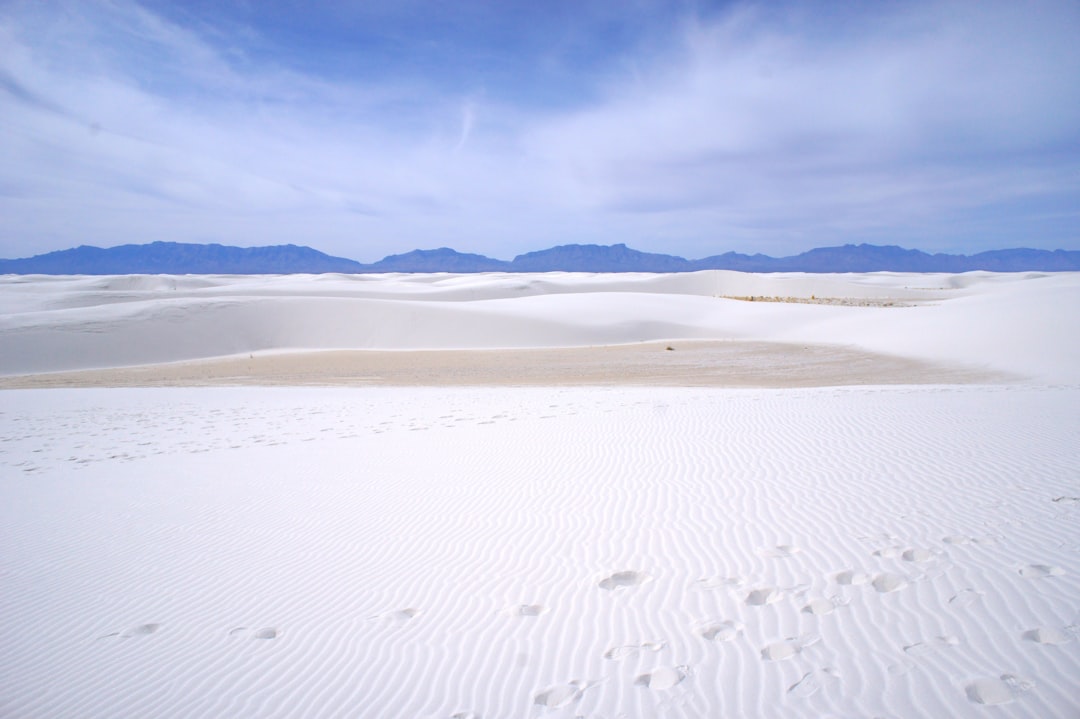
The vast expanse of White Sands National Park, with its shimmering gypsum dunes, belies its ancient history. This seemingly barren landscape was once a very different place, a vibrant ecosystem that supported a diverse array of life, including humans, during the Late Pleistocene epoch. The unique geological conditions of the White Sands area have proven to be an extraordinary preserver of ancient traces, offering a window into a world that has long since vanished.
A Pleistocene Oasis
During the last glacial period, known as the Pleistocene, the climate of North America was significantly cooler and wetter than it is today. This allowed for the formation of numerous lakes and wetlands across the landscape. The Tularosa Basin, where White Sands now lies, was home to large, shallow lakes fed by springs and rainfall. These water sources attracted megafauna such as mammoths, mastodons, giant ground sloths, and early horses, creating a rich hunting ground for early human populations.
The Role of Gypsum
The gypsum itself, a mineral composed of calcium sulfate, plays a crucial role in the preservation of these ancient footprints. When the lakes were present, gypsum mud on the lakebeds was soft and pliable. As humans and animals walked across this mud, their footprints were deeply impressed. Subsequent drying and sun-baked layers of gypsum then acted as a protective seal, effectively encapsulating these impressions. Over thousands of years, subsequent cycles of wet and dry periods, combined with the wind’s sculpting of the dunes, have buried and then, at times, re-exposed these invaluable historical records.
Megafauna and Early Humans
The presence of large mammals is a critical piece of the puzzle in understanding the ecosystem that early humans inhabited. These animals were not only a source of food and resources but also shaped the environment itself. Their grazing patterns influenced vegetation, and their movements created pathways that early humans likely followed. The White Sands footprints offer direct evidence of this co-existence.
Evidence of Co-habitation
Among the human footprints, researchers have found clear impressions left by the megafauna that roamed the area. The tracks of mammoths, for instance, are frequently found alongside human prints, indicating that these two species shared the same ecological space. This direct visual evidence underscores the intimate relationship between early humans and their environment, where survival was inextricably linked to understanding and navigating the world of these colossal creatures.
The discovery of ancient footprints at White Sands National Park has provided significant insights into the lives of the first Americans, suggesting they roamed the area much earlier than previously thought. This fascinating find has sparked interest in understanding the early human presence in North America. For those interested in related topics, you might find the article on retirement account safety particularly relevant, as it discusses the implications of government policies on personal finances. You can read more about it here: Is My Retirement Account Safe From Government?.
The Serendipitous Discovery
The discovery of the White Sands footprints was not the result of a targeted archaeological dig for human traces. Instead, it was a moment of remarkable serendipity, a testament to keen observation and the willingness to question existing timelines. It was the dedication of individuals who recognized the extraordinary significance of what they were seeing that brought this ancient story to light.
A Chance Encounter
The initial discovery was made by Ricardo Mondragon, a park ranger at White Sands, in 2009. While on patrol, Mondragon noticed a series of unusual impressions in the mudflats of the park. These were not the typical animal tracks he was accustomed to seeing. They appeared to be left by human feet, and their sheer number and clarity were striking. Intrigued, he documented his findings.
Initial Skepticism and Growing Interest
Mondragon’s observations initially met with some skepticism. The established timeline for human arrival in the Americas placed it around 16,000 years ago, based on evidence from sites like Monte Verde in Chile. The possibility of human presence in North America as early as the White Sands footprints suggested seemed to contradict this consensus. However, the persistence of Mondragon and the compelling nature of the evidence eventually spurred further investigation by archaeologists and geologists.
The Dawn of Scientific Scrutiny
The scientific community’s engagement with the White Sands footprints marked a turning point. As more researchers became aware of the discovery, systematic studies began, employing advanced dating techniques and rigorous scientific methodologies to ascertain the age of the tracks and the humans who made them. This meticulous process was crucial in transforming an intriguing observation into a groundbreaking scientific finding.
The Footprint Research Team
A dedicated team of researchers, including archaeologists, geologists, and paleobotanists, was assembled to study the footprints. This multidisciplinary approach was essential for a comprehensive understanding of the site. Their work involved detailed mapping of the footprints, geological analysis of the surrounding sediment layers, and crucially, the dating of organic materials found within and around the impressions.
Dating the Past: Unveiling the Age

The most critical aspect of the White Sands discovery was accurately dating the footprints. This is where advanced scientific techniques played a pivotal role, pushing back the accepted timeline for human presence in North America and sparking a vigorous debate within the scientific community.
Radiometric Dating Techniques
The primary method used to date the footprints was radiocarbon dating. This technique relies on the decay of carbon-14, a radioactive isotope of carbon, which has a known half-life. By measuring the amount of carbon-14 remaining in organic materials, scientists can estimate how long ago they were alive.
Seeds and Conifer Pollen
In the case of the White Sands footprints, researchers were able to extract seeds and conifer pollen found embedded within the sediment layers that preserved the tracks. These organic materials, directly associated with the footprints, provided crucial age estimates. Initial dating suggested an age of around 23,000 years ago, a figure that, if accurate, would dramatically alter the established understanding of the peopling of the Americas.
The Power of OSL Dating
While radiocarbon dating provided initial estimates, further scientific analysis was conducted using Optically Stimulated Luminescence (OSL) dating. OSL dating measures the last time sediment grains were exposed to sunlight. This technique was applied to the gypsum layers surrounding the footprints, providing an independent method for corroborating the age of the site.
Corroborating Evidence
The results from OSL dating largely aligned with the radiocarbon dates, strengthening the conclusion that the footprints were indeed made by humans approximately 21,000 to 23,000 years ago. This consistency across different dating methodologies lent significant weight to the findings and fueled the ongoing scientific discussion.
A New Timeline for the First Americans
The validated age of the White Sands footprints has profoundly impacted our understanding of the human migration into the Americas. It challenges the long-held “Clovis-first” model, which posited that the first humans arrived around 13,000 years ago, associated with the distinctive Clovis projectile points. The White Sands evidence indicates a much earlier presence.
Challenging the Clovis-First Model
For decades, the Clovis culture, characterized by its sophisticated stone tools, was considered the earliest evidence of human occupation in North America. Archaeological sites like the Blackwater Draw in New Mexico provided the foundational evidence for this model. The discovery of the White Sands footprints, predating Clovis by thousands of years, directly refutes this singular narrative.
The Significance of Pre-Clovis Sites
The White Sands footprints are not the only evidence suggesting pre-Clovis occupation. Sites like Monte Verde in Chile and Meadowcroft Rockshelter in Pennsylvania have also provided evidence of human presence that predates the Clovis period. However, the direct, undeniable human origin of the White Sands footprints, coupled with their exceptionally early age, provides one of the most compelling pieces of evidence for a much earlier migration.
The Bering Land Bridge and Alternative Routes
The prevailing theory for how humans entered the Americas has long been the Bering Land Bridge, a landmass that connected Siberia and Alaska during the last Ice Age. While this route remains a strong possibility, the earlier dates suggested by White Sands and other pre-Clovis sites open the door to considering alternative migration routes.
Coastal Migration Hypothesis
One prominent hypothesis is the coastal migration route. This theory suggests that early humans may have traveled along the Pacific coastline, using boats to navigate the waters and exploit marine resources. This route would have been accessible even when the interior land routes, like the Bering Land Bridge, were covered in ice. The early dates from White Sands, a site inland, do not necessarily negate the coastal route but suggest that humans were present in North America at a time when interior access might have been challenging.
The Ice-Free Corridor Debate
The “ice-free corridor” refers to a hypothesized ice-free passage that may have opened up between the Cordilleran and Laurentide ice sheets in western Canada. This corridor would have provided a land route for migration southward. However, the timing of the opening of this corridor has been a subject of debate, and it is now understood to have become passable much later than previously thought. The White Sands evidence suggests human presence before this corridor was definitively open, further supporting the idea of earlier arrivals via other means.
Recent discoveries at White Sands have provided compelling evidence regarding the presence of the first Americans, as researchers uncovered ancient footprints that date back thousands of years. This fascinating find not only sheds light on early human migration patterns but also raises questions about the environmental conditions of that era. For those interested in how modern advancements, such as electric vehicles, are shaping the current landscape, a related article discusses the potential impact of Chinese EVs on the US market. You can read more about this topic here.
Tracing the Footprints: What They Reveal
| Location | Date | Footprint Size | Number of Footprints |
|---|---|---|---|
| White Sands, New Mexico | 23,000 years ago | Various sizes | More than 400 footprints |
Beyond their remarkable age, the White Sands footprints offer a unique and intimate glimpse into the lives of the First Americans. They are not abstract artifacts but direct imprints of individuals, revealing their activities, their physical characteristics, and their interactions with their environment.
A Diverse Population
The footprints themselves tell a story of diversity. Researchers have identified tracks left by individuals of different ages and sizes, from children to adults. The presence of small footprints alongside larger ones suggests family groups or small bands traveling together.
Footprints of Children
The discovery of numerous small footprints, clearly belonging to children, is particularly poignant. These young individuals were clearly active participants in the daily lives of their communities, running, playing, and following their elders across the ancient lakebeds. This suggests a society where children were not sheltered but were integrated into the fabric of migration and survival.
Evidence of Daily Life
The patterns of the footprints provide clues about the activities of these early humans. Some tracks appear to be solitary, suggesting individual hunting or foraging. Others are clustered, indicating group movement or communal activities. There are even impressions that suggest resting or standing, offering a snapshot of everyday life.
Interaction with Mega-Fauna
As mentioned earlier, the co-occurrence of human and animal footprints is a significant finding. The White Sands site provides direct visual evidence of early humans living alongside and interacting with the megafauna of the Pleistocene.
Hunting and Co-existence
The footprints sometimes show humans and animals walking in the same direction, suggesting periods of co-existence or even hunting. It is possible that humans were following the tracks of prey animals or avoiding dangerous encounters. The preservation of these interactions offers invaluable insights into the subsistence strategies and ecological relationships of these early populations.
The Mystery of the Giant Sloth Tracks
One of the most intriguing findings at White Sands is the presence of footprints attributed to giant ground sloths. These massive herbivores, some weighing several tons, roamed the landscape alongside humans. The footprints suggest that humans and these enormous creatures shared the same lake shores, raising questions about their interactions – were humans prey, competitors, or simply co-inhabitants of the same ecosystem?
Recent discoveries at White Sands National Park have provided compelling evidence regarding the presence of the first Americans, with ancient footprints dating back over 21,000 years. These findings have sparked significant interest in understanding the migration patterns of early humans in North America. For those intrigued by the broader implications of historical shifts, a related article discusses the concept of shifting wealth and its impact on global economies, which can be explored further in this insightful piece. The connection between ancient human movements and contemporary economic trends offers a fascinating perspective on how history continues to shape our world today.
The Future of White Sands Research
The White Sands footprints have opened a new chapter in the study of the First Americans, but the research is far from over. Ongoing investigations and technological advancements promise to reveal even more about these ancient people and their remarkable journey.
Ongoing Excavation and Analysis
The White Sands National Park continues to be a site of active research. Geologists and archaeologists are constantly working to identify new areas with preserved footprints and to carefully excavate and document them. Each new discovery adds another piece to the complex puzzle of early human migration.
Protecting the Fragile Evidence
One of the key challenges at White Sands is the preservation of these fragile footprints. The ever-shifting sands, while responsible for their preservation for millennia, can also threaten their existence. Strict protocols are in place to protect the excavated areas and ensure that the footprints are not damaged by visitors or environmental factors.
New Technologies and Future Discoveries
The application of cutting-edge technologies will undoubtedly play a crucial role in future research. Advanced imaging techniques, such as lidar and photogrammetry, can create detailed 3D models of the footprints, allowing for precise analysis and preservation. Furthermore, developments in paleogenomics may, in the future, allow for the extraction of ancient DNA from sediments, providing even deeper insights into the genetic makeup of these early populations. The White Sands footprints stand as a powerful testament to the resilience and adaptability of humankind, a tangible link to our ancient ancestors who, with hesitant steps, first ventured into the vast unknown of the Americas. Their story, etched in the sands of time, continues to unfold, promising to rewrite the very beginnings of human history in this continent.

These Footprints Could Rewrite the Story of the First Americans
FAQs
What are the White Sands footprints?
The White Sands footprints are a collection of human footprints preserved in the White Sands National Park in New Mexico. These footprints are believed to be over 20,000 years old and are considered to be some of the earliest evidence of human presence in North America.
Who were the first Americans to leave the footprints at White Sands?
The footprints at White Sands are believed to have been left by the Clovis people, who were some of the earliest known inhabitants of North America. These footprints provide valuable insight into the migration patterns and settlement of the first Americans.
How were the White Sands footprints preserved?
The footprints at White Sands were preserved due to the unique geological conditions of the area. The combination of gypsum sand and the arid climate of the region helped to create a natural cast of the footprints, which have been preserved for thousands of years.
What do the White Sands footprints tell us about the first Americans?
The footprints at White Sands provide important evidence of the presence of humans in North America over 20,000 years ago. They offer insights into the behavior, movement, and possibly the social structure of the early inhabitants of the continent.
Why are the White Sands footprints significant?
The White Sands footprints are significant because they challenge previous theories about the timing and routes of human migration into the Americas. They also provide valuable information about the ancient inhabitants of North America and their interactions with the environment.