
The stark, sun-bleached expanse of White Sands National Park in New Mexico holds secrets that stretch back further than human memory, imprinted not in stone or parchment, but in the very dust and gypsum underfoot. For millennia, these shifting sands have preserved a remarkable testament to early human presence in North America: a series of ancient human footprints. The documentary “Uncovering History: White Sands Footprints” embarks on a profound journey to explore these enigmatic traces, delving into the scientific, archaeological, and societal implications of their discovery. This film is not merely a recounting of an archaeological find; it is an invitation to witness history being rewritten, to grapple with the profound questions it raises about our ancestral past, and to appreciate the fragile beauty of the landscape that holds these invaluable clues.
Discovery Amidst Shifting Sands
The story of the White Sands footprints begins with an observation that, for many years, might have been overlooked. The vastness of White Sands, a landscape constantly reshaped by wind and weather, made the preservation of delicate footprints a seemingly unlikely possibility. However, the unique geological conditions of the park, characterized by its enormous gypsum dunes, played a crucial role. When rain falls on these gypsum sands, it can temporarily cement them, creating a hardened surface that can then preserve impressions before the wind inevitably erodes and redeposits the material. The documentary meticulously details how these fleeting moments of preservation, coupled with the keen eyes of researchers and the serendipitous nature of geological processes, led to the initial discoveries. Early reports and anecdotal evidence from park rangers and visitors, often dismissed as animal tracks or geological curiosities, began to coalesce into a compelling narrative of human passage. The film highlights the dedication of individuals who, despite initial skepticism, pursued these unusual findings, meticulously documenting their locations and characteristics. This segment of the documentary effectively establishes the “how” and “where” of the discovery, setting the stage for the deeper scientific inquiry that followed. It underscores the importance of careful observation and perseverance in the face of the seemingly mundane, demonstrating how profound historical revelations can emerge from the most unexpected corners of our natural world. The visual narrative here is powerful, showcasing the sheer scale of White Sands and the delicate nature of the footprints themselves, often appearing as mere shadows on the sand, easily erased by the next gust of wind. The documentary’s narrative arc begins with this moment of revelation, a whisper from the past unearthed by a combination of natural forces and human curiosity.
The Science of Dating: A Temporal Revolution
The true revolution in understanding the White Sands footprints came with the application of cutting-edge scientific dating techniques. The film dedicates a significant portion to explaining the methodologies employed, making complex scientific concepts accessible to a broad audience. Radiocarbon dating, a cornerstone of archaeology, was initially considered, but the organic material necessary for this method was scarce. The breakthrough came with the utilization of optically stimulated luminescence (OSL) dating and U-series dating. OSL dating, explained with clear animations and expert interviews, measures the last time sediment grains were exposed to sunlight. By dating the layers of sediment surrounding the footprints, researchers could establish a timeframe for when the sand was last disturbed by the weight of a human foot. U-series dating, employed on fossilized mammal tracks found in conjunction with the human prints, provided further corroboration for the age of these ancient sites. The documentary emphasizes the rigorous nature of these scientific investigations, detailing how samples were collected, analyzed, and cross-referenced to ensure accuracy. This segment is crucial for establishing the credibility of the findings and for understanding the profound implications of the revised timelines. It moves the narrative from simple discovery to scientific validation, showcasing the power of interdisciplinary research in unraveling historical mysteries. The interviews with the scientists involved are particularly compelling, conveying their excitement and the weight of their responsibility in re-evaluating established timelines. The documentary successfully conveys that these aren’t just old footprints; they are footprints that push the boundaries of our understanding of human migration into the Americas.
The documentary on the White Sands footprints has sparked significant interest in the intersection of archaeology and national security, particularly in how land use and preservation are managed. For a deeper understanding of these themes, you can explore the article on the role of eminent domain in protecting national security, which discusses how governmental policies can impact archaeological sites and the balance between development and preservation. To read more, visit this article.
Rewriting the Timeline: A Paradigm Shift in North American Prehistory
Challenging Established Narratives
The dating of the White Sands footprints has sent shockwaves through the archaeological and anthropological communities. For decades, the prevailing consensus, often referred to as the “Clovis First” model, posited that the earliest humans arrived in North America around 13,000 years ago, identifiable by their distinctive Clovis stone points. The White Sands footprints, however, consistently date to a much earlier period, some as far back as 21,000 to 23,000 years ago. This discovery necessitates a fundamental re-evaluation of when humans first set foot on the continent and how they navigated its vast landscapes. The documentary powerfully articulates this paradigm shift, presenting expert opinions from leading archaeologists who acknowledge the transformative nature of these findings. It highlights the intellectual courage required to move beyond deeply ingrained theories and embrace new evidence. The film doesn’t shy away from the controversies and debates that have arisen within the scientific community, presenting different perspectives and the ongoing discussions that are shaping our understanding of this critical period. This segment is vital for understanding the significance of the White Sands footprints not just as an archaeological curiosity, but as a catalyst for a scientific revolution. It underscores the dynamic nature of scientific knowledge, where new discoveries can fundamentally alter our perception of the past. The documentary effectively conveys the tension between established dogma and emerging evidence, making for a compelling narrative about the evolution of scientific thought.
Implications for Human Migration Models
The earlier arrival of humans in North America suggested by the White Sands footprints has profound implications for our understanding of migration routes and the timing of human dispersal across the continent. The film explores various hypotheses that are now being reconsidered. Did humans arrive via a coastal migration route along the Pacific, rather than solely through the interior ice-free corridor? If they were present 21,000 years ago, they would have been here during the height of the Last Glacial Maximum, a period when much of North America was covered in ice. This raises questions about their survival strategies, their adaptation to harsh environments, and their technological capabilities. The documentary delves into these questions, presenting research on paleoenvironmental conditions, potential food sources, and the likely technologies these early peoples possessed. It explores how these findings could reshape our understanding of the peopling of the Americas, potentially connecting North American populations to earlier settlements in other parts of the world. This section is crucial for broadening the scope of the discussion beyond just a date, exploring the “how” and “why” of human presence at such an early stage. The visual representations of paleoenvironments and potential migration routes add a vital layer of understanding to these complex theoretical discussions.
The Stories Etched in Sand: Insights into Ancient Lives
The recent documentary on the White Sands footprints has sparked significant interest in ancient human history and our understanding of early civilizations. For those intrigued by the connections between ancient innovations and the footprints discovered in New Mexico, a related article explores the theme of lost technologies that have shaped human progress. You can read more about these fascinating concepts in the article on suppressed ancient technology, which delves into the remarkable achievements of our ancestors and how they may have influenced modern advancements.
A Glimpse into Daily Life and Social Structures
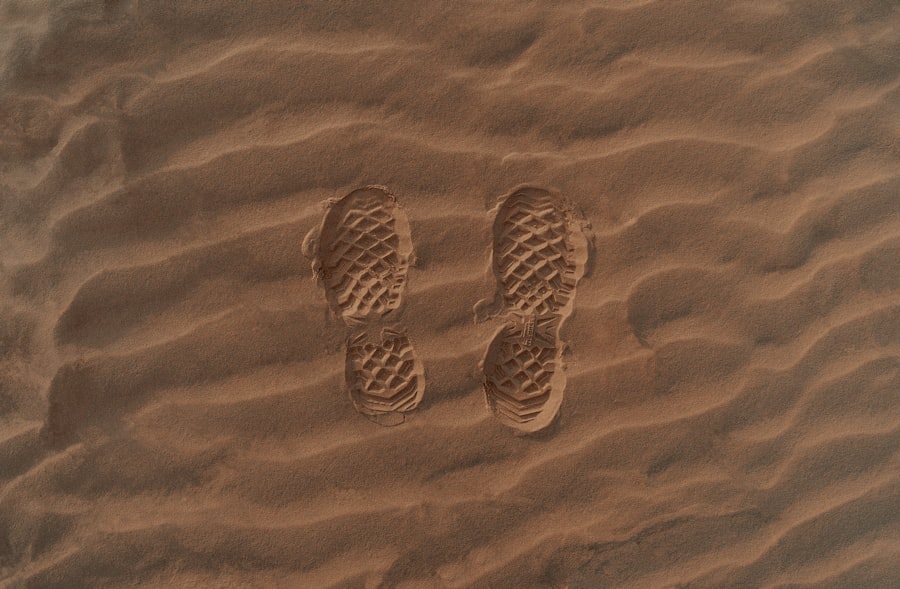
Beyond their temporal significance, the White Sands footprints offer an intimate and unparalleled glimpse into the lives of the people who made them. The documentary dedicates a section to analyzing the footprints themselves, moving beyond mere identification to interpret the behaviors they represent. The size and gait of the prints can offer clues about the age and sex of the individuals. The presence of multiple sets of footprints, sometimes alongside those of large Ice Age megafauna, provides evidence of hunting strategies, herd management, and interactions with the environment. The film showcases how researchers can discern whether individuals were walking, running, carrying burdens, or even dancing. The discovery of footprints from children, walking alongside adults, paints a poignant picture of family units and the transmission of knowledge. The documentary presents these observations not as speculation, but as reasoned interpretations based on extensive knowledge of human locomotion and paleoanthropology. This segment brings the ancient past to life, transforming abstract dates into tangible human experiences. It allows viewers to connect with these ancient individuals on a personal level, understanding them not just as historical figures but as people with lives, families, and daily routines. The visual analysis of the footprints, with experts pointing out specific details and their interpretations, is a powerful storytelling tool.
Paleoecological Connections and Environmental Interactions
The White Sands footprints are inextricably linked to the paleoenvironment in which they were made. The documentary explores how the landscape of White Sands was vastly different thousands of years ago, likely featuring lush vegetation, freshwater lakes, and a diverse array of animal life. The footprints are often found alongside those of extinct animals like mammoths, mastodons, and giant ground sloths, providing crucial evidence of human-megafauna interactions. The film discusses how the presence of these animals would have shaped human subsistence strategies, influencing hunting practices, the availability of resources, and even migration patterns. Researchers analyze the sedimentology of the footprint layers to understand the environmental conditions at the time of their creation, such as the presence of water or vegetation. This ecological context is vital for understanding how humans survived and thrived in this ancient landscape. The documentary uses visualizations and expert commentary to reconstruct these ancient ecosystems, allowing viewers to appreciate the challenges and opportunities faced by these early inhabitants. This focus on paleoecology adds a crucial dimension to the narrative, highlighting the dynamic interplay between humans and their environment in shaping history. The film effectively illustrates that the footprints are not just human artifacts but are embedded within a complex ecological tapestry.
The Guardians of History: Conservation and Future Research

Protecting a Fragile Legacy
The very nature of the White Sands footprints, preserved in sand, makes them incredibly fragile. The documentary addresses the critical challenge of protecting this irreplaceable historical record. The constant shifting of the dunes, though responsible for their initial preservation, also poses a threat of erosion and destruction. Park management strategies, including the careful monitoring of known footprint sites, the use of protective coverings when necessary, and the management of visitor access, are discussed. The film highlights the collaborative efforts between scientists, park officials, and indigenous communities to ensure the long-term preservation of this significant heritage. This segment underscores the responsibility we have to future generations to safeguard these ancient traces. It emphasizes that scientific discovery is only the first step; responsible stewardship is equally vital. The documentary showcases the dedication of those working to protect these sites, often in challenging environmental conditions. The visual emphasis here is on the delicate balance between the forces of nature and the human imperative to preserve.
Ongoing Discoveries and Future Scientific Frontiers
“Uncovering History: White Sands Footprints” concludes by looking towards the future, emphasizing that the exploration of these ancient traces is far from over. New discoveries are continually being made as researchers continue to survey the vast expanse of White Sands. The documentary hints at the potential for uncovering even older footprints or new insights into the lives of these early Americans. Advances in technology, such as drone-based aerial surveys and advanced ground-penetrating radar, are opening up new avenues for exploration and discovery. The film also touches upon the ongoing debates and the continued rigorous scientific scrutiny that these findings will undergo. It encourages a spirit of scientific inquiry and highlights the exciting potential for future research to further refine our understanding of human prehistory. This forward-looking perspective leaves the audience with a sense of anticipation and a recognition that the story of the White Sands footprints is still being written, one impression at a time. The closing segment of the documentary inspires viewers to consider the ongoing nature of scientific discovery and the vast unknowns that still lie waiting to be uncovered, both in the sands of White Sands and in the broader tapestry of human history.

These Footprints Could Rewrite the Story of the First Americans
FAQs
What is the White Sands footprints documentary about?
The White Sands footprints documentary is a film that explores the ancient footprints found in the White Sands National Park in New Mexico. It delves into the scientific significance of these footprints and the insights they provide into the lives of early inhabitants of the area.
Who created the White Sands footprints documentary?
The White Sands footprints documentary was created by a team of filmmakers and researchers who collaborated to bring attention to the remarkable discovery of ancient footprints in the White Sands National Park.
What is the significance of the footprints found in White Sands National Park?
The footprints found in White Sands National Park are significant because they provide valuable information about the behavior and movements of early humans and animals in the area. They offer insights into the prehistoric environment and the interactions between different species.
Where can I watch the White Sands footprints documentary?
The White Sands footprints documentary may be available for viewing on various streaming platforms, such as online video rental services, or through special screenings at museums, educational institutions, or film festivals. Check with local theaters or streaming services for availability.
How can I learn more about the White Sands footprints documentary?
To learn more about the White Sands footprints documentary, you can visit the official website of the film, follow the filmmakers and researchers involved on social media, or seek out related articles, interviews, and reviews in scientific and cultural publications.