Dating White Sands Footprints: Uncovering Ancient History
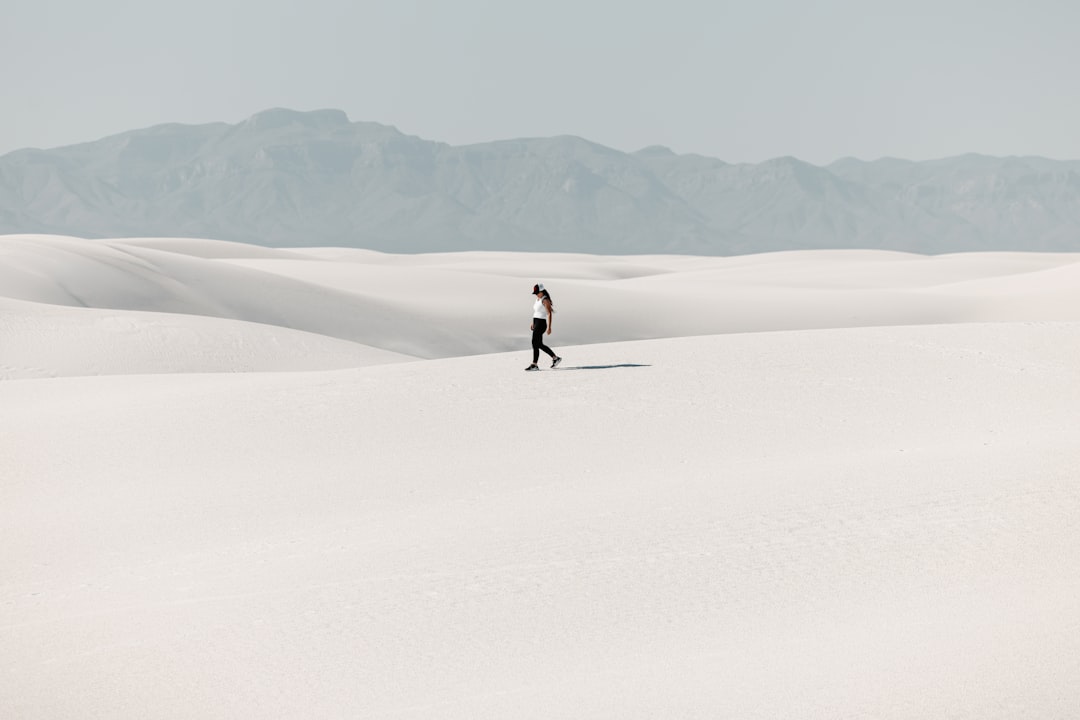
The vast, undulating dunes of White Sands National Park in New Mexico hold secrets far older than the shimmering gypsum sands themselves. Among these secrets are the remarkably preserved footprints of ancient humans, a fleeting testament to their presence in a landscape that was once a very different world. These imprints, etched into the soft earth millennia ago, have become a critical puzzle piece in understanding the peopling of the Americas. However, their true age, and therefore their significance, remained a subject of intense scientific debate for decades. The journey to accurately date these enigmatic footprints has been a complex and fascinating one, a testament to the ingenuity of scientific endeavor and the collaborative spirit that drives discovery.
The White Sands footprints are not merely impressions; they are snapshots of ancient life. Ranging from child-sized to adult, the prints reveal individuals walking, running, and even carrying burdens. They offer a rare glimpse into the daily lives of people who inhabited this region at the close of the last Ice Age. Their preservation is extraordinary, a consequence of the unique geological conditions of White Sands.
What Makes These Footprints So Special?
The gypsum sands of White Sands, when wet, become cohesive and can hold impressions with remarkable fidelity. As the water evaporates, the sun bakes the sand, hardening the impressions and protecting them from the elements. Over millennia, these impressions were buried by subsequent layers of sand, effectively encapsulating them in time. This natural process has yielded an unparalleled archive of human activity from a crucial period in prehistory.
Early Discoveries and Lingering Questions
The first documented discoveries of these footprints date back to the early 20th century. As scientists began to explore the park, they encountered these ancient tracks, sparking immediate interest. However, the initial attempts to date them were rudimentary, relying on stratigraphic evidence and comparisons with other archaeological sites. These early estimates, while pioneering, were often imprecise and subject to considerable uncertainty. The sheer scale and density of the tracks also made it challenging to isolate specific layers and establish a clear chronological sequence. The absence of traditional artifactual evidence directly associated with many of the footprints further complicated early dating efforts, leaving a void in our understanding of their temporal context.
The dating of the ancient footprints found at White Sands National Park has sparked significant interest among researchers, as it provides crucial insights into the lives of early humans in North America. The footprints were dated using a combination of radiocarbon dating and stratigraphic analysis, which helped establish their age at approximately 23,000 years old. This discovery has implications for our understanding of human migration patterns during the last Ice Age. For more information on how external factors can influence our lives, you might find this article on surviving a depression and its impact on financial stability insightful: Surviving a Depression: What Happens to Your Bank Accounts.
The Challenge of Dating Ancient Imprints
Dating geological and archaeological materials is a complex science, and the White Sands footprints presented a particularly formidable challenge. Unlike bone or pottery, footprints are ephemeral traces, lacking the inherent material for direct radiometric dating methods commonly used for organic remains. Scientists had to develop innovative approaches to indirectly determine their age.
The Limitations of Traditional Dating Methods
Radiocarbon dating, a cornerstone of archaeological dating, relies on the decay of carbon-14 in organic materials. Footprints, being impressions in sand, do not typically contain sufficient organic matter for this method to be directly applicable. While some associated organic material might be found in the surrounding layers, its direct relationship to the footprints themselves could be difficult to definitively establish. Similarly, other methods that rely on the analysis of specific minerals or their isotopic composition were not immediately suitable for these sandy impressions.
Stratigraphy: A Crucial but Imperfect Clue
Stratigraphy, the study of layered deposits, played a vital role in early dating attempts. Scientists observed the layers of sand in which the footprints were found and compared them to known geological timelines. They also looked for associated artifacts or fossilized plant and animal remains within these layers. However, the dynamic nature of sand dunes, subject to wind erosion and deposition, can sometimes create stratigraphic complexities, making it challenging to determine the precise order and age of events. Disconformities, gaps in the geological record, could also obscure the true chronological relationship between different layers.
The Ice Age Context: A Changing Landscape

The White Sands region during the last glacial period was a starkly different environment than the arid desert seen today. Understanding this ancient landscape is crucial for contextualizing the footprints and the lives of the people who left them.
A Wetter, Greener Past
During the Pleistocene epoch, when the footprints were likely made, global temperatures were significantly lower. This resulted in increased precipitation and the presence of large bodies of water, including shallow lakes and playas, in areas now characterized by aridity. White Sands would have been a much wetter environment, with vegetation supporting a diverse array of megafauna. The gypsum sands themselves would have been periodically submerged or saturated, creating the ideal conditions for preserving footprints.
The Presence of Megafauna
The ancient landscape of White Sands was also home to now-extinct megafauna, such as mammoths, mastodons, and giant ground sloths. Evidence of these creatures, including their footprints and fossilized remains, has been found in the same geological layers as the human footprints. The coexistence of humans and megafauna is a significant aspect of the White Sands story, raising questions about their interactions and the ecological dynamics of the time.
Human and Animal Interactions
The footprints themselves sometimes offer tantalizing clues about these interactions. Researchers have identified instances where human footprints appear alongside those of extinct animals, suggesting cohabitation and perhaps even hunting or avoidance behaviors. These overlapping tracks provide a unique window into the complex ecological tapestry of the late Pleistocene.
Breakthroughs in Dating: Unlocking the Past
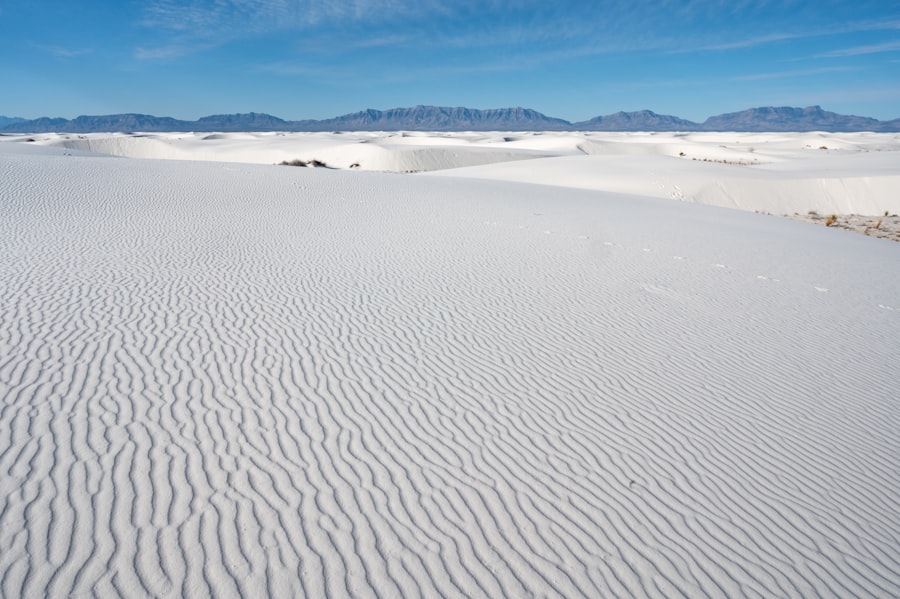
For years, the prevailing view placed the human presence at White Sands shortly after the last glacial maximum, around 10,000 to 12,000 years ago. However, a series of groundbreaking studies, employing advanced dating techniques, dramatically shifted this understanding, pushing back the timeline of human occupation by millennia.
The Role of Seed Dating (Cores)
One of the most significant breakthroughs came with the dating of Ruppia cirrhosa, an aquatic plant whose seeds were found embedded within the footprints. This method, often referred to as “seed dating,” involved collecting seeds found within the sediment that filled the footprints. These seeds could then be subjected to radiocarbon dating.
The Initial Seed Dating Studies
Early studies utilizing this technique yielded dates that were significantly older than previously hypothesized, suggesting human presence as far back as 21,000 to 23,000 years ago. This was a radical departure from existing paradigms and initially met with skepticism from some members of the scientific community. The meticulousness of the sampling and dating process was paramount to establishing the reliability of these early results.
Addressing Concerns and Refining Methods
Concerns were raised about the potential for contamination or the seeds originating from older geological layers and being redeposited. Researchers meticulously addressed these concerns by employing rigorous sampling protocols and multiple dating labs to ensure the accuracy and reproducibility of their findings. The scientific process, involving peer review and replication, is essential for validating such significant discoveries.
Optically Stimulated Luminescence (OSL) Dating
Another crucial dating technique employed in the White Sands research is Optically Stimulated Luminescence (OSL). OSL dating measures the amount of light energy absorbed by sediment grains since they were last exposed to sunlight. This allows scientists to determine when the sediment layers containing the footprints were buried.
The Principle of OSL Dating
When minerals like quartz and feldspar in sand are exposed to sunlight, they release trapped electrons, effectively resetting their “luminescence clock.” When these minerals are buried, cosmic rays and naturally occurring radioactive elements in the surrounding sediment cause them to absorb energy, trapping electrons. OSL dating works by stimulating these buried grains with a specific wavelength of light, causing them to release this trapped energy as luminescence. The intensity of this luminescence is proportional to the time elapsed since burial.
OSL Results and Confirmation
OSL dating of the sediment layers surrounding the footprints provided independent confirmation of the older dates obtained through seed dating. These results further solidified the argument for a much earlier human presence at White Sands, coinciding with the height of the last glacial period. The convergence of evidence from multiple dating methods lent significant weight to the revised timeline.
The recent discovery of ancient footprints at White Sands National Park has sparked significant interest among researchers, particularly regarding the methods used to date these remarkable finds. Scientists employed a combination of radiocarbon dating and stratigraphic analysis to establish the timeline of human activity in the area, revealing that these footprints are over 21,000 years old. For a deeper understanding of how modern scientific techniques can influence our interpretation of historical events, you might find it interesting to read about the implications of wage requirements in trade agreements, as discussed in this article on the impact of the USMCA wage requirement.
Rethinking the Peopling of the Americas
| Method | Date Range |
|---|---|
| Oxidation of footprints | 10,000 to 23,000 years ago |
| Optically stimulated luminescence (OSL) | 21,000 to 23,000 years ago |
| Radiocarbon dating of seeds | 23,000 to 19,000 years ago |
The revised dating of the White Sands footprints has profound implications for our understanding of how and when humans first arrived in the Americas. For decades, the “Clovis First” model, which posited that the Clovis culture, dating to around 13,000 years ago, represented the earliest widespread human presence, dominated archaeological thought. The White Sands evidence challenges this long-held paradigm.
Challenging the Clovis First Model
The dates from White Sands, if accepted, indicate that humans were present in North America at least 10,000 years before the Clovis culture emerged. This necessitates a reevaluation of migration routes, settlement patterns, and the timeline of human expansion across the continent. It suggests that earlier, perhaps pre-Clovis, populations were already established and thriving.
Implications for Migration Routes
The presence of humans in southern North America at such an early date also opens up new possibilities regarding migration routes. While the Bering Land Bridge is still considered a primary pathway, the White Sands evidence might suggest alternative or earlier coastal migration routes. The timing also aligns with periods when sea levels were lower, potentially making coastal travel more feasible.
The Significance of a Pre-Clovis Presence
A confirmed pre-Clovis presence at White Sands means that human history in the Americas is far richer and more complex than previously understood. It implies a longer period of adaptation and development for these early populations, with distinct cultural traditions and technologies that may have preceded the more widely recognized Clovis culture. This also prompts further investigation into other potential pre-Clovis sites across the Americas.
The recent discovery of ancient footprints at White Sands has sparked significant interest in the methods used for dating these remarkable finds. Researchers employed a combination of radiocarbon dating and stratigraphic analysis to establish the age of the footprints, which are believed to be over 21,000 years old. This fascinating topic is explored in more depth in a related article that delves into the mysteries of lost maps and ancient civilizations, which can be found here. Understanding the techniques behind dating such footprints not only sheds light on human history but also connects to broader themes of exploration and discovery.
The Future of White Sands Footprint Research
The White Sands footprints continue to be a site of active research, with scientists constantly refining their techniques and seeking new avenues of investigation. The remarkable preservation of this site offers unparalleled opportunities for future discoveries.
Ongoing Research and New Discoveries
Researchers are actively surveying and excavating new areas within the park, hoping to uncover more footprints and associated evidence. The use of advanced technologies, such as drones for aerial mapping and lidar for subsurface imaging, is revolutionizing how these sites are explored and analyzed.
Paleoenvironmental Reconstruction
Further detailed paleoenvironmental reconstructions are being undertaken to better understand the specific ecological conditions that supported human life at White Sands during the late Pleistocene. This includes analyzing pollen, sediment cores, and faunal remains to create a more vivid picture of the ancient landscape.
Technological Advancements in Dating
The development of even more precise dating techniques and the refinement of existing ones will undoubtedly play a crucial role in future research. Scientists are exploring new ways to date ephemeral traces and to better understand potential sources of error or contamination in dating processes.
The White Sands footprints are more than just impressions in the sand; they are a tangible link to our deep past. The scientific journey to accurately date these ancient tracks has been a testament to human curiosity, perseverance, and the power of collaborative scientific inquiry. As research continues, these enigmatic footprints will undoubtedly continue to reveal more about the earliest chapters of human history in the Americas, forever changing our perception of who we are and where we came from.

These Footprints Could Rewrite the Story of the First Americans
FAQs
1. What is the significance of the White Sands footprints?
The White Sands footprints are significant because they provide evidence of human presence in North America dating back over 20,000 years, which challenges previous theories about the timeline of human migration.
2. How were the White Sands footprints dated?
The White Sands footprints were dated using a combination of radiocarbon dating and optically stimulated luminescence (OSL) dating. Radiocarbon dating was used to date the organic material found in the layers of sediment, while OSL dating was used to determine the last time the sand grains were exposed to sunlight.
3. What did the dating methods reveal about the age of the footprints?
The dating methods revealed that the footprints at White Sands were made over 20,000 years ago, making them some of the oldest known human footprints in North America.
4. What implications do the dated footprints have for our understanding of human migration?
The dated footprints at White Sands suggest that humans were present in North America much earlier than previously thought, challenging the traditional timeline of human migration into the continent.
5. What further research is needed to build on the findings from the White Sands footprints?
Further research is needed to continue studying the footprints and the surrounding archaeological evidence at White Sands in order to gain a more comprehensive understanding of the early human presence in North America and its implications for our understanding of human migration.