
Ancient Footprints: White Sands’ Age
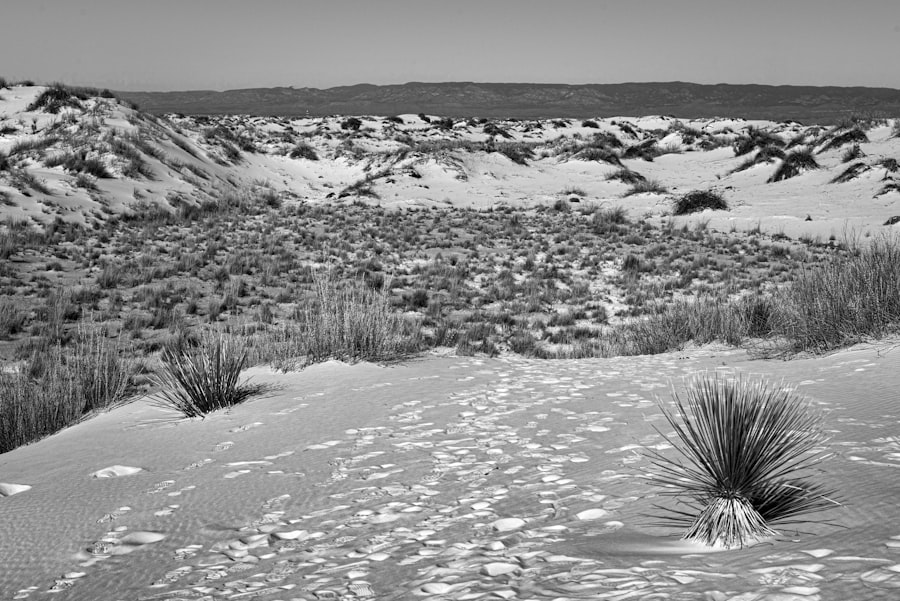
The vast, sun-bleached expanse of White Sands National Park in New Mexico is a landscape sculpted by time and elemental forces. It is a place where the ephemeral beauty of gypsum dunes meets the profound depths of prehistoric human presence. For decades, the striking fossilized footprints embedded within these shifting sands have captivated scientists and the public alike, whispering tales of a world long past. The question of their age, however, has been a persistent and complex puzzle, one that has seen significant scientific debate and evolving interpretations. The discovery and analysis of these ancient tracks have not only illuminated the lives of early inhabitants but have also pushed the boundaries of our understanding of when humans first ventured into North America.
The footprints at White Sands are not mere impressions; they are detailed records of movement, of lives lived on a landscape vastly different from the one we see today. These prints, preserved in the fine gypsum sediment, offer an unparalleled window into the daily activities of ancient peoples. They reveal the presence of individuals, groups, and even animals, providing a narrative of an ancient ecosystem and its inhabitants.
Uncovering the Fossilized Evidence
The discovery of these footprints was not a singular event but rather a gradual unveiling. Over time, erosion and the dynamic nature of the dunes have repeatedly exposed these ancient traces. Initial observations of these distinct imprints sparked curiosity, leading to more systematic investigations. The sheer number and clarity of some of these prints make them exceptionally valuable for scientific study, allowing researchers to discern details such as the size of feet, stride length, and even the direction of travel.
The Significance of Preservation
The unique geological conditions at White Sands are crucial to the exceptional preservation of these footprints. The gypsum sand, when saturated with water, can harden into a form of sedimentary rock, effectively capturing and protecting the impressions before they are erased by wind and further sedimentation. This delicate balance of moisture and sediment, coupled with the slow, yet constant, movement of the dunes, has acted as a natural time capsule, safeguarding these fragile records of human activity.
Early Interpretations and Debates
From the early days of their discovery, the footprints at White Sands have been a source of scientific intrigue and lively discussion. The initial estimations of their age, based on geological context and early dating methods, often placed them within the established timeline of human arrival in the Americas. However, as analytical techniques advanced and new discoveries emerged, the question of their true antiquity became more contentious.
Recent discoveries at White Sands National Park have revealed footprints that are estimated to be around 23,000 years old, providing fascinating insights into the lives of early humans in North America. For a deeper understanding of the implications of ancient human activity and its connection to modern issues, you might find the article on labor value content in trade agreements interesting. It explores how historical practices shape current economic frameworks, which can be related to the long-standing relationship between humans and their environment. You can read more about it in this article: Understanding the USMCA Labor Value Content.
The Long Road to Chronological Understanding
Determining the precise age of the White Sands footprints has been a protracted scientific endeavor, marked by the application of various dating techniques, each with its own strengths and limitations. The quest to pinpoint their origin has been a journey of refinement, as researchers have grappled with the geological complexities of the site and the inherent challenges of dating organic and inorganic materials.
Radiocarbon Dating: A Foundation and a Challenge
Radiocarbon dating (¹⁴C dating) has long been a cornerstone of archaeological chronology. This method relies on the decay of carbon-14, a radioactive isotope found in all living organisms. By measuring the remaining ¹⁴C in organic materials, scientists can estimate how long ago an organism died. In the context of the White Sands footprints, radiocarbon dating was applied to organic materials found in close association with the tracks.
Early Radiocarbon Estimates
Initial attempts to date the footprints using radiocarbon dating yielded results that placed them within a few thousand years ago, aligning with generally accepted timelines for human presence in the region. These early findings provided a crucial baseline for understanding the temporal context of the tracks.
The Problem of Contamination and Context
However, radiocarbon dating is not without its challenges, particularly in arid environments like White Sands. Organic materials found near the footprints, such as plant remains or animal bones, could have been deposited at different times than the footprints themselves. Furthermore, the presence of older, reworked organic material could lead to inaccurate, older dates. This potential for contamination and issues of contextual integrity became a significant hurdle in establishing a definitive age for the tracks.
Luminescence Dating: Illuminating Deeper Time
Luminescence dating techniques, such as optically stimulated luminescence (OSL) and thermoluminescence (TL), offered alternative avenues for dating the sediments that contain the footprints. These methods date the last time mineral grains within the sediment were exposed to sunlight or heat. Luminescence dating is particularly valuable for dating sediments that lack organic material, and it can often reach further back in time than radiocarbon dating.
OSL and TL: Peering into the Pleistocene
OSL and TL dating were employed to date the layers of sand directly above and below the footprint-bearing strata. These techniques provided crucial insights into the geological timeline of the deposition of the sediments. By dating the burial of the footprints, researchers could infer their age.
Challenges in Luminescence Dating
Despite their power, luminescence dating methods also present challenges. The accuracy of these techniques depends on factors such as the homogeneity of the sediment, the presence of interfering minerals, and the precise measurement of environmental factors like background radiation. Interpreting the results requires careful consideration of the geological history of the site.
Stratigraphic Analysis: Reading the Layers of Time
Stratigraphic analysis, the study of rock layers and their chronological relationships, has been an indispensable tool in deciphering the age of the White Sands footprints. By examining the order in which sedimentary layers were deposited, geologists and archaeologists can establish relative ages.
Layer by Layer: Reconstructing the Past
The footprints are found within specific sedimentary layers. Understanding the depositional history of these layers, how they were formed, and what events may have affected them, is critical for placing the footprints within a chronological framework. This involves careful observation of sediment characteristics, grain size, and bedding patterns.
The Role of Paleoclimates
The geological record at White Sands also provides clues about past climate conditions. Fluctuations in water levels, vegetation, and sand accumulation can be linked to broader paleoclimatic shifts. These shifts can, in turn, be correlated with other dated paleoenvironmental records, offering independent lines of evidence for the age of the footprints.
The Groundbreaking Discovery: Re-evaluating Human Arrival
The ongoing research at White Sands has led to a re-evaluation of when humans first arrived in North America, pushing the accepted timeline significantly further back than previously thought. This paradigm shift has profound implications for our understanding of human migration and adaptation.
The Contested Age: Early Findings and Skepticism
For many years, the prevailing scientific consensus placed the peopling of the Americas around 13,000 to 15,000 years ago, associated with the Clovis culture. Early suggestions that the White Sands footprints were older than this faced considerable skepticism from the scientific community.
The Clovis First Paradigm
The “Clovis First” model, which posited that the Clovis culture represented the earliest widespread human presence in the Americas, was deeply entrenched. Evidence that challenged this model was often met with rigorous scrutiny.
The Need for Robust Evidence
Skeptics rightly demanded irrefutable evidence. The complexities of dating and the potential for misinterpretation meant that any claims of much older human presence required exceptional proof.
The Application of High-Precision Dating
Recent advancements in dating methodologies have allowed for a more precise and reliable assessment of the White Sands footprints’ age. These new techniques, when applied with rigorous scientific protocols, have provided compelling evidence that challenges the long-held assumptions.
Dating of Conifer Pollen
One of the pivotal breakthroughs involved the dating of conifer pollen grains found within the footprint layers. Researchers employed a novel approach by analyzing the accumulation of damage in the DNA of these pollen grains caused by radiation. This technique, known as “DNA radiodating,” offered a direct means of dating the organic material within the sediment that enclosed the footprints.
The Significance of the 21,000-23,000 Year Old Range
The results from these high-precision dating methods consistently pointed to an age range of approximately 21,000 to 23,000 years ago for the White Sands footprints. This placed human presence in North America firmly within the Last Glacial Maximum, a period when large ice sheets covered much of the continent.
Implications for Human Migration Models
The revelation that humans were present in North America at the height of the last Ice Age has necessitated a significant revision of existing migration models. It suggests that humans found ways to traverse or circumvent the massive ice sheets, or perhaps migrated through ice-free corridors that opened up at different times.
Rethinking the Bering Land Bridge
The traditional model of migration across the Bering Land Bridge, which was exposed during periods of lower sea levels, may need to be supplemented with alternative routes or earlier timings. The presence of humans at White Sands suggests they were already in the Americas when subsequent ice sheets began to recede.
Adaptation to Glacial Environments
This older age also implies that early North Americans possessed remarkable adaptability, capable of surviving and thriving in the harsh glacial environments of the Pleistocene. Their presence in the interior of North America at such an early date hints at a more complex and widespread dispersal than previously understood.
The Nature of the Footprints: More Than Just Impressions

The White Sands footprints are not just indicators of age; they also provide invaluable information about the people who made them, their activities, and the environment they inhabited. The details preserved within these ancient tracks offer a narrative that goes beyond simple chronology.
Human Activity Recorded
The footprints themselves reveal a range of human behaviors. Some tracks suggest individuals walking alone, perhaps on a hunt or in transit. Others show groups of people moving together, indicative of families or social units. The presence of different sizes of footprints suggests the presence of both adults and children.
Evidence of Hunting and Gathering
Certain patterns in the footprints have led to interpretations of hunting activities. For example, tracks that show individuals moving rapidly or circling in specific areas might suggest the pursuit or trapping of prey. The presence of animal tracks alongside human footprints provides further context for the ecological interactions of the time.
Daily Life and Movement
Beyond specific activities, the sheer volume and distribution of footprints offer insights into the patterns of daily life and movement across the landscape. They show established routes and areas of frequent visitation, painting a picture of how these early peoples interacted with their environment.
The Presence of Associated Fauna
The White Sands site is not exclusively about human footprints. The presence of tracks from various animals is also critical to understanding the ancient ecosystem. These faunal tracks provide evidence of the biodiversity of the region during the Pleistocene.
Mammoths, Giant Sloths, and Other Giants
Among the most striking associated tracks are those of megafauna, including mammoths, giant ground sloths, and other large Pleistocene mammals. The co-occurrence of human and megafauna tracks offers compelling evidence of their shared presence and potential interactions.
Ecological Reconstruction
By studying the footprints of both humans and animals, scientists can reconstruct the ancient food webs and ecological relationships. This helps paint a more complete picture of the environment in which these early humans lived and how they sustained themselves.
The Enigma of the Children’s Tracks
A particularly poignant aspect of the White Sands footprints is the recurring presence of smaller prints, believed to belong to children. These tracks often appear in conjunction with adult prints, offering a touching glimpse into family life and the involvement of the youngest members in the daily activities of the community.
Familial Units and Social Structures
The association of child footprints with adult tracks suggests that children were not sequestered but were integral to the activities of their families and communities. This provides valuable data for understanding early social structures and child-rearing practices.
The Fragility of Childhood in the Pleistocene
These tiny prints also serve as a stark reminder of the challenges and potential dangers faced by children in the Pleistocene era. Their presence on the landscape, alongside the tracks of formidable predators, highlights the precariousness of life and the resilience of early human societies.
Recent discoveries regarding the age of the White Sands footprints have sparked significant interest in the field of archaeology. These ancient tracks, believed to be around 23,000 years old, provide crucial insights into the lives of early humans in North America. For those interested in exploring how trade agreements, such as the USMCA, influence archaeological research and cultural exchanges, a related article can be found here. Understanding the connections between ancient human activity and modern trade can deepen our appreciation for both history and contemporary society.
Future Directions and Enduring Questions
| Age of White Sands footprints | Time period |
|---|---|
| Estimated age | Between 21,000 and 23,000 years old |
The dating of the White Sands footprints has been a monumental achievement, but the research is far from over. Many questions remain, and future investigations promise to further refine our understanding of early human presence in the Americas and the paleoenvironment of White Sands.
Further Refinement of Dating Techniques
While the current dating of the White Sands footprints is robust, ongoing advancements in dating methodologies may lead to even greater precision. Researchers will continue to explore new techniques and refine existing ones to establish the most accurate chronological framework possible.
Cross-Validation and Independent Verification
The scientific community will undoubtedly continue to seek cross-validation and independent verification of the dating results through the application of diverse analytical approaches. This iterative process of questioning and testing is fundamental to scientific progress.
Integrating Geological and Archaeological Data
Future research will likely focus on a more integrated approach, combining detailed geological analyses of the sedimentary layers with continued archaeological investigation of the footprints and any associated artifacts. This holistic approach will provide a more comprehensive understanding of the context of human occupation.
Exploring the Wider Distribution of Early Human Sites
The White Sands discovery is a powerful catalyst for exploring other potential sites with similarly ancient human evidence. Scientists will be looking for other locations that might hold clues to the timing and routes of early human migration.
The Potential of Other Arid Environments
Arid and semi-arid regions, with their potential for excellent preservation, are likely to be focal points for future discoveries. These environments may hold undiscovered footprints or other traces of very early human activity.
Advanced Remote Sensing and Survey Techniques
The application of advanced remote sensing technologies, such as lidar and high-resolution aerial imagery, coupled with sophisticated archaeological survey techniques, could help identify promising areas for investigation, potentially revealing sites that have been hidden from view for millennia.
Understanding the Paleoenvironment and Human Adaptation
A deeper understanding of the paleoenvironment of White Sands during the Pleistocene is crucial for comprehending how early humans survived and thrived. Research will focus on reconstructing the climate, vegetation, and fauna of the region.
Reconstructing Ancient Water Sources and Ecosystems
Investigating the dynamics of ancient lakes and rivers, the types of vegetation that supported life, and the prey available to hunters will provide critical context for understanding human adaptation. The presence of footprints in what is now a desert landscape underscores the dramatic environmental changes that have occurred.
The Cognitive and Behavioral Adaptations
Beyond physical adaptations, future research may also shed light on the cognitive and behavioral adaptations that allowed early humans to navigate and survive in the challenging Pleistocene landscape of North America. This could include insights into their tool-making abilities, social organization, and navigational skills. The White Sands footprints, in their silent testament to lives lived millennia ago, continue to provoke our curiosity and expand the horizons of human history.

These Footprints Could Rewrite the Story of the First Americans
FAQs
1. What are the White Sands footprints?
The White Sands footprints are a collection of ancient human footprints preserved in the gypsum sand dunes of White Sands National Park in New Mexico.
2. How old are the White Sands footprints?
The White Sands footprints are estimated to be around 23,000 years old, making them some of the oldest known human footprints in North America.
3. How were the White Sands footprints preserved?
The footprints were preserved due to the unique environmental conditions at White Sands National Park. The gypsum sand dunes have a high level of preservation due to the dry and stable climate, which allowed the footprints to remain intact for thousands of years.
4. What do the White Sands footprints tell us about early human history?
The footprints provide valuable insight into the behavior and movement patterns of early humans in North America. They also offer evidence of the presence of humans in the Americas during the last ice age.
5. Can visitors see the White Sands footprints?
Yes, visitors to White Sands National Park can view the footprints in person. The park offers guided tours and educational programs that allow visitors to learn about the significance of the footprints and their place in human history.