
The shimmering expanse of White Sands National Park, a landscape sculpted by wind and time, holds secrets far older than the dunes themselves. For decades, scientists and curious visitors alike have been drawn to its stark beauty, a place where the gypsum sands stretch seemingly to infinity. Yet, beneath this otherworldly surface lay a discovery that would rewrite our understanding of early human presence in North America: the astonishing imprint of Pleistocene human footprints. This find, unearthed in the heart of New Mexico, offered a tangible, undeniable link to a distant past, prompting a profound reevaluation of migration routes, timelines, and the very earliest inhabitants of the Americas.
The story of the White Sands footprints is one of patient observation and serendipitous discovery. For years, locals and researchers had occasionally stumbled upon unusual impressions in the soft sands, often dismissed as natural formations or the tracks of modern animals. However, the sheer scale and distinctiveness of some of these findings began to raise questions. They possessed a shape and size that seemed to defy easy explanation. The fine grains of gypsum, under the right conditions of moisture and compaction, could preserve incredibly delicate details, holding a frozen moment from millennia past.
The First Stirrings of Interest
The park itself, established in 1933, has always been a geological wonderland. Its gypsum dunes, formed from the slow evaporation of an ancient lake, create a unique ecosystem. Early geological surveys noted the unusual sand composition and the potential for fossil preservation. However, the focus remained primarily on the geomorphology and the modern flora and fauna. It was the persistent whispers of unusual tracks that began to draw the attention of paleontologists and archaeologists.
The Role of Climate and Preservation
The exceptional preservation of the White Sands footprints is a testament to a confluence of rare environmental factors. The gypsum sands, unlike many other sediments, are relatively stable and resist rapid erosion. When water levels fluctuated in the ancient playa lakes that once covered this region, the soft sediments would dry and harden, creating a perfect canvas for impressions. Footprints pressed into this yielding material were then often covered by subsequent layers of sand or mud, shielding them from the ravages of wind and weather for thousands of years. This natural encapsulation was crucial for their survival.
The discovery of Pleistocene footprints at White Sands has opened a fascinating window into the lives of early humans and their interactions with the environment. These ancient tracks, preserved in the New Mexico desert, provide invaluable insights into the behaviors and movements of prehistoric peoples. For a deeper exploration of how such findings contribute to our understanding of human history, you can read a related article that delves into the broader implications of archaeological discoveries: Unearthing Ancient Secrets: Revealing Hidden History.
Unearthing the Evidence: The Groundbreaking Discovery
The breakthrough came with more systematic investigations, driven by an increasing scientific curiosity about the early peopling of the Americas. While the exact moment of the first significant discovery is difficult to pinpoint, the work of individuals like Dr. Matthew Bennett and his colleagues marked a pivotal shift. Their meticulous surveys and the application of modern scientific techniques transformed anecdotal observations into irrefutable archaeological evidence.
The Process of Investigation
The identification and excavation of the footprints were far from straightforward. Researchers employed a range of techniques, from visual surveys and photography to detailed mapping and sediment analysis. They had to carefully distinguish human tracks from those of ancient megafauna that also roamed the landscape, such as giant ground sloths and mammoths. The process involved painstaking work, often under challenging desert conditions, to document each impression and its context.
Distinguishing Human from Other Tracks
A key challenge was differentiating human footprints from those of other creatures that inhabited the ancient landscape. The size, stride length, and pattern of the impressions were critical clues. Human footprints, with their distinct toe arrangement and heel strike, are quite different from the padded or clawed tracks of many mammals. Furthermore, the presence of multiple overlapping footprints, and the gait patterns observed, provided further confirmation of human origin. The discovery of tracks showing individuals of different ages, including children, added a deeply human element to the scientific findings.
Dating the Past: A Timeline Revolution
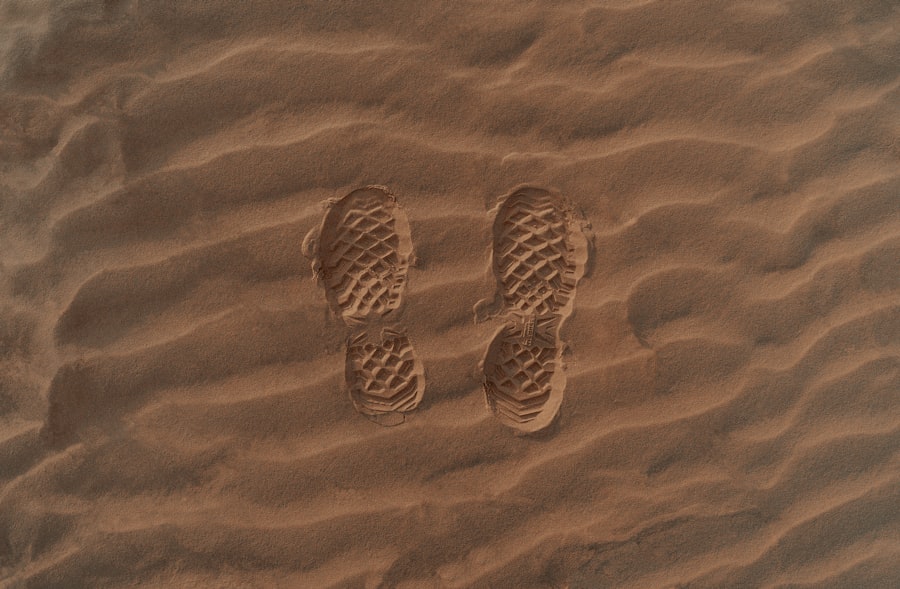
One of the most significant aspects of the White Sands discovery was the ability to accurately date the footprints. This was not a simple task, as direct radiocarbon dating of the footprints themselves was often impossible. Instead, scientists had to rely on indirect dating methods, employing a combination of geological and biological evidence found in the same layers as the tracks. This intricate dating process pushed back the accepted timeline for human presence in North America by thousands of years.
Stratigraphy and Associated Finds
The layers of sediment in which the footprints were found provided a crucial chronological framework. Archaeologists meticulously studied the stratigraphy, the arrangement of rock layers in a sequence. Associated with the footprints were plant remains and the shells of fossilized seeds. These organic materials could be directly dated using radiocarbon methods. The principle of superposition, where older layers are found beneath younger layers, was fundamental to this process.
Radiocarbon Dating and Its Significance
The application of radiocarbon dating to the plant materials found in direct association with the footprints provided a startling new chronology. This method, which measures the decay of carbon-14, allowed scientists to determine the age of the organic samples with remarkable precision. The dates obtained from the White Sands footprints, ranging from approximately 21,000 to 23,000 years ago, placed humans in North America during the Last Glacial Maximum. This was a period when much of the continent was covered by massive ice sheets, suggesting a more complex migration history than previously theorized.
The Impact on Migration Theories
The dating of the White Sands footprints had profound implications for existing theories about the peopling of the Americas. For decades, the dominant model suggested that humans first arrived in North America around 13,000 to 15,000 years ago, migrating across a land bridge from Siberia to Alaska when sea levels were lower. The White Sands evidence strongly indicated human presence significantly earlier, during a time when the Bering Land Bridge may have been submerged or inaccessible, and when massive ice sheets would have presented formidable barriers. This necessitated a re-examination of potential coastal migration routes or other, as yet undiscovered, pathways.
The Lives Etched in Stone: Insights into Early Americans

Beyond establishing a timeline, the White Sands footprints offer an intimate glimpse into the lives of the people who walked these ancient shores. The impressions are not just abstract marks; they are tangible evidence of human activity, of individuals moving, working, and living. These footprints tell a story of families, of hunters, and of a dynamic relationship with their environment.
Tracing Human Activity and Behavior
The patterns of the footprints revealed a great deal about the behaviors of these ancient humans. Researchers observed tracks indicating individuals walking, running, and even carrying burdens. The presence of multiple sets of footprints, some overlapping, suggested social interaction and group movements. The size and depth of the impressions also provided clues about the weight and age of the individuals who made them.
Evidence of Family and Social Groups
Perhaps the most compelling aspect of the White Sands footprints is the evidence of family groups. The discovery of smaller footprints alongside larger ones strongly suggests the presence of children. This paints a picture of families migrating, exploring, and living their lives together. It challenges any notion of a purely solitary or male-dominated migration. The footprints show individuals of all ages, from adults to young children, navigating the ancient landscape.
Hunting and Subsistence Strategies
While direct evidence of hunting tools is scarce in the immediate vicinity of the footprints, the context of the ancient landscape provides clues. The playa lakes that once existed in the White Sands area would have attracted a rich diversity of megafauna and other animals, making it a prime hunting ground. The footprints might represent individuals tracking prey, returning from hunts, or simply moving through territories where subsistence activities were carried out. The presence of footprints leading towards or away from areas where potential food sources might have been concentrated offers indirect evidence of their reliance on the local environment.
Recent discoveries of Pleistocene footprints at White Sands have sparked significant interest among researchers and the public alike, shedding light on the ancient inhabitants of North America. These footprints, which date back over 20,000 years, provide invaluable insights into the behaviors and movements of early humans. For those interested in exploring how historical events can shape our understanding of the past, a related article discusses the impact of significant government actions on society, which can be found here. This connection highlights how the study of history, whether through ancient footprints or modern policies, continues to inform our present and future.
A Window to a Frozen World: The Paleoenvironment of White Sands
| Location | White Sands, New Mexico |
|---|---|
| Age | Pleistocene |
| Number of footprints | Over 30,000 |
| Size of footprints | Varies, some as large as 22 inches |
| Discoverer | Dave Bustos |
The White Sands of today are a starkly beautiful, arid landscape. However, the footprints are a testament to a vastly different past, a time when this region was far more verdant and dynamic. Understanding the paleoenvironment is crucial to comprehending why humans, and other creatures, were present and how they interacted with their surroundings.
The Ancient Playa Lakes
During the Pleistocene epoch, White Sands was not a desert but the site of a vast system of playa lakes. These shallow, ephemeral lakes would have attracted a wealth of life. The gypsum sands we see today were formed from the slow evaporation of these ancient bodies of water. The footprints were likely made on the muddy shores of these lakes or on the exposed lakebeds during periods of desiccation.
The Megafauna of the Pleistocene
The presence of humans during the Pleistocene is inextricably linked to the existence of megafauna. Ancient White Sands would have been home to a variety of large mammals, including mammoths, giant ground sloths, camels, and horses. These animals would have been a significant food source for early humans, and their tracks are sometimes found interspersed with human prints. The interaction between humans and these now-extinct creatures is a key area of ongoing research.
The Climatic Context of the Last Glacial Maximum
The White Sands footprints date to the Last Glacial Maximum, a period of global cooling when massive ice sheets covered much of North America. This had a significant impact on regional climates, influencing precipitation patterns and the availability of water. While the rest of the continent was locked in ice, areas like White Sands, though experiencing different climatic conditions, were still habitable and likely supported a more robust ecosystem than they do today. The presence of humans during this period suggests remarkable adaptability and the ability to exploit diverse environments.
Recent discoveries at White Sands have shed light on the fascinating history of human activity during the Pleistocene epoch, particularly through the analysis of ancient footprints. These findings not only provide insights into the behaviors and movements of early humans but also contribute to our understanding of how the world has evolved over time. For a broader perspective on the changes our planet has undergone, you might find it interesting to read about how the world map evolves in this related article.
The Future of Discovery: Continuing the Quest
The White Sands footprints are not the end of the story, but rather a dramatic new chapter in our understanding of early human history. The discoveries made here have opened up new avenues of research and have spurred further investigations into other potential sites across the Americas. The ongoing work at White Sands and beyond promises to continue to refine our timelines and deepen our appreciation for the resilience and ingenuity of the first Americans.
Ongoing Research and New Technologies
The scientific community continues to actively research the White Sands site. New technologies, such as advanced imaging techniques and more sophisticated dating methods, are being employed to extract even more information from the preserved footprints and their surrounding sediments. The discovery of additional footprint sites within the park and in surrounding areas is a strong possibility.
The Search for Other Early Sites
The White Sands discovery has invigorated the search for other early human sites across North America. Researchers are re-examining existing archaeological collections and actively exploring new regions, with a particular focus on coastal areas and regions that may have been ice-free during the Last Glacial Maximum. The hope is to find more evidence that can corroborate and expand upon the White Sands findings.
Implications for Indigenous History and Heritage
The White Sands footprints hold immense significance for Indigenous communities in North America. They provide irrefutable evidence of an ancient and deep connection to the land, pushing back the timeline of their ancestral presence by millennia. This discovery can contribute to a broader understanding and appreciation of Indigenous history and heritage, offering a tangible link to the earliest chapters of human occupation on the continent. The ongoing dialogue between scientists and Indigenous knowledge keepers is crucial for a comprehensive and respectful interpretation of these finds.

These Footprints Could Rewrite the Story of the First Americans
FAQs
What are the Pleistocene footprints at White Sands?
The Pleistocene footprints at White Sands are ancient tracks left by humans and animals that date back over 10,000 years. These footprints provide valuable insight into the behavior and movement patterns of ancient inhabitants of the area.
Where are the Pleistocene footprints located?
The Pleistocene footprints are located in White Sands National Park in New Mexico, USA. The park is known for its vast gypsum sand dunes and is home to a significant number of well-preserved ancient footprints.
What do the Pleistocene footprints reveal about ancient inhabitants?
The footprints reveal important information about the behavior, movement, and interactions of ancient inhabitants, including their hunting and gathering activities, social structures, and environmental adaptations. They also provide evidence of the presence of extinct megafauna in the area.
How are the Pleistocene footprints preserved at White Sands?
The footprints are preserved due to the unique geological and environmental conditions at White Sands. The gypsum sand dunes create a natural casting process, preserving the footprints in a way that allows scientists to study and analyze them.
What is the significance of the Pleistocene footprints at White Sands?
The Pleistocene footprints at White Sands are significant because they offer a rare and valuable glimpse into the lives of ancient inhabitants and the prehistoric environment. They contribute to our understanding of human and animal behavior during the Pleistocene era and provide important data for scientific research and education.