
The golden sands of Sudan whisper tales of empires long past, of pharaohs whose names echo through the millennia, and of a civilization that rivaled and even preceded its more famous Egyptian counterpart. Yet, for many across the globe, the history of this vast African nation remains shrouded in mystery, a tantalizing enigma waiting to be unlocked. A groundbreaking documentary, aptly titled “Uncovering Ancient History: Sudan,” endeavors to pull back this veil, offering viewers an immersive journey into the heart of Sudan’s extraordinary archaeological heritage. This ambitious production is not merely a visual spectacle; it is a meticulously researched exploration, a testament to the dedication of archaeologists and historians who have tirelessly worked to illuminate this often-overlooked chapter of human history. Through stunning cinematography, expert interviews, and access to some of the most significant archaeological sites in the world, the documentary promises to redefine our understanding of ancient Africa and its profound impact on the global narrative.
The documentary begins by setting the stage for the emergence of one of ancient Africa’s most influential civilizations: the Kingdom of Kush. Far from being a mere footnote to Egyptian history, Kush, also known as Nubia, boasts a lineage of powerful kingdoms that shaped the political and cultural landscape of northeastern Africa for over three thousand years. The film emphasizes that while Egypt’s pyramids are universally recognized, the pyramids of Sudan, though often smaller, are far more numerous, a testament to the enduring legacy of Kushite pharaohs.
A Civilization Forged in the Nile’s Embrace
The narrative skillfully illustrates how the Nile River, a lifeblood for so many ancient civilizations, was equally crucial to the development of Kush. The fertile banks provided agricultural sustenance, enabling the growth of complex societies. The documentary delves into the geographical advantages of Kush, situated strategically between Egypt and the resource-rich interior of Africa, which facilitated trade and cultural exchange. It highlights how this geographical position allowed Kush to not only interact with but also to influence and even dominate its northern neighbor at various points in history.
The Kingdom of Kerma: A Precursor to Power
A significant portion of the documentary is dedicated to the Kingdom of Kerma, the earliest indigenous civilization to flourish in Nubia. The film showcases the remarkable archaeological discoveries at the site of Kerma, revealing a sophisticated urban center with a distinct architectural style and a vibrant economy.
Unearthing the City of Kerma
Viewers are taken on a virtual tour of the vast ruins, including the iconic “Defuffa,” a massive mudbrick structure that likely served as a religious or administrative center. The documentary explains how excavations at Kerma have unearthed evidence of advanced metallurgy, including iron smelting, predating its widespread adoption in Egypt. This discovery alone challenges conventional timelines of technological advancement in the region.
The Royal Tombs and Their Treasures
The exploration extends to the elaborate royal tombs of Kerma, which have yielded an astonishing array of artifacts. The documentary highlights the intricate craftsmanship of pottery, jewelry, and weapons discovered within these burial sites, offering insights into the wealth, artistry, and beliefs of the Kerma people. The sheer scale and opulence of these tombs underscore the power and prestige of Kerma’s rulers.
The Napatan Period: A Golden Age of Kush
The film then transitions to the Napatan period, a pivotal era when Kush experienced a significant resurgence and exerted its influence over Egypt itself. The documentary meticulously chronicles the rise of Napata as a capital and the subsequent Kushite conquest of Egypt, leading to the establishment of the 25th Dynasty.
The Kushite Pharaohs of Egypt
“Uncovering Ancient History: Sudan” provides a compelling account of the Kushite pharaohs who ruled over both Kush and Egypt. The film utilizes stunning visuals of reliefs and statues from this period to portray these powerful rulers, emphasizing their adoption of Egyptian customs and religious practices while retaining their distinct Nubian identity. The narrative powerfully conveys the ambition and capability of the Kushite rulers who dared to claim the double crown.
The Temples of Jebel Barkal and Sanam
The documentary shines a spotlight on the magnificent temples erected during the Napatan period, particularly those at Jebel Barkal and Sanam. These sacred sites, dedicated to the god Amun, served as centers of religious and political power. The film’s visuals bring these impressive ruins to life, showcasing the colossal statues, intricate hieroglyphs, and grand courtyards that attest to the architectural prowess and religious devotion of the Napatans.
For those interested in exploring the rich tapestry of ancient history in Sudan, the documentary “Uncovering Untold Histories” offers a fascinating glimpse into the region’s past. This film delves into the lesser-known narratives and archaeological discoveries that have shaped our understanding of Sudan’s ancient civilizations. To learn more about this captivating subject, you can read the related article here: Uncovering Untold Histories: A Revealing Documentary.
The Splendor of Meroë: A City of Gold and Iron
The documentary dedicates a significant segment to the Meroitic period, arguably the most prosperous and influential era of Kushite civilization. The city of Meroë, located further south than Napata, became the new capital and a thriving hub of trade, culture, and innovation. The film meticulously details the rise of this remarkable metropolis.
The Pyramids of Meroë: A Unique Necropolis
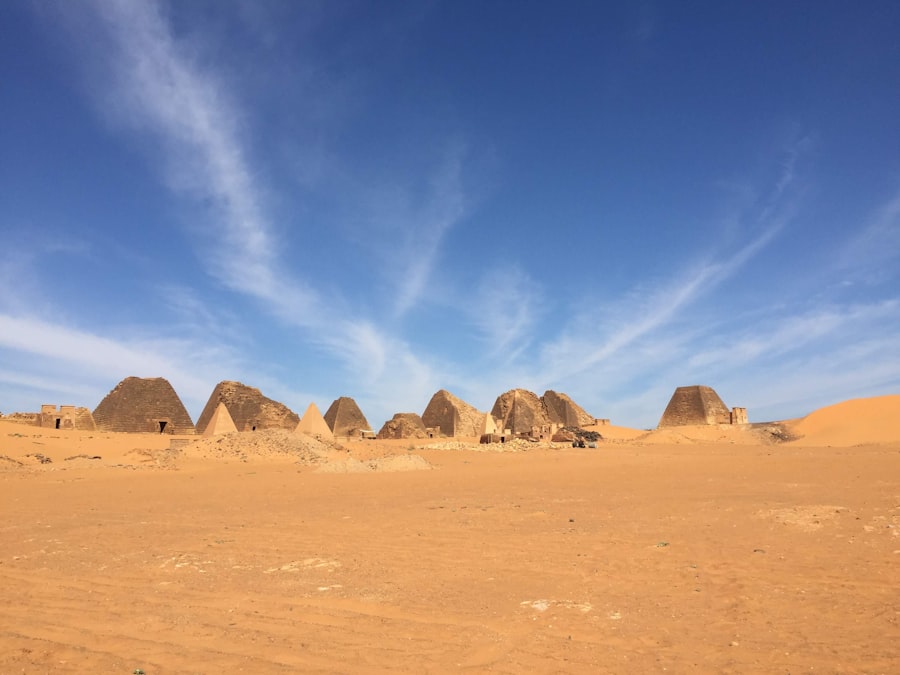
The iconic pyramids of Meroë are a central focus of this section. Unlike their Egyptian counterparts, these pyramids are characterized by their steep angles and smaller size, reflecting a distinct Meroitic architectural style. The documentary explores the ongoing archaeological work at these necropolises, revealing the burial chambers of kings and queens and the treasures they once contained.
The Royal Necropolis of Meroë
The vast cemeteries at Meroë are presented as an awe-inspiring testament to the wealth and power of the Meroitic rulers. The documentary shows aerial footage of the sprawling sites, highlighting the sheer number of pyramids, a phenomenon unparalleled anywhere else in the ancient world. It delves into the process of deciphering the funerary inscriptions and understanding the rituals associated with Meroitic burials.
The Legacy of Queen Amanirenas
The film also highlights the extraordinary stories of powerful female rulers in Meroë, particularly Queen Amanirenas, who famously led her people in a fierce resistance against the Roman Empire. The documentary uses historical accounts and archaeological evidence to paint a vivid picture of this formidable queen and her unwavering determination to protect her kingdom. Her story serves as a powerful example of female leadership and resilience in the ancient world.
In exploring the rich tapestry of ancient history, the documentary on Sudan offers a fascinating glimpse into the civilizations that once thrived along the Nile. The intricate connections between culture, trade, and architecture reveal the profound impact these societies had on the region. For those interested in understanding the broader implications of historical narratives, a related article discusses the evolution of exploration and its consequences in a modern context. You can read more about this intriguing shift in focus in the article titled “The End of Peaceful Space Exploration: A New Era Begins” found here.
The Economic Engine: Iron and Gold
The documentary emphasizes the economic foundation of Meroë’s prosperity, identifying iron production and gold mining as key drivers. The film illustrates the sophisticated iron smelting techniques employed by the Meroites, which allowed them to produce high-quality tools and weapons.
Iron Smelting: A Technological Marvel
The documentary explores the evidence of extensive iron foundries and slag heaps found around Meroë, demonstrating the scale of their metalworking industry. It highlights how this technological advantage likely contributed to Kush’s military strength and economic dominance. Expert commentary explains the complex processes involved in extracting and refining iron, showcasing the Meroites’ mastery of this crucial resource.
The Mines of Gold
The abundant gold deposits in the Nubian desert were another significant source of Meroitic wealth. The documentary showcases the remnants of ancient gold mines and discusses how this precious metal was used for trade, ornamentation, and royal adornments. The vast quantities of gold found in Meroitic burials underscore the immense riches that flowed through the kingdom.
Deciphering the Meroitic Script

One of the most challenging and fascinating aspects of Meroitic civilization is its unique written language. For centuries, the Meroitic script remained largely undeciphered, leaving a significant gap in our understanding of their history and culture. The documentary dedicates a compelling segment to the efforts to crack this ancient code.
The Quest for Decipherment
The film chronicles the arduous journey of linguists and epigraphers who have dedicated their lives to understanding the Meroitic language. It explains the gradual progress made, highlighting the crucial breakthroughs that allowed scholars to begin reading these ancient texts.
The Rosetta Stone of Meroë?
While no single “Rosetta Stone” equivalent has been found for Meroë, the documentary discusses the few bilingual inscriptions and the painstaking comparative analysis that has led to a greater understanding of the script. It emphasizes the importance of inscriptions found on monuments, stelae, and pottery fragments.
Insights from Deciphered Texts
The documentary reveals the fascinating insights gained from deciphered Meroitic texts. These inscriptions offer glimpses into Meroitic religion, royal decrees, legal matters, and everyday life. The ability to read these texts has transformed our perception of Meroë, moving beyond mere material culture to understand their thoughts, beliefs, and societal structures. The film showcases examples of these texts and explains their significance in piecing together the Meroitic puzzle.
The Decline and Legacy of Kush
The documentary concludes by examining the gradual decline of the Meroitic Kingdom and its enduring legacy. While the reasons for its eventual fall are complex and debated, the film offers a nuanced perspective on the factors that contributed to its weakening.
External Pressures and Internal Strife
The documentary explores the impact of external pressures, including the rise of new powers in the region and potential conflicts with neighboring kingdoms. It also touches upon possible internal factors such as economic challenges or succession disputes that may have contributed to the decline.
The Axumite Influence
The film discusses the growing power of the Kingdom of Axum (modern-day Ethiopia) and its eventual dominance over parts of Kush. The interaction and conflict between these two powerful African kingdoms are explored, shedding light on the shifting geopolitical landscape of the time.
The Enduring Cultural Echoes
Despite its eventual decline as a political entity, the documentary emphasizes that the cultural influence of Kush did not vanish. The film highlights how Meroitic traditions, religious practices, and artistic styles continued to resonate in the region for centuries, influencing later cultures. The documentary aims to leave viewers with a profound appreciation for the sophistication and longevity of Kushite civilization.
A Rediscovered Heritage
“Uncovering Ancient History: Sudan” serves as more than just a historical documentary; it is a powerful call to action. It underscores the immense archaeological wealth of Sudan, much of which remains to be explored and understood. The film implicitly advocates for increased investment in archaeological research and preservation efforts in Sudan, a nation that has faced numerous challenges in recent decades. The documentary’s success in bringing these forgotten stories to light is a significant step towards re-evaluating our understanding of ancient global history. It is a testament to the fact that some of history’s most captivating narratives are not found in the most obvious places, but rather lie waiting beneath the sands, ready to be unearthed by those who dare to look. The film leaves audiences with a renewed sense of wonder and a deeper appreciation for the rich tapestry of human history that extends far beyond the commonly known narratives. It is a vivid reminder that the past is a dynamic entity, constantly being reshaped by new discoveries and persistent inquiry.

260 Ancient Graves Were Hiding in This “Empty” Desert
FAQs
What is the focus of the ancient history documentary Sudan?
The ancient history documentary Sudan focuses on the rich history and civilization of Sudan, exploring its ancient kingdoms, cultures, and archaeological sites.
What time period does the documentary cover?
The documentary covers a wide range of time periods, including the ancient civilizations of Kush, Meroe, and the Kingdom of Aksum, spanning from around 8000 BCE to the medieval period.
What are some of the key historical sites and artifacts featured in the documentary?
The documentary features historical sites such as the pyramids of Meroe, the ancient city of Aksum, the Temple of the Lion at Naqa, and the royal cemetery at El Kurru. It also showcases artifacts such as ancient inscriptions, pottery, and religious objects.
What are some of the major themes explored in the documentary?
The documentary explores themes such as the rise and fall of ancient kingdoms, the development of trade and cultural exchange, the role of religion and spirituality, and the impact of external influences on Sudan’s ancient civilizations.
What is the significance of Sudan’s ancient history?
Sudan’s ancient history is significant for its contributions to African and world history, including its advanced civilizations, architectural achievements, and cultural legacies. The documentary aims to highlight the importance of preserving and understanding Sudan’s rich historical heritage.