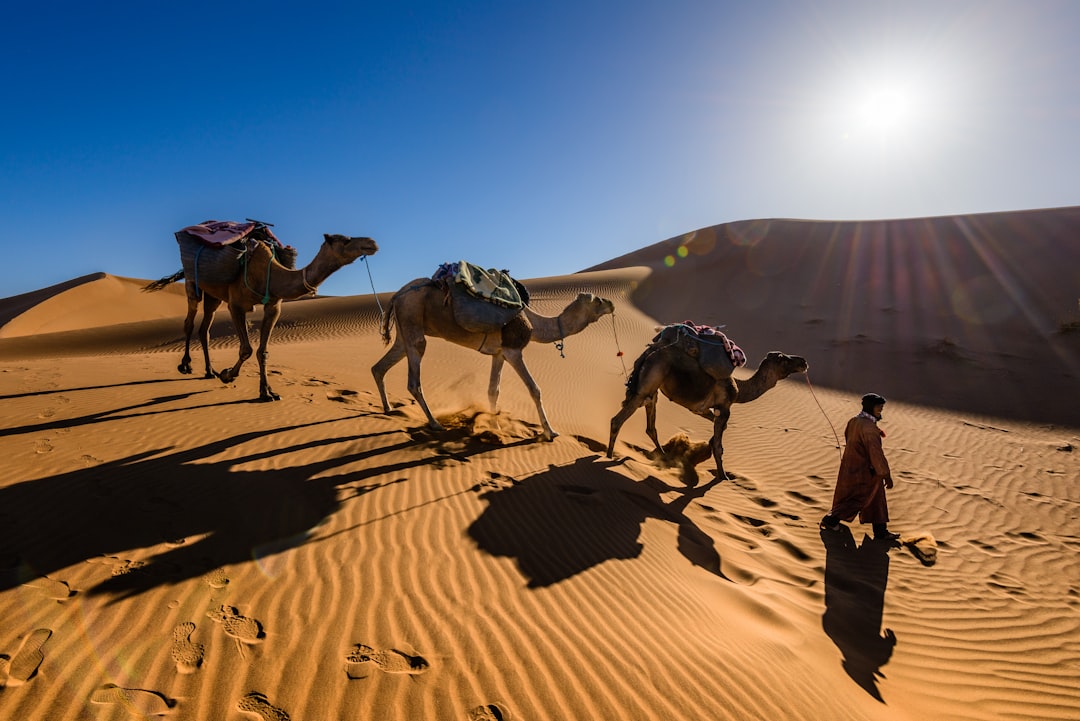
The Sahara Desert, a vast expanse of shimmering sand and unforgiving sun, has long been a symbol of barrenness and ancient secrets. Yet, beneath its seemingly desolate surface lies a world teeming with hidden wonders, a testament to epochs long past when this now-arid landscape was a vibrant, life-sustaining cradle. The tale of the “Lost World Beneath the Sahara” is not one of myth, but of scientific discovery, a continuous unraveling of geological and paleontological enigmas that reveal a Sahara dramatically different from the one we know today. This is a narrative of subterranean oceans, ancient forests, and the colossal creatures that once roamed a forgotten Africa.
For centuries, the Sahara has been perceived as a realm of perpetual dryness. However, the persistent whispers of a wetter past have gradually coalesced into a compelling scientific narrative. These whispers began with anecdotal observations by early explorers, noticing unusual geological formations and fossils that defied the arid present. The sheer scale of the desert, its immense geological history, and the sheer quantity of unearthed evidence have forced scientists to re-evaluate their understanding of its environmental evolution.
The Geological Canvas: Shifting Sands and Ancient Seas
The Sahara’s current topography is a product of immense geological forces that have shaped and reshaped the African continent over millions of years. The vast sedimentary basins that lie beneath the sand are not merely inert deposits; they are records of ancient depositional environments.
Depositional Environments: From Lush Deltas to Arid Plains
The layers of rock and sediment tell a story of dynamic environmental shifts. Scientists have identified evidence of ancient river systems, deltas, and even shallow seas that once covered significant portions of what is now the Sahara. These environments were characterized by abundant water, supporting diverse ecosystems that are now buried under meters of sand. The process of desertification, a gradual drying out of the land, was not a sudden event but a protracted, cyclical phenomenon influenced by global climate changes and tectonic activity.
Paleontological Clues: Fossils as Time Capsules
The Sahara’s fossil record is nothing short of extraordinary. From the microscopic remains of ancient marine organisms to the colossal bones of prehistoric megafauna, these fossils are invaluable time capsules, offering direct evidence of past life. The meticulous excavation and analysis of these finds have been instrumental in reconstructing the Sahara’s lost ecosystems.
The concept of a lost world beneath the Sahara has captivated explorers and historians alike, drawing attention to the mysteries that lie hidden beneath the vast desert sands. For those intrigued by ancient civilizations and their remnants, a related article titled “Exploring the Forbidden Room: Ancient City Ruins” delves into the fascinating discoveries of forgotten cities and the secrets they hold. You can read more about these intriguing archaeological findings by visiting this link: Exploring the Forbidden Room: Ancient City Ruins.
The Great Green Sahara: A Verdant Epoch
Perhaps the most startling revelation about the Sahara’s past is that it was not always a desert. For extended periods, known as the African Humid Periods, the region experienced significant rainfall, transforming it into a savanna, a verdant grassland dotted with trees, and in some areas, even lush forests. This radical transformation was driven by shifts in Earth’s orbit, influencing monsoon patterns and bringing life-giving rains to the region.
Monsoon Magic: The Cycles of the African Humid Periods
The timing and intensity of monsoon seasons have played a pivotal role in shaping the Sahara’s history. During the African Humid Periods, which occurred roughly every 23,000 years due to Milankovitch cycles, the Intertropical Convergence Zone (ITCZ) shifted northward, bringing substantial rainfall to the Sahara.
The Role of Orbital Cycles: Milankovitch’s Influence
The Earth’s orbital parameters – its eccentricity, axial tilt, and precession – all contribute to variations in the amount of solar radiation reaching the planet. These Milankovitch cycles have a profound impact on long-term climate patterns, including the waxing and waning of monsoons. Scientists have meticulously correlated geological evidence with these orbital cycles, confirming the periodicity of the Sahara’s wetter phases.
Evidence of Ancient Lakes and Rivers: Drying Up and Filling In
The geological imprint of these wetter periods is undeniable. Extensive networks of dried-up riverbeds, ancient lakebeds, and fossilized shorelines are scattered across the Sahara. These features are silent witnesses to a time when water flowed freely, supporting a vibrant biosphere.
Biodiversity Bloom: A Haven for Life
The presence of water and lush vegetation in the Sahara during these humid periods fostered an explosion of biodiversity. The region became a critical habitat for a wide array of flora and fauna, many of which are now extinct or found in vastly different environments.
Mammalian Giants: The Reign of Megafauna
The Sahara was once home to a menagerie of magnificent creatures. Fossils of enormous mammals, including proboscideans (ancestors of elephants), rhinos, hippos, and giant antelopes, have been unearthed, painting a picture of a savanna teeming with life.
The Saharan Mastodon: A Tragic Giant
One of the most iconic discoveries is the Saharan mastodon, an extinct relative of the elephant that roamed the region. These colossal herbivores, adapted to browsing on vegetation, are a testament to the rich food sources available in the ancient Sahara. Their fossilized remains offer insights into their diet, behavior, and ecological role.
Ancient Crocodilians: Lords of the Rivers
The presence of substantial water bodies meant that large aquatic predators also thrived. Fossil evidence indicates the presence of formidable crocodilians, some of which were larger than modern-day Nile crocodiles. These apex predators would have dominated the waterways, preying on a variety of other animals.
Avian Spectacle: Birds of a Lost Sky
While less readily preserved, fossilized bird remains also point to a diverse avian population. Evidence suggests the presence of large flightless birds, perhaps similar to ostriches, as well as numerous waterfowl and savanna-dwelling species.
Botanical Bounty: Flora of the Past
The pollen and seed fossils found in ancient lake sediments provide a glimpse into the plant life that once flourished. Evidence suggests a mix of grasses, acacia trees, and other woody vegetation, forming a rich and productive ecosystem.
The Subterranean Oceans: A Hidden Hydrological Network
Perhaps the most profound revelation from beneath the Sahara is the existence of vast underground aquifers, some of which are remnants of ancient seas and massive river systems. These subterranean oceans are a critical resource today, but their origin story is deeply intertwined with the desert’s wetter past.
The Nubian Sandstone Aquifer System: Africa’s Hidden Reservoir
The Nubian Sandstone Aquifer System (NSAS) is one of the largest fossil water aquifer systems in the world, stretching across large portions of Egypt, Libya, Sudan, and Chad. This colossal reservoir holds an immense volume of water, accumulated over millennia.
Fossil Water: A Legacy of Ancient Rains
The water within the NSAS is considered “fossil water” because it was recharged during periods of significantly higher rainfall, primarily the African Humid Periods. This water has been trapped underground for thousands of years, largely untouched by surface evaporation. Its existence is a direct consequence of past climates that allowed water to percolate deep into the earth.
Geological Traps: The Formation of Underground Reservoirs
The geological formations of the Sahara, particularly the vast sedimentary basins, act as natural traps, holding these immense bodies of water. Impermeable layers of rock prevent the water from escaping, preserving it for vast geological timescales. The sandstone itself, with its porous nature, allows for the storage and slow flow of water.
Smaller Aquifers: A Network of Subsurface Water
Beyond the NSAS, numerous other smaller but significant aquifers exist beneath the Sahara. These can be found in various geological formations, each with its own history and recharge mechanisms, though many are also linked to past humid periods.
Paleochannels: Ghost Rivers Underground
In some instances, ancient river channels have been preserved beneath the sand. These “paleochannels” can still contain significant groundwater, effectively acting as subterranean rivers that mirror the courses of their long-vanished surface counterparts.
Isolated Water Pockets: Unexpected Oases
Geological anomalies can also create isolated pockets of water, sometimes referred to as “subterranean oases.” These can be crucial for local ecosystems and human populations, providing essential water sources in otherwise arid regions.
The Great Sahara Transition: The Drying Up
The transition from the lush, life-sustaining Sahara of the past to the arid desert of today was not a sudden catastrophic event but a gradual, multifaceted process. Understanding this transition is key to comprehending the “lost world” beneath the sand.
Climate Shifts: The Retreat of the Rains
The primary driver of the Sahara’s desertification was a fundamental shift in global climate patterns. The northward expansion of the ITCZ, which brought the monsoons, began to recede, leading to a progressive drying out of the region.
The End of the African Humid Periods: A Gradual Decline
As Earth’s orbital parameters changed, the intensity and duration of the African Humid Periods diminished. This meant less rainfall and longer dry spells, gradually transforming the landscape from savanna to desert. The cyclical nature of these periods means that there have been repeated transitions, but the current phase has persisted for thousands of years.
Atmospheric and Oceanic Influences: Feedback Loops
The drying of the Sahara also created feedback loops that reinforced the arid conditions. As vegetation disappeared, the land’s albedo (reflectivity) increased, meaning more solar radiation was reflected back into space, further reducing local temperatures and the potential for rainfall. Changes in ocean currents and atmospheric circulation patterns also played a role in altering regional climate.
Human Impact: The Role of Early Civilizations
While the primary drivers of desertification were natural, human activities, particularly during periods of human habitation in the formerly greener Sahara, may have also contributed to the gradual degradation of the environment.
Overgrazing and Deforestation: Early Ecological Pressures
As early human populations settled in the Saharan fringes, they likely practiced agriculture and animal husbandry. Evidence suggests that in some areas, overgrazing by livestock and the clearing of vegetation for fuel and settlement could have exacerbated soil erosion and reduced the land’s ability to retain moisture, especially during periods of natural drying.
The Paradox of Ancient Settlements: Evidence of Thriving Communities
The existence of numerous ancient settlements, rock art sites, and burial grounds scattered across the Sahara is a stark reminder of the human presence during its wetter phases. These sites, often found in areas that are now incredibly inhospitable, showcase the ingenuity and adaptability of ancient peoples who thrived in this once-fertile landscape.
The concept of a lost world beneath the Sahara has captivated explorers and researchers alike, sparking interest in the rich history and potential discoveries hidden beneath the desert sands. This idea parallels the ongoing discussions about geopolitical dynamics in the region, as highlighted in a recent article that delves into the complexities of navigating global tensions. For those intrigued by the intricate connections between history and contemporary issues, the article can be found here. Exploring these themes not only sheds light on the past but also helps us understand the present landscape of the Sahara and its significance in today’s world.
Unearthing the Lost World: Modern Exploration and Future Prospects
| Lost World Beneath the Sahara | Metrics |
|---|---|
| Location | Beneath the Sahara Desert |
| Size | Unknown |
| Discovery | Recent archaeological findings |
| Artifacts | Ancient pottery, tools, and human remains |
| Importance | Provides insights into ancient human civilizations |
The exploration of the “Lost World Beneath the Sahara” is an ongoing endeavor, driven by advances in technology and a growing scientific curiosity. From satellite imagery to advanced drilling techniques, modern science is continuously peeling back the layers of sand to reveal the secrets of this hidden realm.
Remote Sensing and Geophysical Surveys: Mapping the Unseen
Modern exploration relies heavily on non-invasive techniques to map subterranean features without the need for extensive excavation.
Satellite Imagery: Identifying Ancient Landscapes
Satellites equipped with sophisticated sensors can detect subtle variations in terrain and surface moisture that might indicate the presence of ancient riverbeds, lakes, or geological structures. Multispectral and hyperspectral imaging can reveal differences in vegetation patterns and soil composition, hinting at past hydrological activity.
Ground-Penetrating Radar (GPR) and Seismic Surveys: Peering into the Depths
GPR and seismic surveys use electromagnetic waves and sound waves, respectively, to create detailed cross-sections of the subsurface. These techniques allow scientists to identify buried geological formations, water tables, and even potential archaeological sites without disturbing the land.
Paleontological Excavations: Unearthing Prehistoric Life
The meticulous work of paleontologists remains crucial in understanding the biological history of the Sahara.
Fossil Sites: Locations of Discovery
Dedicated paleontological teams systematically explore identified fossil sites, carefully excavating, cataloging, and preserving unearthed specimens. These sites are often located in specific geological formations known for their fossiliferous potential.
Scientific Analysis: Reconstructing Past Ecosystems
Once fossils are collected, they undergo rigorous scientific analysis. This includes dating the fossils, studying their morphology to understand the animal’s diet and locomotion, and comparing them with existing species to understand evolutionary relationships and ancient ecosystems.
Hydrological Research: Managing Subterranean Resources
The discovery of vast underground water resources has significant implications for the future of the region.
Aquifer Mapping and Modeling: Understanding Water Flow
Scientists are actively mapping the extent and characteristics of these aquifers, developing hydrological models to understand groundwater flow, recharge rates, and the potential for sustainable extraction. This research is vital for water management in arid and semi-arid regions.
Sustainability Concerns: Balancing Extraction and Recharge
The temptation to exploit these vast water reserves is immense, but scientific research highlights the critical need for sustainable management. Since much of this water is fossil water, it is not being replenished at a rate commensurate with potential extraction, raising concerns about long-term availability.
The “Lost World Beneath the Sahara” is a compelling narrative of transformation and resilience. It is a testament to the dynamic nature of our planet’s climate and the extraordinary power of geological time. As we continue to explore its hidden depths, we not only uncover the marvels of a forgotten past but also gain crucial insights into the delicate balance of our planet’s ecosystems and the vital importance of water resources in the present and for the future. The Sahara, once a symbol of desolation, now stands as a monument to life’s enduring capacity to flourish, even in the most unexpected places, and a stark reminder of the ever-changing face of our Earth.

They Found a Shark Graveyard in the Egyptian Desert
FAQs
What is the “lost world beneath the Sahara”?
The “lost world beneath the Sahara” refers to the discovery of a vast underground network of rivers, lakes, and aquifers beneath the Sahara Desert. This discovery has the potential to transform our understanding of the world’s largest desert and its water resources.
How was the “lost world beneath the Sahara” discovered?
The discovery of the underground network beneath the Sahara was made using advanced satellite imagery and radar technology. This allowed scientists to map the subsurface water systems in unprecedented detail, revealing the presence of extensive underground rivers and aquifers.
What are the implications of the discovery of the “lost world beneath the Sahara”?
The discovery has significant implications for water resource management in the Sahara region. It could potentially provide access to new sources of water for local communities and contribute to the sustainable development of the region. Additionally, it may also have implications for our understanding of the region’s geological and ecological history.
What challenges are associated with accessing the water in the underground network beneath the Sahara?
Accessing the water in the underground network presents several challenges, including the depth and complexity of the aquifers, as well as the potential environmental impact of extraction. Additionally, there are logistical and technical challenges associated with drilling and extracting water from such deep underground sources.
What further research is needed to fully understand the “lost world beneath the Sahara”?
Further research is needed to fully understand the extent, dynamics, and sustainability of the underground water network beneath the Sahara. This includes ongoing monitoring and mapping of the aquifers, as well as research into the potential impact of climate change and human activity on these underground water resources.