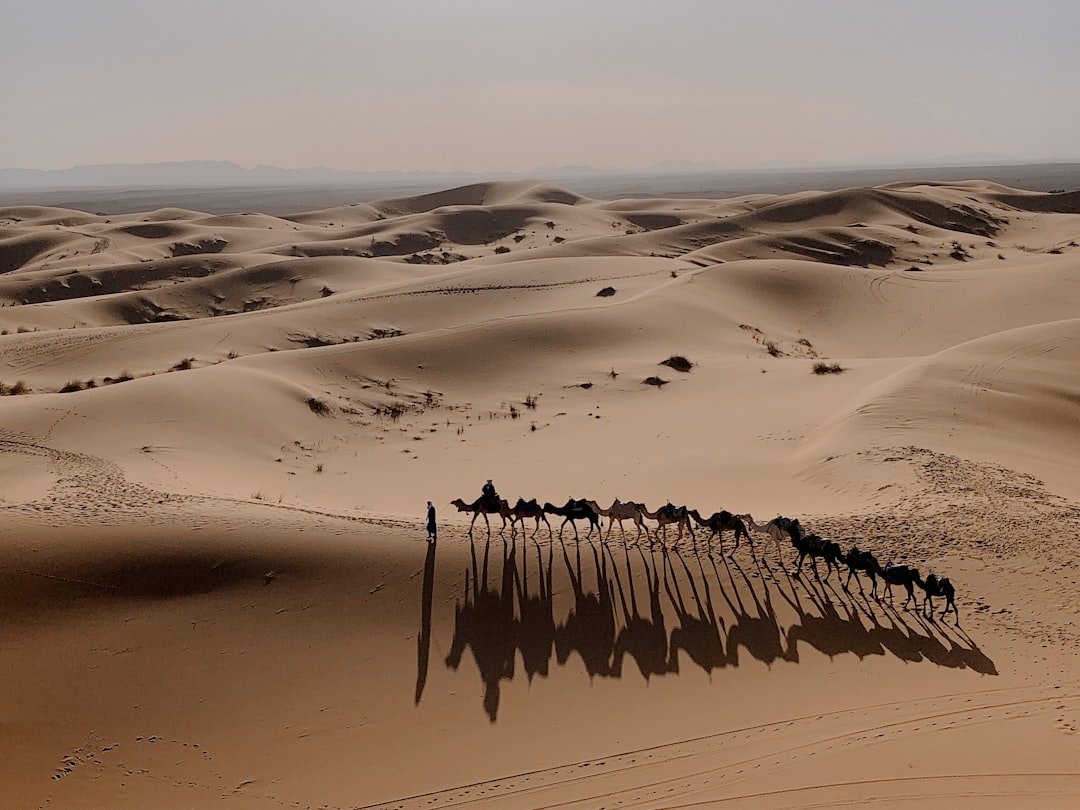
A colossal, ancient sea, hidden for millennia beneath the shifting sands of the Sahara Desert, is slowly yielding its secrets to a dedicated legion of scientists. This subterranean ocean, far vaster and older than previously imagined, offers a tantalizing glimpse into a forgotten chapter of Earth’s history and holds profound implications for our understanding of climate, life, and the very geology of the African continent.
For decades, hints of subsurface water have trickled out of geological surveys and local folklore. Nomadic tribes have long spoken of hidden springs and underground rivers, tales often dismissed as legend. However, persistent geological anomalies, particularly seismic data and the chemical signatures of certain rock formations, began to paint a more compelling picture. These anomalies suggested the presence of significant water reserves deep within the Earth’s crust, far beyond the reach of modern wells and beyond what the arid climate of the Sahara could explain.
Early Indicators and Unconventional Wisdom
The initial investigations were often a blend of high-tech exploration and reliance on traditional knowledge. Satellite imagery, while revealing the vastness of the desert, also highlighted subtle topographical features and mineral deposits that could indicate past hydrological activity. Geologists, accustomed to thinking in terms of current geological processes, had to adjust their paradigms. The Sahara, in its current state, is a testament to aridity, a landscape sculpted by wind and drought. The idea of a vast, ancient body of water existing within its depths seemed counterintuitive.
The Challenge of Access and Exploration
The sheer scale of the Sahara presents a formidable barrier to exploration. The harsh desert environment, with its extreme temperatures and lack of infrastructure, makes accessing and studying these deep subterranean reservoirs exceptionally difficult. Drilling operations are expensive and logistically challenging. Furthermore, the ancient sea is not a single, easily accessible body of water; it is thought to be a complex network of interconnected aquifers and geological formations, spread across a vast geographical area.
Recent discoveries have revealed that beneath the Sahara Desert lies an ancient sea, which once teemed with marine life and shaped the region’s geological history. This fascinating finding adds to our understanding of Earth’s climatic shifts over millennia. For those interested in exploring similar theories about ancient landscapes, you might find the article on the lost continent of Antarctica intriguing. It discusses how ancient seas and landmasses have influenced our planet’s evolution. You can read more about it here: The Lost Continent of Antarctica Theory.
Unveiling the Aquifer Systems
The breakthrough in understanding came with advanced geophysical methods and sophisticated hydrological modeling. Scientists began to piece together the intricate puzzle of the Sahara’s deep aquifers, revealing a system far more extensive and complex than anyone had dared to predict. This subterranean realm is not a singular, stagnant pool but a dynamic, albeit slow-moving, hydrological network.
The Nubian Sandstone Aquifer System: A Glimpse into the Past
Perhaps the most well-documented and significant of these discoveries is the Nubian Sandstone Aquifer System (NSAS). This colossal aquifer, straddling the borders of Egypt, Libya, Sudan, and Chad, contains an estimated volume of water comparable to that of Lake Superior. The water within the NSAS is remarkably old, with some dating back tens of thousands, even hundreds of thousands, of years. This ancient lineage of the water is a key piece of evidence pointing to a vastly different climatic past for the region.
Isotopic Analysis: Dating the Waters
The “age” of the water is determined through isotopic analysis. Scientists study the ratios of different isotopes of hydrogen and oxygen, as well as trace elements like carbon-14, within the water samples. These isotopes act like a geological clock, their abundance changing predictably over time due to radioactive decay or fractionation processes. By comparing the isotopic signatures of the deep aquifer water to those found in more recent rainfall, researchers can estimate how long the water has been isolated from the surface environment.
Recharge Zones and Paleoclimatic Clues
The presence of such vast quantities of ancient water implies periods of significantly increased rainfall in the Sahara’s past. Scientists hypothesize that these recharge zones were active during interglacial periods or periods of increased monsoon activity that extended further north than they do today. The analysis of sediment cores and fossil evidence from the surrounding areas further supports this notion, revealing a Sahara that was once a far more verdant and watered landscape.
Beyond the NSAS: A Network of Hidden Reservoirs
While the NSAS is a prime example, research is increasingly indicating that it is not the only major subterranean water reservoir beneath the Sahara. Other, smaller aquifer systems are being identified across the desert, hinting at a more widespread and interconnected hydrological system that existed in antiquity. These discoveries are constantly expanding the known boundaries of this hidden ocean.
The Tanezrouft Basin and the Sahara Pump
Further west, in the Tanezrouft Basin, a vast and hyper-arid region, evidence suggests the presence of another significant aquifer. The dynamics of water movement within these deep systems are a subject of intense study. Some theories propose a “Sahara Pump” effect, where geological pressures and density differences could drive slow but continuous water movement over millennia.
Groundwater Basins and Geological Formations
The existence and extent of these groundwater basins are intricately linked to the underlying geology. Ancient sedimentary basins, vast depressions in the Earth’s crust that have accumulated layers of sediment over geological time, are ideal for trapping and storing groundwater. The porous nature of these sedimentary rocks, particularly sandstones and limestones, allows them to act as natural reservoirs.
The Paleoclimatic Significance: A Greener Sahara
The discovery of this ancient sea is more than just a hydrogeological revelation; it is a powerful testament to dramatic climatic shifts that have shaped the Earth. The Sahara of today, a byword for aridity and desolation, was once a vastly different place.
The “Green Sahara” Period: A Lush Past
Geological and paleoenvironmental evidence overwhelmingly points to periods known as the “Green Sahara” or “African Humid Period.” During these times, spanning roughly from 11,000 to 5,000 years ago, the Sahara received significantly more rainfall. Monsoonal systems extended much further north, transforming large parts of the desert into savannas, grasslands, and even supporting large lakes.
Evidence from Lake Chad and Paleolakes
The paleo-lake deposits found around the Chadian Basin, for example, provide compelling evidence of massive bodies of freshwater that once existed where arid scrubland now prevails. These ancient lakebeds are littered with fossilized aquatic life and lacustrine sediments, painting a vivid picture of a vibrant ecosystem.
Fossil Discoveries and Ancient Flora and Fauna
The fossil record of the Sahara further supports the Green Sahara narrative. The discovery of ancient animal bones, including hippopotami, crocodiles, and various fish species, in regions now devoid of permanent water, underscores the dramatic climatic transformation. Similarly, fossilized pollen and plant remains indicate the presence of diverse flora that could not survive in the current desert environment.
Implications for Global Climate Models
Understanding the mechanisms that drove these past climatic shifts is crucial for refining our current climate models. By studying the ancient Sahara, scientists can gain insights into how atmospheric circulation patterns, oceanic currents, and even vegetation cover interact to influence regional and global climate. This knowledge is vital for predicting future climate change scenarios.
The Role of Orbital Cycles and Insolation
The primary driver of the Green Sahara periods is believed to be changes in Earth’s orbital parameters, specifically the obliquity and precession of the Earth’s axis. These cycles influence the amount of solar radiation (insolation) received by different parts of the Earth at different times of the year. During certain periods, the northern hemisphere received more direct sunlight during the summer months, which would have amplified monsoonal rainfall.
Feedback Loops: Vegetation and Atmospheric Moisture
The interaction between vegetation and atmospheric moisture is a key area of study. As rainfall increased, vegetation would have proliferated, further enhancing evapotranspiration and contributing to more localized rainfall – a positive feedback loop. Understanding these complex feedback mechanisms is essential for accurate climate modeling.
Life Beneath the Sands: Enduring and Adapting
The existence of vast quantities of ancient water beneath the Sahara raises fascinating questions about the possibility of life surviving or even thriving in this hidden environment. While the deep aquifers are not teeming with surface-dwelling organisms, the potential for unique and specialized life forms is a tantalizing prospect.
Subsurface Microbial Ecosystems
The most likely form of life to exist in such an environment would be extremophilic microorganisms. These are organisms that can survive and even flourish in conditions that would be lethal to most other life forms, such as high pressure, low nutrient availability, and complete absence of sunlight.
Chemosynthesis and Energy Sources
In the absence of sunlight, these microbes would rely on chemosynthesis for energy. This process involves deriving energy from chemical reactions, often involving sulfur compounds or iron, which are abundant in certain geological formations. The ancient water itself would contain dissolved minerals and gases that could serve as the basis for these chemical reactions.
Genetic Adaptation and Evolutionary History
Studying the genetic makeup of these subsurface microbes could provide invaluable insights into the evolution of life in extreme environments. Their genetic adaptations could reveal unique survival strategies and shed light on the resilience of life itself. Furthermore, their genetic makeup might provide clues about the original source of the water and the conditions under which it was last in contact with the surface.
The Search for Ancient Life and Biosignatures
The potential for discovering ancient, preserved life forms or biosignatures (evidence of past life) within the deep aquifers is another exciting avenue of research. While direct evidence of complex multicellular life is unlikely, fossilized microbial communities or chemical traces of ancient biological activity could be present.
Fossilized Microbial Mats and Stromatolites
In certain geological contexts, fossilized microbial mats and stromatolites – layered sedimentary structures formed by the growth of cyanobacteria – could be preserved. These structures, formed in ancient shallow marine or lacustrine environments, would provide direct evidence of past biological activity.
Organic Molecules and Biomarkers
The presence of specific organic molecules or biomarkers within the aquifer water or surrounding sediments could also indicate past or present biological activity. These molecules are often produced by living organisms and can persist in the geological record.
Recent discoveries have revealed that beneath the vast Sahara Desert lies an ancient sea, a remnant of a time when the region was lush and teeming with life. This fascinating finding sheds light on the geological history of the area and its transformation over millennia. For those interested in understanding the implications of such changes on our environment, an insightful article discusses the challenges of desertification and the importance of preserving our land. You can read more about it in this related article.
Unlocking the Future: Resource and Research Potential
| Metrics | Data |
|---|---|
| Location | Beneath the Sahara Desert |
| Age | Ancient |
| Size | Unknown |
| Geological Significance | Provides insights into the region’s prehistoric climate |
The discovery of this ancient subterranean sea holds immense potential for both scientific research and practical applications, particularly concerning water resources and a deeper understanding of Earth’s geological history.
A Vital Water Resource for Arid Regions
The vast quantities of water locked away beneath the Sahara represent a significant potential resource for the arid nations of North Africa. However, the sustainable and ethical management of these ancient reserves is a critical consideration.
Challenges of Extraction and Sustainability
Extracting this water would require significant investment in drilling technology and infrastructure. More importantly, the recharge rates of these ancient aquifers are exceedingly slow, meaning that extensive extraction could lead to rapid depletion of reserves that have been accumulating for millennia. Careful hydrological modeling and long-term planning are essential to avoid unsustainable exploitation.
International Cooperation and Water Diplomacy
The transboundary nature of many of these aquifer systems necessitates international cooperation. Agreements on water sharing, extraction levels, and research initiatives will be crucial to ensure equitable access and prevent potential conflicts over this precious resource.
A Window into Earth’s Deep Processes
Beyond its potential as a water source, the ancient sea beneath the Sahara offers an unparalleled opportunity to study fundamental Earth processes.
Hydrogeology and Geochemistry of Deep Systems
The study of these deep aquifer systems provides invaluable data on the hydrogeology and geochemistry of the Earth’s crust. Understanding how water moves through deep rock formations, the chemical reactions that occur, and the long-term stability of these systems can inform a range of geological research.
Insights into Tectonic Activity and Subsurface Pressures
The dynamics of fluid movement within these deep reservoirs can also offer clues about tectonic activity and subsurface pressures. Anomalies in water pressure or flow rates could potentially indicate seismic activity or other geological shifts.
Future Research Directions and Technological Advancements
The exploration of this hidden ocean is an ongoing endeavor, with future research promising to unveil even more astonishing discoveries.
Advanced Sensing Technologies and Remote Sensing
Continued advancements in seismic imaging, ground-penetrating radar, and other remote sensing technologies will allow for more detailed mapping and characterization of these deep aquifer systems. This will enable scientists to better understand their extent, connectivity, and internal structure.
Deep Drilling and Subsurface Exploration
Targeted deep drilling operations, coupled with sophisticated downhole instrumentation, will be essential for obtaining direct samples of the water, sediments, and rock formations within these ancient reservoirs. This will allow for in-depth analysis of their composition, age, and potential biological content.
Interdisciplinary Collaboration and Data Integration
The most significant breakthroughs will likely come from interdisciplinary collaboration, bringing together geologists, hydrologists, geochemists, biologists, and climate scientists. Integrating data from various sources – from seismic surveys to isotopic analysis and fossil discoveries – will be key to building a comprehensive understanding of this lost world. The ancient sea beneath the Sahara is not merely a geological curiosity; it is a vast, subterranean library, waiting to be read, offering profound lessons about our planet’s past, its present, and its potential future.

They Found a Shark Graveyard in the Egyptian Desert
FAQs
What is the ancient sea beneath the Sahara Desert?
The ancient sea beneath the Sahara Desert refers to the remnants of a vast, prehistoric ocean that once covered the region millions of years ago. This sea, known as the Tethys Sea, existed during the Mesozoic and Cenozoic eras.
How was the ancient sea beneath the Sahara Desert discovered?
The ancient sea beneath the Sahara Desert was discovered through geological research and satellite imaging. Scientists have used advanced technology to study the rock formations, sedimentary layers, and other geological features in the region to uncover evidence of the ancient sea.
What evidence supports the existence of the ancient sea beneath the Sahara Desert?
Evidence supporting the existence of the ancient sea beneath the Sahara Desert includes the presence of marine fossils, salt deposits, and ancient shorelines. These geological features provide valuable clues about the prehistoric environment and the presence of a vast ocean in the region.
What impact did the ancient sea have on the Sahara Desert’s formation?
The ancient sea played a significant role in shaping the geological features of the Sahara Desert. The deposition of sediments, the movement of tectonic plates, and the drying up of the sea over millions of years all contributed to the formation of the desert landscape we see today.
What significance does the ancient sea beneath the Sahara Desert hold for scientific research?
The ancient sea beneath the Sahara Desert provides valuable insights into Earth’s geological history, climate change, and the evolution of ancient ecosystems. Studying the remnants of this prehistoric ocean can help scientists better understand the planet’s past and its potential implications for the future.