
The sun, a relentless orb in the vast North American sky, had long since faded from the collective memory of the continent’s indigenous peoples. Centuries had passed, and the once-thriving civilization that had called this land home was reduced to whispers in the wind, mere echoes in the soil. Yet, beneath the unassuming plains of southwestern Illinois, a grander narrative lay buried, a testament to human ingenuity, complex societal structures, and a vibrant cultural legacy. This is the story of Cahokia, the lost city, a metropolis that once dwarfed contemporary European settlements, and the ongoing efforts to uncover its secrets.
The story of Cahokia is not one of a sudden, miraculous appearance, but rather a gradual unfolding, a testament to the enduring power of adaptation and innovation by the Mississippian culture. Long before it reached its zenith, this region was a hub of activity, a crossroads where various indigenous groups interacted, traded, and developed unique cultural practices.
The Pre-Mississippian Roots
The land that would become Cahokia was inhabited for millennia by people who practiced agriculture, hunted, and gathered. While not possessing the monumental architecture of later eras, these earlier inhabitants laid the groundwork for what was to come. They understood the fertile river valleys, the abundant game, and the strategic importance of the confluence of the Mississippi, Missouri, and Illinois Rivers. Archaeological evidence suggests small, scattered settlements, primarily focused on subsistence, but with a growing complexity in social organization and material culture. These early communities, often referred to as Late Woodland cultures, demonstrated an increasing reliance on maize agriculture, a dietary staple that would fuel the demographic growth of subsequent periods.
The Mississippian Transformation
The true genesis of Cahokia as a powerful center can be traced to the rise of the Mississippian culture, which began to flourish around 800 CE. This period witnessed a significant shift in societal organization, agricultural practices, and technological advancements. The adoption of intensive maize cultivation, coupled with innovations in pottery and toolmaking, allowed for larger, more sedentary populations. The Mississippian people developed sophisticated mound-building techniques, creating earthen structures that served various purposes, from religious ceremonies and burial sites to residences for the elite. This cultural efflorescence wasn’t confined to Cahokia; it spread across a vast network of settlements throughout the Eastern Woodlands, but Cahokia, due to its strategic location and resourceful leadership, emerged as the undisputed heart of this burgeoning civilization.
Early Growth and Expansion
The initial stages of Cahokia’s growth were characterized by the consolidation of power and the expansion of its influence. Smaller villages in the surrounding region began to coalesce under the leadership of Cahokia’s burgeoning elite. This process likely involved a combination of political negotiation, economic integration, and, perhaps, military influence. The control of vital trade routes, particularly those involving copper from the Great Lakes and shell from the Gulf Coast, undoubtedly played a crucial role in Cahokia’s ascent. As the population grew and the settlement expanded, the need for centralized authority and a complex administrative structure became increasingly apparent, setting the stage for the monumental constructions that would define Cahokia’s Golden Age.
The lost city of Cahokia, once a thriving urban center of the Mississippian culture, continues to intrigue historians and archaeologists alike. Its complex society and monumental earthworks raise questions about the social and political structures of ancient civilizations in North America. For those interested in exploring the broader implications of ancient rulers and their deceptions, a related article can be found at Uncovering the Deceptions of Ancient Rulers, which delves into the intricacies of power dynamics in historical contexts.
The Apex of Cahokian Power: A Thriving Urban Center
By the 11th century, Cahokia had transformed from a significant regional center into a veritable metropolis, a sprawling urban landscape that dwarfed any other settlement in North America at the time. This period, often referred to as the “Compiled Phase,” marked the zenith of its power, influence, and cultural achievements.
Monks Mound: The Beating Heart of Cahokia
Dominating the landscape of Cahokia is Monks Mound, a colossal earthen structure that stands as a testament to the engineering prowess and organizational capabilities of the Mississippian people. This platform mound, measuring an astonishing 100 feet high, 990 feet long, and 760 feet wide, is the largest prehistoric earthwork in the Americas. Its construction, which took centuries to complete in multiple stages, involved the excavation and transportation of millions of cubic feet of soil, a feat requiring a massive and coordinated labor force. Atop Monks Mound stood a substantial wooden structure, likely the residence of the paramount chief or a central temple, offering a commanding view of the surrounding city and its farmlands. The sheer scale of Monks Mound suggests not only immense power but also a profound spiritual and ideological significance, serving as a focal point for the entire Cahokian civilization.
The Walled City and Other Mounds
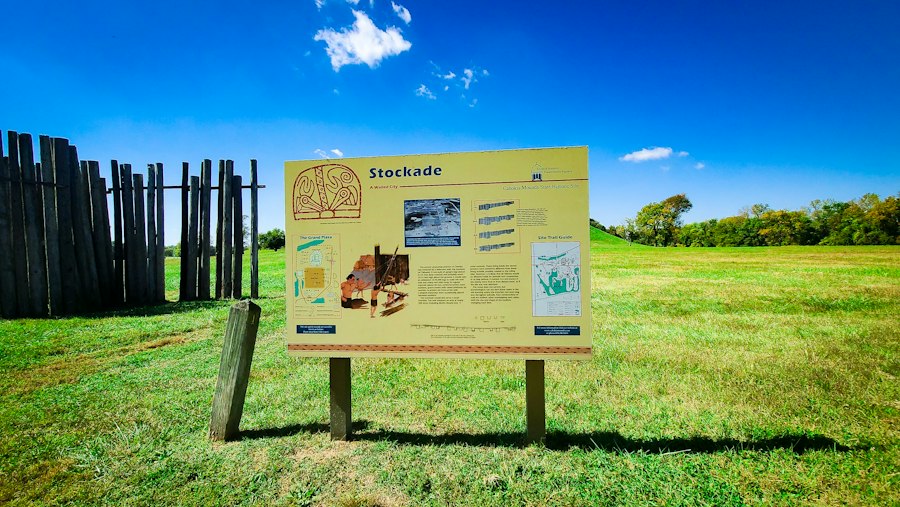
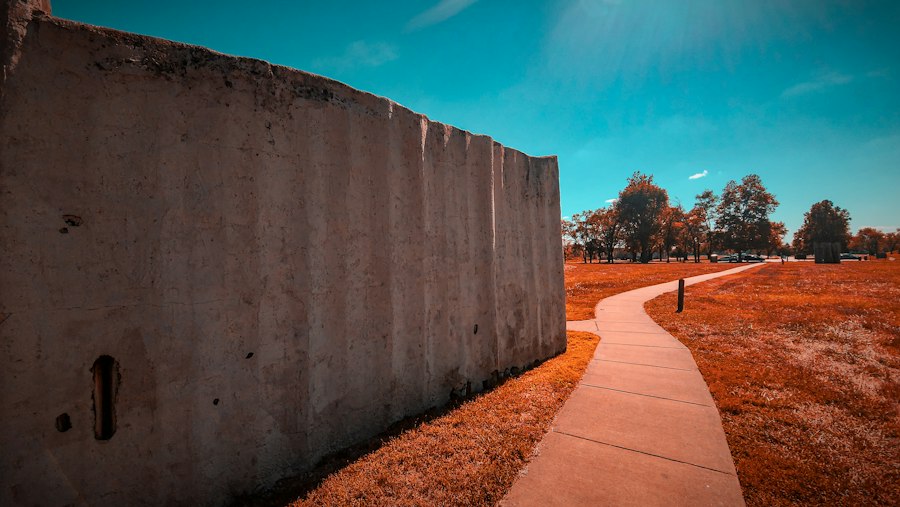
Beyond Monks Mound, Cahokia encompassed a vast urban core, estimated to have covered six square miles and housed a population that may have reached 20,000 to 50,000 people at its peak. This dense settlement was organized into distinct neighborhoods and ceremonial precincts. A defining feature of this urban landscape was a palisade wall, constructed of large wooden timbers, that enclosed a significant portion of the city. This wall, fortified with watchtowers, likely served both defensive and symbolic purposes, delineating the urban core and reinforcing the authority of its rulers. Within the walled city, and scattered across the wider Cahokian landscape, were hundreds of other mounds of varying sizes and shapes. These included conical burial mounds, ridge-top mounds, and rectangular platform mounds, each with its own specific function, from communal plazas to elite residences and astronomical observatories.
A Hub of Trade and Exchange
Cahokia’s strategic location at the confluence of major rivers made it a critical nexus for trade and exchange throughout eastern North America. Raw materials and finished goods flowed into Cahokia from distant regions, including copper from present-day Michigan, mica from the Appalachian Mountains, flint from Indiana, and marine shell from the Gulf Coast. In return, Cahokian artisans produced exquisite pottery, finely crafted stone tools, and other goods that were distributed throughout their vast sphere of influence. This extensive trade network not only enriched Cahokia economically but also facilitated the diffusion of cultural ideas, religious beliefs, and artistic styles, solidifying its position as a dominant force in the Mississippian world.
The Intricacies of Cahokian Society: Governance and Belief Systems
Unraveling the social fabric of Cahokia is a complex endeavor, as the Mississippian people left no written records. However, archaeological evidence, combined with comparative studies of other indigenous societies, offers tantalizing insights into their governance, social hierarchy, and spiritual beliefs.
A Hierarchical Society
Cahokia was undeniably a hierarchical society, with a clear distinction between the elite and the common populace. The monumental architecture, particularly the residences atop the largest mounds, points to a ruling class that commanded significant resources and labor. Burial practices also reveal social stratification, with the elite interred in elaborate tombs, often accompanied by grave goods indicative of their status. The commoners, who likely formed the agricultural workforce and skilled craftspeople, lived in more modest dwellings within the urban core and surrounding villages. The precise mechanisms of social control and the extent of social mobility remain subjects of ongoing research, but it is clear that a complex system of authority governed this vast population.
The Role of Chiefs and Priests
At the apex of Cahokian society likely stood a paramount chief, a powerful individual who wielded considerable political, economic, and religious authority. This chief’s lineage would have been crucial to their legitimacy, and their role may have encompassed everything from leading military expeditions to officiating at important ceremonies. Alongside the chief, a class of priests or shamans likely played a vital role in interpreting the spiritual world and mediating between the human and divine realms. Their knowledge of astronomical cycles, calendrical systems, and healing practices would have been essential for the functioning of the community and the maintenance of cosmic order. The interconnectedness of political and religious power is a common theme in complex societies, and Cahokia was likely no exception.
The Cosmology and Rituals
The spiritual beliefs of the Cahokians were deeply intertwined with their understanding of the natural world and the cosmos. Their cosmology likely involved a complex system of deities, spirits, and ancestral beings. The construction of mounds, their alignment with celestial events, and the presence of effigy pottery suggest a profound connection to the sun, moon, and stars. Rituals, often performed at mound centers and public plazas, were central to Cahokian life. These ceremonies likely served to appease the gods, ensure agricultural fertility, celebrate important life events, and reaffirm social order. The discovery of human sacrifices and evidence of elaborate feasting at certain sites hints at the intensity and significance of these religious practices.
The Mysteries of Decline: Unraveling Cahokia’s Abandonment
By the 14th century, the once-vibrant metropolis of Cahokia had largely fallen silent. The grand structures were left to the elements, and the bustling plazas became overgrown with vegetation. The reasons behind this dramatic decline have long been a subject of intense scholarly debate, with a multitude of theories proposed.
Environmental Factors
One prominent theory suggests that environmental degradation played a significant role in Cahokia’s demise. Centuries of intensive agriculture, coupled with deforestation for construction and fuel, may have led to soil erosion, reduced agricultural yields, and water scarcity. The proximity to the Mississippi River, while beneficial for trade, also exposed the city to the risks of flooding, which could have devastated crops and infrastructure. Overexploitation of local resources, from timber to game animals, could have created an unsustainable ecological footprint, pushing the inhabitants to seek new lands.
Social and Political Instability
Internal factors may have also contributed to Cahokia’s decline. As the population grew and resources became strained, social tensions may have escalated. Warfare with neighboring groups, or even internal conflict within Cahokian society, could have led to instability and the eventual abandonment of the city. The intricate social hierarchy, while once a source of strength, might have become a point of fragility, with the collapse of leadership or the rise of dissent leading to societal breakdown. The outward diffusion of Cahokian cultural traits in later periods suggests that elements of their society dispersed rather than vanishing entirely, hinting at a more complex process of migration and adaptation rather than outright collapse.
Climate Change and Disease
More recent research has also explored the potential impact of climate change and disease. Shifts in regional climate patterns, such as prolonged droughts or unusually harsh winters, could have placed immense pressure on Cahokia’s agricultural base and overall stability. Furthermore, the dense urban environment and extensive trade networks could have facilitated the rapid spread of infectious diseases, though direct archaeological evidence for widespread epidemics remains elusive. The combination of these factors, acting in concert, likely created a tipping point, forcing the inhabitants to make the difficult decision to leave their magnificent city behind.
The lost city of Cahokia, once a thriving urban center near present-day St. Louis, offers fascinating insights into the complexities of ancient civilizations in North America. Researchers continue to explore how resource management and environmental factors influenced its rise and fall. For a deeper understanding of how modern societies grapple with resource scarcity, you can read about the ongoing challenges in resource allocation in this related article on resource wars. The article provides a contemporary perspective that echoes the struggles faced by ancient communities like Cahokia. You can find it here: resource wars.
Legacy and Ongoing Discoveries: Preserving the Echoes of Cahokia
| Metric | Data |
|---|---|
| Location | Illinois, United States |
| Estimated Population | 10,000-20,000 |
| Time Period | 1050-1350 AD |
| Size | Approximately 4,000 acres |
| Significance | One of the largest pre-Columbian settlements in North America |
Though the physical structures of Cahokia lay in ruins, its legacy endures. Modern archaeology continues to uncover its secrets, piecing together the fragments of a lost civilization and offering invaluable insights into the history of North America.
The Role of Archaeology and Preservation
The archaeological investigation of Cahokia, which began in earnest in the early 20th century, has been a monumental undertaking. The vastness of the site and the complexity of its stratigraphy have required decades of meticulous excavation, mapping, and analysis. Today, Cahokia Mounds State Historic Site is a UNESCO World Heritage Site, recognized for its outstanding universal value. Ongoing efforts are focused on both preserving the existing remains and conducting new research to further our understanding. This includes using advanced technologies such as LiDAR (Light Detection and Ranging) to map buried features and drones for aerial surveys, revealing patterns and structures previously unseen.
What Cahokia Teaches Us
The story of Cahokia is a powerful reminder of the advanced civilizations that flourished in North America long before European arrival. It challenges simplistic narratives of pre-Columbian societies and highlights the capacity for large-scale political organization, complex social structures, and impressive engineering feats among indigenous peoples. Cahokia offers a crucial perspective on the diversity of human experience and the varied paths of societal development across the globe. Its study enriches our understanding of human migration, cultural adaptation, and the intricate relationship between humans and their environment.
The Future of Cahokian Research
The exploration of Cahokia is far from over. New discoveries are made with each passing season, continually refining our understanding of this remarkable civilization. Future research will likely focus on deciphering the nuances of its political economy, unraveling the complexities of its belief systems, and further investigating the precise factors that led to its eventual abandonment. The ongoing collaboration between archaeologists, anthropologists, and indigenous communities is crucial to ensuring that the story of Cahokia is told with respect and accuracy, preserving its legacy for generations to come and offering a profound testament to the enduring power of human achievement.

A City Bigger Than London Once Stood in America. Then It Vanished.
FAQs
What is the Lost City of Cahokia?
The Lost City of Cahokia refers to the ancient Native American city located in present-day Illinois, USA. It was the largest pre-Columbian settlement north of Mexico and was inhabited from about 600 to 1400 AD.
What was the significance of Cahokia?
Cahokia was a major center for trade, agriculture, and culture in the Mississippian civilization. It had a population of 10,000 to 20,000 at its peak and was characterized by its large earthen mounds, including the famous Monk’s Mound, which is the largest prehistoric earthwork in the Americas.
Why is Cahokia considered a “lost” city?
Cahokia was abandoned by the time European explorers arrived in the 17th century, and its existence was largely forgotten until the 19th century. The site was rediscovered and excavated by archaeologists in the 20th century, leading to a renewed interest in its history and significance.
What caused the decline of Cahokia?
The exact reasons for the decline of Cahokia are still debated among archaeologists, but factors such as environmental degradation, resource depletion, and social or political upheaval are believed to have played a role in the city’s abandonment.
What can visitors see at the Cahokia Mounds State Historic Site today?
Today, visitors to the Cahokia Mounds State Historic Site can explore the preserved mounds, including Monk’s Mound, as well as a museum that showcases artifacts and exhibits related to the ancient city and its inhabitants. The site is a UNESCO World Heritage site and an important cultural and historical landmark.