The vast expanse of North America, prior to the arrival of Europeans in the late 15th century, was a tapestry of vibrant and diverse indigenous cultures, each with its own unique history, traditions, and societal structures. For millennia, these peoples had thrived, adapting to a multitude of environments and developing complex ways of life that profoundly shaped the continent’s landscapes and its future trajectory. Understanding pre-Columbian North America is not merely an academic exercise; it is an essential step in appreciating the deep roots of human presence on the continent and the rich legacy that continues to influence contemporary society. This exploration delves into the multifaceted world of these indigenous civilizations, moving beyond simplistic stereotypes to reveal their ingenuity, resilience, and profound connection to the natural world.
The story of pre-Columbian North America begins with the earliest human migrations, a process shrouded in scientific debate but generally understood to have occurred thousands of years before the Common Era. These early peoples, often referred to as Paleo-Indians, were hunter-gatherers who navigated the glacial landscapes of a dramatically different North America. Their arrival marked the genesis of a long and dynamic human story on the continent.
Theories of Migration and Early Settlement
While definitive answers remain elusive, the prevailing scientific consensus points to migration across the Bering Land Bridge, a landmass that once connected Siberia and Alaska during periods of lower sea levels.
The Bering Land Bridge Hypothesis
This theory posits that nomadic groups followed herds of megafauna, such as mammoths and mastodons, across this exposed land bridge. Archaeological evidence, including distinctive stone projectile points like Clovis points, supports the presence of these early big-game hunters across North America.
Coastal Migration Routes
Alternative theories suggest a parallel migration along the Pacific coast, utilizing maritime resources and possibly employing watercraft to move southward. This route could have provided an earlier and potentially more consistent pathway to habitable regions.
Adapting to Diverse Environments
The initial settlers quickly dispersed, encountering a wide array of ecological zones, from the frozen north to the arid southwest and the temperate forests of the east. Their survival and eventual flourishing depended on their ability to understand and adapt to these varied landscapes.
The Arctic and Subarctic Peoples
Cultures like the Inuit and Aleut developed sophisticated technologies and survival strategies for extreme cold, relying on hunting marine mammals, fishing, and utilizing materials like bone, ivory, and animal hides for shelter and clothing. Their nomadic lifestyle was dictated by the seasonal availability of resources.
The Great Plains and Plateau Hunter-Gatherers
Peoples of the Great Plains and Plateau, while often characterized by their later reliance on the horse, were initially highly mobile hunter-gatherers who exploited the rich bison herds and other game. Their strategies involved intricate knowledge of animal behavior and seasonal plant cycles.
Before Columbus arrived in North America, the continent was home to a diverse array of indigenous cultures and societies, each with their own unique histories and traditions. An interesting article that explores the complexities of governance and authority in the context of disasters is available at this link: The US Government’s Authority in Declared Disasters. This article provides insight into how governmental structures have evolved over time, which can be contrasted with the systems of governance that existed among Native American tribes prior to European contact.
The Rise of Complex Societies: Agriculture, Sedentism, and Social Stratification
As millennia passed, indigenous populations grew, and many groups began to develop more settled lifestyles, with agriculture playing a pivotal role in this transformation. The cultivation of staple crops allowed for surplus food production, which in turn facilitated population growth, specialization of labor, and the emergence of more complex social structures and political organizations.
The Agricultural Revolution in Mesoamerica and its Influence
While agriculture developed independently in various parts of the world, its most significant impact on North America originated in Mesoamerica, with the domestication of maize (corn). This revolutionary crop spread northward, profoundly altering the lifeways of many North American cultures.
The Domestication of Maize
The cultivation of maize, a genetically modified plant from teosinte, provided a highly nutritious and storable food source. Its adoption, however, was a gradual process, with different regions incorporating it at varying rates and to different degrees.
Spread of Agricultural Practices
As maize agriculture spread northwards, it fostered the development of more sedentary villages and the creation of permanent settlements. This shift from a purely nomadic existence allowed for the accumulation of material possessions and the development of more sophisticated social and political systems.
The Flourishing of Sedentary Cultures
The adoption of agriculture led to the development of some of the most complex and influential societies in pre-Columbian North America. These cultures are often characterized by their impressive architectural achievements, elaborate social hierarchies, and sophisticated artistic traditions.
The Mississippian Culture: Mound Builders of the East
The Mississippian culture, flourishing between approximately 800 and 1600 CE, is perhaps the most renowned example of complex indigenous civilization in eastern North America. Centered along the Mississippi River and its tributaries, these societies were characterized by large, permanent agricultural villages, often featuring monumental earthen mounds.
Cahokia: A Thriving Metropolis
Cahokia, located near present-day St. Louis, Missouri, stands as a testament to the scale and sophistication of Mississippian society. At its peak, it was a sprawling urban center with a population estimated to be as high as 20,000 inhabitants, featuring a central plaza, numerous mounds, and evidence of extensive trade networks.
Social Hierarchy and Political Organization
Mississippian societies were clearly stratified, with evidence of elite rulers, complex ceremonial practices, and a division of labor. The construction of massive mounds, often serving as platforms for elite residences or burial sites, points to a strong centralized authority and a significant labor force.
The Ancestral Puebloans: Architects of the Southwest
In the arid Southwest, the Ancestral Puebloan peoples, also known as the Anasazi, developed unique cultures characterized by their masterful dry-farming techniques and impressive cliff dwellings. These societies, spanning several centuries, adapted to the challenging desert environment with remarkable ingenuity.
Chaco Canyon and Mesa Verde
Chaco Canyon in New Mexico was a major ceremonial and administrative center, featuring large, multi-story pueblos and evidence of extensive trade in turquoise and other goods. Mesa Verde in Colorado is famous for its spectacular cliff dwellings, built into natural alcoves in the canyon walls, providing defensive advantages and protection from the elements.
Architectural Innovations
The Ancestral Puebloans were skilled architects, constructing their homes and communal structures from stone, adobe, and timber. Their understanding of engineering and their ability to adapt to the terrain are evident in their enduring settlements.
Diverse Lifestyles: From Nomadic Hunters to Advanced Agriculturalists

The pre-Columbian North American landscape was not a monolithic entity; rather, it was home to a staggering diversity of lifeways. While agriculture played a transformative role, many cultures continued to thrive as highly skilled hunters and gatherers, demonstrating the adaptability and resourcefulness of indigenous peoples in different ecological niches.
The Hunter-Gatherer Traditions
For many groups, the nomadic or semi-nomadic lifestyle remained central to their existence, dictated by the seasonal availability of food resources and the need to follow game migrations. These cultures developed intricate knowledge of their environments, mastering skills that ensured their survival and prosperity.
The Pacific Northwest: Masters of the Coastal Bounty
The peoples of the Pacific Northwest, such as the Salish and the Haida, lived in a region of abundant resources, particularly salmon and cedar. They developed sophisticated fishing techniques, built large plank houses, and created elaborate totem poles that conveyed complex clan histories and spiritual beliefs. Their social structures were often hierarchical, with chiefs and nobility holding significant status.
The Great Basin Peoples: Adapting to Aridity
The indigenous peoples of the Great Basin, a vast arid region encompassing parts of Nevada, Utah, and Oregon, relied on a diverse range of resources, including small game, seeds, roots, and insects. They were highly mobile, moving in small family groups to exploit seasonally available food sources. Their resourcefulness and deep understanding of plant and animal life were crucial for survival in this challenging environment.
The Influence of the Horse on Plains Cultures
The introduction of the horse by Europeans had a profound and transformative impact on the cultures of the Great Plains. While horses were present in North America pre-historically, they had gone extinct. Their reintroduction, initially through escaped Spanish horses, revolutionized hunting, warfare, and mobility for many Plains tribes.
The Bison Economy
The vast herds of bison were the cornerstone of the Plains economy. The horse allowed for more efficient hunting of these animals, providing sustenance, shelter, and materials for clothing and tools. This reliance on the bison shaped the nomadic lifestyle and spiritual beliefs of many Plains peoples.
Warrior Societies and Social Structures
The horse facilitated increased intertribal interaction, both for trade and conflict. This led to the development of sophisticated warrior societies and a strong emphasis on individual bravery and prowess in battle. The iconic image of the Plains warrior on horseback emerged during this period.
Spiritual Beliefs and Worldviews: Connecting with the Sacred
Indigenous cultures across North America shared a profound connection to the spiritual realm and the natural world. Their cosmologies were rich and complex, reflecting a deep respect for the interconnectedness of all living things and the unseen forces that governed existence.
Animism and the Spirit World
A common thread running through many indigenous spiritual traditions was animism, the belief that spirits inhabit all natural objects and phenomena, from rocks and rivers to animals and celestial bodies. This worldview fostered a sense of reverence and responsibility towards the environment.
The Great Spirit and Creator Deities
Many cultures recognized a supreme creator or Great Spirit, a benevolent force responsible for the existence of the universe. This overarching divinity was often seen as the source of life, wisdom, and guidance.
The Role of Shamans and Medicine People
Shamans and medicine people played crucial roles in indigenous societies as intermediaries between the physical and spiritual worlds. They were healers, spiritual guides, and keepers of sacred knowledge, often performing rituals and ceremonies to ensure balance, healing, and prosperity.
Rituals, Ceremonies, and Oral Traditions
Indigenous spiritual practices were deeply embedded in daily life and were expressed through a rich tapestry of rituals, ceremonies, and storytelling. These traditions served to reinforce social bonds, transmit cultural knowledge, and connect individuals to the sacred.
Seasonal Ceremonies and Harvest Festivals
Many ceremonies were tied to the agricultural cycle or the changing seasons, celebrating harvests, the coming of spring, or the abundance of game. These events were often communal affairs, involving feasting, dancing, and prayer.
Storytelling and Mythology
Oral traditions were the primary means of preserving history, cultural values, and spiritual beliefs. Stories of creation, heroic deeds, and the exploits of ancestral figures served as both entertainment and vital educational tools, shaping the moral and ethical framework of the community.
Before Columbus arrived in North America, the continent was home to a diverse array of indigenous cultures and civilizations, each with its own rich history and traditions. For a deeper understanding of how historical narratives shape our perception of regions and peoples, you might find it interesting to explore the complexities surrounding Kurdistan’s quest for independence. This article highlights the struggles and aspirations of a people seeking recognition and autonomy, drawing parallels to the experiences of indigenous groups in North America. To read more about this topic, visit Kurdistan’s quest for independence.
Legacy and Resilience: Enduring Echoes of Pre-Columbian North America
| Aspect | Details |
|---|---|
| Population | Estimated 50-100 million people |
| Cultures | Various indigenous cultures and civilizations |
| Technology | Stone tools, agriculture, and complex societies |
| Trade | Extensive trade networks across the continent |
| Religion | Diverse spiritual beliefs and practices |
The arrival of Europeans marked a dramatic and often devastating turning point in the history of indigenous North America. Disease, conquest, and cultural disruption led to immense suffering and loss. However, the story of pre-Columbian cultures is not one of mere historical footnotes; it is a story of resilience and enduring influence.
The Impact of European Colonization
The arrival of European explorers and settlers unleashed a cascade of profound changes upon indigenous societies. The introduction of new diseases, to which indigenous peoples had no immunity, resulted in catastrophic population declines.
Disease and Demographic Collapse
Diseases like smallpox, measles, and influenza, carried by Europeans, swept through indigenous communities with devastating speed, decimating populations and undermining social structures.
Warfare and Land Dispossession
Competition for resources and differing concepts of land ownership led to widespread conflict and the systematic dispossession of indigenous peoples from their ancestral lands.
The Enduring Legacy of Indigenous Cultures
Despite the immense challenges and losses, indigenous cultures have demonstrated remarkable resilience and adaptability. Their traditions, languages, and philosophies continue to shape the cultural landscape of North America.
Preservation of Languages and Traditions
Many indigenous communities are actively working to preserve and revitalize their languages and cultural traditions, recognizing their vital importance to identity and cultural continuity.
Contributions to Contemporary Society
The innovations and knowledge of pre-Columbian indigenous peoples continue to enrich contemporary society, from agricultural practices and sustainable resource management to artistic expressions and philosophical insights. Understanding this rich history is crucial for a comprehensive appreciation of North American identity and the ongoing dialogue between indigenous and non-indigenous peoples. The pre-Columbian era represents not just a prelude to European arrival, but a vibrant and complex chapter in human history, the echoes of which continue to resonate powerfully today.
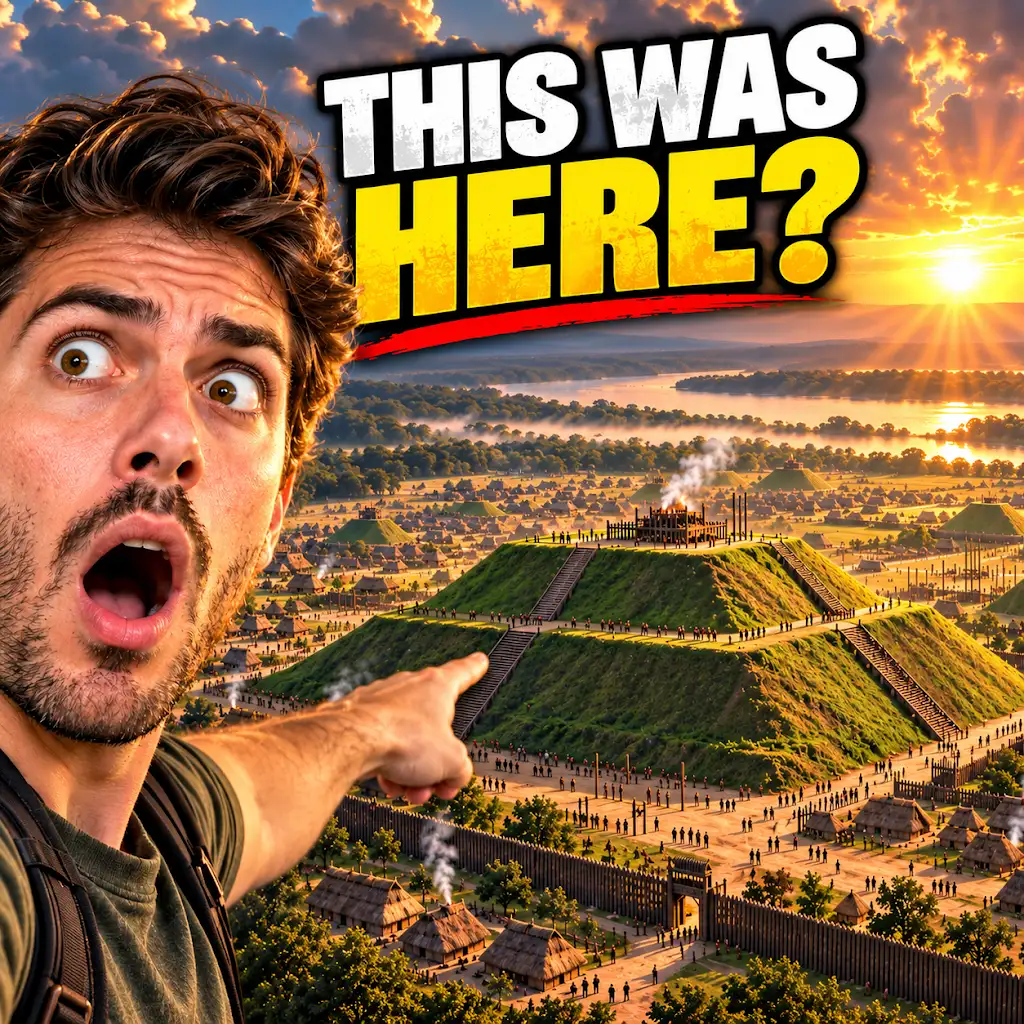
A City Bigger Than London Once Stood in America. Then It Vanished.
FAQs
1. What time period does “North America before Columbus” refer to?
The time period “North America before Columbus” refers to the era before the arrival of Christopher Columbus in 1492, which marks the beginning of European exploration and colonization of the Americas.
2. What indigenous civilizations existed in North America before Columbus?
Before Columbus, North America was home to various indigenous civilizations, including the Maya, Aztec, Inca, Mississippian, Ancestral Puebloans, and many others. These civilizations had developed complex societies, architecture, agriculture, and trade networks.
3. What impact did European colonization have on the indigenous populations of North America?
European colonization had a devastating impact on the indigenous populations of North America. It led to widespread disease, displacement, warfare, and forced assimilation, resulting in a significant decline in indigenous populations.
4. What were some of the major achievements of indigenous peoples in North America before Columbus?
Before Columbus, indigenous peoples in North America had achieved significant advancements in agriculture, architecture, astronomy, medicine, and governance. They had developed complex societies with rich cultural traditions and sophisticated knowledge systems.
5. How did the arrival of Columbus and subsequent European exploration change the landscape of North America?
The arrival of Columbus and subsequent European exploration drastically changed the landscape of North America. It led to the introduction of new diseases, plants, animals, and technologies, as well as the displacement and marginalization of indigenous peoples. This ultimately reshaped the demographics, environment, and social structures of the continent.