
Cahokia and Medieval London: A Comparative Analysis
The study of past societies, particularly those separated by vast geographical distances and cultural traditions, offers invaluable insights into the diverse trajectories of human civilization. This article undertakes a comparative analysis of two preeminent urban centers of their respective eras: Cahokia, a sprawling Mississippian city that flourished in North America, and Medieval London, a burgeoning commercial and political hub in Western Europe. While separated by thousands of miles and distinct developmental paths, both cities represent remarkable achievements in societal organization, urban planning, and economic complexity. By examining their spatial organization, social hierarchies, economic activities, religious practices, and eventual decline or transformation, we can illuminate both the universal drivers of urban development and the unique cultural expressions that shaped these influential settlements.
The physical manifestation of a civilization’s ambitions is often most evident in its urban centers. Cahokia and Medieval London, despite their different architectural materials and construction techniques, both exhibit a degree of planning and organization that speaks to sophisticated societal structures.
Cahokia’s Monumental Core and Surrounding Settlements
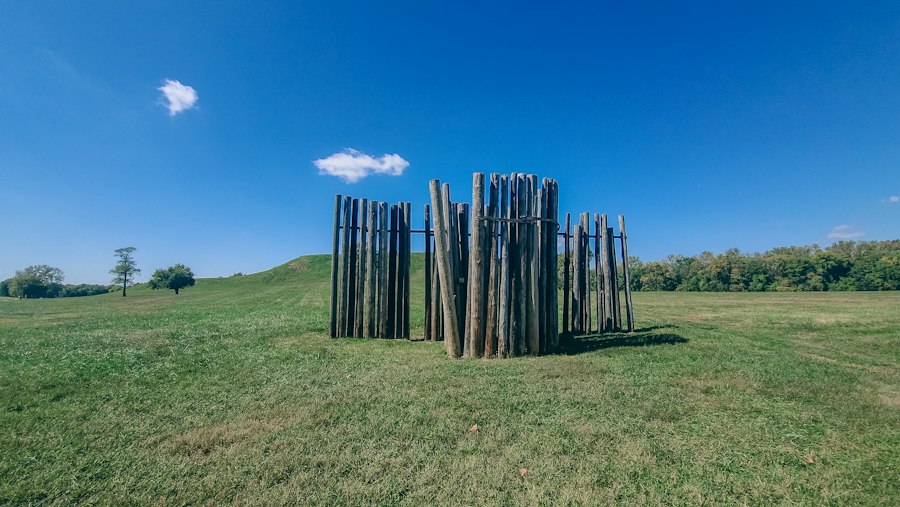
Cahokia, at its zenith between approximately 1050 and 1350 CE, was a city of immense scale for its time and region. Its most striking feature was the monumental earthwork construction, dominated by Monks Mound, a colossal platform mound that remains the largest prehistoric earthwork in the Americas. This central plaza and the surrounding mounds, some residential and others ceremonial, formed the core of the urban experience. The city’s layout was not a rigid grid but rather an organic expansion radiating from the central precinct. Evidence suggests a planned core, with plazas and mounds strategically placed, indicating a deliberate design to facilitate public gatherings and ritualistic activities. The city was enclosed by a palisade, a defensive barrier that points to the importance of security and social control. Beyond the immediate urban core, numerous smaller villages and hamlets dotted the landscape, forming an interconnected hinterland that supported the city’s population and provided resources. These outlying settlements were often linked by trails and waterways, facilitating trade and communication. The sheer volume of earth moved for construction, estimated to be in the millions of cubic feet, signifies a substantial labor force organized and directed by a powerful elite.
Medieval London’s Organic Growth and Evolving Infrastructure
Medieval London, in contrast, experienced a more organic growth pattern, influenced by its Roman foundations and its strategic location on the River Thames. While not characterized by monumental earthworks, London’s urban fabric was defined by its dense street network, its defensive walls (which evolved over centuries), and its numerous churches and public buildings. The city grew outward from its core, with different districts developing distinct characters based on their primary economic activities. Guilds often established their presence in specific streets, creating specialized commercial areas. The River Thames served as a vital artery for trade and transportation, with wharves and docks forming crucial elements of the urban infrastructure. The development of sanitation systems, though rudimentary by modern standards, was a significant undertaking, with the construction of sewers and the management of waste becoming increasingly important as the population grew. Public spaces, such as markets and churchyards, played a crucial role in daily life, serving as centers for commerce, social interaction, and religious observance. The city’s expansion also saw the development of monastic institutions and royal palaces, which contributed to its architectural grandeur and political significance.
Cahokia, a pre-Columbian Native American city located near present-day St. Louis, Missouri, offers a fascinating contrast to medieval London, particularly in terms of urban planning and societal organization. While both cities thrived during their respective eras, Cahokia’s expansive earthen mounds and complex social structure highlight a unique approach to governance and community life that differs significantly from the feudal system prevalent in medieval London. For a deeper exploration of how governance and property rights have evolved over time, you can read more in the article on the implications of government seizure of private property during crises, which can be found here: Governments’ Seizure of Private Property in Crisis.
Social Stratification and Governance
The organization of society and the mechanisms of governance in both Cahokia and Medieval London reveal differing approaches to power, authority, and social order.
Cahokia’s Hierarchical Society and Elite Control
Cahokia was undoubtedly a hierarchical society, with a ruling elite at its apex. Archaeological evidence, particularly the distinct burial practices and the distribution of wealth and prestige goods, points to a significant gap between the elite and the common populace. Elaborate burials, often accompanied by rich grave goods such as shell beads, copper ornaments, and finely crafted pottery, are indicative of elite status. The monumental architecture itself is a testament to the power of the elite to mobilize labor and resources for their own aggrandizement and for the maintenance of their authority. While the exact nature of Cahokian governance remains debated, it is widely believed to have been a chiefdom or a confederacy of chiefdoms, with a paramount chief wielding considerable influence. The centralized planning evident in the city’s core, the construction of defensive palisades, and the regulation of access to certain areas suggest a strong governing body capable of enforcing its will. The ritualistic use of plazas and mounds further implies a connection between political power and religious ideology, reinforcing the legitimacy of the elite.
Medieval London’s Emerging Guilds and Royal Authority
Medieval London’s social structure was characterized by a complex interplay of royal authority, aristocratic influence, and the rising power of mercantile guilds. The King was the ultimate sovereign, with his presence and administration deeply embedded in the city’s governance. Royal charters granted privileges and regulated trade, shaping the economic landscape. Beneath the royal authority, a powerful aristocracy held significant landholdings and influence, though their direct control over the city’s daily affairs was often mediated through royal appointees and city officials. The most distinctive feature of London’s social organization was the pervasive influence of guilds. These associations of craftsmen and merchants played a crucial role in regulating their respective trades, setting standards, controlling apprenticeships, and providing a social safety net for their members. Guilds also wielded considerable political power, often participating in the city’s governance and electing officials. The social hierarchy within London was also marked by distinctions between free men, apprentices, and laborers, with varying levels of rights and opportunities. The growing merchant class, enriched by London’s burgeoning trade, began to wield increasing social and economic influence, challenging traditional aristocratic dominance.
Economic Activities and Trade Networks
The economic engines that powered Cahokia and Medieval London were distinct but both crucial to their growth and prosperity, highlighting the diverse ways societies achieve economic sophistication.
Cahokia’s Agricultural Base and Regional Exchange
Cahokia’s economy was fundamentally rooted in intensive agriculture, primarily maize cultivation, supplemented by hunting, fishing, and gathering. The fertile floodplain of the Mississippi River provided ideal conditions for high agricultural yields, supporting a large and dense population. This agricultural surplus was the bedrock upon which the city’s complex social and political structures were built. Beyond subsistence, Cahokia was a major center of regional exchange. Archaeological evidence reveals extensive trade networks that extended across eastern North America. Cahokians traded goods such as finely crafted pottery, shell beads, copper, mica, and exotic stone, likely in exchange for raw materials and finished products not available in their immediate vicinity. The presence of materials sourced from hundreds of miles away, such as flint from Indiana and copper from the Great Lakes, underscores the reach of their trade networks. This exchange was likely facilitated by riverine transportation and overland trails, with specialized traders playing a vital role. The economic power of Cahokia was thus derived from its agricultural productivity and its strategic position within these far-reaching exchange systems.
Medieval London’s Commercial Prowess and International Trade
Medieval London’s economic dynamism stemmed from its role as a major commercial and port city. Its economy was characterized by a diverse range of activities, including trade, manufacturing, and finance. London served as a nexus for both domestic and international trade. Its port on the Thames facilitated the import of raw materials such as wool and timber, and the export of finished goods such as textiles. The city was a major entrepôt for goods from across England and Europe, with merchants from Flanders, France, and the Hanseatic League establishing a significant presence. The burgeoning wool trade was particularly crucial, with London playing a pivotal role in its export to the continent. Beyond trade, London was also a center for crafts and manufacturing. Guilds regulated the production of goods such as leather, metalwork, and clothing, ensuring quality and controlling competition. The development of financial institutions, such as moneylending and exchange operations, further solidified London’s economic importance. The city’s economic growth was fueled by its expanding population, its strategic location, and the entrepreneurial spirit of its merchants.
Religious Beliefs and Ritual Practices

The spiritual lives and ritualistic expressions of Cahokian and Medieval Londoners offer a window into their cosmologies and their understanding of the world.
Cahokia’s Cosmic Order and Ancestral Veneration
The religious beliefs of Cahokia are understood primarily through archaeological interpretation, focusing on the symbolic meanings embedded in their art, architecture, and burial practices. A central theme appears to be a hierarchical cosmology, with a connection between the earthly realm, the underworld, and the celestial sphere. The monumental mounds and plazas likely served as stages for elaborate public rituals, possibly involving astronomical observations and ceremonies to appease deities or spirits. The use of symbolic imagery in their art, such as bird motifs and serpentine figures, suggests a complex pantheon of supernatural beings. Ancestral veneration likely played a significant role, with the elite potentially acting as intermediaries between the living and their ancestors, reinforcing their authority. The emphasis on cyclical time, as suggested by the construction and occupation phases of the city, may also have been a core element of their worldview. The placement of burials, particularly those of the elite, within or near ceremonial structures, further highlights the intertwined nature of religion, politics, and social status.
Medieval London’s Christian Dominance and Ecclesiastical Power
Medieval London was overwhelmingly a Christian city, with its spiritual life deeply interwoven with the Catholic Church. The ubiquitous presence of churches, cathedrals, and monasteries shaped the urban landscape and the daily routines of its inhabitants. Religious doctrine provided the overarching framework for understanding the world, morality, and the afterlife. Religious rituals, such as mass, sacraments, and festivals, were integral to the lives of all Londoners, from the humblest laborer to the most powerful noble. The Church wielded immense social, economic, and political power. It was a major landowner, a center of learning and charity, and an influential force in political affairs. The bishop of London, the dean of St. Paul’s, and the abbots of various monasteries were significant figures in the city’s hierarchy. Religious holidays provided opportunities for social gathering, feasting, and entertainment, while also reinforcing Christian teachings. The belief in saints, relics, and the efficacy of prayer shaped the personal piety of individuals and the collective spiritual practices of the community.
Cahokia, a remarkable pre-Columbian city, offers fascinating insights when compared to medieval London, particularly in terms of urban development and societal organization. Both cities thrived as cultural and economic hubs of their respective eras, yet they faced distinct challenges that shaped their trajectories. An interesting article discusses the broader implications of climate on ancient civilizations, which can provide context for understanding the environmental factors that influenced both Cahokia and medieval London. For more on this topic, you can read about the climate’s role in societal changes in this related article.
Decline and Transformation
| Metrics | Cahokia | Medieval London |
|---|---|---|
| Population | 10,000 – 20,000 | 50,000 – 80,000 |
| Size of Settlement | 1,600 acres | 370 acres |
| Major Structures | Monks Mound, Woodhenge | Westminster Abbey, Tower of London |
| Economy | Agriculture, trade | Trade, crafts, commerce |
| Religion | Polytheistic beliefs | Christianity |
The eventual fates of Cahokia and Medieval London, while vastly different, offer lessons about the fragility of urban centers and the processes of societal change.
Cahokia’s Mysterious Dissolution and Legacy
The decline and eventual abandonment of Cahokia remain a subject of considerable debate among archaeologists. By the mid-14th century, the city had experienced a significant population decline, and by the late 14th or early 15th century, it was largely uninhabited. Several theories have been proposed, often in combination. Environmental factors, such as soil exhaustion due to intensive agriculture or climatic shifts, may have played a role. Social upheaval, internal conflict, or a decline in the authority of the ruling elite could have led to the breakdown of the social order. Disease outbreaks, while difficult to confirm archaeologically, are also a possibility. Resource depletion, particularly of timber for construction and fuel, might have contributed to the city’s unsustainability. Whatever the precise causes, the abandonment of Cahokia represents a profound societal transformation. While the physical city was left to nature, its legacy endured in the oral traditions and cultural memories of descendant Indigenous peoples, and in the monumental earthworks that continue to awe visitors and scholars alike.
Medieval London’s Resilience and Continued Growth
In stark contrast to Cahokia’s abandonment, Medieval London experienced a period of significant challenge and transformation, but ultimately demonstrated remarkable resilience and continued its trajectory of growth. The Black Death in the mid-14th century, which devastated Europe, had a profound impact on London, leading to massive population loss. However, the city eventually recovered. The depopulation caused by the plague, paradoxically, led to increased wages and improved living conditions for survivors, stimulating further economic activity. London’s strategic importance as a center of trade and governance, coupled with its adaptable population, allowed it to rebound. The city’s infrastructure was continually improved, and its economic activities diversified. While it faced periods of political instability and social unrest, London consistently reinvigorated itself, laying the foundations for its future prominence as a global metropolis. Its transformation was one of adaptation and evolution, rather than outright dissolution, demonstrating the capacity of well-established urban centers to weather crises and continue their development.

A City Bigger Than London Once Stood in America. Then It Vanished.
FAQs
What is Cahokia and medieval London?
Cahokia was a pre-Columbian Native American city located in present-day Illinois, USA. It was the largest and most influential urban settlement of the Mississippian culture. Medieval London refers to the city of London during the medieval period, roughly from the 5th century to the late 15th century.
How do Cahokia and medieval London compare in terms of population?
Cahokia is estimated to have had a population of around 10,000 to 20,000 at its peak, making it one of the largest cities in the world at the time. In comparison, medieval London’s population is estimated to have been around 50,000 to 80,000 during the 13th century, making it significantly larger than Cahokia.
What were the main economic activities in Cahokia and medieval London?
Cahokia was a major center for trade, agriculture, and craft production. The inhabitants engaged in farming, hunting, and gathering, and also participated in long-distance trade networks. In medieval London, the main economic activities included trade, commerce, manufacturing, and agriculture. The city was a hub for international trade and a center for various crafts and industries.
What were the main architectural features of Cahokia and medieval London?
Cahokia is known for its earthen mounds, including the Monk’s Mound, which is the largest pre-Columbian earthwork in the Americas. The city also had plazas, residential areas, and ceremonial structures. In medieval London, the city was characterized by its narrow, winding streets, timber-framed buildings, and stone structures such as churches, castles, and the Tower of London.
What led to the decline of Cahokia and medieval London?
The decline of Cahokia is believed to have been caused by a combination of environmental factors, social upheaval, and the disruption of trade networks. In contrast, medieval London faced challenges such as the Black Death, political instability, and economic downturns, which contributed to its decline during the late medieval period.