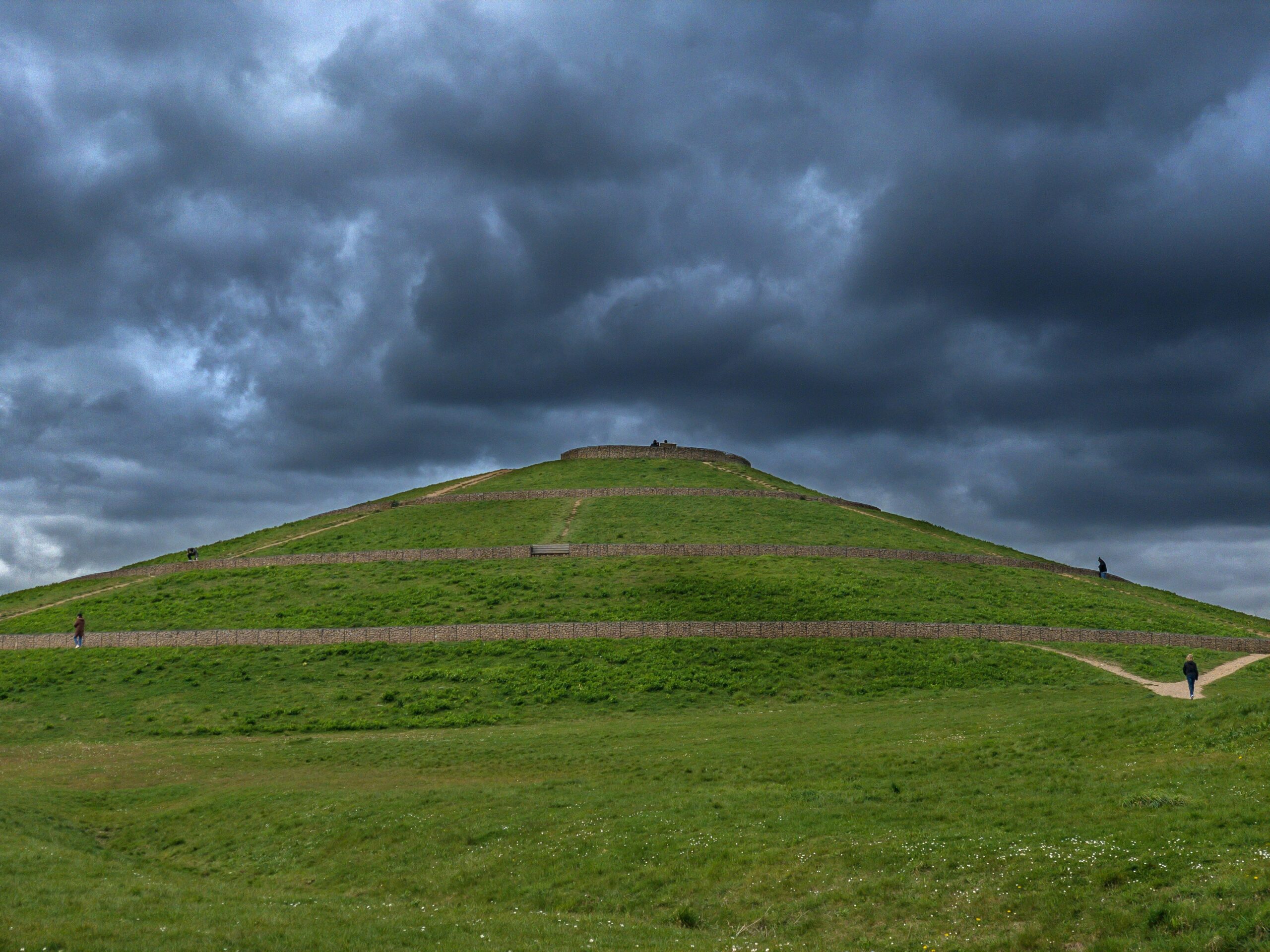
The monumental earthwork known as Monks Mound, the largest prehistoric Native American structure north of Mexico, stands as a silent testament to the ingenuity, labor, and complex societal organization of the Mississippian culture. Rising from the fertile floodplains of the Mississippi River, near modern-day Collinsville, Illinois, this colossal pyramid of soil was the heart of the ancient city of Cahokia, a metropolis that, at its zenith, rivaled the populations of many European cities. The history of Monks Mound is inextricably linked to the rise and fall of Cahokia itself, a story of ambition, construction, ceremonial importance, and eventual abandonment that continues to fascinate archaeologists and historians alike.
The construction of Monks Mound was not a singular event but a prolonged and ambitious undertaking, spanning centuries and requiring an immense expenditure of human effort. The origins of this colossal structure lie in the early stages of Cahokia’s development, a period marked by increasing population density and the emergence of a sophisticated chiefdom.
Early Occupations and the Pre-Mound Landscape
Before the monumental edifice of Monks Mound began to take shape, the land upon which it now stands was likely occupied by earlier inhabitants. Archaeological evidence suggests that the area was utilized for settlement and agriculture by Woodland period peoples. However, it was the transition to the Mississippian period, around 800 CE, that truly heralded a new era of cultural and architectural innovation. The nascent Cahokian society, characterized by its hierarchical structure and agricultural prowess, began to envision and then to execute projects on an unprecedented scale. The very soil that forms Monks Mound was meticulously sourced, transported, and deposited by hand, a feat that speaks volumes about the organizational capacity of its creators. The initial construction phases, though perhaps less grand than later iterations, laid the groundwork for the massive undertaking to come.
The Stages of Construction: A Layered History
The history of Monks Mound is a palpable one, etched in its very stratigraphy. Archaeologists have identified multiple distinct construction phases, each representing a significant addition to the mound’s size and form. These phases, dated through radiocarbon analysis and other archaeological methods, reveal a deliberate and phased approach to construction. Early stages likely involved the creation of a smaller platform mound, upon which subsequent generations built and expanded. Each new phase involved the careful placement of different soil types, with lighter colored loams often used for interior fill and darker, richer soils for exterior capping. This meticulous layering provides valuable insights into the construction techniques and the labor management strategies employed by the Cahokians. The mound’s growth was not haphazard; it was a carefully orchestrated process of accumulation, driven by the evolving needs and aspirations of the Cahokian elite.
Cahokia Mounds, particularly Monks Mound, stand as a testament to the advanced civilization that thrived in North America long before European contact. This monumental earthwork not only served as a ceremonial center but also reflects the complex social and political structures of the Mississippian culture. For those interested in understanding the broader implications of infrastructure development, including how it parallels historical advancements, you might find insights in the article about the role of private companies in military space infrastructure, which can be accessed here: Private Companies’ Role in Military Space Infrastructure.
The Purpose and Function: A Multifaceted Monument
Monks Mound was far more than just a pile of earth; it served a multitude of crucial functions within the Cahokian complex. Its sheer scale and prominent location suggest a deep symbolic and practical significance, central to the social, political, and religious life of the city.
The Seat of Power: A Royal Residence and Administrative Center
The most widely accepted theory regarding the primary function of Monks Mound’s summit is that it served as the residence of Cahokia’s paramount chief, often referred to as the “Great Sun.” The expansive flat top of the mound, estimated to be approximately 16 acres in area, was large enough to accommodate a substantial dwelling and associated structures. From this elevated vantage point, the chief could oversee the vast city below, symbolize his authority, and preside over important ceremonies and administrative functions. The strategic location of the mound, offering commanding views of the surrounding landscape, further reinforced its role as a center of political power and control. The presence of a major elite residence on its summit would have been a constant visual reminder of the chief’s authority and the hierarchical structure of Cahokian society.
A Sacred Precinct: Ceremonial and Religious Significance
Beyond its secular functions, Monks Mound was undoubtedly a place of profound religious and ceremonial importance. The sheer effort involved in its construction suggests a deep-seated spiritual motivation. The mound’s orientation, its alignment with celestial events, and the presence of ritualistic artifacts found within and around it point to its role as a sacred space. It is likely that major festivals, important religious rites, and significant calendrical observances took place on the summit or at its base. The mound could have served as a cosmic mountain, a bridge between the earthly realm and the celestial spheres, a concept found in many indigenous cosmologies. The vast plazas surrounding the mound would have been the gathering places for thousands of people to witness these important rituals.
A Marketplace and Gathering Space: Facilitating Social Interaction
While the summit was likely reserved for the elite and sacred activities, the vast plazas at the base of Monks Mound served as crucial public spaces. These open areas facilitated social interaction, economic exchange, and the gathering of large populations for various events. It is highly probable that these plazas functioned as vibrant marketplaces where goods were traded, news was exchanged, and social ties were strengthened. The concentration of people in these areas, radiating outwards from the monumental mound, underscores its role as a focal point for the entire community, drawing people together for shared experiences and collective endeavors.
The Structure and Design: Engineering Marvels of the Mississippian Era

The construction of Monks Mound represents an astounding feat of engineering and planning for its time. Without the use of metal tools, draft animals, or wheeled vehicles, the Mississippian people managed to move and shape millions of cubic feet of earth into a structure of remarkable precision and enduring strength.
Dimensions and Scale: A Colossus of Earth
Monks Mound is an imposing structure, measuring approximately 1,000 feet north to south, 770 feet east to west, and standing an impressive 100 feet tall at its highest point. Its base covers an area of about 14 acres, and its volume is estimated to be around 21.5 million cubic feet, making it the largest prehistoric earthwork in the Americas. To put this into perspective, it would take a crew of 100 people working for 15 years, digging and carrying earth with baskets, to build Monks Mound. The sheer scale of the mound is a testament to the organized labor and the immense population that Cahokia could mobilize. Its vastness dwarfed surrounding settlements and served as an unmistakable symbol of Cahokian dominance.
Terraces and Stairways: Architectural Sophistication
Monks Mound is not a simple conical mound. It is a multi-tiered structure, featuring four large terraces that ascend towards the summit. These terraces, gradually decreasing in size as they rise, are a testament to a sophisticated understanding of structural integrity and aesthetic design. The precise dimensions and slopes of these terraces were carefully calculated to ensure stability and prevent erosion. Furthermore, evidence suggests the presence of large wooden stairways, likely constructed from sturdy timbers, providing access to the upper levels. These stairways, often located on the southeastern side of the mound, would have been monumental in themselves, further enhancing the grandeur and accessibility of the sacred and elite spaces.
Internal Composition: A Carefully Engineered System
The internal composition of Monks Mound reveals a complex and deliberate construction process. Archaeologists have identified distinct layers of different soil types, indicating a systematic approach to fill and capping. Darker, humus-rich soils were often used for the outer layers, providing stability and a richer appearance, while lighter, sandy soils were used for the interior fill. This careful selection and placement of materials suggests a deep understanding of soil mechanics and erosion control, essential for the long-term survival of such a massive earthwork. The internal structure also reveals evidence of postholes and other features, hinting at the existence of internal drainage systems or even embedded structural elements that are no longer visible.
The Decline and Abandonment: The Fading Echoes of Cahokia
The magnificent city of Cahokia, with Monks Mound at its heart, did not endure indefinitely. By the late 13th century, the vibrant metropolis began to experience a decline, culminating in its eventual abandonment. The reasons for this demise are complex and likely multi-faceted, leaving behind a compelling mystery.
Environmental Stresses and Resource Depletion
One of the leading theories for Cahokia’s decline centers on environmental factors and the unsustainable exploitation of resources. The immense population of Cahokia would have placed significant demands on the surrounding environment. Deforestation for fuel, construction, and agriculture, coupled with intensive farming practices, could have led to soil erosion and decreased agricultural productivity. Changing climate patterns, such as increased flooding or prolonged droughts, could have further exacerbated these environmental pressures, making it difficult for the city to sustain its large population. The delicate balance between human needs and the environment likely tipped, leading to a gradual unraveling of the societal fabric.
Social and Political Instability
Internal factors may have also contributed to Cahokia’s downfall. Evidence of increased warfare and fortifications suggests a period of growing social unrest and political instability. The hierarchical structure of Mississippian societies was, in some instances, prone to internal conflict and power struggles. A breakdown in the leadership or the rise of rival factions could have led to the fragmentation of the chiefdom. The immense labor required to maintain such monumental structures like Monks Mound, especially during times of hardship, could have become an unsustainable burden, leading to a loss of faith in the ruling elite and a subsequent dispersal of the population.
Migration and the Legacy of Cahokia
The abandonment of Cahokia did not necessarily signify the end of Mississippian culture. Instead, it is believed that the population dispersed, migrating to other areas and influencing the development of subsequent cultures. While the grand city of Cahokia faded into memory, its descendants continued to thrive, carrying with them the knowledge, traditions, and artistic styles of their ancestors. The legacy of Cahokia, and by extension Monks Mound, lives on in the archaeological record and in the oral traditions of some Native American tribes. The stories and symbols embedded within the earthwork continue to inspire and inform our understanding of a remarkable civilization that once flourished in the heart of North America.
Cahokia Monks Mound, the largest earthen structure in North America, serves as a testament to the advanced society that thrived in the region over a thousand years ago. This monumental site not only highlights the architectural ingenuity of the Mississippian culture but also raises questions about the resources that supported such a civilization. For a deeper understanding of how resource scarcity can shape societal dynamics, you might find it interesting to explore this article on resource conflicts in history, which can be accessed here.
The Modern Rediscovery: Unearthing the Secrets of Monks Mound
| Year | Event |
|---|---|
| 900 AD | Construction of Cahokia Monks Mound begins |
| 1050 AD | Cahokia reaches its peak population of 20,000-30,000 people |
| 1200 AD | Decline of Cahokia and abandonment of the site |
| 1964 | Cahokia Mounds designated a National Historic Landmark |
| 1982 | Cahokia Mounds designated a UNESCO World Heritage Site |
For centuries, Monks Mound lay largely undisturbed, a silent sentinel on the prairie, its true significance obscured by the passage of time and the accumulation of soil. It was only with the advent of systematic archaeological investigation that the secrets of this ancient monument began to be unveiled.
Early Explorations and Indigenous Accounts
While there are accounts of early European explorers encountering the vast earthworks of Cahokia, detailed scientific exploration of Monks Mound did not begin until the late 19th and early 20th centuries. Early archaeologists and antiquarians recognized the immense historical and cultural value of the site. Indigenous oral traditions, passed down through generations, likely held clues to the mound’s importance, though these were often not systematically recorded or integrated into early scientific interpretations. The name “Monks Mound” itself is a misnomer, stemming from a later period when Trappist monks briefly occupied the site in the 19th century, mistakenly believing they were the builders.
Archaeological Investigations: Unlocking the Past
The true unlocking of Monks Mound’s history began with extensive archaeological excavations. Archaeologists, employing increasingly sophisticated techniques, have meticulously excavated various sections of the mound and its surrounding areas. These investigations have revealed the layered construction history, the nature of the structures that once stood on its summit, and the artifacts that provide insights into the daily lives, religious beliefs, and societal organization of the Cahokians. Radiocarbon dating has been instrumental in establishing timelines, while detailed soil analysis has illuminated construction methods. Ground-penetrating radar and other remote sensing technologies are now being employed to further map the subsurface features without destructive excavation.
Preservation and Public Interpretation: A Legacy for the Future
Today, Monks Mound and the surrounding Cahokia Mounds State Historic Site are recognized as a UNESCO World Heritage Site, a testament to their global significance. Ongoing preservation efforts are crucial to protect this invaluable cultural resource from natural erosion and human impact. Visitor centers and interpretive programs play a vital role in educating the public about the history and importance of Monks Mound and the Mississippian culture. The ability to walk upon its terraces, to stand where ancient chiefs and priests once stood, offers a tangible connection to the past and a profound appreciation for the achievements of these early Americans. Monks Mound remains a powerful symbol of human ingenuity, a window into a complex society, and a vital reminder of the rich and often overlooked history of indigenous North America.

A City Bigger Than London Once Stood in America. Then It Vanished.
FAQs
What is Cahokia Monks Mound?
Cahokia Monks Mound is the largest pre-Columbian earthwork in North America, located in present-day Illinois. It was built by the Mississippian culture around 900-1200 AD and served as the center of the Cahokia settlement.
What was the purpose of Cahokia Monks Mound?
The purpose of Cahokia Monks Mound is believed to have been religious and ceremonial. It likely served as a platform for the ruling elite, including religious leaders, to perform rituals and ceremonies.
How was Cahokia Monks Mound constructed?
Cahokia Monks Mound was constructed using basketfuls of dirt and clay, which were carried and deposited by hand. The mound was built in several stages, with each layer of earth being carefully placed and compacted to create the final structure.
What is the significance of Cahokia Monks Mound?
Cahokia Monks Mound is significant for its size and the engineering skills required to construct it. It is also a testament to the complex social and religious organization of the Mississippian culture, as well as their ability to mobilize labor for large-scale construction projects.
What is the current status of Cahokia Monks Mound?
Cahokia Monks Mound is a UNESCO World Heritage Site and is protected as part of the Cahokia Mounds State Historic Site. It is open to the public for visitation and is a popular destination for tourists and archaeology enthusiasts.