The sun, a relentless eye in the sky, beat down upon the fertile Mississippi floodplain. For centuries, this vast alluvial plain had been a place of scattered settlements, of hunter-gatherers and nascent agricultural communities. Yet, around the 11th century CE, something profound began to shift. Along the great river, a monumental transformation was taking place, one that would birth a city of unprecedented scale and complexity in North America. This was the rise of Cahokia, a vibrant metropolis that, for a time, dwarfed any European settlement of its era and left an enduring legacy etched in earth and memory.
The story of Cahokia’s rise is not one of sudden invention but of a gradual convergence of factors, a confluence of resources, ingenuity, and social organization. Before the grand mounds and sprawling plazas, there were the seeds of human presence, small villages that tapped into the rich potential of the river valley. The landscape itself was a primary architect of Cahokia’s success. The Mississippi River, a titan of a waterway, was not merely a geographical feature; it was a lifeblood, a highway, and a source of immense sustenance.
The Mississippi River: A Natural Advantage
The Mississippi, along with its tributaries like the Missouri and Ohio, provided unparalleled access to a vast interior of the continent. This facilitated trade, the movement of people, and the exchange of ideas. The river’s annual floods, while potentially destructive, deposited rich silt across the floodplain, creating incredibly fertile land ideal for intensive agriculture. This agricultural surplus was the bedrock upon which Cahokia’s civilization would be built.
Adapting to the Environment: Early Agricultural Innovations
Early inhabitants learned to harness the river’s bounty. They developed sophisticated farming techniques suited to the alluvial soils, likely cultivating staple crops like maize (corn), beans, and squash – the “Three Sisters” – which provided a nutritious and sustainable food source. The ability to reliably produce more food than was immediately needed allowed for a growing population and the emergence of specialized roles beyond subsistence farming. This agricultural surplus was the engine that powered Cahokia’s growth, freeing up labor and fostering the development of a more complex society.
The Spread of Mississippian Culture
Cahokia did not emerge in a vacuum. It was the pinnacle of a broader cultural tradition known as the Mississippian culture, which flourished across much of the southeastern United States from approximately 800 to 1600 CE. This culture shared commonalities in pottery styles, mound construction, social organization, and belief systems. Cahokia, however, became the undeniable heartland, the nexus where these shared traits coalesced and reached their most ambitious expression. The existing networks and shared cultural understanding facilitated the rapid adoption and integration of new ideas and practices that propelled Cahokia forward.
Cahokia, once a thriving urban center of the Mississippian culture, became a city due to a combination of agricultural innovation, trade, and social organization. The fertile land along the Mississippi River allowed for advanced farming techniques, which supported a growing population. Additionally, Cahokia’s strategic location facilitated trade with neighboring communities, further enhancing its economic strength. For a deeper understanding of the engineering marvels that contributed to the development of ancient cities like Cahokia, you can explore the article at Uncovering Ancient Engineering Marvels.
The Apex of Power: Monumental Construction and Urban Planning
As Cahokia grew, so too did its ambition. The most striking testament to its power and organization is the sheer scale of its monumental construction. The city, at its zenith, was not merely a collection of houses but a meticulously planned urban landscape dominated by massive earthwork mounds and expansive public spaces. This was a deliberate undertaking, a reflection of a hierarchical society with the capacity for immense collective labor and sophisticated engineering.
The Monks Mound: A Testament to Human Endeavor
Dominating the Cahokian landscape is Monks Mound, a colossal structure that remains the largest prehistoric earthen mound in the Americas. Standing over 100 feet tall and covering an area of approximately 14 acres at its base, it is a testament to an extraordinary feat of engineering and labor. Its construction was not a single event but a process that spanned centuries, with successive generations adding layers of earth, bringing its total volume to an estimated 21 million cubic feet.
The Purpose of the Mound: More Than Just a Pile of Earth
While its exact purpose remains a subject of scholarly debate, Monks Mound likely served as the ceremonial and political center of Cahokia. Its summit, flat and expansive, would have accommodated important structures, possibly the residence of the paramount chief, council houses, or temples. From its elevated position, the elite could observe and preside over the sprawling city below, reinforcing their authority and connection to the cosmos. The sheer effort involved in its construction also served as a powerful symbol of the community’s collective will and the ruling class’s ability to mobilize it.
The Plaza and Public Spaces: The Heartbeat of the City
Surrounding Monks Mound was a vast central plaza, an open expanse that served as a communal gathering place. This plaza was the vibrant heart of the city, a space for markets, festivals, ceremonies, and public pronouncements. Its existence suggests a strong sense of community and a need for shared spaces that fostered social cohesion. The plaza was meticulously leveled and maintained, indicating a conscious effort to create and preserve these important public areas.
Residential Areas and Social Stratification
Beyond the monumental core, Cahokia was a sprawling city with distinct residential areas. Archaeological evidence reveals a complex pattern of settlement, with evidence of both elite residences and more modest dwellings. These areas suggest a significant degree of social stratification, with those of higher status likely residing closer to the ceremonial center and possessing larger, more elaborate homes. The planning extended to these residential zones, with evidence of organized streets and pathways, further underscoring Cahokia’s urban nature.
A Hub of Trade and Interaction: Connecting the Mississippian World

Cahokia’s rise was inextricably linked to its role as a nexus of trade and interaction. The city served as a magnet, drawing in resources and goods from across a vast network of exchange that spanned much of eastern North America. This vibrant trade not only enriched Cahokia but also disseminated its cultural influence far and wide.
The Riverine Network: Highways of Commerce
The Mississippi River and its tributaries were the primary arteries of Cahokian trade. Canoes and other watercraft plied these waterways, carrying goods between Cahokia and distant communities. This riverine network provided access to a diverse array of resources, including copper from the Great Lakes, shells from the Gulf Coast, mica from the Appalachian Mountains, and obsidian from present-day Wyoming.
Essential Trade Goods: Sustaining and Adorning the City
The goods exchanged were diverse, reflecting both practical needs and the desire for prestige. Essential foodstuffs, of course, were part of the trade. However, Cahokia also imported materials used for crafting tools, weapons, and ornamentation. Copper was particularly prized, fashioned into intricate jewelry, axe heads, and ceremonial objects. Shells were transformed into beads and gorgets, adding to the visual splendor of the elite.
The Wooden Circle (Woodhenge): A Celestial Calendar and Gathering Place
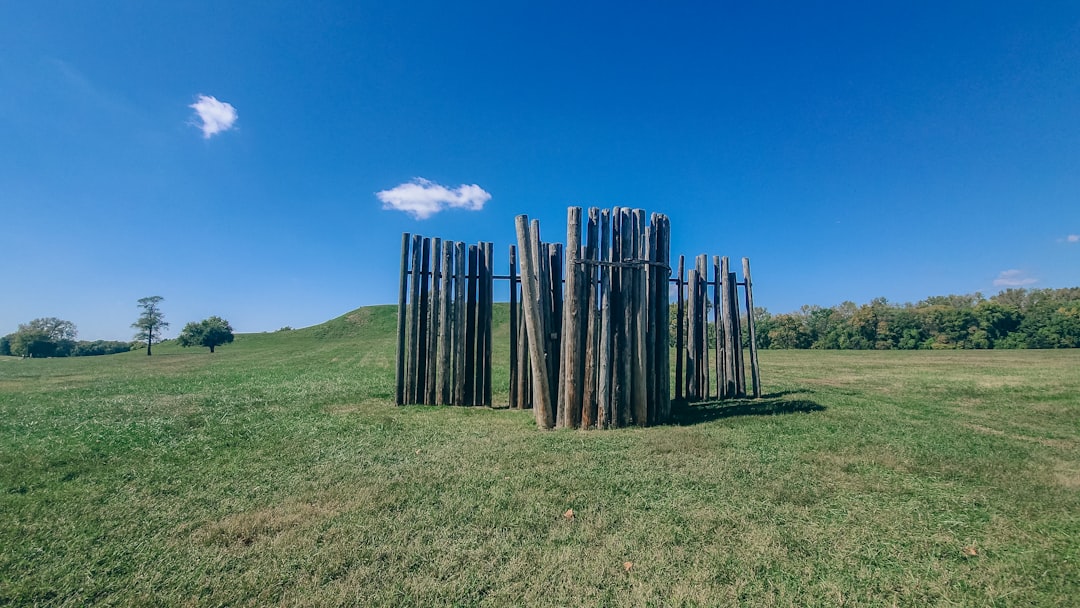
A fascinating aspect of Cahokian life was the construction of large wooden circles, often referred to as “Woodhenge.” These structures, composed of numerous upright posts arranged in concentric circles, are believed to have served as astronomical observatories and calendars. By tracking the sunrise and sunset over specific posts, Cahokians could accurately mark solstices, equinoxes, and other important celestial events.
The Intersection of Religion and Astronomy
The precise alignment of Woodhenge with astronomical phenomena suggests a deep connection between Cahokian religious beliefs and their understanding of the cosmos. These structures likely played a crucial role in their ceremonial calendar, marking times for planting, harvesting, and important rituals. They also served as gathering places, bringing the community together for important ceremonies and festivals.
The Spread of Cahokian Influence: A Cultural Diffusion
The exchange of goods was not purely economic; it was also a conduit for cultural diffusion. Cahokian pottery styles, artistic motifs, and architectural techniques began to appear in distant settlements. This outward spread of Cahokian influence speaks to the city’s prestige and the adoption of its cultural practices by allied or subordinate communities. Cahokia became a model, a beacon of Mississippian civilization.
The Social and Political Fabric: Governing a Complex Society
The existence of a city as large and complex as Cahokia required sophisticated social and political structures. Governing such a population and organizing the massive labor needed for construction and subsistence demanded a hierarchical system with clearly defined roles and responsibilities.
Hierarchy and Leadership: Chiefs and Elites
At the apex of Cahokian society was likely a paramount chief or a ruling elite who wielded considerable power. This leadership was probably hereditary, passed down through generations. Evidence suggests a stratified society with distinct classes, from the ruling elite and their kin to artisans, laborers, and farmers. The grand burial mounds, such as those found in Mound 72, reveal the wealth and status of certain individuals through the grave goods interred with them.
The Significance of Mound 72: A Glimpse into Elite Burials
Mound 72 is particularly significant for the elaborate burials it contains. These included individuals adorned with thousands of shell beads, copper ornaments, and exotic materials. The presence of sacrificed individuals, interred alongside the elite, suggests a belief system that emphasized subservience and the continuation of social hierarchies into the afterlife. These burials provide a tangible link to the power and influence of Cahokia’s rulers.
The Role of Religion and Ritual: Unifying the People
Religion and ritual played a central role in unifying Cahokian society and legitimizing the authority of its leaders. The monumental mounds, the plazas, and the astronomical alignments of Woodhenge all point to a society deeply engaged in spiritual practices. These rituals likely reinforced social cohesion, provided a shared identity, and offered a framework for understanding the world.
The Cosmology of Cahokia: Understanding the Universe
While we can only infer aspects of their belief system, it is clear that Cahokians possessed a complex cosmology. Their construction projects, their astronomical observations, and their burial practices all suggest a worldview that connected the earthly realm with the spiritual and celestial planes. The earth itself, and the act of shaping it through mound building, likely held deep symbolic meaning.
Specialized Labor and Craftsmanship: The Artisans of Cahokia
The sheer scale of Cahokian achievements points to a highly specialized workforce. Beyond the farmers who sustained the population, there were skilled artisans who crafted pottery, tools, weapons, and ornaments. There were also laborers who dedicated their time to the monumental construction projects, likely organized into work crews. This specialization allowed for the production of goods and structures that would have been impossible in a less organized society.
Cahokia became a prominent city due to its strategic location and the development of complex societal structures that facilitated trade and agriculture. The city’s rise can be better understood by exploring the broader context of urban development in ancient civilizations, as discussed in a related article that examines the intricate mapping of the world before discovery. This article highlights how such geographical knowledge influenced the growth of cities like Cahokia, making it a fascinating read for those interested in the factors that contribute to urbanization. For more insights, you can check out the article here.
The Decline and Legacy: A City’s Enduring Enigma
| Reasons | Metrics |
|---|---|
| Strategic Location | Position at confluence of Mississippi, Missouri, and Illinois rivers |
| Agricultural Surplus | Evidence of large-scale farming and food production |
| Trade Hub | Presence of trade networks and exchange of goods |
| Social and Political Organization | Evidence of complex societal structure and governance |
| Religious and Ceremonial Center | Presence of large mounds and religious artifacts |
Despite its remarkable rise, Cahokia’s reign as a major metropolis was not eternal. Sometime after 1350 CE, the city began to decline, and by the time Europeans arrived in the region centuries later, Cahokia was largely abandoned and reclaimed by the wilderness. The reasons for its decline remain a subject of ongoing research and debate, adding to the city’s enduring enigma.
Theories of Decline: Environmental and Social Factors
Numerous theories have been proposed to explain Cahokia’s abandonment. Environmental factors, such as deforestation, soil erosion, and potential shifts in river courses, may have strained the city’s resources. Social factors, including internal conflict, disease, or the collapse of trade networks, are also considered plausible contributors. It is likely that a combination of these factors, interacting in complex ways, led to the city’s eventual demise.
The Case for Environmental Degradation
The intensive agriculture required to feed a large urban population, coupled with the deforestation necessary for construction and fuel, could have led to significant environmental degradation. This would have impacted crop yields, water quality, and overall sustainability.
The Possibility of Social Upheaval
Changes in leadership, internal strife, or the breakdown of social order could have also contributed to Cahokia’s decline. A loss of faith in the ruling elite or a failure to adapt to changing circumstances might have led to emigration and the gradual dispersal of the population.
Rediscovery and Archaeological Significance: Unearthing the Past
For centuries, Cahokia remained a forgotten landscape, its monumental mounds slowly being swallowed by the earth and vegetation. It was not until the 19th and 20th centuries that systematic archaeological investigations began to reveal the true extent and complexity of this ancient city. These investigations have transformed our understanding of pre-Columbian North America.
The Cahokia Mounds State Historic Site: A UNESCO World Heritage Site
Today, the Cahokia Mounds State Historic Site, a UNESCO World Heritage Site, preserves the remnants of this once-great city. Through careful excavation and preservation, archaeologists continue to unearth new insights into Cahokian life, revealing the sophistication of its people, the grandeur of its constructions, and the intricate web of its society.
An Enduring Legacy: A Glimpse into a Lost Civilization
The legacy of Cahokia is profound. It stands as a testament to the ingenuity, organizational capacity, and cultural achievements of the Mississippian peoples. It challenges the notion of North America as a sparsely populated wilderness before European contact, demonstrating that complex, urban societies flourished here centuries ago. Cahokia reminds us that history is not a static narrative but a continuous process of discovery, with layers of human experience waiting to be unearthed and understood. The echoes of its vibrant past continue to resonate, offering a tantalizing glimpse into a lost civilization that once commanded the heart of a continent.

A City Bigger Than London Once Stood in America. Then It Vanished.
FAQs
1. What is Cahokia?
Cahokia was a pre-Columbian Native American city located in present-day Illinois, near St. Louis, Missouri. It was the largest and most influential urban settlement of the Mississippian culture, thriving between the 9th and 15th centuries.
2. Why did Cahokia become a city?
Cahokia became a city due to its strategic location near the confluence of the Mississippi, Missouri, and Illinois rivers, which provided fertile land for agriculture and access to trade routes. This allowed Cahokia to become a center for trade, culture, and political power in the region.
3. What factors contributed to the rise of Cahokia as a city?
Several factors contributed to the rise of Cahokia as a city, including its agricultural productivity, strategic location for trade, and the development of a complex social and political hierarchy. The city’s leaders were able to consolidate power and resources, leading to the construction of monumental earthen mounds and a large population.
4. What led to the decline of Cahokia as a city?
The decline of Cahokia as a city is believed to be the result of a combination of factors, including environmental degradation, resource depletion, social and political unrest, and possibly external conflicts. By the 14th century, the city’s population had significantly declined, and it was eventually abandoned.
5. What is the significance of Cahokia as a city?
Cahokia’s significance lies in its status as one of the largest and most complex urban centers in pre-Columbian North America. The city’s cultural, political, and economic influence extended across the region, and its monumental architecture and artifacts provide valuable insights into the Mississippian culture. Cahokia is now a UNESCO World Heritage site and continues to be a subject of archaeological research and cultural significance.