
The summer of 1996, a seemingly ordinary day for two aspiring triathletes wading in the Columbia River near Kennewick, Washington, would irrevocably alter the course of scientific understanding and ignite a fierce debate that continues to resonate. David Tanner and Don Miller, seeking a shortcut to their training route, stumbled upon something far more significant than a clearer path. Partially submerged in the sandy riverbed, glinting under the midday sun, were human bones. These weren’t the recent remains of a lost hiker; their appearance, their preservation, and the sheer shock of their discovery suggested something ancient, something profound.
The initial discovery was made on July 28, 1996. The bones, which eventually became known as Kennewick Man, were identified as belonging to a human male. Their discovery, however, was far from straightforward. The archaeologists who were subsequently called to the scene, and later the legal battles that ensued, revealed a complex web of competing interests: scientific inquiry, Native American cultural heritage, and the very definition of who had the right to claim and study the past. The bones, initially treated as a scientific anomaly, quickly became a symbol of a deeper, unresolved tension in American history and archaeology.
The controversy surrounding Kennewick Man primarily revolves around the debate between scientific research and Native American rights, as his discovery sparked discussions about the origins of early inhabitants in North America. This ancient skeleton, found in 1996 near Kennewick, Washington, led to legal battles over the remains, as various tribes claimed him as an ancestor and sought to have him reburied according to their cultural practices. For further insights into the broader implications of human interaction with the environment and its historical context, you can read a related article on the challenges we face today in understanding our past and preserving our heritage at this link.
The Initial Investigation and Scientific Fascination
The discovery of the human remains quickly drew the attention of local authorities and, subsequently, archaeologists. Dr. John W. Peterson, a radiologist and amateur archaeologist, was among the first scientists to examine the bones. His initial assessment suggested extreme antiquity, a hypothesis that would soon be bolstered by a battery of scientific tests. The bones were found to be remarkably well-preserved, owing to the anaerobic conditions of the riverbed. This preservation allowed for a wealth of data to be extracted, fueling immense scientific interest.
Dating the Remains: A Shocking Revelation
The first significant scientific endeavor was to accurately date the remains. Radiocarbon dating, a cornerstone of paleoanthropological research, was employed. Multiple dating techniques were utilized, yielding consistent results that sent shockwaves through the scientific community. The age of the remains was estimated to be between 8,000 and 9,000 years old. This was an astonishing figure, predating the commonly accepted timelines for human habitation in the Pacific Northwest by thousands of years.
Physical Characteristics and Early Interpretations
Beyond their age, the physical characteristics of Kennewick Man also sparked intense interest. Cranial morphology and skeletal features were meticulously analyzed. Early interpretations, based on the prevailing scientific paradigms of the time, suggested a connection to the Ainu people of Japan or other populations in Northeast Asia. This interpretation was largely driven by the distinct cranial shape, which differed from typical Native American skeletal structures. The assumption was that such a divergence in features indicated a lineage distinct from the indigenous populations of the Americas.
The Controversy Begins: Competing Claims
The scientific fascination, however, was almost immediately challenged by a different, yet equally powerful, claim. The Umatilla, Yakama, Nez Perce, and other Confederated Tribes and Bands of the present-day Confederated Tribes and Bands of the Yakama Nation, along with other Pacific Northwest tribes, asserted that the remains were those of an ancestor and therefore belonged to them under the terms of the Native American Graves Protection and Repatriation Act (NAGPRA). This legislation, enacted in 1990, aims to protect Native American graves and artifacts and allows for the repatriation of human remains and cultural items to descendant tribes.
The Legal Battle: NAGPRA and the “Ancient One”
The discovery of Kennewick Man ignited a legal firestorm that would last for years, pitting scientific curiosity against tribal sovereignty and cultural rights. The core of the dispute lay in the interpretation and application of NAGPRA. The tribes argued that the remains were those of an ancestor, regardless of their specific genetic affiliation to contemporary tribes, and therefore should be repatriated. The scientific community, on the other hand, argued that the age and unique physical characteristics of the remains warranted extensive study to understand early human migration and settlement patterns in North America.
The Role of NAGPRA
NAGPRA is designed to facilitate the return of Native American cultural items, including human remains, funerary objects, and sacred objects, to lineal descendants and culturally affiliated Indian tribes. A key aspect of the law is the requirement for federal agencies to consult with tribes regarding Native American graves and cultural items. The discovery of Kennewick Man, on federal land managed by the U.S. Army Corps of Engineers, immediately triggered NAGPRA’s provisions.
The Tribes’ Assertion of Ancestry
The tribes consistently referred to the remains as the “Ancient One,” a testament to their deep spiritual and cultural connection to the ancestor whose bones had been uncovered. They emphasized that their claim was not solely based on genetic linkage, but on a broader understanding of ancestral ties and the sacredness of human remains. For them, the scientific dissection of their ancestor was a desecration, and repatriation was a matter of cultural justice.
Scientific Opposition and the Pursuit of Knowledge
A coalition of scientists, led by anthropologist Dr. James Chatters, who was initially involved in the investigation, argued that the remains’ significant age and distinct physical traits offered an unprecedented opportunity to learn about early human migrations into the Americas. They contended that the “Ancient One” could represent a previously unknown population group, shedding light on the complex peopling of the continent. They feared that immediate repatriation would prevent invaluable scientific research, effectively burying crucial chapters of human history.
Scientific Analysis and the Shifting Narrative
The legal battles, while ongoing, did not entirely halt scientific inquiry. Under court order, limited studies were permitted, and the data generated began to paint a more nuanced picture of Kennewick Man, challenging some of the earlier assumptions and further complicating the debate. The focus shifted from purely morphological analysis to a more comprehensive suite of scientific techniques.
DNA Analysis: A Complex Picture
One of the most anticipated scientific advancements was the potential for DNA analysis. However, the age of the remains and the conditions under which they were found presented significant challenges. While some initial attempts were made, the degradation of ancient DNA meant that conclusive, comprehensive genetic profiles were difficult to obtain. When some limited genetic markers were eventually analyzed, they suggested a closer affiliation to modern Europeans than to any specific Native American tribe, further fueling the scientific argument for independent study. This finding, while controversial, was a significant development.
Isotopic Analysis: Clues to Diet and Origin
Isotopic analysis of the bones provided valuable insights into Kennewick Man’s diet and potentially his geographic origins. By examining the ratios of different isotopes of elements like carbon and nitrogen, scientists could infer what he ate and where he might have lived. The results indicated a diet rich in marine resources, suggesting that he spent a significant amount of time near the coast or that coastal resources were transported inland. This information helped to build a more complete picture of his life and the environment he inhabited.
Cranial Morphology Re-examined
The initial interpretations of cranial morphology were also subject to re-examination and debate. While some features remained distinct, a broader comparative analysis began to suggest that the variation observed in ancient human populations was greater than previously understood. This led to a re-evaluation of whether the distinctiveness of Kennewick Man necessarily pointed to a non-Native American lineage.
The discovery of Kennewick Man, one of the oldest and most complete human skeletons found in North America, sparked significant controversy due to its implications for the understanding of Native American history and rights. Researchers debated the origins and age of the remains, which led to legal battles over the repatriation of the skeleton to Native American tribes. This situation reflects broader themes in archaeology and anthropology, particularly regarding the treatment of indigenous remains and cultural heritage. For further insights into the complexities of ancient civilizations and their connections to modern issues, you can read more in this article about unearthed clues from pre-flood civilizations here.
The Court’s Decision and the Concept of “Indian”
| Aspect | Description |
|---|---|
| Discovery Date | 1996 |
| Location | Kennewick, Washington, USA |
| Age of Remains | Approximately 9,000 years old |
| Initial Scientific Analysis | Suggested features more similar to Polynesian or Ainu populations than Native Americans |
| Controversy | Dispute between scientists wanting to study the remains and Native American tribes claiming cultural affiliation and requesting repatriation |
| Legal Framework | Native American Graves Protection and Repatriation Act (NAGPRA) invoked by tribes |
| Outcome | After years of legal battles, remains were eventually returned to Native American tribes in 2017 for reburial |
| Significance | Raised important questions about ancient human migration, cultural heritage, and the rights of indigenous peoples |
The legal battles culminated in a landmark court decision in 2004, which significantly impacted the application of NAGPRA and the broader understanding of who constitutes an “Indian” for legal and cultural purposes. The ruling, delivered by U.S. District Judge John Jelderks, declared that the remains were not “culturally affiliated” with the tribes that had claimed them under NAGPRA.
The Judge’s Rationale: A Strict Interpretation
Judge Jelderks based his decision on a strict interpretation of NAGPRA’s definition of cultural affiliation, which requires a connection based on “tribal or lineage lineage” that can be traced back to the remains. Given the extreme antiquity of Kennewick Man and the lack of direct, demonstrable lineage from contemporary tribes, the court found that the tribes had not met this burden of proof. The judge’s reasoning emphasized the scientific evidence of the remains’ age and unique physical characteristics, suggesting they may have belonged to a population group predating the arrival of modern Native American tribes.
Implications for NAGPRA and Future Discoveries
The Kennewick Man ruling had profound implications for NAGPRA. It established a higher evidentiary bar for tribes seeking repatriation of very ancient remains, potentially favoring scientific study in such cases. Critics argued that this decision undermined the spirit of NAGPRA and reduced tribal rights to a matter of genetic or historical proof, neglecting the spiritual and cultural claims of indigenous peoples. It created a precedent that could complicate future discoveries of ancient human remains, leading to prolonged legal disputes.
The Tribes’ Continued Advocacy and Shifting Legal Landscape
Despite the court’s decision, the tribes continued to advocate for the repatriation of Kennewick Man. They argued that the ruling was flawed and that their inherent connection to the land and its ancient inhabitants was sufficient basis for their claim. The legal landscape surrounding NAGPRA and the repatriation of ancient human remains has continued to evolve since the Kennewick Man case, with subsequent legal challenges and legislative interpretations attempting to address some of the complexities highlighted by this discovery.
Legacy and Lingering Questions
The story of Kennewick Man is far from over. While the immediate controversy surrounding his disposition has subsided, the discovery continues to inform and challenge our understanding of the past, the rights of indigenous peoples, and the ethics of scientific research. The bones themselves, now housed at the Burke Museum of Natural History and Culture in Seattle, remain a potent symbol of these ongoing dialogues.
The Peopling of the Americas: A New Chapter
Kennewick Man, irrespective of his precise lineage, has undeniably rewritten a chapter in the story of the peopling of the Americas. His existence demonstrates that North America was inhabited by diverse human populations much earlier than previously thought, and that migration patterns were likely more complex and varied. The ongoing scientific study of his remains and the broader archaeological context of the Columbia River region continues to yield invaluable insights into early human adaptability and resilience.
Indigenous Rights and Scientific Ethics: An Ongoing Debate
The controversy surrounding Kennewick Man has served as a critical case study in the complex intersection of indigenous rights and scientific ethics. It has forced a re-evaluation of how human remains are treated, the importance of collaboration and consultation with descendant communities, and the ethical responsibilities of scientists when dealing with culturally sensitive materials. The debate highlights the need for respectful engagement and power-sharing between scientific institutions and indigenous peoples.
The “Ancient One” and Cultural Reverence
For the tribes, Kennewick Man remains the “Ancient One,” a revered ancestor whose bones represent a tangible link to their past. The legal battles, while difficult, have also fostered a greater awareness of indigenous perspectives and the profound cultural significance of ancestral remains. The ongoing discussion emphasizes that scientific knowledge, while valuable, must be balanced with cultural respect and the recognition of the inherent dignity of all human beings, past and present. The legacy of Kennewick Man is a reminder that our understanding of the past is not solely a scientific endeavor but also a deeply human and cultural one, requiring empathy, respect, and a willingness to listen to diverse voices.
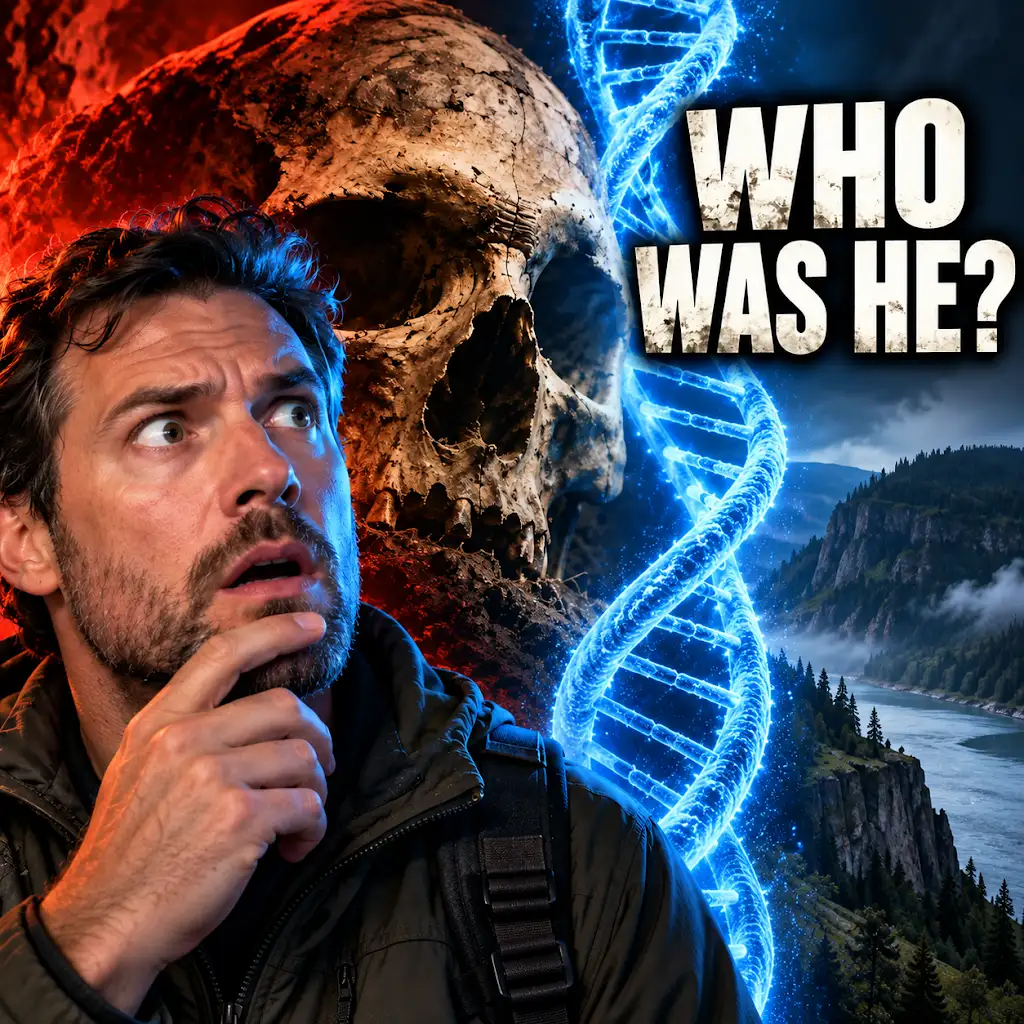
Kennewick Man’s Skull Said One Thing. DNA Said Another.
FAQs
What is Kennewick Man?
Kennewick Man is the name given to the skeletal remains of a prehistoric man found along the Columbia River in Kennewick, Washington in 1996.
Why was Kennewick Man controversial?
Kennewick Man was controversial because of the debate over his ancestry and the legal battle over his remains between Native American tribes and scientists.
What were the different theories about Kennewick Man’s ancestry?
There were conflicting theories about Kennewick Man’s ancestry, with some scientists arguing that he was not Native American but instead had European or Polynesian origins.
What was the outcome of the legal battle over Kennewick Man’s remains?
After a lengthy legal battle, the court ruled in 2004 that Kennewick Man’s remains were not Native American and could be studied by scientists.
What did the study of Kennewick Man reveal about his origins?
Studies of Kennewick Man’s remains using DNA analysis and other scientific methods suggested that he was more closely related to Native American populations than to any other group, contradicting earlier theories.