
The skeletal remains, a whisper from the distant past, emerged from the churning waters of the Columbia River near Kennewick, Washington, in 1996. Initially identified as a modern crime victim due to their remarkably intact state, these bones would soon embark on a journey that would challenge scientific understanding, ignite legal battles, and ultimately lead to a groundbreaking revelation: the DNA of Kennewick Man. A compelling documentary, aptly titled “Uncovering Kennewick Man’s DNA,” meticulously chronicles this extraordinary saga, offering viewers an immersive experience into the scientific quest to decipher the genetic legacy of one of North America’s oldest human inhabitants.
The Discovery and the Controversy
The discovery of the Kennewick Man skeleton was, in itself, a sensational event. Found by two spectators during a canoe race, the remarkably well-preserved remains immediately presented a scientific enigma. The initial assessment by law enforcement, followed by anthropological investigation, pointed towards an age far exceeding any modern human remains. This sparked immediate scientific interest, but it also ignited a firestorm of controversy that would engulf the scientific community and the descendants of Indigenous peoples for years to come.
The Initial Assessment and Scientific Intrigue
The initial discovery, made on July 28, 1996, by David and Marianne Thomas, was met with a mix of excitement and confusion. The bones, found partially submerged and exposed by receding waters, were remarkably complete, boasting a skull, pelvis, and long bones. This preservation, unusual for remains exposed to the elements and river currents, immediately hinted at something ancient. Anthropologists, led by Dr. James Chatters, were called to the scene. Their preliminary examinations, based on morphology and the skeletal features, suggested that the individual was likely male, around 40-45 years old at the time of death, and possessed a cranial shape that was distinct from typical Native American populations. This distinct morphology, along with the estimated age of the remains, which was later placed at approximately 9,000 years old, fueled intense scientific curiosity. The possibility of understanding a human lineage predating established migrations into the Americas was a tantalizing prospect.
The Legal Impasse and the Clash of Interests
However, the scientific intrigue was quickly overshadowed by legal and ethical complexities. Under the Native American Graves Protection and Repatriation Act (NAGPRA), human remains found on federal land are presumed to be of Native American origin and are subject to repatriation by affiliated tribes. Five Columbia River tribes – the Confederated Tribes of the Colville Reservation, the Confederated Tribes and Bands of the Yakama Nation, the Nez Perce Tribe, the Confederated Tribes of the Umatilla Indian Reservation, and the Wanapum Tribe – promptly claimed the remains, asserting their ancestral rights. This claim, grounded in cultural and spiritual beliefs, was met with resistance from a coalition of scientists who argued that the remains predated the arrival of modern Native American groups and therefore should be studied to understand the broader history of human migration into the Americas. The ensuing legal battles, which spanned over a decade, centered on the interpretation of NAGPRA and the definition of “Native American.” The documentary powerfully illustrates the agonizing wait for scientific inquiry, as the remains were held in limbo, their secrets locked away by protracted litigation.
The Kennewick Man DNA documentary sheds light on the ancient origins of one of North America’s oldest skeletons, revealing fascinating insights into early human migration and genetics. For those interested in exploring more about ancient civilizations and their remarkable achievements, the article on Nabta Playa, which discusses the stone circle as an ancient astronomical marvel, provides a captivating perspective on how early societies interacted with their environment. You can read more about it in this article: Nabta Playa: Stone Circle – Ancient Astronomical Marvel.
The Dawn of DNA Analysis
The advent of advanced DNA sequencing technologies proved to be the crucial turning point in the Kennewick Man saga. While initial attempts to extract viable DNA from ancient remains were fraught with challenges, the relentless pursuit of scientific knowledge, coupled with technological advancements, eventually paved the way for an unprecedented breakthrough. The documentary “Uncovering Kennewick Man’s DNA” dedicates significant attention to the intricate and painstaking process of genetic analysis, highlighting the dedication of the scientists involved.
Early Attempts and the Challenges of Ancient DNA
Extracting usable DNA from ancient skeletal remains is a notoriously difficult undertaking. Over thousands of years, DNA degrades due to environmental factors such as heat, moisture, and microbial activity. Furthermore, the bone matrix itself can inhibit DNA extraction, and contamination from modern human DNA is a constant threat. Early attempts to analyze Kennewick Man’s DNA were met with limited success due to these inherent challenges. The documentary effectively conveys the frustration and setbacks faced by researchers as they grappled with fragmented and compromised genetic material. It emphasizes that the pursuit of ancient DNA is a delicate dance with time and decay, where every milligram of bone powder represents a potential treasure trove of information, yet also a minefield of degradation.
Technological Advancements and the Breakthrough
The documentary showcases the evolution of DNA sequencing technology that made the analysis of Kennewick Man’s DNA finally feasible. Innovations in polymerase chain reaction (PCR) and next-generation sequencing (NGS) allowed scientists to amplify tiny fragments of ancient DNA and piece together larger genetic sequences. This technological leap enabled researchers to overcome the limitations of earlier methods. The film likely features interviews with the geneticists who spearheaded this effort, detailing their meticulous methodologies, their careful protocols to avoid contamination, and the sheer determination required to achieve a conclusive result. The transformation of seemingly inert bone fragments into a roadmap of genetic ancestry is depicted as a testament to human ingenuity and scientific perseverance.
The Genetic Revelation: A Surprising Link
The culmination of years of scientific effort and legal wrangling was the groundbreaking revelation of Kennewick Man’s genetic lineage. The DNA analysis provided an answer that was both scientifically significant and deeply resonant, offering a new perspective on the peopling of the Americas. The documentary meticulously explores the implications of these findings, emphasizing their impact on our understanding of human history.
The recent documentary on Kennewick Man DNA has sparked significant interest in ancient human history and the mysteries surrounding our ancestors. For those intrigued by the intersection of archaeology and historical narratives, a fascinating article titled “Uncovering Lost Maps: Library of Alexandria’s Legacy” delves into another pivotal moment in history that shaped our understanding of the past. You can explore this captivating piece by following this link: Uncovering Lost Maps. Both the documentary and the article highlight the importance of uncovering hidden truths that connect us to our origins.
Unraveling the Ancestry: The Polynesian Connection
The most astonishing discovery stemming from the DNA analysis was the strong genetic affinity between Kennewick Man and the indigenous populations of modern-day Polynesia. This finding defied initial assumptions and sparked considerable debate within the scientific community. The documentary likely illustrates the statistical analysis and the specific genetic markers that pointed to this unexpected connection. It might feature animated visualizations of genetic trees and migration patterns, helping viewers grasp the complex data. The surprise element is palpable, as it challenges long-held theories about the primary migration routes into the Americas.
Implications for Migration Theories and Human History
The Polynesian link has profound implications for existing theories on the migration of humans into the Americas. Previously, the dominant model suggested a primary migration from Siberia across the Bering Land Bridge, followed by subsequent dispersal. Kennewick Man’s DNA suggests that the story of the Americas’ earliest inhabitants may be far more complex, possibly involving earlier or parallel migrations from Asia, potentially with maritime components. The documentary delves into these implications, discussing how the findings necessitate a re-evaluation of established historical timelines and migration pathways. It underscores that the story of human migration is not a simple, linear narrative but a tapestry woven with numerous threads and influences.
The Documentary’s Impact and Legacy
“Uncovering Kennewick Man’s DNA” is more than just a scientific recounting; it is a powerful narrative that explores the intersection of science, law, culture, and ethics. The documentary’s impact lies not only in its scientific revelations but also in its humanizing portrayal of the individuals involved and its sensitive handling of the cultural and spiritual dimensions of the discovery.
Bridging Science and Culture
A key strength of the documentary is its ability to bridge the gap between rigorous scientific inquiry and the deeply held cultural beliefs of Indigenous peoples. It does not present the scientific findings as a victory over cultural claims, but rather as a means to enrich our collective understanding of human history. The film likely features interviews with tribal elders and representatives, allowing them to articulate their perspectives on the remains and the scientific process. This dual perspective is crucial for fostering respect and understanding, demonstrating that scientific discovery and cultural heritage can coexist and inform each other. The documentary emphasizes that Kennewick Man, regardless of his genetic origins, is an ancestor whose story is significant to all of humanity.
A Renewed Dialogue and Future Research
The documentary serves as a catalyst for a renewed dialogue about the ethics of scientific research involving human remains and the importance of collaboration between scientists and Indigenous communities. It highlights the progress made in building trust and fostering partnerships, particularly following the eventual repatriation of Kennewick Man to the Umatilla Tribe in 2017. The film likely concludes by looking towards the future, discussing ongoing research possibilities and the potential for further discoveries that will continue to illuminate the complex history of human presence in the Americas. It leaves viewers with a sense of awe at the vastness of human history and the ongoing quest to understand our origins. The enduring legacy of Kennewick Man, now amplified by the power of DNA, is his contribution to a more nuanced and comprehensive understanding of our shared human past.
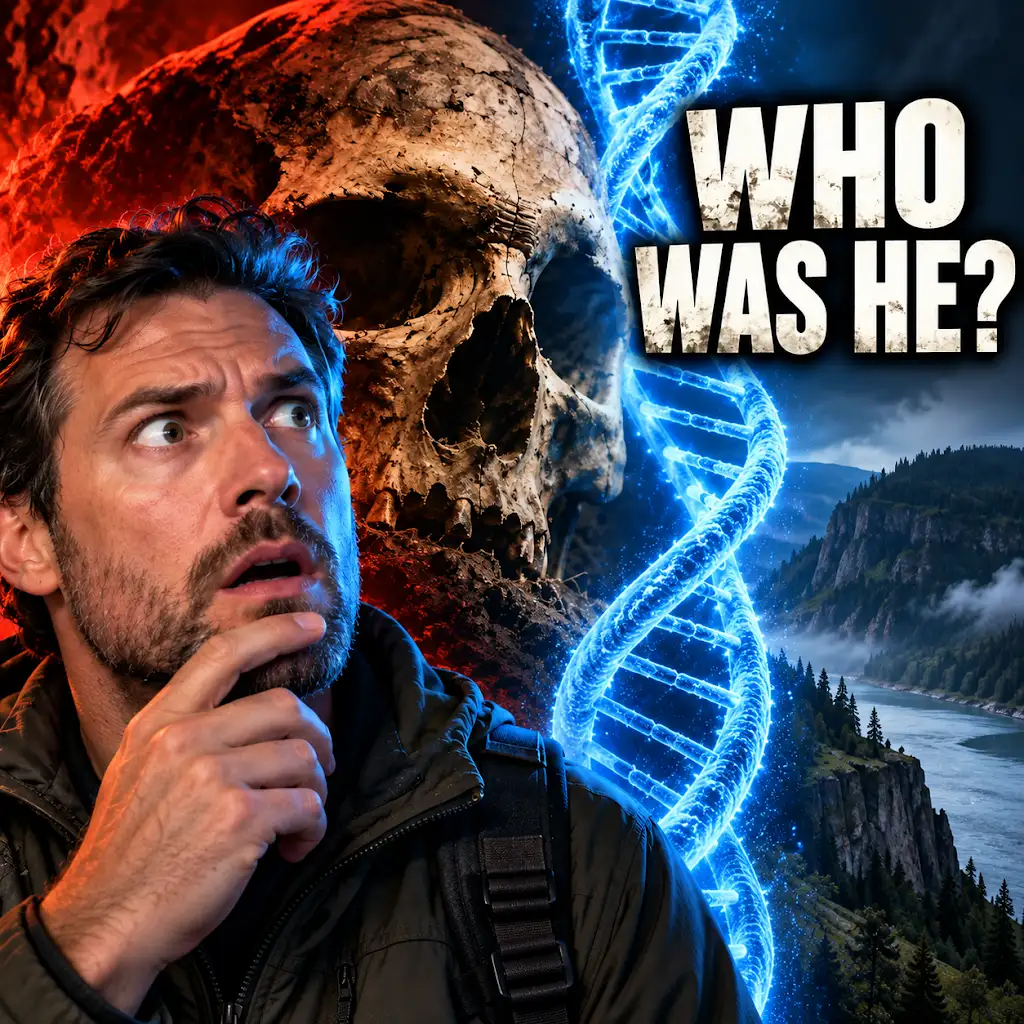
Kennewick Man’s Skull Said One Thing. DNA Said Another.
FAQs
What is the Kennewick Man DNA documentary about?
The Kennewick Man DNA documentary explores the genetic analysis of the ancient skeletal remains known as Kennewick Man, found in Washington state in 1996.
Who is Kennewick Man?
Kennewick Man is the name given to the 9,000-year-old skeleton discovered along the Columbia River in Kennewick, Washington. The remains are one of the oldest and most complete skeletons ever found in North America.
What was the significance of the DNA analysis in the documentary?
The DNA analysis conducted on Kennewick Man’s remains provided valuable insights into his genetic ancestry and relationship to modern Native American tribes. It also shed light on the migration patterns of early human populations in North America.
What were some of the key findings from the DNA analysis?
The DNA analysis revealed that Kennewick Man was more closely related to Native American tribes than any other population. It also suggested that he belonged to a distinct genetic lineage that is not directly ancestral to any modern Native American group.
How did the documentary contribute to our understanding of early human history in North America?
The Kennewick Man DNA documentary helped to deepen our understanding of the genetic diversity and migration patterns of early human populations in North America. It also sparked discussions about the cultural and legal implications of studying ancient human remains.