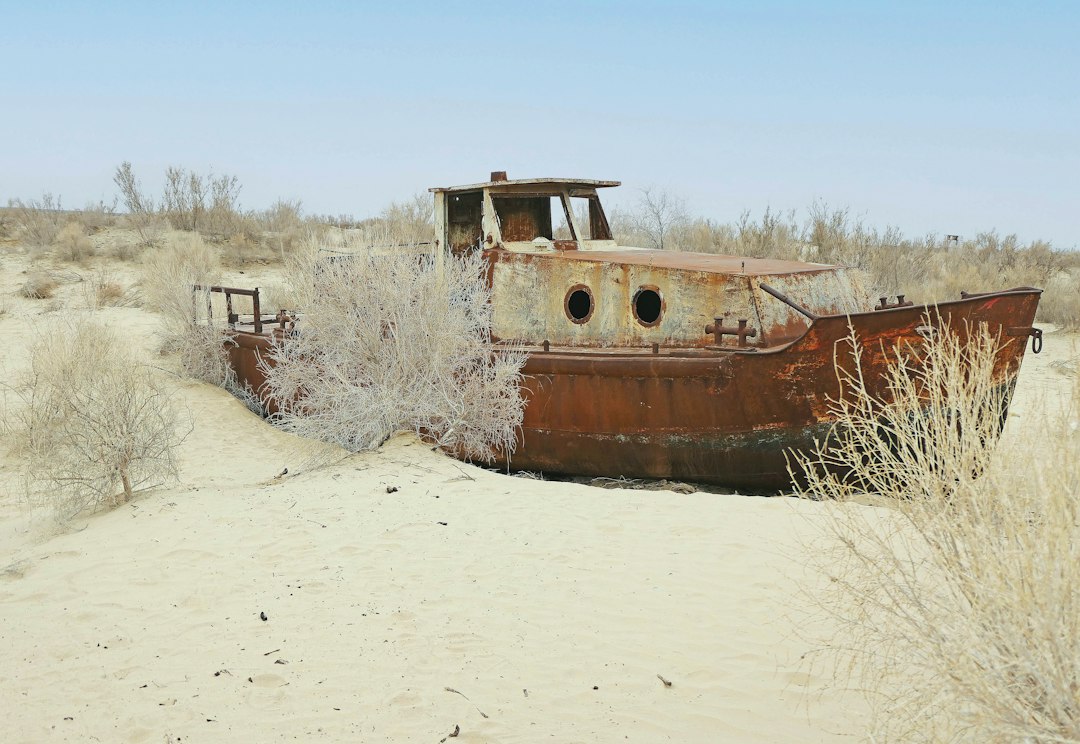
The Aral Sea, once the fourth-largest lake in the world, is a stark testament to human ambition and ecological consequence. Its dramatic shrinking over the latter half of the 20th century transformed a vibrant ecosystem into a vast, salt-encrusted desert, leaving behind a legacy of environmental tragedy. Yet, amidst the desolation, a fragile story of rebirth has begun to unfold, offering a glimmer of hope for this scarred landscape.
Before its decline, the Aral Sea was a thriving hub of life and economic activity. Its name, meaning “island sea,” hinted at its expansive nature, a vast inland body of water that supported a rich biodiversity and a vibrant fishing industry. The Amu Darya and Syr Darya rivers, its lifeblood, flowed into its azure waters, nourishing a unique ecosystem.
A Thriving Ecosystem and Abundant Life
For millennia, the Aral Sea was a haven for a diverse array of flora and fauna. Its brackish waters were home to numerous fish species, including carp, pike, and sturgeon, which supported a thriving fishing industry. The surrounding wetlands and deltas, fed by the fertile river waters, were crucial breeding grounds for migratory birds, attracting hundreds of thousands of individuals each year. The unique salinity levels of the Aral Sea contributed to its distinct ecological character, fostering a delicate balance that had sustained itself for ages. The local communities, deeply intertwined with the sea, relied on its bounty for sustenance and livelihood. The fishing fleets, a common sight on its waters, brought in substantial catches, contributing significantly to the regional economy. The fertile deltas also supported agriculture, with crops like rice and cotton flourishing under the influence of the sea’s life-giving presence.
Economic Powerhouse: Fisheries and Transportation
The Aral Sea was not only an ecological treasure but also a significant economic engine. Its abundant fish stocks supported a thriving commercial fishing industry, with dozens of processing plants and ports lining its shores. The sea also served as a vital transportation route, connecting communities and facilitating trade across the region. Fishing villages flourished, their economies intrinsically linked to the sea’s productivity. The bountiful catches provided employment for thousands, and the seafood produced was a staple in local diets and a valuable export. The navigable waterways facilitated the movement of goods and people, fostering a sense of connection and prosperity. Ports like Aralsk and Muynak were bustling centers of activity, a testament to the sea’s economic importance.
A Source of Regional Pride and Identity
The Aral Sea was more than just a natural resource; it was an integral part of the cultural identity and collective memory of the peoples of Central Asia. It featured in local folklore, songs, and traditions, representing a source of pride and sustenance. Its vastness and beauty inspired awe, and its presence shaped the very fabric of life in the surrounding regions. The annual fishing festivals, the stories of legendary catches, and the annual migrations of birds all contributed to a rich cultural tapestry woven around the Aral Sea. It was a symbol of abundance and a promise of a secure future for generations to come.
The Aral Sea, once one of the largest lakes in the world, has dramatically shrunk due to extensive irrigation projects and mismanagement of water resources. This environmental disaster has not only affected the local climate but also the livelihoods of communities that depended on the sea for fishing and agriculture. For a broader perspective on water management issues, you can read about the challenges and opportunities in another significant body of water, the South China Sea, in the article found here: Navigating the South China Sea: Challenges and Opportunities. Understanding these interconnected water crises can shed light on the importance of sustainable practices in managing our precious water resources.
The Unforeseen Catastrophe: Soviet Irrigation Projects
The seeds of the Aral Sea’s destruction were sown in the mid-20th century, with the ambitious and ultimately devastating Soviet irrigation projects. The drive to transform the arid Central Asian landscape into a cotton-growing paradise led to the diversion of the Amu Darya and Syr Darya rivers, the very arteries that fed the sea.
The Aral Sea: A Victim of Soviet Agricultural Ambitions
In the pursuit of agricultural self-sufficiency and a strong cotton industry, the Soviet Union embarked on a monumental endeavor: the construction of vast irrigation canals to water the vast cotton fields of Turkmenistan, Uzbekistan, and Kazakhstan. The Kara-Kum Canal, the Karakum Canal, and numerous other projects were designed to harness the waters of the Amu Darya and Syr Darya, rerouting them away from their natural destination, the Aral Sea. This decision, driven by an ideology that prioritized human control over nature, would have profound and irreversible consequences. The vast quantities of water diverted for irrigation, often used inefficiently, meant that increasingly less water reached the Aral Sea. The desert, which was to be tamed, began to claim back its territory, with the Aral Sea becoming its first and most tragic casualty.
The Diverted Rivers: A Slow Draining of Life
The Amu Darya and Syr Darya rivers, once mighty flows, became mere trickles by the time they reached the Aral Sea. The sheer scale of water abstraction for irrigation meant that the natural replenishment of the sea was drastically curtailed. The once-powerful currents that had sustained the Aral Sea for millennia were reduced to a fraction of their former glory, a stark illustration of the impact of unsustainable water management. The decision to prioritize cotton production over the ecological health of the Aral Sea was a monumental error in judgment, driven by short-term economic gains at the expense of long-term environmental stability. The vast network of canals, while enabling cotton cultivation, effectively strangled the Aral Sea, slowly but surely draining its lifeblood.
The Consequences Unfold: Shrinking Shores and Ecological Collapse
As the rivers dwindled, the Aral Sea began its rapid and heartbreaking retreat. The water levels plummeted, and the coastline receded at an alarming rate. The once-thriving fishing industry collapsed, leaving behind ghost towns and ruined ports. The ecological balance was shattered, with the loss of habitat leading to the extinction of many species. The shrinking of the sea also led to a significant increase in salinity, further stressing the remaining aquatic life. The once-vibrant ecosystem, a testament to nature’s resilience, began to unravel under the immense pressure of human intervention.
The Aral Sea’s Descent into a Toxic Desert
The consequences of the river diversion extended far beyond the shrinking of the Aral Sea. The exposed seabed, laden with salt and agricultural chemicals, transformed into a toxic desert, a desolate landscape that brought new environmental and health challenges.
The Salt and Dust Storms: A Legacy of Pollution
As the Aral Sea dried up, its exposed seabed became a vast source of salt and dust. Fierce winds whipped these toxic particles into massive dust storms, which traveled hundreds of kilometers, polluting the air and land far beyond the immediate vicinity of the former sea. These storms carried not only salt but also pesticides, fertilizers, and other industrial pollutants that had accumulated in the seabed over decades. The consequences for public health were dire, leading to a surge in respiratory illnesses, cancers, and birth defects in the surrounding populations. The once-pristine environment had become a poisoned landscape, its toxicity a constant threat to life.
The Health Crisis: Respiratory Illnesses and Beyond
The inhabitants of the Aral Sea region bore the brunt of the environmental catastrophe. The constant inhalation of salt and chemical-laden dust led to an unprecedented rise in respiratory diseases, including asthma and tuberculosis. The prevalence of certain cancers, particularly those affecting the digestive system, also increased significantly. Pregnant women and children were particularly vulnerable, facing higher rates of birth defects and developmental issues. The Aral Sea disaster created a full-blown public health crisis, a stark reminder of the interconnectedness of human well-being and environmental health. The once-thriving communities were now struggling with widespread illness, their lives irrevocably altered by the ecological devastation.
The Loss of Biodiversity: A Silent Extinction
The shrinking of the Aral Sea led to a catastrophic loss of biodiversity. The unique ecosystem, adapted to the specific salinity and conditions of the sea, could not survive the dramatic changes. Many fish species, endemic to the Aral Sea, were driven to extinction. The surrounding wetlands, deprived of their water source, also withered, impacting migratory bird populations and other wildlife. The desertification of the land further reduced habitat, contributing to the silent extinction of countless species. The vibrant tapestry of life that once characterized the Aral Sea region was reduced to a pale shadow of its former glory.
Glimmers of Hope: The North Aral Sea Revival
Despite the overwhelming scale of the tragedy, a remarkable story of environmental recovery has begun to unfold in the northern part of the Aral Sea. The construction of a dam in the early 2000s marked a turning point, initiating a process of gradual but significant rebirth.
The Kokaral Dam: A Barrier Against Despair
Recognizing the dire situation and the need for intervention, Kazakhstan, with international support, embarked on the construction of the Kokaral Dam in 2005. This ambitious engineering project aimed to separate the smaller, northern Aral Sea (known as the Small Aral) from the larger, more severely affected southern Aral Sea (the Large Aral). By controlling the flow of water from the Syr Darya river, the dam allowed for the gradual refilling of the Small Aral, offering a chance for ecological recovery. The dam itself, a concrete structure, became a symbol of defiance against the prevailing environmental destruction.
The Return of Water: Salinity Reduction and Ecosystem Restoration
The refilling of the Small Aral Sea has been a slow but steady process. As freshwater from the Syr Darya began to flow into the basin, the salinity levels gradually decreased. This reduction in salinity was crucial for the return of aquatic life. Fish species, which had long disappeared, began to reappear, and the ecosystem started to show signs of recovery. The once-barren shores began to support new vegetation, and the wetlands, though still a fraction of their former size, started to attract migratory birds once more. The water, once a distant memory, was slowly returning, bringing with it the promise of life.
The Resurgence of Fisheries: A Fishermen’s Tale
The most tangible sign of the Small Aral Sea’s rebirth has been the resurgence of its fishing industry. As the water quality improved and fish populations recovered, fishing boats returned to the sea. The revival of this vital economic activity has brought renewed hope and employment to the communities that had been devastated by the Aral Sea’s decline. The sounds of nets being cast and the sight of returning catches have become a welcome soundtrack to this environmental success story. The once-abandoned fishing ports are seeing signs of life, a testament to the resilience of both nature and the human spirit.
The Aral Sea, once one of the largest lakes in the world, has faced severe ecological challenges due to extensive irrigation projects that diverted rivers feeding it. This environmental crisis has sparked interest in ancient water management systems that may offer insights into sustainable practices. For those interested in exploring this topic further, a related article discusses the innovative techniques used by ancient civilizations to manage water resources effectively. You can read more about these fascinating systems in the article on ancient water management. Understanding these historical approaches could provide valuable lessons for addressing the ongoing issues surrounding the Aral Sea.
The Long Road to Full Recovery: Challenges and Future Prospects
| Metric | Before (1960s) | After (2020s) |
|---|---|---|
| Surface Area | 68,000 km² | ~10,000 km² (varies by year) |
| Volume | 1,100 km³ | ~100 km³ |
| Maximum Depth | 69 m | Less than 10 m in many parts |
| Salinity | ~10 g/L | Up to 100 g/L in some areas |
| Fish Species | Over 20 species | Almost none in the dried areas |
| Economic Impact | Thriving fishing industry | Collapse of fishing industry |
| Environmental Impact | Stable ecosystem | Desertification and dust storms |
While the revival of the North Aral Sea is a cause for celebration, the Aral Sea tragedy is far from over. The southern Aral Sea remains largely desiccated, and significant challenges persist in achieving a complete ecological and socio-economic recovery.
The Fate of the South Aral Sea: A Persistent Scar
The southern Aral Sea, separated by the Kokaral Dam, continues to face an uphill battle. The sheer volume of its former basin and the ongoing water scarcity issues make its full restoration a monumental challenge. The desiccated seabed of the southern Aral remains a vast toxic desert, its environmental and health impacts continuing to affect the surrounding populations in Uzbekistan. The legacy of the past continues to cast a long shadow over this region, requiring continued attention and resources. Efforts to mitigate the dust storms and address the health crisis in the south are ongoing, but the scale of the problem is immense.
International Cooperation and Sustainable Water Management
The Aral Sea crisis underscores the urgent need for greater international cooperation and sustainable water management practices in Central Asia. The region’s shared water resources necessitate collaborative solutions to ensure equitable distribution and prevent future environmental disasters. Addressing the Aral Sea issue requires a regional approach, where countries work together to manage water resources efficiently and cooperatively. This includes investing in water-saving technologies, promoting drought-resistant crops, and developing integrated river basin management plans. The lessons learned from the Aral Sea disaster must guide future water policies and development strategies.
Investing in Local Communities: Adaptation and Resilience
Beyond ecological restoration, supporting the economic and social well-being of the communities affected by the Aral Sea tragedy is crucial. This involves investing in education, healthcare, and diversified economic opportunities that are not solely dependent on the sea’s resources. Empowering local communities to adapt to the changing environment and build resilience is essential for their long-term prosperity. This could involve promoting ecotourism, supporting small businesses, and investing in renewable energy projects. The human element of the Aral Sea story is as important as the ecological one, and ensuring the well-being of its people is paramount.
The Aral Sea’s journey from a vibrant inland sea to a desiccated desert and now to a nascent state of recovery is a profound environmental narrative. It serves as a stark warning about the consequences of unchecked human intervention in natural systems and a powerful testament to the resilience of nature and the potential for restorative action when concerted efforts are made. The Aral Sea’s story is far from over, but the rebirth of its northern half offers a beacon of hope, reminding us that even the most devastating environmental tragedies can, with dedication and foresight, be met with a chance for renewal.

A Dam Brought the Aral Sea Back—But Only Part of It
FAQs
What was the Aral Sea like before?
The Aral Sea was once the fourth largest lake in the world, covering an area of about 26,000 square miles. It was a thriving ecosystem that supported diverse flora and fauna.
What caused the decline of the Aral Sea?
The main cause of the decline of the Aral Sea was the diversion of its two main tributary rivers, the Amu Darya and Syr Darya, for irrigation purposes by the Soviet Union in the 1960s. This led to a drastic reduction in the inflow of water into the sea.
How has the Aral Sea changed over time?
The Aral Sea has significantly shrunk in size over the years, with water levels dropping by over 80% since the 1960s. The once thriving fishing industry has collapsed, and the exposed seabed has become a source of environmental and health problems due to the salt and toxic chemicals left behind.
What is the current state of the Aral Sea?
Today, the Aral Sea has been reduced to a fraction of its original size, with the northern and southern parts completely separated. The northern part, known as the Small Aral Sea, has seen some recovery efforts with the construction of a dam to help restore water levels.
What are the environmental impacts of the Aral Sea’s decline?
The decline of the Aral Sea has had severe environmental impacts, including desertification of the surrounding region, loss of biodiversity, and health problems for local communities due to the exposure to salt and toxic chemicals. Efforts are being made to address these issues and restore the ecosystem.