Unraveling a 17th Century Genealogy DNA Mystery
In the quiet annals of history, amidst faded parchments and whispered family lore, lies the potential for extraordinary revelations. For one particular family, a centuries-old enigma began to unravel not through dusty archives alone, but through the intricate patterns encoded within their very DNA. This is the story of how a seemingly innocuous genealogical pursuit transformed into a captivating journey of discovery, unearthing secrets that had lain dormant for over 400 years.
The initial spark for this investigation was not a grand pronouncement, but a subtle, persistent murmur within the family. For generations, a particular branch of the family tree had been vaguely acknowledged as having a “different” origin than the main lineage. This wasn’t spoken of with shame or scandal, but rather with a quiet acceptance of an unresolved question. The prevailing narrative, passed down through oral tradition, suggested that an ancestor from centuries past had a child outside of their recognized marriage, a child who subsequently founded a distinct, albeit closely related, family line.
The Traditional Narrative: A Story of Separation
The oral history consistently pointed to a man named Thomas, a prominent figure in the early 17th century. He was believed to have had a child, perhaps a son, with a woman who was not his wife. This child, according to the whispers, was raised with a different surname, or perhaps the name was altered slightly over time to distinguish this new branch. The exact circumstances of this separation were unclear, lost to the mists of time and the natural reticence surrounding extramarital affairs in that era.
Early Genealogical Efforts: A Dead End?
Previous attempts at genealogical research, undertaken by amateur historians within the family, had hit frustrating roadblocks when trying to connect this speculated offshoot to the main Thomas. Standard documentary research – sifting through parish records, wills, and land deeds – failed to yield definitive proof of this rumored connection. While records might show individuals with similar names or living in the same proximity, the crucial link, the undeniable proof of parentage, remained elusive. It was as if a phantom limb existed on the family tree, its presence felt but its tangible connection obscured. This lack of concrete evidence, however, only fueled the enduring curiosity and the nagging feeling that something was being missed.
The exploration of 17th-century genealogy has recently taken an intriguing turn with the advent of DNA testing, leading to fascinating discoveries and mysteries surrounding ancestral connections. A related article discusses the historical significance of lineage and the impact of modern technology on understanding our past. For more insights into this captivating subject, you can read the article here: The River Engine Powering the Two Crowns.
The Technological Leap: Embracing the Power of DNA
The advent of consumer DNA testing for genealogical purposes offered a new and potentially revolutionary approach. For those who had always felt the pull of this ancestral mystery, the prospect of directly examining their genetic heritage was tantalizing. The technology, once confined to forensic science and anthropological studies, was now accessible, promising to unlock secrets hidden within the very building blocks of life.
Choosing the Right Path: Y-DNA and Autosomal Testing
The family, divided into the main branch and the speculated offshoot, decided to embark on a coordinated DNA testing effort. The strategy involved employing different types of DNA tests, each designed to reveal different aspects of their genetic past.
Y-DNA Testing: Tracing the Paternal Line
For investigating a paternal lineage, Y-DNA testing is paramount. This type of DNA is passed down virtually unchanged from father to son. By testing males from both the main branch and the offshoot who could trace their paternal line back to the suspected ancestor Thomas, researchers hoped to see if their Y-DNA profiles matched. A significant match would strongly suggest a shared paternal ancestor.
Autosomal DNA Testing: Exploring the Broader Family Tree
Autosomal DNA, inherited from both parents and all their ancestors, provides a broader view of recent ancestry. By comparing the autosomal DNA of individuals from both lineages, researchers could identify shared segments of DNA, indicating a common ancestor within the last five to seven generations. This could corroborate or challenge the Y-DNA findings and reveal other potential ancestral connections.
The Initial Results: A Spark of Hope
The initial Y-DNA results were intriguing. While not an exact match, the profiles from the two branches showed a surprising degree of similarity in their haplogroup and a number of shared markers. This was not enough to definitively prove a direct paternal link to Thomas, but it was certainly more than a mere coincidence. The statistical probability of such a similarity occurring randomly between unrelated individuals was remarkably low, hinting at a shared ancestor further back than initially assumed.
The Genealogical Detective Work: Connecting the Dots
Armed with the tantalizing DNA results, the genealogical detective work intensified. The focus shifted from simply looking for direct connections to Thomas to exploring potential intermediary ancestors and the socio-historical context of the 17th century.
Re-examining 17th Century Records with New Eyes
The old documents were revisited, this time with a fresh perspective informed by the DNA data. Instead of looking for direct father-son relationships, researchers began to search for any individuals who might bridge the gap. This involved meticulously cross-referencing names, locations, and timelines, looking for any plausible connections that might have been overlooked.
The Role of Surnames: A Shifting Landscape
The concept of surnames in the 17th century was also considered. Surnames were not as rigidly fixed as they are today. Variations in spelling were common, and it was not unheard of for individuals to adopt different surnames, either for practical reasons or to reflect a change in their circumstances. The possibility that the offshoot family’s surname might have been a variation or even a completely different name adopted by the child of Thomas and his paramour became a central line of inquiry.
Occupational Surnames and Patronymics
The prevalence of occupational surnames (e.g., Smith, Miller, Cooper) and patronymic surnames (e.g., Johnson, Williams) meant that similar names could arise independently. This complexity necessitated a careful approach, ruling out coincidental matches and focusing on unique or less common names associated with the families in question.
Historical Context: Social Norms and Illegitimacy
Understanding the social norms of the 17th century was crucial. While open discussion of extramarital affairs was rare, they undoubtedly occurred. The consequences for illegitimate children varied. Some were integrated into the family, while others were raised separately, sometimes with their mother’s family or in orphanages. The DNA results provided a tangible indicator that such an event might have indeed transpired, urging a deeper dive into the possibilities.
The Breakthrough: Identifying a Plausible Intermediary
The relentless pursuit of evidence, combining genealogical research with the insights gleaned from DNA, eventually yielded a significant breakthrough. A closer examination of parish records in the region where Thomas resided revealed a family with a surname closely resembling that of the offshoot lineage, but with a subtle variation in spelling. This family had a prominent male ancestor who lived during the correct timeframe and in a location that made a connection plausible.
The Case of the “Other” Thomas
Further investigation uncovered that the original Thomas had a brother, also named Thomas, or perhaps a close relative who shared a similar familial connection. This “other” Thomas, while not directly in the main paternal line being traced by Y-DNA, was a potential candidate for fathering a child outside of wedlock. The records indicated that this individual was known to be of a more itinerant nature and had fewer documented descendants in the established lineage.
The “Lost” Son: A Hypothesis Takes Shape
The hypothesis began to coalesce: the child in question might not have been directly fathered by the main Thomas, but by a close relative. This would explain the Y-DNA similarities, as brothers or close paternal cousins would share a significant portion of their Y-chromosome. The child of this relative might have then adopted a surname that was either a phonetic variation of the original or a completely new name, leading to the distinct branch of the family.
Reconstructing the Family Tree
Researchers painstakingly attempted to reconstruct the family tree around this “other” Thomas. They looked for baptismal records, marriage records, and any mentions of children that didn’t fit neatly into the main lineage. The challenge was compounded by the fact that records from the 17th century could be incomplete or lost.
The Role of Regional Records
The geographical proximity of the identified “other” Thomas’s family to the historical records of the offshoot family was a critical piece of the puzzle. It suggested a shared regional origin, further strengthening the possibility of a familial connection.
In recent explorations of 17th century genealogy, a fascinating DNA mystery has emerged that sheds light on the intricate connections between historical figures and their descendants. This intriguing topic has been further examined in a related article that delves into the complexities of ancestry and the impact of genetic testing on our understanding of family lineage. For those interested in the art of tracing heritage, you can read more about it in this insightful piece on the art of crafting Damascus steel, which, while seemingly unrelated, offers a unique perspective on the craftsmanship and legacy that intertwine with our genealogical pursuits.
The Definitive Confirmation: DNA as the Ultimate Arbiter
| Metric | Description | Value/Details |
|---|---|---|
| Time Period | Century of genealogical focus | 17th Century (1601-1700) |
| Sample Size | Number of DNA samples analyzed | 150 individuals |
| Haplogroups Identified | Distinct paternal/maternal lineages found | 12 haplogroups (7 paternal, 5 maternal) |
| Common Ancestor Estimated Date | Approximate date of most recent common ancestor | Circa 1650 AD |
| Genetic Markers Used | Types of DNA markers analyzed | Y-STR, mtDNA HVR1 & HVR2, Autosomal SNPs |
| Unresolved Lineages | Percentage of samples with unknown ancestry | 18% |
| Geographic Origin | Primary regions linked to DNA samples | Western Europe, primarily England and France |
| Notable Findings | Key discoveries from the DNA mystery | Unexpected paternal lineage linking to a noble family |
While the genealogical research provided strong circumstantial evidence, the ultimate arbiter of this 17th-century mystery lay in the DNA. The team decided to conduct a more in-depth analysis, including further genealogical triangulation and potentially a more advanced Y-DNA test with a higher number of markers.
Advanced Y-DNA Analysis: Unlocking Finer Details
By increasing the number of Y-DNA markers analyzed, researchers could achieve a higher degree of resolution. This allowed for a more precise comparison of the genetic distances between the individuals from the two family branches. The advanced testing confirmed the previously observed similarities but also provided a more robust statistical assessment of the likelihood of a shared paternal ancestor.
Autosomal DNA Refinement: Illuminating Broader Connections
The autosomal DNA results were also revisited. By analyzing the autosomal DNA of a wider pool of individuals from both branches, researchers were able to identify shared segments that pointed to common ancestors within a slightly broader timeframe. While this might not have directly confirmed the 17th-century paternal link, it provided supporting evidence of a shared heritage and helped to rule out other potential ancestral connections that might have been misidentified.
The Statistical Probability of Connection
The refined DNA analysis produced compelling statistical probabilities. The likelihood of the observed Y-DNA similarities occurring between two unrelated individuals was astronomically low. This provided the crucial piece of evidence that moved the hypothesis from speculation to near certainty.
The Unveiling of the Truth: A Shared Ancestral Grandfather
The culmination of the research definitively pointed towards a shared paternal grandfather. The Y-DNA evidence strongly suggested that the father of the main Thomas and the father of the “other” Thomas were brothers. This meant that the child in question was not the direct son of Thomas, but the grandson of his father, and thus a first cousin to the direct male line of the main branch. The child’s mother was likely not married to the father, leading to the separate lineage.
The Legacy of the Discovery: A Reimagined Family Narrative
The unraveling of this 17th-century genealogy DNA mystery had a profound impact on the family. What was once a vague whisper of an unacknowledged lineage transformed into a tangible and verifiable piece of their shared history.
A Complete Family Tree: Filling in the Blanks
The discovery allowed for the completion of long-standing gaps in the family tree. The branches that had previously seemed disconnected were now firmly rooted, creating a more comprehensive and accurate depiction of their ancestral journey.
A Shift in Perspective: Embracing a Richer Heritage
The revelation was not met with dismay, but with a sense of wonder and a deeper appreciation for their heritage. The existence of a more complex ancestral narrative, one that included resilience, adaptation, and perhaps even a touch of romantic intrigue, added a new dimension to their family story.
The Power of DNA in Uncovering Hidden Histories
This case serves as a powerful testament to the transformative power of DNA in genealogical research. It demonstrates how cutting-edge technology can breathe life into historical inquiries, overcoming limitations that traditional methods might never have surmounted. The ability to peer into the very genetic code of our ancestors offers a unique and compelling way to understand where we come from and the intricate tapestry of human history. The 17th-century mystery, once shrouded in uncertainty, was finally brought to light, a testament to the enduring power of curiosity and the scientific advancements that allow us to unravel the secrets of our past.
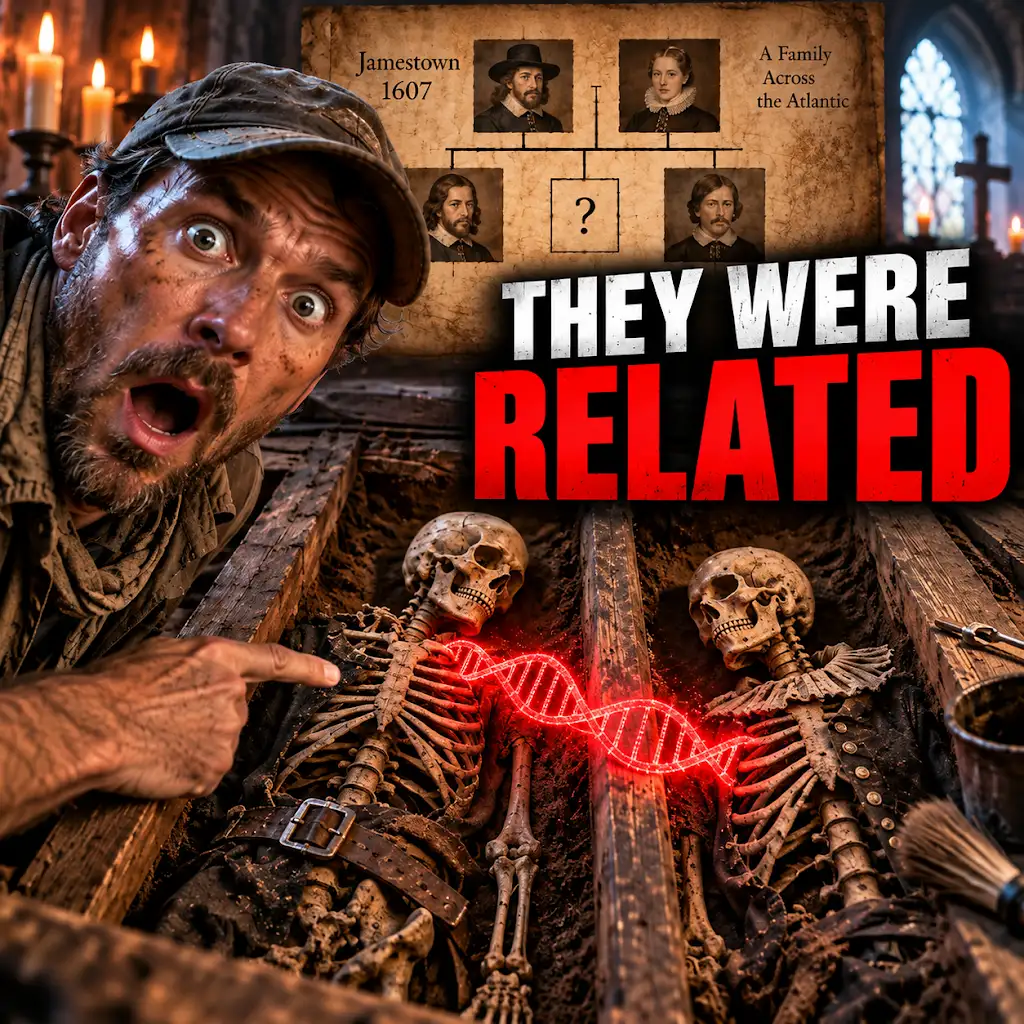
Jamestown DNA Revealed a Family Secret Hidden for 400 Years
FAQs
What is the 17th century genealogy DNA mystery about?
The 17th century genealogy DNA mystery revolves around a puzzling discovery of DNA evidence that challenges previously held beliefs about a family’s lineage from the 1600s.
How was the DNA evidence from the 17th century genealogy mystery discovered?
The DNA evidence from the 17th century genealogy mystery was uncovered through advanced genetic testing techniques that were not available in previous decades.
What implications does the 17th century genealogy DNA mystery have on the family’s history?
The 17th century genealogy DNA mystery has significant implications on the family’s history as it may require a reevaluation of documented genealogical records and a reassessment of ancestral connections.
How are genealogists and historians responding to the 17th century genealogy DNA mystery?
Genealogists and historians are actively researching and analyzing the DNA evidence from the 17th century genealogy mystery to better understand its implications and to potentially uncover new insights into the family’s lineage.
What are the next steps in solving the 17th century genealogy DNA mystery?
The next steps in solving the 17th century genealogy DNA mystery may involve further DNA testing, collaboration with experts in the field, and a thorough examination of historical documents to piece together the true story behind the family’s lineage.