
Uncovering Jamestown Settlers’ DNA Evidence
The story of Jamestown, America’s first permanent English settlement, is etched into the nation’s founding narrative. For centuries, its history was pieced together through fragmented documents, archaeological finds, and the lingering whispers of legend. Yet, a revolution in scientific understanding has begun to unlock the very building blocks of those early inhabitants, revealing a far more complex and nuanced picture than ever before. The advent of advanced DNA analysis has provided a direct link to the individuals who braved the Atlantic and endured the brutal realities of a new world. This technology, once confined to fictional thrillers, is now a powerful tool in the historian’s arsenal, allowing us to look beyond the broad strokes of colonial ambition and delve into the intimate details of lineage, migration, and even the biological realities of survival.
The scientific community’s increasing ability to extract and analyze ancient DNA has fundamentally altered how we approach historical investigations. For sites like Jamestown, where surviving records can be incomplete and biased, genetic evidence offers an unparalleled window into the past. This is not merely about confirming existing theories; it is about challenging long-held assumptions and uncovering entirely new narratives. The process is intricate, requiring meticulous excavation, careful preservation, and sophisticated laboratory techniques. Yet, the rewards are immense, providing a tangible connection to the past that transcends the written word.
From Fragments to Forensics: The Evolution of DNA Analysis
The journey of DNA analysis from a forensic tool for solving modern crimes to a key in historical inquiry is a testament to scientific ingenuity. Initially, DNA extraction from ancient remains was a formidable challenge, often yielding insufficient or degraded material. However, breakthroughs in Polymerase Chain Reaction (PCR) and Next-Generation Sequencing (NGS) have dramatically improved the quantity and quality of genetic data that can be recovered. This means that even from skeletal remains that have been buried for centuries, scientists can now extract enough information to reconstruct a person’s genetic profile.
Ethical Considerations and Best Practices
As the power of DNA analysis grows, so too does the importance of ethical considerations. Working with the remains of individuals who lived centuries ago requires a deep respect for their ancestral heritage and the communities who may still trace their lineage to them. Museums, archaeological institutions, and scientific researchers must collaborate closely with descendant communities, ensuring that their voices are heard and their concerns are addressed. Protocols for respectful excavation, storage, and scientific analysis are paramount, aiming to honor the past while advancing knowledge for the future.
Recent studies on the DNA evidence of Jamestown settlers have shed light on the origins and health of these early colonists, revealing insights into their ancestry and the challenges they faced in the New World. For those interested in exploring how historical narratives are shaped by scientific discoveries, a related article discusses the contemporary implications of competition in space exploration, highlighting how nations are vying for resources beyond Earth. You can read more about this intriguing topic in the article titled “The New Space Race: Nations’ Moon Grab Tactics” available at this link.
Unearthing the Settlers: The Archaeological Foundation
The DNA evidence derived from Jamestown settlers is inextricably linked to the meticulous work of archaeologists. Without the discovery and careful excavation of human remains, the genetic insights would remain purely theoretical. The archaeological efforts at Jamestown have been ongoing for decades, transforming a relatively unknown site into one of the most intensively studied colonial settlements in North America. Each bone, each burial, represents a potential doorway into the past, a physical manifestation of the individuals who once walked the earth.
The Jamestown Rediscovery Project
The pivotal work of the Jamestown Rediscovery project, initiated in 1994, has been instrumental in locating and excavating the original 1607 fort and its associated burials. This project, employing cutting-edge archaeological techniques, has unearthed a wealth of artifacts and, crucially, human remains. The discovery of the “Captain John Smith” skeleton, while later disproven to be him, was a landmark moment, demonstrating the potential of the site to yield significant discoveries.
Identifying and Preserving Remains
The identification and preservation of human remains are critical first steps in any ancient DNA study. Archaeologists must carefully document the context of each burial, noting its position, orientation, and any associated grave goods. Once unearthed, the remains are meticulously cleaned and preserved to prevent degradation of the fragile DNA. This often involves specialized conservation techniques to stabilize bones and teeth, ensuring that they are suitable for later laboratory analysis.
The Significance of Context
The archaeological context of a burial is as important as the skeletal remains themselves. The location of a grave, its depth, and the presence of other artifacts can provide crucial clues about the individual’s social status, their role in the settlement, and even the cause of their death. This contextual information is then integrated with the DNA data, creating a richer and more comprehensive understanding of the individual and their place in Jamestown society.
Deciphering the Genetic Code: Extraction and Analysis

The journey from a dusty bone fragment to a usable DNA profile is a complex and demanding one, requiring specialized laboratories and highly trained scientists. The ancient environment of Jamestown, with its varying soil conditions and the passage of time, presents unique challenges to DNA preservation. However, advancements in extraction techniques and sequencing technologies have made it possible to recover usable genetic material even from challenging samples.
The Art of Ancient DNA Extraction
Extracting DNA from ancient bone is a delicate process. The bone is typically ground into a fine powder, and then chemical agents are used to break down the bone matrix and release the DNA. Contamination is a constant concern, as even modern DNA from researchers can overwhelm the ancient signal. Therefore, extraction is performed in highly controlled, sterile environments to minimize the risk of contamination.
Next-Generation Sequencing: Reading the Past
Once extracted, the DNA is amplified and sequenced using Next-Generation Sequencing (NGS) technologies. NGS allows for the rapid and efficient sequencing of millions of DNA fragments simultaneously. This massive dataset is then computationally assembled to reconstruct the individual’s genome. The process is akin to piecing together an incredibly complex jigsaw puzzle, with sophisticated algorithms helping to align the fragments and reconstruct the original sequence.
Mitochondrial DNA vs. Nuclear DNA
Scientists often focus on two types of DNA for ancient studies: mitochondrial DNA (mtDNA) and nuclear DNA. mtDNA is inherited solely from the mother and is present in many copies within each cell, making it more resilient to degradation and easier to extract from ancient samples. It provides information about maternal lineage. Nuclear DNA, found in the nucleus of cells, is inherited from both parents and contains a much larger amount of genetic information, allowing for a more detailed understanding of an individual’s ancestry, traits, and relationships.
Unveiling Ancestry and Kinship: Revelations from the Bones

The DNA evidence extracted from Jamestown settlers has begun to paint a vibrant tapestry of their origins and familial connections, challenging previous assumptions about the homogeneity of the early English population. It reveals a more diverse group of individuals than perhaps previously imagined, with roots stretching beyond the immediate shores of England.
Mapping European Origins
By comparing the ancient DNA to modern and historical reference populations, scientists can infer the geographical origins of the Jamestown settlers. This has revealed a fascinating diversity within the English population itself, with individuals carrying genetic markers from various parts of the British Isles and even continental Europe. This suggests that the early settlers were not a monolithic group but rather a collection of individuals drawn from a range of backgrounds and regions.
Identifying Family Relationships
One of the most compelling applications of ancient DNA analysis is the ability to identify familial relationships between individuals. By comparing the genetic profiles of different skeletons found at Jamestown, researchers can determine if they are siblings, parents and children, or other relatives. This has provided invaluable insights into the social structures of the settlement, revealing family units that may have arrived together or formed bonds within the challenging environment.
The Unexpected Diversity of the Settlers
The initial narrative of Jamestown often focused on a select group of English gentlemen and laborers. However, DNA evidence is beginning to reveal a more complex social fabric. Studies have hinted at the presence of individuals from different socioeconomic backgrounds and even potentially from non-English European backgrounds who were integrated into the settlement. This growing understanding of diversity is crucial for a complete picture of the colonial experience.
Recent studies have uncovered intriguing DNA evidence related to the Jamestown settlers, shedding light on their origins and the challenges they faced in the New World. This research not only enhances our understanding of early colonial life but also connects to broader themes of political fragmentation and societal development. For a deeper exploration of how such fragmentation has influenced historical narratives, you can read more in this insightful article on the impact of political fragmentation. If you’re interested, check out the full piece here.
Beyond the English Pale: Uncovering Interconnections
| Metric | Data/Value | Source/Study | Notes |
|---|---|---|---|
| Number of Jamestown settlers analyzed | 8 individuals | Jamestown Rediscovery Project (2017) | Samples taken from skeletal remains at Jamestown site |
| Percentage of European ancestry | 100% | Jamestown Rediscovery Project (2017) | All analyzed remains showed European genetic markers |
| Presence of Native American ancestry markers | 0% | Jamestown Rediscovery Project (2017) | No Native American DNA detected in analyzed samples |
| Y-DNA haplogroups identified | R1b1a2 (common Western European lineage) | Jamestown Rediscovery Project (2017) | Consistent with English origin of settlers |
| mtDNA haplogroups identified | H1, U5 (common European maternal lineages) | Jamestown Rediscovery Project (2017) | Matches expected European maternal ancestry |
| Evidence of genetic diseases | None conclusively identified | Jamestown Rediscovery Project (2017) | Limited by DNA preservation and sample size |
| Radiocarbon dating range of remains | 1607-1625 AD | Jamestown Rediscovery Project | Confirms remains date to early Jamestown settlement period |
The story of Jamestown is not solely about English settlers. As the settlement grew and interacted with the indigenous populations of the Powhatan Confederacy and later with individuals from Africa, genetic evidence becomes a powerful tool for understanding these complex interconnections. The DNA of early Virginians can reveal the profound and lasting impact of these interactions.
Interactions with the Powhatan Confederacy
Early historical accounts describe interactions, both peaceful and conflict-ridden, between the English settlers and the indigenous Powhatan people. Ancient DNA analysis has the potential to shed light on the extent of intermarriage and the blending of populations. While direct evidence can be challenging to find, the presence of specific genetic markers could indicate the absorption of indigenous individuals into the settler population, or vice versa, over time.
The African Diaspora in Early Virginia
Jamestown was the site of the first arrival of Africans in English North America in 1619. DNA evidence from individuals buried at Jamestown can contribute to understanding the origins of these early African individuals and their integration, or lack thereof, into the colonial society. Identifying African ancestry in skeletal remains provides direct biological confirmation of their presence and allows for a deeper exploration of their experiences.
Tracing Maternal and Paternal Lines
By analyzing both mitochondrial DNA (mtDNA) and Y-chromosome DNA, scientists can trace maternal and paternal lineages separately. This allows for a more nuanced understanding of population movements and interactions. For example, tracing Y-chromosomes can reveal the migration patterns of men, while mtDNA can track the movements of women, providing a more complete picture of how different groups intermingled and influenced each other’s genetic makeup.
The ongoing research into the DNA of Jamestown settlers is a testament to the power of scientific innovation to illuminate the past. It is a process that requires patience, collaboration, and a deep respect for the individuals whose genetic legacies we are uncovering. As technology continues to advance and more samples are analyzed, we can expect even more profound revelations about the lives, origins, and interconnectedness of the people who laid the foundation for a new nation. The bones of Jamestown, once silent witnesses, are now speaking a language of DNA, telling us stories that were previously lost to time.
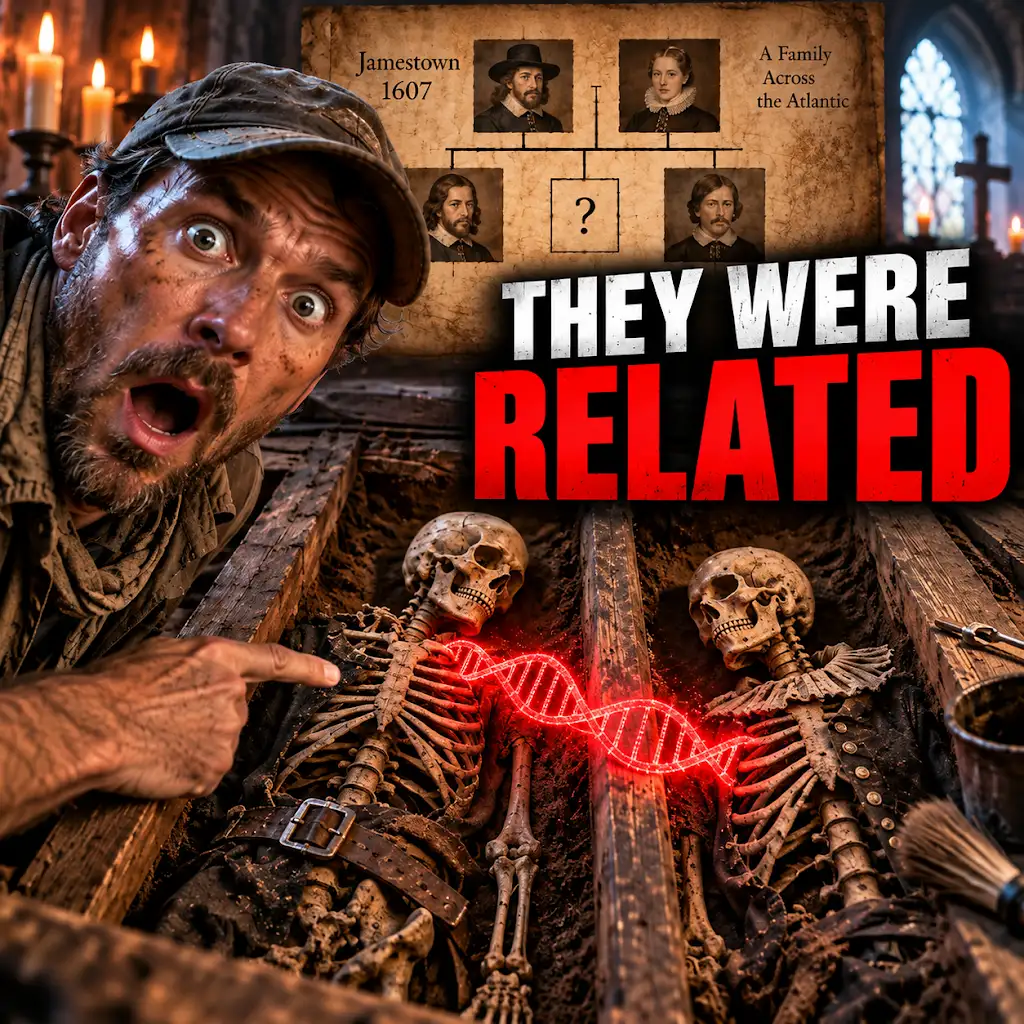
Jamestown DNA Revealed a Family Secret Hidden for 400 Years
FAQs
What is the significance of the Jamestown settlers DNA evidence?
The DNA evidence from Jamestown settlers provides valuable insights into the genetic makeup of the early English colonists in America and their interactions with indigenous populations.
How was the DNA evidence from Jamestown settlers collected?
The DNA evidence was collected from the skeletal remains of individuals buried at the Jamestown settlement site in Virginia. Researchers extracted DNA samples from teeth and bones to analyze the genetic information.
What did the DNA analysis reveal about the Jamestown settlers?
The DNA analysis revealed that the Jamestown settlers had diverse genetic backgrounds, with individuals of European, African, and Native American descent among the population. This suggests a complex and interconnected history of early colonization in America.
How does the Jamestown settlers DNA evidence contribute to our understanding of American history?
The DNA evidence provides a more nuanced understanding of the cultural and genetic diversity among the early settlers in America. It sheds light on the complex interactions and relationships between different groups during the colonial period.
What are some of the implications of the Jamestown settlers DNA evidence?
The DNA evidence challenges traditional narratives of American history and highlights the need for a more inclusive and accurate representation of the diverse populations that contributed to the shaping of the United States.