The whisper of ancient winds carries tales of the earliest English settlement in North America, a story etched in the soil of Jamestown. For centuries, this historic site has yielded artifacts and insights into the lives of those who dared to venture across the Atlantic. Yet, some of the most profound discoveries have been microscopic, encoded within the very fabric of life itself – our DNA. The recent uncovering and analysis of Jamestown’s H10e mitochondrial DNA represents a groundbreaking leap in our understanding of the colony’s demographic and genetic landscape, offering a tangible link to the individuals who walked its now-silent streets. This scientific endeavor, a testament to both meticulous excavation and cutting-edge genetic technology, has begun to rewrite chapters of early American history, moving beyond mere artifacts to the very bloodlines of its inhabitants.
The journey to uncovering Jamestown’s H10e mitochondrial DNA began not in a sterile laboratory, but in the damp earth of the original Jamestown fort. Archaeological efforts, persistent and painstaking, have unearthed thousands of human remains over the decades, each bone a silent witness to the hardships and triumphs of the fledgling colony. The skeletal remains, often found in contexts of distress or violence, have provided invaluable clues about the mortality rates, diets, and health of the early settlers. However, the true potential of these remains lay dormant, awaiting the advent of advanced genetic techniques.
The Significance of Mitochondrial DNA
Mitochondrial DNA (mtDNA) holds a unique place in genealogical and anthropological research. Unlike nuclear DNA, which is inherited from both parents, mtDNA is passed down almost exclusively from mother to child. This maternal lineage tracing makes it an invaluable tool for understanding ancestry, migration patterns, and familial relationships across generations. The small, circular molecule found within the mitochondria – the powerhouses of cells – is relatively stable and can often be extracted and analyzed even from ancient specimens. Its abundance within cells also increases the likelihood of successful amplification and sequencing.
Early Challenges and Technological Advancements
The extraction and analysis of ancient DNA (aDNA) is fraught with challenges. Contamination from modern DNA is a persistent threat, requiring stringent laboratory protocols. The degradation of DNA over time, particularly in less-than-ideal preservation conditions, can render samples unusable. However, advancements in DNA extraction techniques, particularly those that minimize damage to fragile molecules, and the development of highly sensitive sequencing technologies have revolutionized the field. These innovations have opened up possibilities for analyzing DNA from remains that were previously considered too degraded to yield useful genetic information.
The study of H10e mitochondrial DNA has provided fascinating insights into the genetic history of populations in Jamestown, revealing connections to early settlers and their ancestry. For those interested in exploring related topics, an intriguing article titled “Uncovering Ancient Secrets of Wind Harvesting” delves into the innovative techniques used by ancient civilizations to harness natural resources, which may parallel the adaptive strategies of early Jamestown inhabitants. You can read more about it here: Uncovering Ancient Secrets of Wind Harvesting.
Identifying the H10e Haplogroup: A Maternal Thread in the Jamestown Tapestry
The initial archaeological findings at Jamestown, while significant, painted a broad picture of the colony’s population. The identification of a specific mitochondrial DNA haplogroup, such as H10e, allows for a much finer-grained understanding of the genetic origins of at least a portion of the settlers. This discovery is not merely an academic curiosity; it represents a tangible link to individuals whose lives, though long past, now speak to us through their genetic legacy.
What is a Haplogroup?
A haplogroup is a genetic population group of people who share a common ancestor on the patrilineal or matrilineal decent. In the context of mtDNA, haplogroups are defined by specific patterns of single nucleotide polymorphisms (SNPs) within the mitochondrial genome. These patterns are inherited with little recombination, allowing researchers to trace maternal lineages back thousands of years. Different haplogroups are associated with distinct geographic origins and historical migration routes of human populations.
The Specificity of H10e
The H10e haplogroup is a subclade of the broader haplogroup H, which is one of the most common mtDNA haplogroups in Europe. While haplogroup H is widespread, its subclades can reveal more specific ancestral origins. The identification of H10e within Jamestown’s skeletal remains indicates a maternal lineage that likely originated in a particular region of Europe, offering clues about the geographic backgrounds of some of the early female settlers or their ancestors. Pinpointing this specific haplogroup is akin to finding a unique identifier within a vast library of human genetic history.
The Implications for Understanding European Ancestry
The presence of H10e in Jamestown suggests that some of the women who settled in the colony, or who were part of the generations that followed, had ancestors from a specific European region associated with this haplogroup. This information can complement historical records, which often focus on prominent male figures and may not fully capture the demographic diversity of the early colonial population. It allows for a more nuanced understanding of the genetic makeup of those who contributed to the establishment of English America.
Unraveling the Stories of the Individuals: From Haplogroups to Human Lives
The discovery of H10e in Jamestown is more than just a scientific classification; it is a gateway to understanding the individual lives of the women whose genetic legacy has been preserved. Each identified instance of this haplogroup represents a person, a mother, a daughter, a wife, whose story, though largely unwritten by historical documents, can now be glimpsed through the lens of their DNA.
Connecting DNA to Skeletal Remains
The process of linking the identified H10e haplogroup to specific individuals involves meticulous cross-referencing between genetic data and the archaeological context of the skeletal remains. Archaeologists carefully document the provenance of each bone, its condition, and any associated artifacts or burial practices. Geneticists then work with these meticulously cataloged samples, performing DNA extraction and sequencing. When a match for the H10e haplogroup is found, it can then be associated with the physical characteristics and burial context of that particular individual.
Reconstructing Social and Familial Networks
By identifying multiple individuals within the Jamestown population who share the H10e haplogroup, researchers can begin to reconstruct potential familial and social connections. If these individuals were buried in close proximity or exhibited similar patterns of life and death, it could suggest they were related or belonged to the same social group. While definitive proof of direct kinship can be challenging with ancient DNA, the presence of shared maternal lineages provides strong suggestive evidence for closer ties than would be expected by chance.
The Challenges of Individual Identification
It is crucial to acknowledge the limitations of ancient DNA analysis in unequivocally identifying specific individuals by name. While a haplogroup points to a maternal lineage, it does not provide a unique personal identifier like a fingerprint or a modern DNA profile. The challenge lies in matching the ancient genetic information to historical records, which are often incomplete or lack the detailed genealogical information required for such a precise connection. Therefore, the stories reconstructed are often suggestive rather than definitive.
Broader Implications for Early American Demography and Migration
The identification of specific mitochondrial DNA haplogroups in Jamestown extends far beyond the immediate site, offering crucial insights into the broader patterns of early American demography and the complex migration networks that shaped the nascent colonies.
Understanding the European Ancestry of Early Settlers
The prevalence and specific types of mtDNA haplogroups found in Jamestown provide a genetic snapshot of the European populations from which the settlers originated. This can help to confirm or refine existing historical hypotheses about the primary sources of migration to early English colonies. For instance, the identification of H10e, with its European roots, directly informs our understanding of the maternal genetic contributions to the Jamestown population.
Tracing Maternal Migration Routes
Mitochondrial DNA’s maternal inheritance makes it an excellent tool for tracing the movement of populations over time. By analyzing the haplogroups of individuals at different locations and time periods, researchers can begin to map the routes that women took as they migrated from their ancestral homelands to the New World. The presence of specific haplogroups in Jamestown can shed light on the specific migratory paths of women who contributed to its establishment.
The Complexity of Colonial Populations
The early colonial populations were not monolithic. They were formed through a complex interplay of factors, including voluntary migration, forced displacement, and the establishment of new social structures. Genetic analysis, like the uncovering of H10e, helps to move beyond simplified narratives and reveals the intricate genetic tapestry that formed the foundation of colonial societies. It underscores the fact that these were not just English colonies, but places where diverse European ancestries, and later African and Indigenous ancestries, converged.
Recent studies on H10e mitochondrial DNA in Jamestown have shed light on the genetic lineage of early settlers, revealing intriguing connections to their European origins. This research not only enhances our understanding of migration patterns but also complements findings in related fields, such as ancient water management systems. For a deeper exploration of how these systems were developed and their significance in historical contexts, you can read more in this insightful article on ancient water management systems.
The Future of Genetic Archaeology at Jamestown and Beyond
| Metric | Value | Description |
|---|---|---|
| Haplogroup | H10e | Specific mitochondrial DNA haplogroup identified in Jamestown remains |
| Sample Age | Early 1600s | Estimated time period of the Jamestown colony remains |
| mtDNA Sequence Length | 16,569 base pairs | Full length of human mitochondrial DNA analyzed |
| Number of Mutations | 5 | Mutations distinguishing H10e from the reference sequence |
| Geographic Origin | Europe (likely Northern or Western Europe) | Probable ancestral origin of the H10e haplogroup |
| Frequency in Modern Populations | ~1-2% | Approximate frequency of H10e in contemporary European populations |
| Significance | Identification of maternal lineage of early Jamestown settlers | Helps trace ancestry and migration patterns of early colonists |
The discovery and analysis of Jamestown’s H10e mitochondrial DNA represent a significant milestone, but they are merely the beginning of a larger scientific endeavor. The ongoing advancements in genetic technologies promise to unlock even deeper secrets from the past.
Continued Excavation and Sample Collection
The archaeological work at Jamestown continues, and with it, the potential for uncovering more human remains that can be subjected to genetic analysis. Each new burial unearthed offers another opportunity to expand our understanding of the colony’s genetic landscape. Careful and ethical excavation practices are paramount to ensure the preservation and integrity of these invaluable samples.
Expanding the Scope of Genetic Analysis
Beyond mtDNA, future research may focus on the analysis of nuclear DNA, which can provide a more comprehensive picture of an individual’s ancestry, including both maternal and paternal lines, as well as information about traits and potential predispositions. The development of techniques for extracting and analyzing DNA from even more degraded samples will further broaden the scope of what can be learned from ancient remains.
Ethical Considerations and Public Engagement
As genetic archaeology delves deeper into the past, it is essential to maintain a strong ethical framework. This includes respecting the remains of deceased individuals, ensuring proper consent where applicable, and engaging in transparent communication with the public about the findings and their implications. The stories revealed by ancient DNA are not just scientific data; they are the stories of real people, and their legacies deserve to be treated with respect and dignity. The uncovering of Jamestown’s H10e mitochondrial DNA is a powerful reminder that the past is not a static entity, but a living legacy that continues to inform and enrich our understanding of who we are and where we come from.
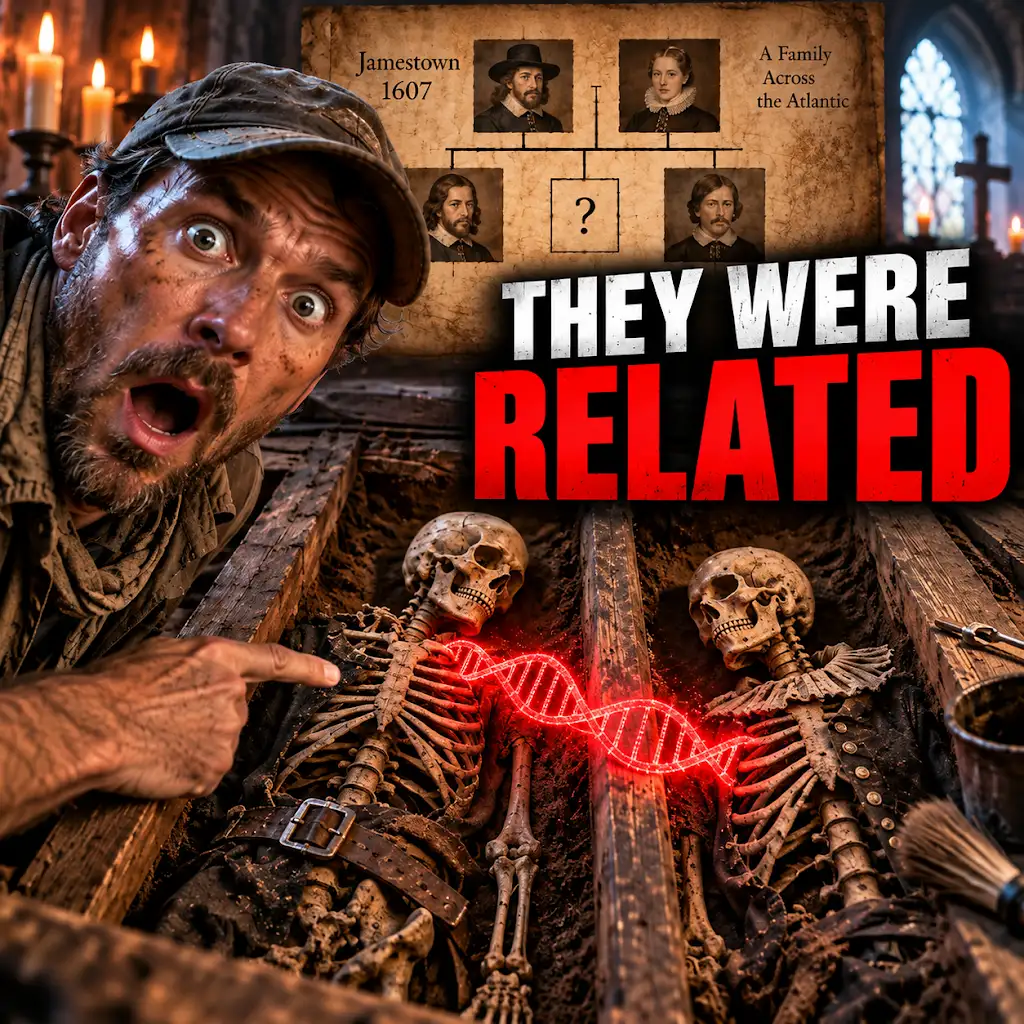
Jamestown DNA Revealed a Family Secret Hidden for 400 Years
FAQs
What is H10e mitochondrial DNA?
H10e is a specific subclade of mitochondrial DNA that is found in individuals with European ancestry. It is a genetic marker that can be used to trace maternal lineage.
What is the significance of H10e mitochondrial DNA in the context of Jamestown?
The presence of H10e mitochondrial DNA in individuals associated with Jamestown, Virginia, provides insights into the genetic ancestry and migration patterns of the early settlers in the region.
How is H10e mitochondrial DNA inherited?
Mitochondrial DNA, including the H10e subclade, is passed down from mother to offspring. This means that individuals inherit their mitochondrial DNA exclusively from their maternal line.
What can the study of H10e mitochondrial DNA reveal about Jamestown’s history?
Studying H10e mitochondrial DNA can help researchers understand the genetic diversity, population movements, and interconnections among individuals who lived in Jamestown during the colonial period.
How does the presence of H10e mitochondrial DNA contribute to our understanding of Jamestown’s population dynamics?
The presence of H10e mitochondrial DNA in individuals associated with Jamestown suggests a European genetic influence in the early colonial population, shedding light on the diverse origins of the settlers in the region.