Four centuries have passed since the first English settlers braved the Atlantic to establish Jamestown, a fragile outpost on the banks of the James River. This settlement, the birthplace of English America, is a tapestry woven with tales of hardship, survival, and ultimately, a nascent nation. Yet, beneath the well-trodden paths and meticulously unearthed artifacts, a more intimate story, a family secret, has lain dormant for 400 years, only recently beginning to surface and reshape our understanding of those earliest days. It is a secret whispered not in the grand pronouncements of governors or the dramatic accounts of starvation, but in the quiet, scientific scrutiny of ancient bones, a secret that reveals a startling familial connection between two individuals whose lives, though separated by time and circumstance, were inextricably linked in ways previously unimagined.
The Shadow of the Past: Early Jamestown and its Inhabitants
The year 1607 marked a pivotal moment in history. The Virginia Company of London, driven by a mixture of economic ambition and imperial fervor, dispatched three ships – the Susan Constant, the Godspeed, and the Discovery – carrying over 100 men and boys. Their destination: the New World, a land teeming with promise and peril. Jamestown, named in honor of King James I, was their chosen site, a strategic location offering natural defenses but also, as they would soon discover, a breeding ground for disease and conflict with the indigenous Powhatan Confederacy.
The Challenges of the First Years
The initial years of Jamestown were a brutal testament to the harsh realities of colonization. The settlers, largely unprepared for the climate, diet, and diseases of the region, faced starvation, illness, and internal strife. The infamous “Starving Time” of 1609-1610 stands as a stark reminder of their struggle, a period when hunger drove inhabitants to desperate measures, including cannibalism. This harrowing experience, immortalized in historical accounts, painted a grim picture of the early colonists’ resilience and their precarious hold on existence.
Key Figures of Early Jamestown
Among the many who embarked on this ambitious venture were individuals whose names would become etched in the annals of American history. Captain John Smith, the charismatic and often controversial leader, played a crucial role in the colony’s survival through his leadership and resourcefulness. Other figures, like Bartholomew Gosnold and John Ratcliffe, also featured prominently, their actions shaping the colony’s trajectory. However, the focus on these prominent figures often overshadowed the lives of countless other individuals, whose contributions, though perhaps less celebrated, were equally vital.
The recent discovery of a 400-year-old family secret in Jamestown has captivated historians and genealogists alike, shedding light on the early colonial experience in America. This intriguing revelation parallels the exploration of ancient civilizations, such as the Minoans, who were known for their advanced navigation techniques. For those interested in uncovering more about historical secrets and their implications, you can read about the Minoan civilization’s celestial navigation in this related article: Unlocking the Secrets of Minoan Celestial Navigation.
Unearthing the Truth: The Power of Forensic Anthropology
For centuries, our understanding of Jamestown’s inhabitants relied on written records and archaeological findings. While invaluable, these sources offer a selective glimpse, often emphasizing leadership, governance, and conflict. The silent testament of human remains, however, held a more personal narrative, one that required the sophisticated tools of forensic anthropology and genetic analysis to unlock. The discovery and subsequent analysis of specific skeletal remains at Jamestown have become the bedrock of this unfolding family secret.
The Discovery of “Jane”
In 2012, archaeologists unearthed a remarkably well-preserved set of human remains that would come to be known as “Jane.” This discovery was significant not only for its completeness but also for the undeniable evidence of cannibalism. The butchering marks on Jane’s skull and tibia provided irrefutable proof of the horrific events during the Starving Time, adding a visceral and deeply disturbing dimension to the historical narrative.
The Significance of Cannibalism
The discovery of Jane’s remains dramatically altered the perception of the Starving Time. It moved from a historical account of extreme hardship to tangible evidence of humanity pushed to its absolute limits. The scientific analysis of these remains allowed for a deeper understanding of the physical toll of starvation and the desperate measures taken for survival. This forensic evidence provided a somber and powerful human face to one of the most challenging periods of early American history.
Advanced Scientific Techniques
The analysis of Jane’s remains went far beyond macroscopic observation. Sophisticated techniques such as CT scanning, digital reconstruction, and isotope analysis were employed to glean as much information as possible. These methods allowed researchers to estimate her age, identify potential diseases, and even gain insights into her diet. The ability to reconstruct her likeness from fragmented bones brought a lost individual back to a semblance of life, humanizing the often-abstract historical figures.
The Unexpected Kinship: A Tale of Two Skeletons
The narrative took a truly astonishing turn when further analysis, employing cutting-edge genetic sequencing, revealed a startling familial connection between Jane and another Jamestown resident whose remains had been discovered years prior. This connection, buried for four centuries, revealed a shared ancestry that intertwined the fates of two individuals in a way that challenged existing assumptions and added a profound layer of intimacy to the Jamestown story.
The Remains of the “Foremost Man”
Years before the discovery of Jane, archaeologists had identified another set of remains, often referred to as the “Foremost Man” or “Captain George Percy’s Remains” due to their proximity to his known burial site. While this individual’s skeletal remains offered clues about his life and death, his identity remained somewhat ambiguous, a prominent figure whose exact familial ties were not immediately apparent.
Interpreting Skeletal Evidence
The initial analysis of the “Foremost Man’s” remains provided valuable information. Researchers were able to determine his age at death, approximate height, and signs of physical stress, suggesting a life of labor or hardship. However, the true depth of his significance, particularly in relation to other Jamestown settlers, remained largely undiscovered until the advent of advanced genetic analysis.
The Breakthrough: DNA Revelation
The true revelation came with the application of paleogenomics, the study of ancient DNA. By meticulously extracting and analyzing genetic material from both Jane and the “Foremost Man,” scientists were able to compare their DNA sequences. The results were unambiguous and stunning: the two individuals were closely related, sharing a maternal lineage. This meant that Jane was likely the daughter of the “Foremost Man.”
The Significance of Maternal Lineage
The identification of a maternal lineage is particularly significant in understanding familial relationships in historical contexts. It allows for the tracing of direct descent through the female line, providing a tangible link between generations. In this case, it established a direct parent-child relationship between Jane and the “Foremost Man,” a connection that had been entirely unknown to historical records.
Reconstructing Identities: Connecting the Bones to History
The discovery of this familial link necessitated a re-examination of the identities of both individuals. While historical documents provide names and roles, skeletal remains offer a biological canvas upon which to build a more complete picture of who these people were and how they fit into the social fabric of early Jamestown. The connection between Jane and the “Foremost Man” allowed for the potential to tie these biological findings to known historical figures.
Identifying the “Foremost Man”
Based on the location of his burial, his stature, and the context of the discovery, strong evidence suggests that the “Foremost Man” was indeed Captain George Percy, a prominent leader and later governor of Jamestown. Percy, a member of a noble English family, played a significant role in the colony’s early years, though his leadership was often fraught with challenges. His family history, documented through genealogical records, provided a crucial point of comparison for the genetic findings.
Captain George Percy’s Role in Jamestown
George Percy’s arrival in Jamestown was marked by his aristocratic background and his family’s investment in the Virginia Company. He served in various capacities, including as President of the Council. His writings offer valuable, albeit often biased, accounts of the colony’s struggles. The possibility that Jane was his daughter introduced a deeply personal dimension to his known historical narrative, hinting at private lives and family dynamics that were rarely recorded.
The Identity of “Jane” and Her Family
While the “Foremost Man” is strongly believed to be George Percy, the identity of “Jane” remains more elusive, though the familial connection provides critical clues. The genetic evidence indicates she was a young female, likely a teenager at the time of her death. The prevailing theory is that she was Percy’s daughter. This would mean she was one of the few women and children present in Jamestown during those early, brutal years.
The Rarity of Women in Early Jamestown
The demographic composition of early Jamestown was heavily skewed towards men. The presence of women and children was limited, and their experiences were often vastly different from those of the male colonists. The possibility of Jane being a young woman present during the Starving Time adds a poignant and tragic layer to her story, highlighting the vulnerability of this demographic in the face of extreme adversity.
The recent discovery of a 400-year-old family secret in Jamestown has captivated historians and genealogists alike, shedding light on the early colonial experience in America. This intriguing revelation not only highlights the complexities of family lineage but also opens up discussions about the socio-economic dynamics of the time. For those interested in how historical narratives shape our understanding of modern society, a related article discusses the shift to Southern U.S. manufacturing and its implications for contemporary family histories. You can read more about it here.
The Enduring Legacy: Reshaping Our Understanding of Jamestown
The 400-year-old family secret unearthed at Jamestown is more than just a historical footnote; it is a revelation that compels a re-evaluation of our understanding of this foundational settlement. The intimate connection between two individuals, revealed through the silent language of bones and DNA, offers a more nuanced and human perspective on the challenges, relationships, and hidden lives of the first English colonists.
A More Human History
For too long, the history of Jamestown has been dominated by grand narratives of exploration, conquest, and political maneuvering. The discovery of Jane and her connection to George Percy injects a profound sense of humanity into this story. It reminds us that behind the historical figures and documented events were individuals with personal lives, families, and struggles that were deeply entwilled with the fate of the colony. The story of a father and daughter, separated by the ravages of starvation, resonates on a deeply emotional level.
Challenging Existing Narratives
The identification of a direct familial relationship where none was previously known challenges the completeness of historical records. It underscores the limitations of written accounts and highlights the invaluable role of scientific investigation in uncovering hidden truths. This discovery prompts historians to revisit existing narratives and consider the possibility of other equally significant, yet undocumented, familial connections that may have shaped the early colony.
The Importance of Interdisciplinary Research
This groundbreaking discovery is a testament to the power of interdisciplinary research. The collaboration between archaeologists, forensic anthropologists, geneticists, and historians has been crucial in piecing together this complex puzzle. The integration of scientific methodologies with historical inquiry provides a more comprehensive and accurate understanding of the past.
A New Chapter in Jamestown’s Story
Jamestown’s 400-year-old family secret is not an ending, but a beginning. It opens a new chapter in the ongoing exploration and interpretation of this seminal site. The secrets held within the soil, waiting to be unearthed by scientific inquiry, continue to enrich our understanding of the people who laid the foundation for modern America. The story of Jane and George Percy serves as a potent reminder that history is not merely a collection of facts, but a living narrative, constantly being re-examined and revealed through new discoveries, reminding us of the enduring human spirit and the intricate tapestry of relationships that lie at the heart of every historical endeavor.
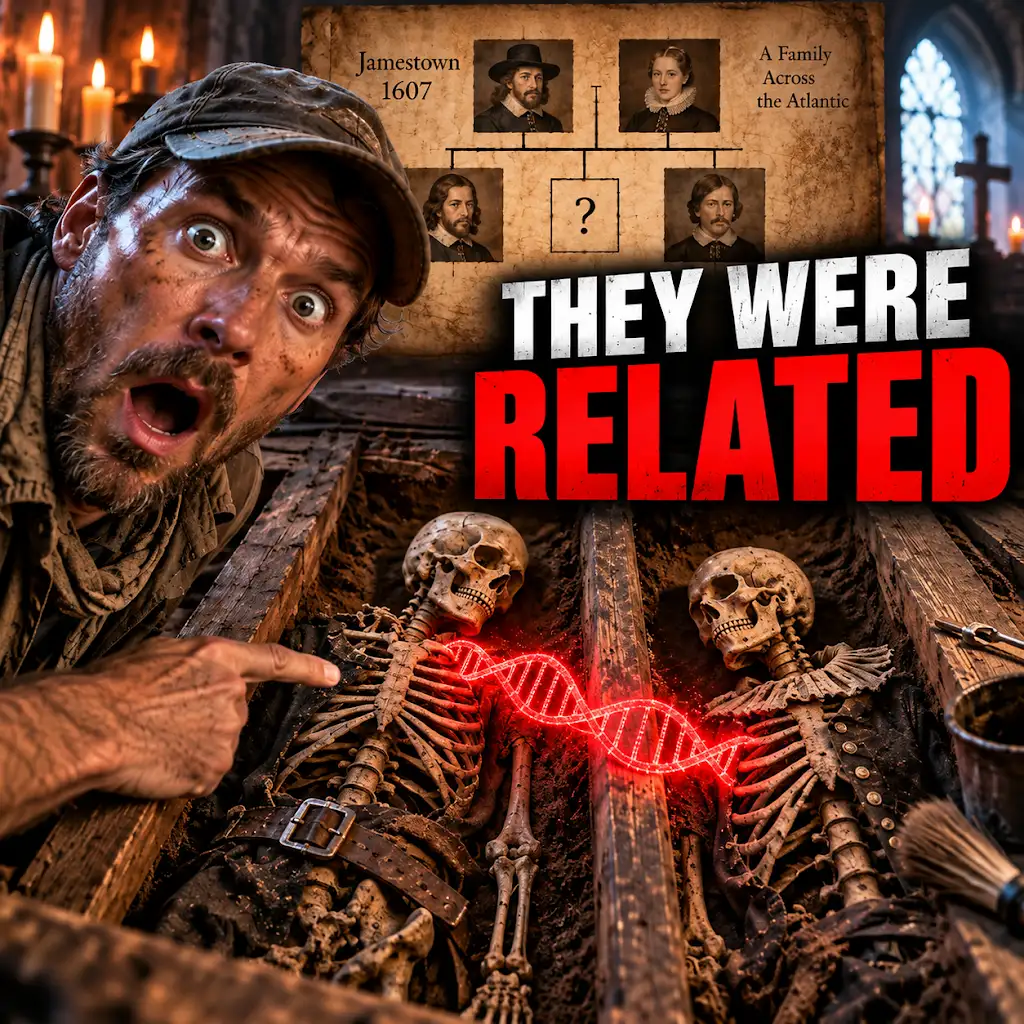
Jamestown DNA Revealed a Family Secret Hidden for 400 Years
FAQs

What is the 400 year old Jamestown family secret?
The 400 year old Jamestown family secret refers to a hidden history within a family that dates back to the founding of Jamestown, the first permanent English settlement in America.
How was the Jamestown family secret discovered?
The Jamestown family secret was discovered when a descendant of the original Jamestown settlers stumbled upon old documents and artifacts that revealed a long-held family secret.
What does the Jamestown family secret reveal about the family’s history?
The Jamestown family secret reveals a complex and intriguing history that sheds light on the struggles, triumphs, and relationships of the family members who lived during the early days of the Jamestown settlement.
Why is the Jamestown family secret significant?
The Jamestown family secret is significant because it provides a unique and personal perspective on the history of Jamestown and the challenges faced by the early settlers, offering a more intimate understanding of the past.
How has the discovery of the Jamestown family secret impacted the descendants of the original settlers?
The discovery of the Jamestown family secret has sparked curiosity, reflection, and a deeper connection to their ancestors among the descendants of the original Jamestown settlers, prompting them to explore their family history and heritage in greater depth.