
The hallowed grounds of Jamestown, Virginia, the first permanent English settlement in North America, continue to yield profound insights into the lives and origins of its early inhabitants. Beyond the archaeological trenches and meticulously preserved artifacts, a new frontier of discovery has emerged: the realm of ancient DNA. Recent groundbreaking research, focusing on skeletal remains unearthed at the historic site, has unveiled a rare Y-DNA haplogroup, offering an unprecedented glimpse into the genetic tapestry of those who braved the Atlantic to forge a new life in the New World. This discovery is not merely an academic curiosity; it is a potent reminder of the complex and often surprising migratory patterns that shaped human history, and the intricate ways in which science can illuminate the past.
The Significance of Y-DNA Haplogroups
Understanding the significance of this rare haplogroup necessitates a foundational comprehension of Y-DNA and its role in tracing paternal lineages. Y-DNA, inherited exclusively from father to son, is a powerful genetic marker that undergoes gradual mutations over vast stretches of time. These mutations act as evolutionary clockwork, allowing scientists to reconstruct ancestral migration routes and identify common ancestors.
What is a Y-DNA Haplogroup?
A Y-DNA haplogroup represents a large population group sharing a common ancestor who lived tens of thousands of years ago. These haplogroups are designated by a series of letters and numbers, reflecting specific branching points in the human Y-chromosome tree. By analyzing these patterns, researchers can determine an individual’s deep ancestral origins and infer their migratory history.
Y-DNA as a Genealogical Tool
While genealogical research traditionally relies on documentary evidence, Y-DNA analysis offers a complementary and often more profound perspective. It can bypass the limitations of written records, which are often incomplete, lost, or inaccessible. For individuals whose known family history is sparse, Y-DNA testing can reveal connections to distant relatives and shed light on their prehistoric lineage, potentially tracing their ancestry back to specific geographical regions or ancient cultures.
The Jamestown Context: A Unique Genetic Crossroads
Jamestown, established in 1607, was a melting pot of individuals from various parts of England and, increasingly, from other European nations. The early years were fraught with hardship, disease, and conflict, yet it represented a pivotal moment in the establishment of English presence in North America. The skeletal remains recovered from Jamestown offer a direct connection to these pioneers, providing a biological archive of their genetic makeup.
Recent studies have uncovered fascinating insights into the rare DNA haplogroup found at the Jamestown settlement, shedding light on the genetic diversity of early American colonists. This research not only enhances our understanding of the historical population but also connects to broader themes of ancestry and migration. For those interested in the intersection of genetics and history, a related article discussing the implications of genetic research on our understanding of human origins can be found at this link.
The Discovery of the Rare Haplogroup
The identification of a rare Y-DNA haplogroup within the skeletal remains at Jamestown represents a significant scientific achievement. This discovery challenges existing assumptions about the genetic diversity of the early English settlers and opens new avenues for research into their origins and connections to continental Europe.
The Analytical Process: From Bone to Base Pairs
The journey from a skeletal fragment to a definitive Y-DNA haplogroup is a complex and meticulous process. It involves a series of highly specialized laboratory techniques, each crucial for extracting and analyzing ancient genetic material.
Bone Sample Collection and Preparation
The process begins with the careful excavation and collection of skeletal remains. These samples are handled with extreme care to prevent contamination with modern DNA. Once in the laboratory, the bones undergo a rigorous cleaning and sterilization process to remove any surface contaminants.
DNA Extraction from Ancient Samples
Extracting DNA from ancient bone is a challenging endeavor due to degradation over time. Specialized protocols are employed to isolate minute quantities of endogenous DNA from the mineral matrix of the bone. This often involves grinding bone fragments into a fine powder and using chemical reagents to release the DNA.
Polymerase Chain Reaction (PCR) and Sequencing
Once extracted, the precious DNA fragments are amplified using Polymerase Chain Reaction (PCR). This technique makes millions of copies of specific DNA regions, enabling analysis. Next-generation sequencing technologies are then employed to read the sequence of these amplified DNA fragments.
Bioinformatic Analysis and Haplogroup Assignment
The raw sequencing data is then subjected to sophisticated bioinformatic analysis. Specialized software and databases are used to compare the sequenced DNA to known human Y-chromosome reference sequences. This allows for the identification of specific mutations and the assignment of the individual to a particular Y-DNA haplogroup.
Identifying the “Rare” Element
The haplogroup discovered at Jamestown was deemed “rare” because it was not commonly found among the expected population groups of early 17th-century English settlers. While a majority of English men at the time belonged to haplogroups prevalent in the British Isles, this particular haplogroup suggested a more distant or less common ancestral origin.
Comparing to Existing Population Data
Researchers compared the identified haplogroup to extensive databases of Y-DNA haplogroup frequencies across various European populations. This comparative analysis is crucial for understanding the geographical distribution of the haplogroup and inferring potential ancestral homelands. The rarity of this haplogroup in documented English populations at the time of Jamestown’s founding is what makes its presence so compelling.
Potential Origins and Migratory Pathways
The presence of this rare Y-DNA haplogroup at Jamestown prompts fascinating questions about the ancestral origins of the individual and the potential migratory pathways that brought them to the colony. This discovery necessitates a re-examination of established theories about the genetic makeup of early colonial populations.
Tracing the Haplogroup’s Footprints
By analyzing the geographical distribution of this specific haplogroup, scientists can attempt to trace its ancient origins. This involves looking for regions where the haplogroup is more prevalent, suggesting a potential ancestral homeland for the individual.
Haplogroup Distribution Studies
Studies that map the prevalence of Y-DNA haplogroups across different continents and countries are invaluable in this regard. The more widespread a haplogroup is, the longer it has likely been in existence and the further its ancestral carriers have traveled.
Ancient DNA Evidence from Other Sites
Cross-referencing the Jamestown findings with ancient DNA data from other archaeological sites across Europe can provide further clues. If the same rare haplogroup is found in ancient populations in specific regions of Europe, it strengthens the hypothesis of an ancestral link.
The “Continental Connection” Hypothesis
The rarity of the haplogroup within typical English gene pools strongly suggests a connection to continental Europe, rather than solely to the British Isles. This opens up a range of possibilities regarding the individual’s immediate ancestry.
Migration from the European Continent
It is possible that the individual, or their direct paternal ancestors, migrated from continental Europe to England before embarking for the New World. Such migrations were not uncommon throughout history, driven by trade, conflict, or economic opportunity.
Prehistoric European Migrations
More broadly, the haplogroup might represent a remnant of ancient migrations that predated the formation of modern national identities. Humans have been migrating and intermingling for millennia, and Y-DNA haplogroups can reveal these deep ancestral connections.
Examining Historical Records for Clues
While the DNA provides a biological narrative, historical records can offer corroborating evidence. Researchers will scour contemporary documents for any mention of individuals with origins that might align with the genetic findings.
Passenger Lists and Ship Records
Though often incomplete for this period, passenger lists, ship manifests, and colonial administrative records might contain information about the origins of settlers. Any anomaly or unusual entry could be a point of investigation.
Regional Histories and Genealogies
Exploring regional histories and genealogies within England and continental Europe might reveal family lines with the potential to carry such a rare haplogroup. This could involve looking at areas with known historical ties to the specific regions suggested by the DNA analysis.
Implications for Early Colonial Demographics
The discovery of this rare haplogroup has profound implications for our understanding of the demographic composition of the early Jamestown colony. It suggests a greater genetic diversity among the settlers than previously assumed, challenging the notion of a purely insular English gene pool.
Beyond the “Typical” English Settler
For a long time, the image of the early Jamestown settler was largely based on the documented origins of the majority of the colonists – primarily from southern England. This discovery forces a reevaluation of this simplified picture.
The Role of Non-English Europeans
It raises the possibility that a more significant, albeit perhaps unacknowledged, presence of individuals with continental European ancestry existed within the early colonial population. These individuals may have integrated into English society or arrived through indirect routes.
Economic and Social Integration
Understanding how individuals with less common genetic backgrounds integrated into the colonial society is also important. Did they assimilate quickly? Did they maintain distinct identities? The DNA offers a biological anchor for such social and cultural inquiries.
Challenging Existing Genealogies
This finding has the potential to challenge and expand established genealogies of early colonial families. For descendants of Jamestown settlers, this discovery might offer new insights into their ancestral roots, potentially connecting them to lineages previously unknown or overlooked.
Revisiting Family Trees
Genealogists may need to revisit existing family trees, considering the possibility of continental European ancestral lines that were not previously apparent through traditional documentary research.
New Avenues for Genetic Genealogy
For individuals interested in their ancestry, this discovery highlights the power of Y-DNA analysis in uncovering hidden connections and expanding our understanding of human migration and settlement patterns.
The Interplay of Biology and History
This research exemplifies the powerful synergy between genetic science and historical inquiry. The DNA provides a biological narrative that can then be used to guide and interpret historical evidence, leading to a more nuanced and comprehensive understanding of the past.
DNA as a Historical Record
Ancient DNA acts as a historical record etched into our very being. It provides direct, unbiased evidence of ancestral connections, complementing and sometimes correcting the narratives constructed from written documents.
Historical Contextualization of Genetic Findings
Conversely, historical records provide the essential context for interpreting genetic findings. Understanding the political, social, and economic forces at play during the colonial era is crucial for explaining the presence and significance of specific genetic markers.
Recent studies have uncovered fascinating insights into the genetic diversity of early American settlers, particularly focusing on a rare DNA haplogroup found at Jamestown. This discovery sheds light on the ancestry of the colonists and their connections to various populations across the globe. For those interested in exploring the implications of such genetic findings in a broader context, a related article discusses key strategies for navigating international relations, which can be viewed here. Understanding these historical connections may provide valuable lessons for contemporary global interactions.
Future Research and Unanswered Questions
The discovery of this rare Y-DNA haplogroup at Jamestown is not an end point but rather a compelling beginning. It opens up a wealth of new research questions and avenues for exploration, promising further revelations about the lives and origins of the early colonists.
Expanding the Genetic Database of Jamestown
The success of this initial study will undoubtedly spur further efforts to analyze ancient DNA from other skeletal remains unearthed at Jamestown. A larger dataset will provide a more robust and comprehensive picture of the colony’s genetic diversity.
Analyzing More Samples
The systematic analysis of additional skeletal remains from Jamestown could reveal the presence of other rare haplogroups or provide statistical data on the prevalence of various lineages within the colony.
Investigating Different Time Periods
Future research could also focus on analyzing DNA from different time periods of Jamestown’s occupation, potentially revealing shifts in the demographic composition of the settlement over time.
Investigating the Individual’s Life Story
Beyond their genetic lineage, the individual who carried this rare haplogroup likely had a unique life story. Further research aims to connect their genetic findings with archaeological and historical evidence to reconstruct their identity and experiences.
Archaeological Context of the Remains
The archaeological context in which the remains were found—their burial location, associated artifacts, and the condition of the skeleton—can offer clues about their social status, health, and the circumstances of their death.
Searching for Documentary Evidence
As mentioned earlier, a concerted effort to search for documentary evidence related to individuals with origins consistent with the genetic findings will be paramount. This could involve archival research in both England and continental Europe.
Understanding the Broader Implications for Colonial History
This discovery has broader implications for our understanding of colonial history beyond Jamestown. It prompts reflection on the genetic diversity of other early colonial settlements and the complex migratory patterns that shaped the peopling of North America.
Comparative Studies with Other Colonies
Comparing the genetic makeup of Jamestown with that of other early colonial sites, such as Plymouth or St. Augustine, could reveal significant differences and similarities in their founding populations.
The Multifaceted Nature of Early Migration
Ultimately, this research underscores the multifaceted nature of early colonial migration. It was not a monolithic movement but a complex tapestry woven from diverse origins, driven by a multitude of personal and historical factors. The rare Y-DNA haplogroup discovered at Jamestown serves as a powerful testament to this rich and intricate past.
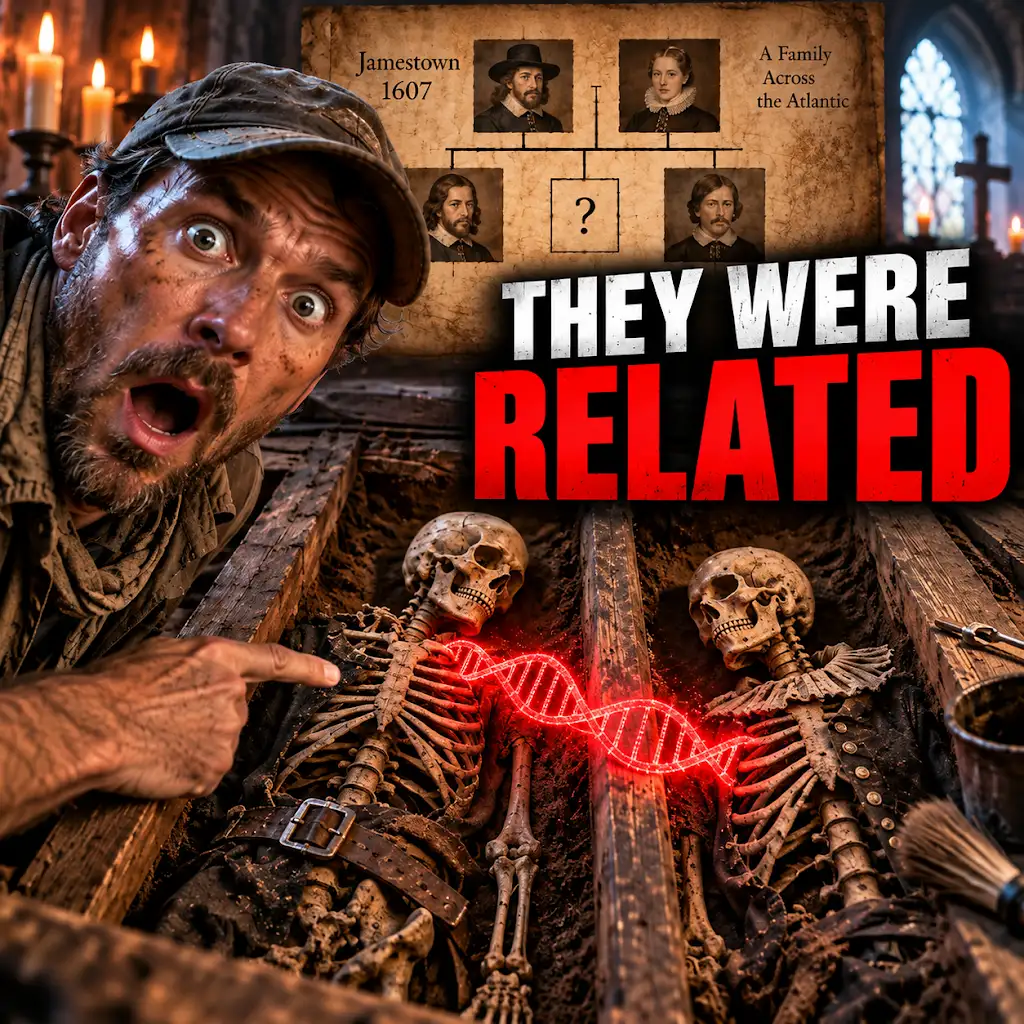
Jamestown DNA Revealed a Family Secret Hidden for 400 Years
FAQs
What is a DNA haplogroup?
A DNA haplogroup is a genetic population group of people who share a common ancestor on the patrilineal or matrilineal line.
What is a rare DNA haplogroup?
A rare DNA haplogroup is a genetic lineage that is not commonly found in a population, indicating a unique or less common ancestry.
What is the significance of finding a rare DNA haplogroup at Jamestown?
Finding a rare DNA haplogroup at Jamestown can provide insights into the diverse origins of the settlers who arrived at the historic site, shedding light on the complex history of early American colonization.
How is a DNA haplogroup determined?
A DNA haplogroup is determined through genetic testing, specifically analyzing specific markers on the Y-chromosome (for paternal haplogroups) or the mitochondrial DNA (for maternal haplogroups).
What can the discovery of a rare DNA haplogroup reveal about Jamestown’s history?
The discovery of a rare DNA haplogroup at Jamestown can reveal connections to populations or regions not previously known to have been present at the site, providing a more comprehensive understanding of the diverse backgrounds of the early settlers.