Unraveling History: Ancient DNA Solves Mystery
The quest to understand our past has long been a tapestry woven from archaeological digs, deciphered texts, and educated speculation. For millennia, historians and archaeologists have meticulously pieced together narratives from the scant remains left behind by our ancestors. However, a revolution has swept through the field, one that whispers secrets from the very building blocks of life: ancient DNA. This potent tool, once the stuff of science fiction, has transformed the way we perceive human history, allowing us to unravel mysteries that were previously locked away in time. One such profound breakthrough involves the intricate puzzle of the Neanderthal-Denisovan lineage and their surprising contributions to modern human populations.
The journey to understand ancient populations began with the physical remnants of our ancestors. Excavations of burial sites, ancient settlements, and even fossilized remains have provided invaluable insights into the lives, diets, and societal structures of past peoples. These tangible artifacts, from pottery shards to sophisticated tools, offer a glimpse into their ingenuity and daily existence.
The Art of the Archaeologist: Interpreting Material Culture
Archaeologists employ a diverse array of techniques to interpret the material culture left behind. Stratigraphy, the study of rock layers and soil, helps to establish chronologies and understand the sequence of human occupation. The analysis of artifacts like tools, weapons, and ornaments can reveal technological advancements, trade networks, and social hierarchies. Furthermore, the study of ancient settlements, including the layout of homes, public spaces, and defensive structures, provides crucial information about community organization and lifestyle.
Decoding Daily Life: Tools, Pottery, and Dwelling Remains
The humble stone axe or the intricate pattern on a piece of pottery can tell a compelling story. For instance, the wear patterns on a stone tool can indicate its specific function, whether it was used for butchering animals, woodworking, or preparing hides. The composition and firing techniques of pottery can reveal information about available resources and technological sophistication. The remains of ancient dwellings, from simple hearths to elaborate structures, offer clues about family size, domestic routines, and the level of comfort and security enjoyed by past communities.
Beyond the Artifact: Examining Skeletal Remains
Skeletal remains, though often fragmented, provide a direct link to the biological past. Paleopathologists can examine bones for signs of disease, trauma, and nutritional deficiencies, offering a picture of the health and challenges faced by ancient populations. The analysis of teeth can reveal dietary habits and even provide insights into the age at death. In some cases, the position of a body in a grave can suggest burial rituals and beliefs about the afterlife.
The Limitations of the Tangible: Gaps in the Historical Record
Despite the immense value of archaeological evidence, it is inherently incomplete. Soft tissues, organic materials like clothing and food, rarely survive the passage of time. Written records, when they exist, are often biased, incomplete, or unavailable for large segments of human history, particularly for pre-literate societies. This is where the advent of ancient DNA analysis has proven revolutionary, filling crucial gaps and offering a level of detail previously unimaginable.
In a fascinating exploration of how ancient DNA can illuminate historical enigmas, a recent article discusses the implications of genetic research in understanding our past. This research not only sheds light on human migration patterns but also helps resolve long-standing mysteries surrounding ancient civilizations. For further insights into how historical treaties, like the Outer Space Treaty, continue to influence contemporary discussions, you can read more in this related article: Is the Outer Space Treaty Still Relevant?.
The Genetic Revolution: DNA as a Time Capsule
The discovery of the double helix structure of DNA by Watson and Crick in 1953 marked the dawn of molecular biology. Over the decades, advancements in DNA sequencing technology have allowed scientists to read the genetic code of living organisms with increasing speed and accuracy. The true paradigm shift, however, came with the development of techniques capable of extracting and analyzing DNA from ancient samples – DNA that has survived within the skeletal remains of our ancestors for thousands, even hundreds of thousands, of years.
From Fragmented Codes to Complete Genomes: The Art of Ancient DNA Extraction
Extracting usable DNA from ancient samples is a complex and delicate process. Bone and teeth are the primary sources, as their mineralized structure offers a degree of protection for the DNA molecules. Strict contamination controls are paramount to ensure that the extracted DNA is genuinely ancient and not from modern handlers or the environment. Once extracted, the fragmented DNA strands are amplified using polymerase chain reaction (PCR) and then sequenced.
The Challenges of Degradation: Preserving Ancient Genetic Material
Over time, DNA degrades. It breaks down into smaller fragments, and chemical modifications can alter its structure. This degradation poses a significant challenge for ancient DNA analysis. Scientists have developed sophisticated computational methods to reconstruct fragmented DNA sequences and to identify and correct for chemical damage that may have occurred. The older the sample, the more challenging this process becomes.
The Power of Next-Generation Sequencing: Reading the Past
Next-generation sequencing (NGS) technologies have revolutionized the field. These technologies allow for the rapid and cost-effective sequencing of millions of DNA fragments simultaneously. This has enabled researchers to generate complete or nearly complete genomes from ancient samples, providing an unprecedented level of detail about the genetic makeup of past populations.
Contamination: The Ever-Present Threat
One of the most significant hurdles in ancient DNA research is contamination. Even minuscule amounts of modern human DNA can overwhelm the faint signal from ancient DNA. Strict laboratory protocols are essential, including working in dedicated clean rooms, using sterile equipment, and employing computational methods to distinguish authentic ancient DNA from contaminating modern DNA.
The Neanderthal-Denisovan Enigma: A Branch of Our Family Tree
For a long time, the relationship between modern humans (Homo sapiens), Neanderthals, and the recently discovered Denisovans was a subject of intense debate. Were they distinct species that had no genetic interaction? Or were there moments of interbreeding that left a lasting legacy in our own DNA? Ancient DNA has provided definitive answers, painting a far more complex and intimate picture of our evolutionary past.
The Discovery of Neanderthals: Echoes from the Ice Age
Neanderthals, our closest extinct human relatives, inhabited Europe and parts of Asia from around 400,000 to 40,000 years ago. Their fossilized remains, characterized by their robust build, prominent brow ridges, and large nasal cavities, were initially misinterpreted, with some suggesting they were a pathological form of modern humans. However, as more fossils were discovered and analyzed, it became clear that Neanderthals represented a distinct hominin species that had evolved in parallel with our own lineage.
Early Discoveries: The Feldhofer Cave and Beyond
The first Neanderthal fossils were discovered in 1856 in the Feldhofer Cave in Germany’s Neander Valley. Subsequent discoveries across Europe and the Middle East gradually built a picture of their physical characteristics and geographical distribution. Early interpretations were heavily influenced by prevailing scientific thought, leading to a range of theories about their intelligence and capabilities.
Reconstructing Neanderthal Life: Tools, Culture, and Behavior
Archaeological evidence suggests that Neanderthals were intelligent and adaptable. They created sophisticated stone tools, such as the Mousterian industry, and were skilled hunters who managed their environments effectively. Evidence of fire use, burial practices, and even possible symbolic behavior suggests a level of complexity in their lives that challenges earlier notions of them being primitive brutes.
The Revelation of the Denisovans: A Ghostly Presence
The Denisovans emerged from the shadows in 2010 with the analysis of a finger bone fragment discovered in Denisova Cave in Siberia. This tiny bone yielded ancient DNA that was distinct from both Neanderthals and modern humans, revealing a previously unknown hominin group. The limited fossil evidence makes it challenging to reconstruct their physical appearance and behavior, but their genetic signature has proven to be a powerful tool for understanding human migration and interbreeding.
The Denisova Finger: A Tiny Clue, a Monumental Discovery
The breakthrough came with the sequencing of mitochondrial DNA and then the complete nuclear genome from the finger bone. The genetic analysis revealed that the Denisovans were a sister group to the Neanderthals, diverging from the lineage that led to modern humans even earlier than Neanderthals did.
A Sparse Fossil Record, A Rich Genetic Legacy
Unlike Neanderthals, the fossil record for Denisovans is remarkably sparse. Beyond the finger bone, only a few teeth and a fragment of jawbone have been unequivocally identified as Denisovan. This makes their genetic signature all the more crucial for understanding their evolutionary history and their interactions with other hominin groups.
The Intertwined Destinies: Evidence of Interbreeding
The most astonishing revelation from ancient DNA analysis is the undeniable evidence that Homo sapiens interbred with both Neanderthals and Denisovans. This means that for a period of time, our ancestors coexisted and reproduced with these now-extinct hominin groups. The genetic traces of these encounters are present in the DNA of most people alive today.
Unraveling the Genetic Footprints: Introgression and Admixture
When different hominin groups interbreed, genes are exchanged. This process is known as introgression. Ancient DNA analysis has allowed scientists to pinpoint specific genetic variants that originated in Neanderthals and Denisovans and are now found in modern human populations. These variants are not randomly distributed; they are often concentrated in certain gene regions and exhibit varying frequencies across different geographic groups.
Neanderthal DNA in Modern Humans: A Subtle but Significant Contribution
Non-African populations carry approximately 1-4% Neanderthal DNA. This genetic legacy is not evenly distributed across the genome; some regions have a higher density of Neanderthal DNA, while others have been actively selected against. This suggests that some Neanderthal genes were beneficial in the new environments that Homo sapiens encountered, while others may have been detrimental.
Denisovan DNA in Modern Humans: A Story of Adaptation to Unique Environments
The genetic imprint of Denisovans is particularly prominent in populations of East Asian and Oceanian descent. For instance, indigenous populations in New Guinea and Australia carry a significant amount of Denisovan DNA, with some individuals inheriting as much as 4-6% of their genome from these enigmatic hominins. This high frequency suggests that Denisovan genes played a crucial role in adaptation to specific environments, such as high altitudes.
The Adaptive Advantage: Genes for Immunity and Altitude
Research has revealed that some of the Neanderthal and Denisovan genes that persist in modern human populations conferred adaptive advantages. For example, certain immune-related genes inherited from Neanderthals may have provided early Homo sapiens with a crucial advantage in fending off novel pathogens encountered in new environments. Similarly, Denisovan DNA has been linked to adaptations for living at high altitudes, such as increased lung capacity and more efficient oxygen utilization.
The EPAS1 Gene: A Denisovan Gift for High-Altitude Living
One of the most striking examples is the EPAS1 gene, which is highly prevalent in Tibetan populations. This gene is strongly associated with adaptation to low-oxygen environments at high altitudes. Analysis has shown that the version of EPAS1 found in Tibetans is of Denisovan origin, suggesting that our ancestors acquired this beneficial gene through interbreeding with Denisovans thousands of years ago.
Immune System Boosters: Neanderthal Contributions to Our Defenses
Neanderthal DNA has also been implicated in enhancing our immune systems. Studies have identified Neanderthal variants in genes that regulate inflammatory responses and the activation of immune cells. These genes may have helped early modern humans mount more effective defenses against a range of infections encountered as they migrated out of Africa.
Recent advancements in the study of ancient DNA have shed light on various historical mysteries, revealing insights into past populations and their migrations. For instance, the article on apocalyptic ancient technology discusses how lost innovations could have catastrophic effects on civilizations, paralleling the way ancient DNA can unravel the complexities of human history. This connection highlights the importance of understanding our past, as it not only informs us about ancient cultures but also about the technological advancements that shaped their existence. To explore more about these fascinating topics, you can read the full article here.
Beyond the Genome: Unraveling the Complexity of Hominin Interactions
| Metric | Value | Description |
|---|---|---|
| Sample Age | 4,000 years | Age of the ancient DNA samples analyzed |
| Number of Samples | 150 | Total ancient DNA samples sequenced |
| Sequencing Coverage | 30x | Average depth of DNA sequencing coverage |
| Identified Haplogroups | 5 | Distinct genetic lineages discovered in the study |
| Historical Period | Bronze Age | Timeframe linked to the DNA samples |
| Geographic Region | Central Europe | Location where samples were collected |
| Key Discovery | Migration Patterns | Ancient DNA revealed previously unknown migration routes |
| Publication Year | 2023 | Year the research was published |
The study of ancient DNA has not only revealed the genetic connections between hominin groups but has also begun to shed light on the nature and extent of their interactions. The patterns of admixture and the specific genes that have been retained offer clues about the timelines, locations, and even the potential social dynamics of these encounters.
Timelines of Interbreeding: When Did Our Ancestors Meet?
By analyzing the age of the ancient DNA samples and the patterns of genetic variation, scientists can estimate when these interbreeding events likely occurred. Current estimates suggest that admixture between Homo sapiens, Neanderthals, and Denisovans occurred multiple times and over extended periods, likely starting as early as 200,000 years ago and continuing until around 40,000 years ago.
Out of Africa: The Crucial Window of Interaction
The primary wave of interbreeding is thought to have occurred as early Homo sapiens migrated out of Africa. As they encountered established Neanderthal and Denisovan populations in Eurasia, opportunities for gene flow arose. The genetic signatures found in modern populations strongly support this scenario.
Geographic Hotspots: Where Did These Encounters Take Place?
The distribution of Neanderthal and Denisovan DNA in modern human populations provides clues about the geographic regions where these interactions were most prevalent. The presence of Neanderthal DNA in populations worldwide, with slightly higher frequencies in Europe and Asia, suggests widespread interactions across Eurasia. The strong Denisovan signal in East Asia and Oceania points to significant interbreeding events in these regions.
The Fertile Crescent: A Crossroads of Hominin Movement
Regions like the Fertile Crescent, a bridge between Africa and Eurasia, are considered likely areas where early Homo sapiens would have encountered Neanderthals. The rich archaeological record from this region, combined with the genetic evidence, supports the idea of significant gene flow occurring here.
The Nature of the Encounters: Coexistence or Conflict?
While ancient DNA primarily reveals genetic exchange, it also hints at the broader context of hominin interactions. The fact that interbreeding occurred suggests periods of coexistence, rather than constant conflict. However, the relatively low percentage of Neanderthal and Denisovan DNA in the vast majority of Homo sapiens genomes might indicate that these encounters were not always smooth or that the hybrid offspring had a lower reproductive success in certain contexts.
Beyond Genetics: Interpreting the Archaeological Evidence
Archaeological findings, such as the shared tool technologies or the overlap in geographical ranges of different hominin groups, can complement the genetic data. The discovery of fossils that exhibit mosaic traits, a mix of Neanderthal and modern human characteristics, also provides tantalizing evidence of interbreeding and its biological consequences.
Recent advancements in the study of ancient DNA have shed light on various historical mysteries, revealing insights into the lives and migrations of our ancestors. For instance, a fascinating article discusses how ancient genetic material has been instrumental in tracing the origins of certain populations and understanding their interactions throughout history. This research not only enhances our knowledge of human evolution but also connects to broader themes of survival and adaptation in changing environments. To explore more about the implications of protecting assets during uncertain times, you can read this insightful piece on safe havens.
The Ongoing Revolution: Future Directions and Unanswered Questions
The field of ancient DNA research is still in its relative infancy, and the pace of discovery is breathtaking. As technologies continue to advance and more ancient samples are analyzed, we can expect even more profound insights into our evolutionary past and the complex story of human origins.
Pushing the Boundaries: Older and More Challenging Samples
Scientists are continually developing new techniques to extract and analyze DNA from increasingly degraded and ancient samples. The goal is to push back the timeline further, potentially accessing genetic information from hominin ancestors that predate Neanderthals and Denisovans. This could unlock secrets about the very origins of our lineage.
The Quest for Early Human Ancestors: DNA from Millennia Past
Extracting DNA from hominin fossils dating back hundreds of thousands of years, or even a million years, remains a significant challenge. However, breakthroughs in sample preservation and DNA recovery techniques offer hope that we may one day be able to sequence the genomes of our more distant ancestors, providing an unprecedented view of early human evolution.
Unveiling Other Ancient Hominins: Expanding the Family Tree
As our ability to analyze ancient DNA improves, we may uncover evidence of other previously unknown hominin groups. The discovery of Denisovans was a testament to the power of DNA to reveal hidden chapters of our evolutionary history. Future analyses could potentially identify more branches on the hominin family tree, further complicating and enriching our understanding of human origins.
The Search for the “X-Woman”: A Hypothetical New Hominin Discovery
Imagine the discovery of DNA from a hominin group that is neither Neanderthal nor Denisovan, and whose genetic signature is distinct from modern humans. This “X-woman” or “X-man” could represent another significant branch of the hominin family tree, further expanding our understanding of the diversity of ancient human relatives.
The Ethical and Societal Implications: Our Shared Heritage
The ability to reconstruct the genetic past also brings with it important ethical considerations. The analysis of ancient DNA can reveal sensitive information about past populations, and careful consideration must be given to how this information is used and shared, particularly with descendant communities. Understanding our shared genetic heritage can foster a greater appreciation for the interconnectedness of all humanity.
Respecting the Past: Engaging with Indigenous Communities
As we delve deeper into the genetic history of our planet, it is crucial to engage with indigenous communities and respectfully consider their perspectives and knowledge. Their ancestral lands often hold the key to unlocking ancient secrets, and their collaboration is essential for responsible scientific research.
A New Narrative: Rewriting Human History with Genetic Evidence
Ancient DNA has fundamentally rewritten the narrative of human evolution. It has moved us beyond speculative theories to a data-driven understanding of our past. The story of human origins is no longer a linear progression but a complex web of interactions, migrations, and interbreeding events. The secrets unlocked by ancient DNA are not just scientific curiosities; they are profound revelations about who we are and where we come from, reminding us that our history is deeply intertwined with the stories of our ancient relatives, the Neanderthals and the Denisovans, and their enduring legacy within us.
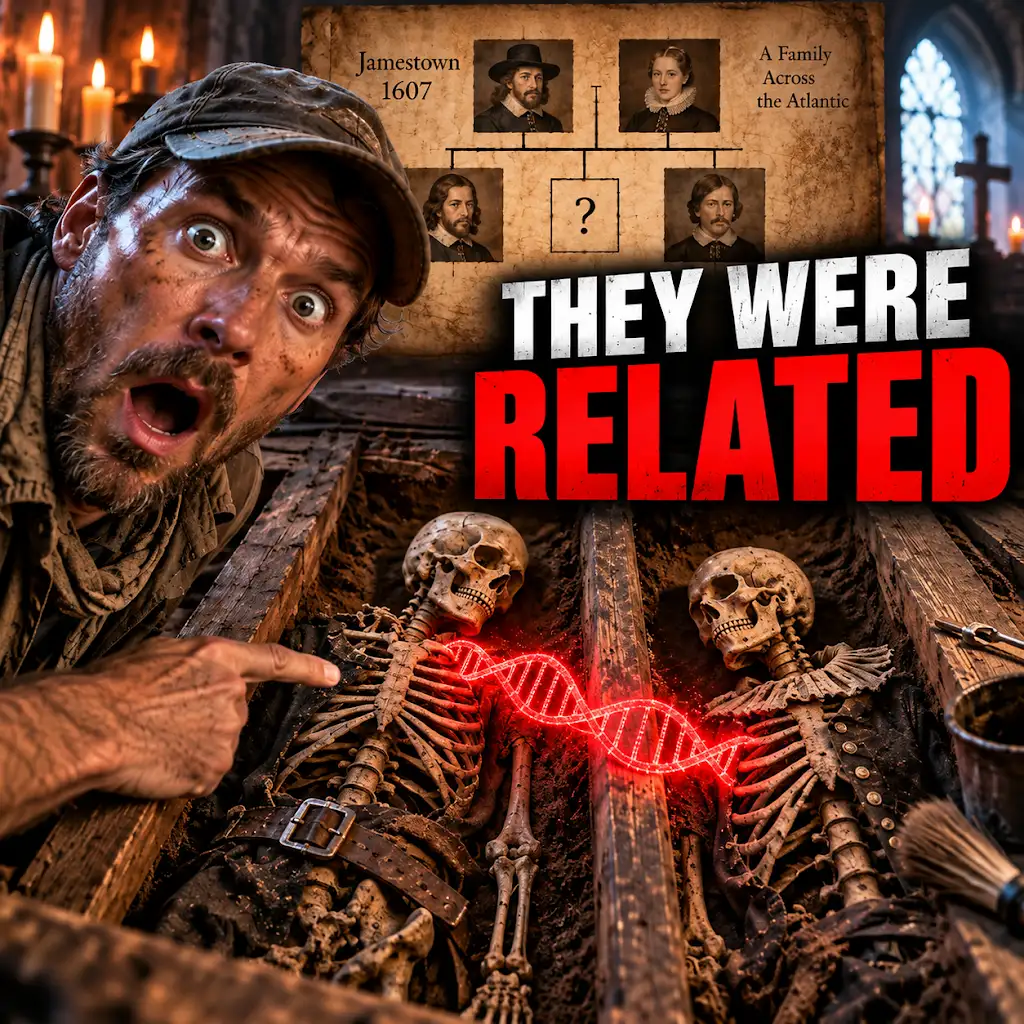
Jamestown DNA Revealed a Family Secret Hidden for 400 Years
FAQs
What is ancient DNA?
Ancient DNA refers to genetic material that is extracted from ancient remains, such as bones, teeth, or hair, and can provide valuable information about the genetic makeup of individuals who lived in the past.
How can ancient DNA help solve historical mysteries?
By analyzing ancient DNA, researchers can trace the genetic ancestry of individuals, identify familial relationships, and even uncover migration patterns of ancient populations. This information can help shed light on historical events and solve long-standing mysteries.
What are some examples of historical mysteries that have been solved using ancient DNA?
Ancient DNA has been used to confirm the identity of historical figures, such as King Richard III of England and the Romanov family of Russia. It has also been instrumental in understanding the origins of ancient civilizations and the spread of diseases throughout history.
What are the challenges of working with ancient DNA?
Ancient DNA is often degraded and contaminated, making it difficult to extract and analyze. Contamination from modern DNA, as well as environmental factors like heat and humidity, can also pose challenges to researchers working with ancient genetic material.
How does ancient DNA analysis contribute to our understanding of human history?
Studying ancient DNA allows researchers to reconstruct the genetic history of human populations, track the movements of ancient peoples, and uncover genetic adaptations to different environments. This information provides valuable insights into the origins and evolution of human societies throughout history.