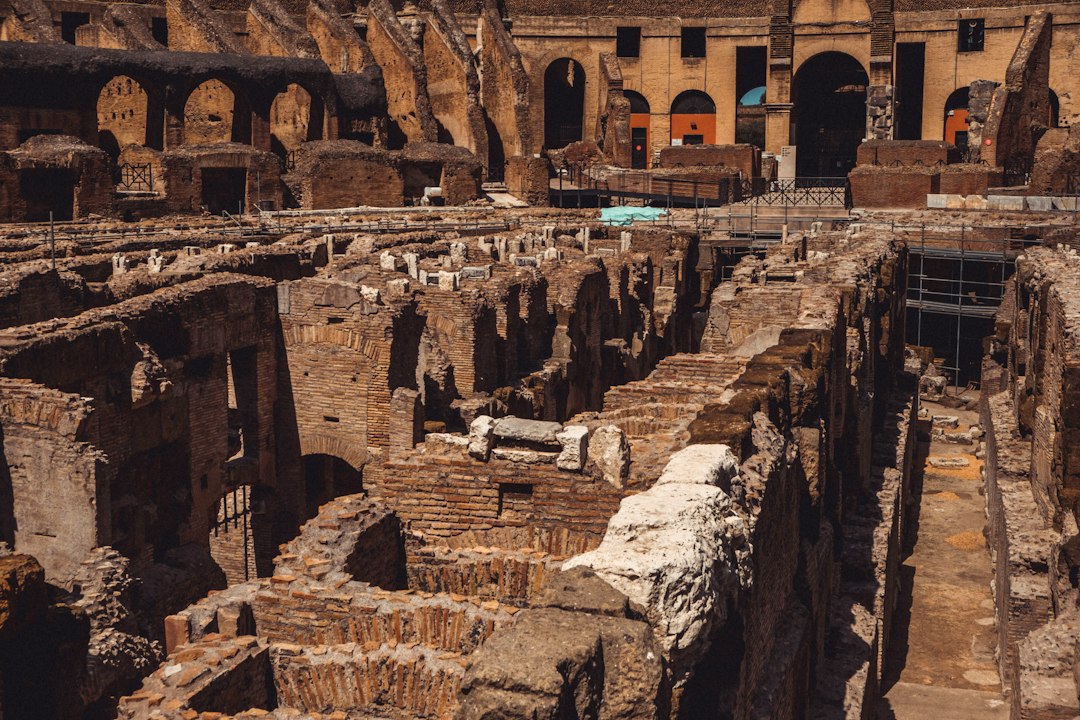
The sands of time, vast and unforgiving, have a way of burying the marvels of civilizations long past. Yet, beneath the accumulated dust and debris, whispers of forgotten ingenuity persist. Archaeologists, engineers, and historians are increasingly embarking on a quest to unearth these lost ancient engineering techniques, a pursuit that promises not only to rewrite our understanding of history but also to inspire innovative solutions for the future. The meticulous excavation of ancient sites, coupled with cutting-edge analytical tools, is slowly peeling back the layers of mystery, revealing how our ancestors, with seemingly rudimentary resources, achieved feats of construction and design that continue to baffle modern minds.
The sheer scale and precision of ancient monumental architecture have long been a source of awe and speculation. From the towering pyramids of Egypt to the sprawling cities of the Maya and the intricate aqueduct systems of Rome, these structures stand as testaments to the ambition and skill of their creators. For centuries, the methods employed to raise such colossal edifices, often from materials quarried and transported over vast distances, remained shrouded in enigma, fueling theories ranging from advanced astronomical alignments to more fantastical explanations. However, ongoing research is beginning to shed light on the practical, albeit extraordinary, engineering principles that underpinned these achievements.
Quarrying and Transportation of Megaliths
The very act of obtaining and moving stones weighing many tons presents a formidable engineering challenge. Ancient civilizations, lacking the heavy machinery of today, relied on a sophisticated understanding of physics, leverage, and human coordination.
Understanding the Limitations and Ingenuity of Ancient Tools
While detailed blueprints are scarce, evidence from quarry sites provides crucial insights. The discovery of bronze tools, stone hammers, and wooden wedges points to a systematic approach to breaking down rock faces. The precise application of these tools, often in conjunction with the introduction of water to exploit natural fracture lines, demonstrates a keen observational ability and a deep understanding of material properties.
The Art of the Ramp and the Sled
Theories surrounding the transportation of megaliths predominantly involve the use of ramps and sledges. Archaeological findings, such as worn grooves in ancient pathways and the discovery of ancient sled prototypes, lend credence to these hypotheses. The construction of massive earthen ramps, carefully engineered to a specific gradient, would have allowed teams of laborers to haul massive stone blocks using ropes and sheer manpower. The addition of water or lubricants to the ground beneath the sledges would have significantly reduced friction, making the arduous task more manageable.
The Role of Waterways and Leverage
In some cases, waterways played a pivotal role. The Egyptians, for instance, likely utilized the Nile River to transport quarried stones from distant sites to the construction locations. The controlled flooding of canals and the use of barges represent a pragmatic approach to overcoming geographical barriers. Beyond simple hauling, the strategic application of levers, often in the form of sturdy wooden beams, would have been crucial for maneuvering and positioning these massive stones with remarkable accuracy.
The study of lost ancient engineering techniques reveals fascinating insights into the ingenuity of past civilizations, showcasing their ability to construct monumental structures without modern technology. For those interested in understanding how ancient societies managed their resources and built impressive infrastructures, a related article discusses the importance of financial preparedness in today’s world. You can explore this topic further in the article found here: Financial Emergency Plan for US Citizens: Be Prepared for the Unexpected.
Water Management: Architects of Hydration and Sanitation
Perhaps one of the most impactful areas of ancient engineering lies in their mastery of water management. The ability to harness, distribute, and even purify water was fundamental to the survival and prosperity of ancient societies, enabling the growth of agriculture, the development of urban centers, and the maintenance of public health. The sophistication of their techniques often rivals, and in some cases surpasses, that of early modern systems.
The Aqueduct Systems: Conduits of Civilization
The Roman aqueducts are perhaps the most famous examples of ancient water engineering, but they were not alone in their pursuit of reliable water sources. Across the globe, from the arid lands of the Middle East to the mountainous regions of the Americas, engineers devised ingenious methods for delivering water where it was needed most.
Gravity as a Guiding Force
The fundamental principle behind most ancient aqueducts was gravity. Engineers meticulously calculated gradients, ensuring a consistent flow of water over considerable distances. This required an intimate understanding of topography and a precise surveying methodology. The careful alignment of channels, often through tunnels and across valleys via impressive arched structures, speaks to an advanced geometric and astronomical knowledge.
The Materials and Construction of Water Channels
The materials used in aqueduct construction varied but were chosen for their durability and impermeability. Stone, brick, and concrete, often in the form of mortar mixed with volcanic ash to create a waterproof substance, were employed. The construction itself was a testament to organized labor and skilled craftsmanship, with each segment of the aqueduct meticulously fitted to ensure water integrity.
Distribution Networks and Cisterns
Beyond the main conduits, ancient engineers developed intricate networks for distributing water within cities and towns. This included smaller channels, public fountains, and sophisticated cistern systems for storage. These systems demonstrate an understanding of hydraulics and the need for equitable access to this vital resource.
Sanitation and Drainage: The Unsung Heroes of Urban Living
Equally impressive, and perhaps more critical for long-term urban sustainability, were the ancient systems of sanitation and drainage. The ability to remove waste and prevent the spread of disease was a hallmark of advanced ancient civilizations.
The Cloaca Maxima and Other Urban Sewer Systems
The Roman Cloaca Maxima, a vast sewer system that still functions in part today, is a prime example of sophisticated urban sanitation. These systems, often constructed with vaulted tunnels, were designed to efficiently channel wastewater and refuse away from populated areas and into rivers or the sea.
Public Latrines and Waste Disposal
The provision of public latrines, often featuring running water to flush away waste, indicates a concern for public health and hygiene. Evidence of organized waste disposal sites outside of urban centers further suggests a comprehensive approach to managing the byproducts of urban life.
Advanced Material Science: Forging the Unbreakable and the Enduring

The longevity of many ancient structures and artifacts is a direct result of the advanced material science employed by their creators. While often overlooked in favor of grand architectural designs, the understanding and manipulation of materials were fundamental to their success.
The Secrets of Roman Concrete
Roman concrete, a material that has endured for millennia, remains a subject of intense study. Its remarkable durability, particularly its ability to withstand saltwater, has baffled modern material scientists for centuries.
The Role of Pozzolana
The key to Roman concrete’s longevity lies in its unique composition, which often included volcanic ash, known as pozzolana. This ingredient reacted with lime and water to create a cement that hardened over time, becoming even stronger with exposure to seawater.
Self-Healing Properties
Recent research suggests that Roman concrete may have possessed self-healing properties. Tiny lime fragments within the concrete could react with water and carbon dioxide to fill cracks, thereby extending the material’s lifespan.
Metallurgy and Alloy Creation
Ancient metallurgists possessed a remarkable understanding of how to extract, refine, and combine metals to create alloys with specific properties. This knowledge enabled the production of tools, weapons, and decorative objects of exceptional quality and durability.
The Bronze Age Revolution
The development of bronze, an alloy of copper and tin, marked a significant technological leap. Ancient smiths learned to control the ratios of these metals to achieve varying degrees of hardness, flexibility, and corrosion resistance.
The Mystery of Damascus Steel
The legendary Damascus steel, known for its unparalleled sharpness and strength, remains a subject of debate. The precise forging techniques and the specific composition of these ancient swords, which often featured distinctive wavy patterns, are still not fully understood.
Precision Engineering and Measurement: The Unseen Foundation

Beneath the impressive facades of ancient architecture lies a foundation of meticulous precision engineering and measurement. The ability to achieve remarkable accuracy in construction, without the benefit of modern surveying equipment or standardized units, speaks volumes about their understanding of geometry, astronomy, and the practical application of measurement.
Astronomical Alignments and Orientation
Many ancient structures, from temples to tombs, were oriented with remarkable precision to celestial bodies. This suggests a deep understanding of astronomy and its practical application in construction.
The Significance of Solstices and Equinoxes
The alignment of structures with solstices and equinoxes was not merely symbolic; it often served practical purposes, such as marking agricultural seasons or establishing sacred directions.
The Use of Sighting Tools and Geometry
Archaeological evidence points to the use of rudimentary sighting tools, plumb bobs, and gnomons for establishing accurate alignments. The application of geometric principles, often derived from observation and empirical study, allowed them to lay out complex foundations and structures with astounding accuracy.
Standardization of Units and Measurement Systems
While formal standardization as we know it was less prevalent, many ancient cultures developed sophisticated systems of measurement based on body parts, natural phenomena, or astronomical cycles.
The Royal Cubit and Other Standard Units
The discovery of standardized measuring tools and references, such as the Egyptian royal cubit, demonstrates a desire for consistency in construction and trade. These units, though seemingly arbitrary to us today, were deeply ingrained in their societal structures.
Practical Geometry in Construction
The application of practical geometry, often referred to as “rope stretchers” or “harpedonaptai” in ancient Greece, allowed builders to lay out right angles and construct complex shapes without formal mathematical notation. The accurate division of land and the creation of regular shapes for buildings relied on these fundamental geometric principles.
The study of lost ancient engineering techniques continues to captivate researchers and enthusiasts alike, shedding light on the remarkable capabilities of past civilizations. One fascinating aspect of this exploration is how these ancient methods could inform modern practices, particularly in the context of resource utilization. For instance, an insightful article discusses the potential of exploiting lunar resources, which highlights the innovative approaches that could be inspired by historical engineering feats. To learn more about this intriguing intersection of ancient wisdom and future possibilities, you can read the article on exploiting lunar resources here.
Lost Technologies and Knowledge Transmission: The Challenge of Reconstruction
| Technique | Period | Region | Description | Known Applications | Current Understanding Level |
|---|---|---|---|---|---|
| Roman Concrete | 1st Century BC – 4th Century AD | Roman Empire | Durable concrete made with volcanic ash, lime, and seawater | Harbors, aqueducts, buildings | Partially understood; modern replication challenging |
| Damascus Steel | Medieval Period | Middle East | High-quality steel with distinctive patterns and superior strength | Swords and blades | Lost; modern attempts to recreate approximate methods |
| Greek Fire | 7th Century AD | Byzantine Empire | Incendiary weapon with unknown chemical composition | Naval warfare | Completely lost; exact formula unknown |
| Incan Stone Masonry | 15th – 16th Century | Andes, South America | Precision-cut stones fitted without mortar, earthquake resistant | Walls, temples, fortresses | Partially understood; techniques not fully replicated |
| Antikythera Mechanism | 2nd Century BC | Ancient Greece | Complex geared device for astronomical calculations | Astronomical predictions | Mostly understood through modern study |
One of the greatest challenges in unearthing lost ancient engineering techniques is the scarcity of direct documentation. Unlike modern engineering, which relies heavily on detailed blueprints and written manuals, ancient knowledge was often transmitted through apprenticeships, oral traditions, and practical demonstration. This makes the reconstruction of these techniques a complex and iterative process of deduction and experimentation.
The Interpretation of Archaeological Evidence
Archaeological findings are the primary source of information. This includes not only the structures themselves but also the tools, workshops, and remnants of materials left behind. Each artifact, each wear pattern on a stone, offers a clue to the methods employed.
Analyzing Tool Marks and Material Residues
The detailed analysis of tool marks on stone surfaces can reveal the types of tools used and the force applied. Similarly, the examination of material residues, such as wood fibers or traces of pigments, can provide insights into construction processes and aesthetic considerations.
Replicating Ancient Processes Through Experimentation
Modern engineers and historians often engage in experimental archaeology, attempting to replicate ancient techniques using historical methods and materials. These practical demonstrations are crucial for validating theoretical models and gaining a deeper appreciation for the ingenuity of ancient builders.
The Role of Oral Tradition and Apprenticeship
The transmission of knowledge in ancient societies was heavily reliant on oral tradition and hands-on apprenticeship. Master craftsmen would impart their skills and understanding to younger generations through direct instruction and supervised practice.
The Loss of Nuance in Modern Interpretation
This method of knowledge transfer, while effective in its time, makes it challenging for modern researchers to capture the full nuance and tacit knowledge embedded within these practices. The subtle adjustments, the intuitive understanding of materials, and the shared experience of communal labor are difficult to fully reconstruct from mere observation.
The Impact of Societal Collapse and Cultural Amnesia
The decline and eventual collapse of ancient civilizations often led to a loss of specialized knowledge. As societies fragmented and the need for large-scale engineering projects diminished, the skills and understanding associated with them could fade, leaving behind only the silent monuments.
The Rediscovery and Reinterpretation of Ancient Wisdom
The ongoing process of unearthing these lost techniques is not merely an academic exercise; it represents a rediscovery of human ingenuity and a testament to the enduring power of innovation. By understanding how our ancestors achieved so much with so little, we gain a fresh perspective on the challenges and opportunities facing us today, potentially unlocking solutions that have been lying dormant, waiting to be unearthed. The whispers from the past, once deciphered, can guide us towards a more sustainable and inspired future.

How Ancient Cities Stayed Cool Without Air Conditioning
FAQs
What are ancient engineering techniques?
Ancient engineering techniques refer to the methods and practices used by civilizations in the past to design and construct various structures, machines, and infrastructure.
What are some examples of lost ancient engineering techniques?
Examples of lost ancient engineering techniques include the construction of the pyramids in Egypt, the aqueducts of the Roman Empire, and the intricate stone carvings at sites like Petra in Jordan.
Why are ancient engineering techniques considered lost?
Ancient engineering techniques are considered lost because many of the specific methods and processes used by ancient civilizations have not been fully documented or understood, leading to a lack of knowledge about how certain structures were built.
How have modern engineers studied and learned from ancient engineering techniques?
Modern engineers have studied and learned from ancient engineering techniques by examining the remaining structures, artifacts, and writings left behind by ancient civilizations. They have also used advanced technology like 3D modeling and computer simulations to better understand how these structures were built.
What significance do lost ancient engineering techniques hold in today’s world?
Lost ancient engineering techniques hold significance in today’s world as they showcase the ingenuity and innovation of past civilizations. Studying these techniques can inspire modern engineers and architects to think creatively and develop sustainable solutions for contemporary challenges.