For millennia, humanity has gazed at the stars, seeking to understand the cosmos. Yet, beneath our very feet lies a realm of equally profound mystery and complexity: the Earth’s interior. While space exploration ignites imaginations with visions of alien worlds, the deep Earth remains a largely uncharted territory, a vast, unseen expanse holding the keys to our planet’s formation, evolution, and ongoing processes. Among the most ambitious endeavors to peel back the layers of this terrestrial enigma was the Kola Superdeep Borehole. This monumental project, conceived during the Cold War, aimed to pierce the Earth’s crust and delve deeper than any human-made structure ever had. Its story is one of scientific ambition, technological prowess, and the humbling realization of how much remains unknown about our own planet. Comparing its achievement to the Earth itself reveals not a competition, but a stark illustration of the Earth’s immensity and the enduring allure of its hidden depths.
The Genesis of a Deep Dream: The Kola Superdeep Borehole Project
The inception of the Kola Superdeep Borehole project was rooted in a confluence of geopolitical ambition and burgeoning scientific curiosity. The Soviet Union, a nation with a strong drive for scientific and technological superiority, saw the borehole as a prestige project, a testament to their engineering capabilities and a potential source of invaluable scientific data. Beyond the Cold War prestige, however, lay a genuine scientific desire to understand the fundamental nature of the Earth’s crust. Geologists and geophysicists were eager to verify theoretical models about the Earth’s structure, the composition of its inner layers, and the processes that shaped them.
Geopolitical Undercurrents
The Cold War provided a powerful impetus for undertaking such a monumental and costly project. The Soviet Union was locked in a technological and ideological race with the United States. Demonstrating their ability to achieve unprecedented feats of engineering, particularly in drilling to extreme depths, was seen as a significant propaganda victory. It signaled a mastery over natural resources and a capacity for ambitious scientific undertakings that rivaled or surpassed their Western counterparts. The very act of drilling deeper was a symbolic conquest, a tangible representation of pushing the boundaries of human knowledge and control.
Scientific Imperatives
However, the project was far from solely a propaganda exercise. The scientific community harbored a deep-seated desire to answer fundamental questions about our planet. Prior to the Kola Borehole, understanding of the Earth’s crust was largely based on indirect methods, such as seismic wave analysis and the study of surface geology. Direct sampling of rock at significant depths was extremely limited. Scientists were keen to:
Unveiling the Continental Crust
The primary scientific goal was to study the structure and composition of the continental crust, particularly the Precambrian crystalline basement that lies beneath sedimentary layers. This region, believed to be the oldest part of the continental crust, held clues to the early stages of Earth’s formation and evolution.
Investigating the Mohorovičić Discontinuity
A key target was the Mohorovičić discontinuity (Moho), the boundary between the Earth’s crust and the mantle. While its existence was inferred from seismic data, direct observation and sampling of the Moho and the upper mantle were a dream for geologists. The Kola Borehole, while not reaching the Moho, provided invaluable insights into the transition zone.
Understanding Deep Earth Processes
Scientists hoped to gain a better understanding of processes occurring deep within the Earth, such as metamorphism, the movement of fluids, and the generation of seismic activity. Direct access to rock formations at extreme depths promised to shed light on these complex phenomena.
The Kola Superdeep Borehole, which reaches a depth of approximately 12,262 meters, is often cited as the deepest artificial point on Earth, providing invaluable insights into the Earth’s crust. In comparison, the Earth’s mantle extends much deeper, reaching depths of about 2,900 kilometers. For those interested in exploring more about the mysteries of our planet, including the hidden secrets beneath the ice of Antarctica, you can read a related article that delves into these topics at this link.
The Herculean Task: Engineering and Challenges of the Kola Borehole
Drilling to such extreme depths was an unprecedented engineering challenge, pushing the limits of existing technology and requiring innovative solutions to overcome a multitude of obstacles. The Kola Superdeep Borehole became a testament to human ingenuity and perseverance in the face of formidable natural forces.
Technological Innovations and Adaptations
The Soviet Union had to develop and adapt drilling technologies specifically for this project. Standard drilling techniques were insufficient for the pressures, temperatures, and rock types encountered at extreme depths.
Advanced Drilling Bits and Equipment
Developing drill bits capable of withstanding immense pressure and abrasion from hard crystalline rock was crucial. Specialized casings and drilling fluids were also engineered to maintain borehole stability and prevent collapse.
High-Pressure and High-Temperature Environments
As the drill penetrated deeper, the Earth’s internal heat and pressure increased dramatically. The equipment and materials used had to be robust enough to function in these punishing conditions, often exceeding the capabilities of standard oil and gas drilling operations.
Overcoming Geological Obstructions
The borehole encountered numerous geological challenges. Fractured rock formations, the presence of water under immense pressure, and unexpected mineral deposits all posed significant hurdles that required constant problem-solving and adaptation.
The Unforeseen Foes: Temperature and Pressure
Perhaps the most significant challenges were the escalating temperatures and pressures encountered as the borehole advanced. These factors not only strained the equipment but also dictated the ultimate depth that could be reached.
The Escalating Thermometer
The geothermal gradient proved to be a formidable obstacle. While initial predictions for temperature at certain depths were made, the actual temperatures encountered far exceeded expectations. At 12 kilometers, temperatures were already around 180°C, making further drilling increasingly difficult and eventually impossible with the available technology.
The Crushing Weight of Earth
The immense pressure exerted by the overlying rock layers also posed a significant threat to the integrity of the borehole. This pressure could cause the borehole to collapse or the drilling equipment to be damaged. Maintaining borehole stability became a constant battle.
Revelations from the Deep: What the Kola Borehole Found
Despite its ultimate cessation, the Kola Superdeep Borehole yielded a treasure trove of scientific data, significantly altering our understanding of the Earth’s crust. It provided direct evidence that challenged existing geological theories and opened new avenues of research.
A New Perspective on the Continental Crust
The samples brought to the surface from the Kola Borehole provided the first direct glimpse into the deep continental crust, revealing its complex history and composition.
The Unforeseen Nature of the Crystalline Basement
Contrary to expectations of relatively homogeneous granite and basalt, the crystalline basement at Kola turned out to be far more complex and diverse. It contained a variety of metamorphic rocks, indicating a history of intense geological activity, including folding, faulting, and recrystallization.
Evidence of Ancient Life in Unexpected Places
One of the most astonishing discoveries was the presence of fossilized microorganisms, including single-celled algae, at depths previously thought to be devoid of life. These findings suggested that life could exist in conditions far more extreme than previously imagined, thriving in the high-pressure, high-temperature, and fluid-rich environments of the deep Earth.
Unexpected Fluid Systems
The borehole encountered significant quantities of water trapped within the rock formations at extreme depths. This water, under immense pressure and temperature, played a crucial role in the geological processes, facilitating mineral transport and influencing the rock’s physical properties.
Challenging Conventional Wisdom
The discoveries at Kola forced geologists to re-evaluate long-held theories about the Earth’s crust and its formation.
Rethinking Crustal Structure
The intricate layering and varied composition of the crystalline basement challenged simplified models of crustal structure. It highlighted the dynamic and complex history of tectonic processes that shaped these ancient rocks.
The Mystery of the Missing Seismic Boundary
The absence of a clear boundary corresponding to the predicted “granitic” and “basaltic” layers, as suggested by seismic data, was a significant puzzle. This suggested that the Earth’s crust was not as neatly stratified as once believed and that seismic waves might be reflecting off more complex discontinuities.
The Interconnectedness of Earth’s Systems
The discovery of life and fluid systems at these depths underscored the interconnectedness of Earth’s various systems, demonstrating that processes occurring deep within the planet could influence surface phenomena and that life could adapt to seemingly inhospitable environments.
The Earth’s Unfathomable Scale: Kola’s Tiny Dent in Immensity
The Kola Superdeep Borehole, a marvel of human engineering reaching a depth of 12,262 meters (approximately 7.6 miles), stands as a testament to our drive to explore. However, when contrasted with the sheer scale of the Earth, its achievement, while monumental in human terms, represents a mere microscopic scratch on the planet’s surface.
The Crust: A Thin Veneer
The Earth’s crust, the outermost solid shell, is astonishingly thin compared to the planet’s overall radius. The continental crust, which the Kola Borehole penetrated, averages around 30-50 kilometers in thickness, though it can be much thicker under mountain ranges. The oceanic crust is even thinner, typically around 5-10 kilometers.
The Kola Borehole’s Slice
Even at its deepest point, the Kola Borehole only managed to penetrate approximately 12.2 kilometers of the continental crust. This means it explored less than one-third of the average thickness of the continental crust and a fraction of the thickness under major geological features.
A Microscopic Comparison
To put this into perspective, imagine the Earth as a ripe apple. The Earth’s radius is approximately 6,371 kilometers. The Kola Borehole’s depth of 12.2 kilometers is about 0.0019 of the Earth’s radius. If the Earth were an apple, the borehole would have barely scratched through the skin.
Beyond the Crust: The Mantle’s Embrace
Beneath the crust lies the Earth’s mantle, a vast layer that constitutes about 84% of the Earth’s volume and extends to a depth of approximately 2,900 kilometers. This region is where most of the planet’s heat is generated and where the slow, convection currents drive plate tectonics.
The Unreachable Depths
The Kola Borehole, designed to study the crust, never came close to reaching the mantle. The increasing temperatures and pressures made further penetration impossible with the technology of the time. The upper mantle, with its dense and viscous rock, remains largely inaccessible to direct human exploration.
The Earth’s True Interior
The Earth’s core, a region of immense heat and pressure, is divided into the liquid outer core and the solid inner core, extending to the center of the planet. Understanding these regions relies entirely on indirect geophysical methods. The Kola Borehole’s reach is utterly insignificant when compared to the entirety of these inner realms.
The Kola Superdeep Borehole, which reaches a depth of approximately 12,262 meters, remains the deepest artificial point on Earth, offering invaluable insights into the Earth’s crust. This remarkable feat of engineering highlights the challenges and limitations of deep drilling, especially when compared to the Earth’s total radius of about 6,371 kilometers. For those interested in exploring how ancient civilizations adapted to extreme conditions, a fascinating article discusses survival techniques during droughts, shedding light on the resilience of human ingenuity in the face of adversity. You can read more about it in this related article.
The Enduring Mystery: What Lies Deeper?
While the Kola Superdeep Borehole provided invaluable data, it also highlighted the vastness of our ignorance regarding the Earth’s interior. The project’s limitations, primarily due to temperature and pressure, underscore the profound challenges that still lie ahead in unraveling the planet’s deepest secrets.
The Limits of Human Endeavor
The Kola Borehole served as a powerful reminder that even with remarkable technological advancements, there are fundamental physical barriers that limit direct human exploration. The extreme conditions of the Earth’s interior are a formidable challenge that may require entirely new paradigms in scientific and engineering approaches.
The Need for New Technologies
To probe deeper, humanity will likely need to develop entirely new drilling technologies, materials, and energy sources capable of withstanding unprecedented temperatures and pressures. This could involve advancements in robotics, remote sensing, and perhaps even novel methods of material science.
The Role of Geophysics
For the foreseeable future, geophysics will continue to be our primary tool for understanding the Earth’s deep interior. Techniques like seismology, gravity measurements, and magnetotellurics will be crucial for inferring the composition, structure, and dynamics of the mantle and core.
The Unfinished Symphony of Earth Science
The Kola Superdeep Borehole was not an endpoint but a significant chapter in the ongoing story of Earth science. Its findings have spurred further research and inspired new generations of scientists to continue the quest for knowledge.
The Pursuit of the Mantle and Core
The desire to directly sample and study the Earth’s mantle and core remains a grand scientific aspiration. While direct drilling to these depths might be a distant dream, future projects could focus on shallower but more extensive sampling of the upper mantle or on developing indirect methods that provide even greater resolution of the deep Earth.
The Interplay of Disciplines
Understanding the Earth’s interior requires a multidisciplinary approach, bringing together geologists, physicists, chemists, and engineers. The complex interactions between rock, fluid, heat, and pressure at extreme depths demand a holistic understanding that transcends individual scientific fields. The Kola Superdeep Borehole, in its own way, fostered this collaborative spirit, driving innovation and pushing the boundaries of what we thought possible. The Earth, in its infinite complexity, continues to beckon, promising a universe of discovery beneath our very feet.
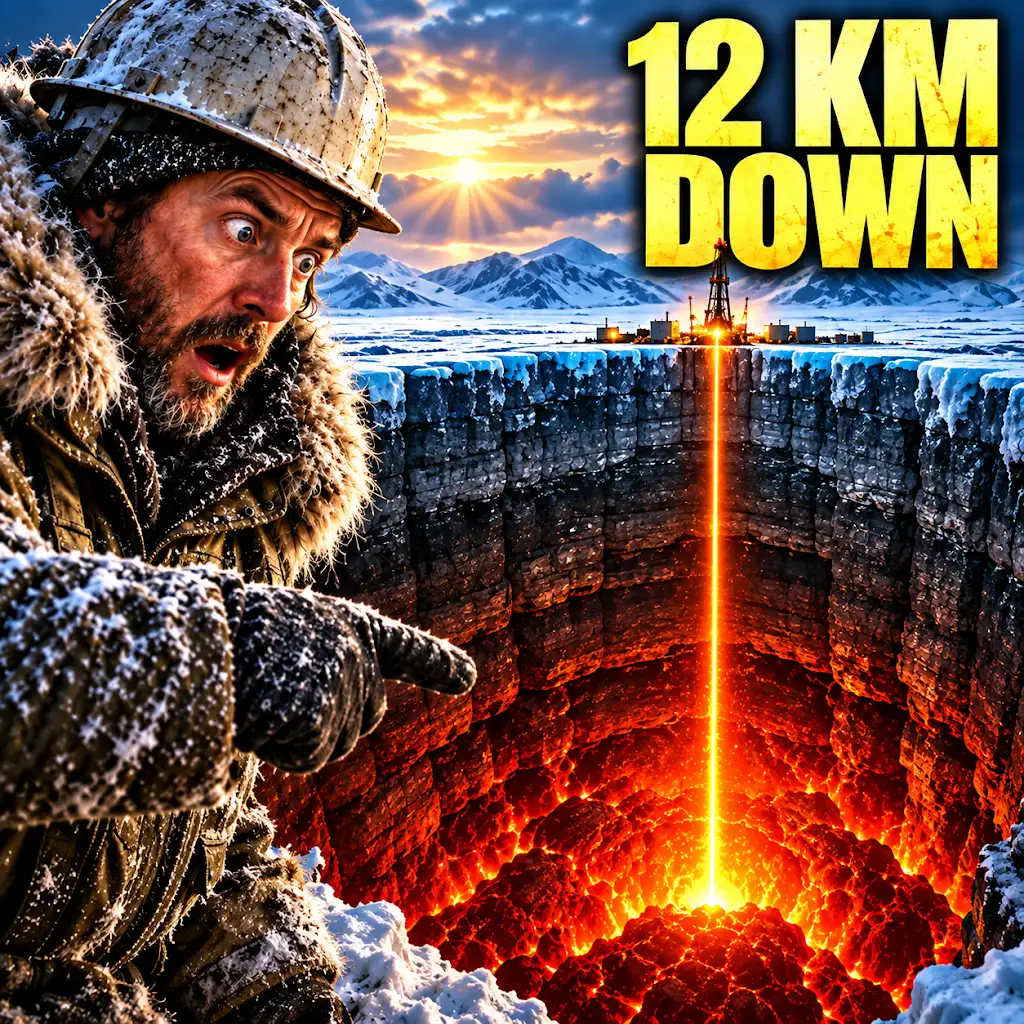
They Drilled 12 KM Into Earth — Then Everything Changed
FAQs
What is the Kola Superdeep Borehole?
The Kola Superdeep Borehole is the deepest man-made hole on Earth, reaching a depth of approximately 7.5 miles (12 kilometers) into the Earth’s crust.
How does the depth of the Kola Superdeep Borehole compare to the Earth’s depth?
While the Kola Superdeep Borehole is an impressive feat of engineering, it is only a tiny fraction of the Earth’s total depth. The Earth’s radius is about 3,959 miles (6,371 kilometers), making the Kola Superdeep Borehole less than 0.2% of the Earth’s radius.
What was the purpose of drilling the Kola Superdeep Borehole?
The main purpose of drilling the Kola Superdeep Borehole was to study the Earth’s crust and mantle, as well as to explore the possibility of drilling to even greater depths in the future.
What did scientists discover from the Kola Superdeep Borehole project?
Scientists involved in the Kola Superdeep Borehole project discovered a number of interesting geological findings, including unexpected high temperatures and pressures at depths much shallower than predicted.
Are there any plans to drill deeper than the Kola Superdeep Borehole in the future?
While there are currently no plans to drill deeper than the Kola Superdeep Borehole, the project has provided valuable insights into the Earth’s structure and has inspired further research into deep drilling technologies.