The Earth’s crust, a familiar blanket of soil, rock, and water, belies the vast, unknown expanses that lie beneath. For millennia, humanity has gazed at the stars, charting celestial bodies and pondering the cosmos. Yet, the very ground beneath our feet harbors mysteries that rival the depths of space, a subterranean realm of immense scale and profound significance, largely unexplored and teeming with untold wonders. This article ventures into that enigmatic world, a journey into the profound darkness where geological forces sculpt unimaginable landscapes and life adapts to extremes, revealing a hidden dimension of our planet that continues to captivate and challenge the human spirit.
The superficial layers of our planet, the continents and oceans, are but a thin veneer upon a complex, layered interior. Understanding this deep structure is not merely an academic pursuit; it is fundamental to comprehending the forces that shape our world, from the rumblings of earthquakes to the slow, inexorable drift of continents. Geologists and geophysicists have employed a remarkable array of tools and techniques to peer into this inaccessible realm, piecing together a picture of a dynamic and ever-changing Earth.
Seismic Tomography: Mapping the Inner Earth
The most powerful tool for visualizing the Earth’s interior is seismic tomography, a technique akin to medical CT scans but on a planetary scale. By analyzing the travel times of seismic waves generated by earthquakes as they pass through the Earth, scientists can infer the density and composition of the materials they encounter.
The Birth of Seismic Imaging
The earliest understanding of Earth’s interior came from studying earthquake waves. When an earthquake occurs, it generates two primary types of seismic waves: P-waves (primary or compressional waves) and S-waves (secondary or shear waves). P-waves can travel through solids and liquids, while S-waves are restricted to solids. The distinct paths and speeds of these waves, as recorded by seismographs around the globe, provided the first clues about the Earth’s layered structure. The abrupt changes in wave velocity at certain depths indicated the presence of distinct boundaries.
Decoding Wave Anomalies
Seismic tomography refines this by using thousands of earthquake recordings. By comparing the actual travel times of waves with predicted travel times assuming a uniform Earth, scientists can identify anomalies. Faster-than-average wave speeds suggest denser, cooler material, often associated with subducting oceanic plates that have plunged deep into the mantle. Slower-than-average speeds point to hotter, less dense material, often indicative of mantle plumes rising from the deep Earth or areas where tectonic plates are diverging. This allows for the creation of three-dimensional maps of the mantle, revealing structures like vast plumes of superheated rock and the remnants of ancient tectonic plates.
Revealing the Mantle’s Dynamic Nature
Seismic tomography has revolutionized our understanding of the Earth’s mantle. It has shown that the mantle is not a static, homogenous mass but a churning, convective engine driving plate tectonics. These tomographic models have revealed large, slow-moving currents of rock that transport heat from the Earth’s core to the surface, influencing volcanic activity and the formation of mountains. The intricate patterns of these currents are still being unraveled, offering insights into the long-term evolution of our planet.
The Layers Within: Crust, Mantle, and Core
Beneath the thin crust lies the vast mantle, a region of silicate rock that makes up the bulk of Earth’s volume. Deeper still is the core, a region of immense heat and pressure, divided into a liquid outer core and a solid inner core. Each layer possesses unique properties that dictate the planet’s geological activity and magnetic field.
The Crust: A Familiar but Dynamic Frontier
The Earth’s crust, the outermost solid shell, varies dramatically in thickness and composition. Continental crust, thicker and less dense, forms the landmasses, while oceanic crust, thinner and denser, lies beneath the oceans. Despite its apparent solidity, the crust is constantly being shaped by tectonic forces, volcanic activity, and erosion. Understanding its composition and behavior is crucial for resource exploration and mitigating geological hazards.
The Mantle: The Engine of Plate Tectonics
The mantle, stretching from the base of the crust to a depth of approximately 2,900 kilometers, is primarily composed of silicate rocks rich in iron and magnesium. While largely solid, it behaves as a highly viscous fluid over geological timescales, allowing for slow convection currents. These currents are the driving force behind the movement of tectonic plates, leading to earthquakes, volcanic eruptions, and mountain building. The transition zone within the upper mantle, between roughly 410 and 660 kilometers depth, is particularly important, as changes in mineral structure occur due to increasing pressure and temperature, affecting seismic wave velocities.
The Core: A Geodynamo’s Crucible
At the heart of the Earth lies the core, a metallic sphere composed predominantly of iron and nickel. The outer core, a liquid layer, generates Earth’s magnetic field through the convection of molten metal, a phenomenon known as the geodynamo. This magnetic field acts as a protective shield, deflecting harmful solar radiation. The inner core, a solid sphere despite its extreme temperature, is thought to be growing slowly as the Earth gradually cools. Studying the core is exceptionally challenging, relying almost entirely on inferences from seismic waves and laboratory experiments simulating extreme pressures and temperatures.
Recent discoveries have unveiled a hidden world beneath Earth’s surface, revealing intricate networks of caves and underground rivers that challenge our understanding of geology and ecology. For an intriguing exploration of how these subterranean realms can hold secrets to ancient civilizations and lost technologies, you can read more in the article titled “Lost Power Found: A Captivating Documentary” available at this link.
Echoes from the Abyss: The World of Caves and Karst Landscapes
Beneath the surface, a hidden world of geological artistry unfolds within caves. These subterranean voids, carved by the persistent action of water over millennia, offer a glimpse into geological time and host unique ecosystems adapted to perpetual darkness. Karst landscapes, characterized by soluble rock formations like limestone, are the very architects of these underground marvels.
The Genesis of Subterranean Worlds
The formation of caves is a slow, patient process, intricately linked to the geological and hydrological conditions of a region. The dissolution of soluble rocks by acidic water is the primary mechanism, leading to the creation of vast networks of passages, chambers, and spectacular formations.
Dissolution: Water’s Sculpting Power
The bedrock of many cave systems is composed of carbonate rocks, such as limestone and dolomite, which are susceptible to dissolution by weakly acidic water. Rainwater absorbs carbon dioxide from the atmosphere and soil, forming carbonic acid. As this water percolates through the ground and into bedrock fractures, it slowly dissolves the rock, widening the cracks and creating voids. This process, known as dissolution, is the fundamental force behind cave formation. The rate of dissolution depends on factors like the acidity of the water, the solubility of the rock, and the flow rate of the water.
The Influence of Lithology and Structure
The type of rock and its geological structure play a crucial role in determining where caves form and what shapes they take. Permeable rocks allow water to infiltrate easily, facilitating dissolution. Fractures, joints, and bedding planes within the rock act as initial pathways for water, dictating the initial orientation and development of cave passages. Areas with significant geological faulting or where rock layers are tilted can lead to more complex and extensive cave systems. Certain rock types, like gypsum, are even more soluble than limestone, leading to rapid cave formation and often spectacular, albeit less stable, formations.
Vertical and Horizontal Development
Cave passages can develop in both vertical and horizontal directions. Vertical shafts, or “pits,” are often formed when water flows downwards through fractures, widening them as it dissolves the rock. Horizontal passages, or “tunnels,” are typically formed by the flow of water along bedding planes or within zones of more intense fracturing. The interplay between these vertical and horizontal dissolution processes leads to the intricate, three-dimensional networks that characterize many cave systems. The presence of a water table, the upper surface of the saturated zone in the ground, also influences cave development, with caves typically forming either above or below this level depending on the dissolutional environment.
Speleothems: Nature’s Underground Sculptures
Within these subterranean chambers, a breathtaking display of geological artistry unfolds in the form of speleothems – mineral formations created by the deposition of dissolved minerals from dripping or flowing water. These formations, often referred to as stalactites, stalagmites, and other decorative features, are testaments to the slow, persistent work of nature.
Stalactites and Stalagmites: The Iconic Duo
The most recognizable speleothems are stalactites, which hang like icicles from the cave ceiling, and stalagmites, which rise from the cave floor. Stalactites form as water, rich in dissolved calcium carbonate, drips from the ceiling. As a droplet hangs, some of the calcium carbonate is deposited, leaving a tiny ring of calcite. Over thousands of years, successive drops add to this deposit, elongating the formation downwards. Stalagmites form in a similar fashion, but the water drips onto the floor, depositing calcite and building upwards. When a stalactite and a stalagmite meet and fuse, they form a column.
A Symphony of Shapes and Colors
Beyond the classic stalactite and stalagmite, caves host a bewildering variety of speleothem forms. Flowstone, formed by sheets of water flowing over cave walls and floors, can create curtains, draperies, and terraces. Helictites, defying gravity, twist and turn in seemingly random directions, their growth influenced by capillary action and air currents. Cave pearls, smooth, spherical concretions, form in pools where gentle water movement prevents them from adhering to the floor. The colors of speleothems are derived from impurities in the water, such as iron oxides, which can impart shades of red, orange, and brown.
The Pace of Formation and Preservation
The growth of speleothems is an incredibly slow process, often measured in centimeters per thousand years. This slow pace underscores the immense timescale involved in cave formation and the preservation of these delicate formations. Factors like water chemistry, air circulation, and the stability of the cave environment are crucial for their continued growth and survival. Disturbing these formations can halt their growth and lead to their degradation, highlighting the importance of responsible cave exploration and conservation.
Subterranean Ecosystems: Life in the Dark
The perpetual darkness and stable, yet often harsh, conditions of caves have fostered the evolution of unique and specialized ecosystems. Life here has adapted in remarkable ways to survive and thrive in an environment devoid of sunlight, relying on chemosynthesis and external food sources.
Troglophiles and Troglobites: Adapting to the Gloom
Cave-dwelling organisms can be broadly categorized. Troglophiles are species that can live in caves but are also found in similar environments above ground, such as damp leaf litter or under rocks. They can survive in the cave but are not exclusively adapted to it. Troglobites, on the other hand, are obligate cave dwellers – species that live their entire lives in caves and are highly specialized for this environment. These adaptations often include loss or reduction of eyesight, depigmentation (resulting in pale or transparent bodies), and heightened senses of touch, smell, and hearing.
The Base of the Food Web: Beyond Photosynthesis
With no sunlight for photosynthesis, the base of the cave food web relies on alternative energy sources. Chemosynthetic bacteria, which derive energy from chemical reactions (often involving sulfur or nitrogen compounds), are a primary food source for many cave invertebrates. Another significant input of organic matter comes from the surface. “Gongoozlers,” as they are sometimes called, are organisms that feed on organic debris washed into the cave by water, such as dead leaves, wood, and animal carcasses. This detritus fuels a complex food chain of bacteria, fungi, and invertebrates, which in turn support larger predators.
Sensory Adaptations and Evolutionary Marvels
The sensory adaptations of cave-dwelling creatures are extraordinary. Many troglobites have elongated antennae and appendages, allowing them to navigate and detect prey or mates through touch and vibration. Some species have lost their eyes entirely, as vision is useless in total darkness, while others have adapted to detect minute changes in light or air currents. The evolutionary journey of these organisms, isolated and subjected to unique selective pressures, offers profound insights into the adaptability of life and the process of evolution itself.
The Earth’s Fiery Heart: Delving into Volcanism and Geothermal Activity

Beneath the seemingly solid crust lies a world of molten rock, intense heat, and immense pressure – the realm of volcanism and geothermal activity. These powerful forces, erupting from the Earth’s interior, shape landscapes, create new land, and provide a glimpse into the planet’s internal dynamics.
The Mantle Plumes: Upwelling of Magma
Volcanism is not uniformly distributed across the globe. Many volcanoes are found along the boundaries of tectonic plates, where plates collide or pull apart. However, isolated volcanoes, such as the Hawaiian Islands, are thought to be formed by “hotspots” – plumes of unusually hot mantle material rising from deep within the Earth.
Magma Formation: Melting the Deep Rock
The intense heat and pressure within the Earth’s mantle can cause rock to melt, forming magma. At mid-ocean ridges, where tectonic plates pull apart, the pressure is reduced, allowing the mantle rock to melt. At subduction zones, where one plate slides beneath another, water released from the descending plate lowers the melting point of the overlying mantle rock. Hotspots are associated with deep mantle plumes, which bring hotter material closer to the surface, triggering melting.
The Ascent of Magma
Once formed, magma is less dense than the surrounding solid rock, causing it to rise towards the surface. It can accumulate in underground chambers, known as magma chambers, where it can cool, solidify, or undergo chemical changes. If the pressure of the overlying rock is overcome, the magma can erupt onto the surface as lava, ash, and gases. The viscosity of the magma, determined by its silica content and temperature, influences the explosivity of an eruption.
Intraplate Volcanism: Islands in the Pacific
The Hawaiian Islands are a classic example of intraplate volcanism. A persistent mantle plume beneath the Pacific Ocean floor has created a chain of volcanoes as the Pacific Plate slowly moves over the stationary plume. The oldest islands are found to the northwest, while the youngest and most active volcanoes are at the southeast end of the chain. This phenomenon provides a direct window into the long-term activity of the Earth’s mantle.
Geothermal Energy: Harnessing Earth’s Internal Heat
The heat emanating from the Earth’s interior is not just a source of volcanic activity; it is also a powerful and sustainable energy resource. Geothermal energy harnesses this natural heat for electricity generation, heating, and cooling.
Hydrothermal Systems: Nature’s Underground Power Plants
Geothermal power plants tap into hydrothermal systems, where hot water and steam are found underground. These systems are often associated with volcanic activity or areas where magma is close to the surface. Water circulates through permeable rock, heated by the Earth’s internal heat, and rises to the surface as hot springs, geysers, or steam vents.
Harnessing Steam and Hot Water
In a geothermal power plant, wells are drilled into the hydrothermal reservoir to access the hot steam or water. This steam is used to drive turbines, which generate electricity. In areas with hot water but not enough steam, the hot water can be used to vaporize a secondary fluid with a lower boiling point, which then drives the turbine. Geothermal energy can also be used directly for heating buildings and greenhouses or for industrial processes.
Environmental Benefits and Challenges
Geothermal energy is a clean energy source, producing very low greenhouse gas emissions compared to fossil fuels. It also has a small land footprint. However, there are challenges associated with geothermal energy. The availability of suitable geothermal resources is geographically limited, and the initial drilling costs can be high. There are also concerns about the potential release of small amounts of hydrogen sulfide gas, which has a distinctive odor, and the risk of induced seismicity in some cases.
The Supervolcano Threat: A Cataclysmic Potential
While most volcanic eruptions are localized events, a rare but devastating phenomenon known as a supervolcano eruption poses a significant threat to global ecosystems and human civilization. These colossal events, characterized by eruptions that expel more than 1,000 cubic kilometers of material, are exceptionally infrequent but incredibly destructive.
Caldera Formation: The Aftermath of Catastrophe
Supervolcano eruptions are associated with large volcanic depressions called calderas. These form when a massive magma chamber empties beneath a volcano, causing the overlying ground to collapse. The eruption itself is incredibly powerful, ejecting vast quantities of ash, gases, and rock into the atmosphere, which can block sunlight for years, leading to a global cooling effect known as a volcanic winter.
Detecting and Monitoring Supervolcanoes
Detecting and monitoring potential supervolcanoes is a crucial but challenging task. Scientists use a combination of geological surveys, seismic monitoring, and ground deformation studies to identify areas with large magma chambers and the potential for future eruptions. Understanding the behavior of these colossal geological forces is vital for assessing and preparing for the catastrophic potential they represent.
The Deep Biosphere: Life in Unforeseen Niches

The discovery of life thriving in the most extreme conditions imaginable has expanded our understanding of the biosphere’s resilience and adaptability. The deep biosphere, encompassing the vast microbial communities residing within the Earth’s crust and sediments, represents a significant, largely unexplored realm of life.
Microbial Dominance: Life’s Ubiquitous Presence
Microorganisms – bacteria, archaea, and fungi – are the dominant life forms in the deep biosphere, existing in environments previously thought to be sterile. Their ability to survive and reproduce under extreme pressure, temperature, and nutrient scarcity is a testament to life’s enduring power.
Life Below the Surface: From Sediments to Deep Crust
The deep biosphere extends from the shallow sediments of the ocean floor and continental margins to kilometers deep within the Earth’s crust. These microbial communities inhabit porous rocks, groundwater systems, and even cracks within solid rock. They are found in a wide range of conditions, including hot, acidic, and oxygen-deprived environments.
Chemosynthesis: Fuelling Life Without Sunlight
In the absence of sunlight, life in the deep biosphere relies on chemosynthesis, a process where microbes obtain energy from chemical reactions involving inorganic compounds. These reactions can involve the oxidation of sulfur, hydrogen, iron, or methane. These chemosynthetic microbes form the base of deep biosphere food webs, supporting a diverse array of other microorganisms, including those that feed on them.
Extremophiles: Masters of Survival
The study of extremophiles, organisms that thrive in extreme environments, has revealed the astonishing adaptability of life. These microscopic pioneers have unlocked secrets that could have profound implications for astrobiology, biotechnology, and our understanding of life’s origins.
Adapting to Heat and Cold: Thermophiles and Psychrophiles
Thermophiles are organisms that thrive in high temperatures, often found in hot springs, hydrothermal vents, and deep subsurface environments. Psychrophiles, conversely, are adapted to extremely cold conditions, found in glaciers, polar ice, and the deep ocean. The enzymes and cellular structures of these organisms are uniquely suited to function under these opposing temperature extremes.
Surviving Pressure and Acidity: Piezophiles and Acidophiles
Piezophiles, or barophiles, are organisms that flourish under high pressure, commonly found in the deep ocean trenches and deep subsurface. Acidophiles thrive in highly acidic environments, such as those found near volcanic areas or in certain industrial waste sites. Their cellular machinery is designed to withstand the damaging effects of low pH. Conversely, alkaliphiles are adapted to alkaline conditions.
The Role of Radiotrophic Organisms
Some organisms, known as radiotrophs, can utilize ionizing radiation as an energy source. Certain bacteria, such as Deinococcus radiodurans, possess highly efficient DNA repair mechanisms that allow them to survive and even reproduce in environments with high levels of radiation, such as those found in nuclear waste sites or even deep underground where naturally occurring radioactive isotopes are present.
Astrobiological Implications: Life Beyond Earth
The existence of a robust deep biosphere on Earth has significant implications for the search for extraterrestrial life. If life can persist and evolve in such extreme conditions on our own planet, it suggests that similar environments on other celestial bodies could also harbor life.
Martian Subsurface: A Potential Haven for Life
Planetary scientists are increasingly focusing on the subsurface of Mars as a potential refuge for past or present life. Evidence suggests that Mars once had liquid water on its surface and that subsurface water might still exist. The presence of subsurface environments with protection from harsh surface radiation and access to potential chemical energy sources makes the Martian deep subsurface a prime target in the search for extraterrestrial life.
Icy Moons and Beyond: Oceanic Worlds
The icy moons of the outer solar system, such as Europa (a moon of Jupiter) and Enceladus (a moon of Saturn), are also compelling targets in astrobiology. These moons are believed to possess vast subsurface oceans of liquid water beneath their icy crusts. If these oceans contain dissolved minerals and energy sources, they could potentially support life similar to that found in Earth’s deep biosphere, possibly fueled by hydrothermal activity at the seafloor.
Exploring the hidden world beneath Earth’s surface has always captivated the imagination of scientists and adventurers alike. Recent discoveries have unveiled fascinating insights into subterranean ecosystems and ancient civilizations that once thrived below ground. For those intrigued by the mysteries of our planet, a related article delves into unexplained ancient artifacts that shed light on the past. You can read more about these intriguing findings in the article on unexplained ancient artifacts.
The Uncharted Depths: Challenges and the Future of Subterranean Exploration
| Metric | Value/Estimate | Description |
|---|---|---|
| Depth of Earth’s Crust | 5-70 km | Thickness varies from oceanic to continental crust |
| Mantle Thickness | 2,900 km | Layer beneath the crust, composed of silicate rocks |
| Core Radius | 3,485 km | Inner and outer core combined radius |
| Temperature at Core-Mantle Boundary | 3,700 – 4,000 °C | Extreme heat at the boundary between mantle and outer core |
| Estimated Volume of Subterranean Life | Up to 2 billion cubic kilometers | Volume of Earth’s subsurface inhabited by microbial life |
| Depth of Deepest Borehole | 12.3 km | Kola Superdeep Borehole, deepest man-made hole |
| Percentage of Earth’s Water Stored Underground | ~30% | Water stored in aquifers and underground reservoirs |
| Pressure at Earth’s Center | ~360 GPa | Pressure at the very center of the Earth |
The exploration of Earth’s subterranean realm presents formidable challenges, pushing the boundaries of human ingenuity and technological advancement. The inherent difficulties of penetrating deep into the Earth have meant that much of this world remains a mystery, a frontier ripe for future discovery.
Technological Hurdles: Overcoming Extreme Conditions
Reaching and studying the deep subterranean environment requires overcoming immense obstacles, including extreme pressures, temperatures, and the sheer inaccessibility of the locations.
Drilling and Sampling: Reaching for the Deep
Deep drilling operations are essential for accessing the Earth’s interior. However, the pressures and temperatures encountered at great depths can damage drilling equipment and make sample recovery difficult. Advanced drilling techniques, such as rotary drilling with specialized drill bits and the use of downhole sensors to monitor conditions, are crucial. Collecting uncontaminated samples from these depths is also a significant challenge, requiring sterile sampling methods to avoid introducing surface microbes.
Submersible and Robotic Exploration: Venturing into the Unknown
For aquatic subterranean environments, such as deep-sea hydrothermal vents or flooded cave systems, remotely operated vehicles (ROVs) and autonomous underwater vehicles (AUVs) are indispensable. These robotic explorers can withstand the extreme pressures and temperatures of the deep ocean, equipped with cameras, sensors, and sampling arms to gather data and collect specimens from environments that are impossible for humans to reach directly.
Extreme Environment Habitats: Creating Artificial Simulators
To study the unique life forms found in the deep biosphere, scientists often need to replicate their extreme habitats in laboratories. This involves creating specialized incubators and bioreactors that can maintain high pressures, temperatures, and specific chemical compositions, allowing for the study of microbial physiology and behavior under controlled conditions.
The Ethical and Environmental Imperative: Responsibility in Exploration
As humanity ventures deeper into the Earth’s hidden realms, ethical considerations and environmental stewardship become paramount. Understanding the potential impacts of our exploration is crucial to preserving these fragile and unique environments.
Minimizing Disturbance: Protecting Fragile Ecosystems
The exploration of caves and other subterranean environments can inadvertently harm delicate ecosystems. Strict protocols are necessary to minimize physical disturbance, prevent the introduction of invasive species, and avoid contamination of sensitive microbial communities. Responsible exploration involves leaving no trace and respecting the intrinsic value of these natural wonders.
Resource Extraction and its Consequences
The potential for valuable mineral and energy resources within the Earth’s crust raises complex ethical questions regarding their extraction. Balancing the potential benefits of resource utilization with the need to protect subterranean environments and their unique life forms requires careful consideration and robust regulatory frameworks. The long-term consequences of extensive mining and drilling operations on subterranean ecosystems need to be thoroughly assessed.
Conservation Efforts: Preserving Our Subterranean Heritage
Many subterranean environments, particularly caves, are recognized for their scientific and natural heritage value. Conservation efforts, including the establishment of protected areas, public education, and the development of sustainable tourism practices, are essential to safeguard these invaluable resources for future generations. Scientific research plays a vital role in understanding the ecological significance of these areas and informing conservation strategies.
The Future of Subterranean Discovery: New Frontiers Await
The exploration of the Earth’s subterranean realm is far from over. Advances in technology, a growing understanding of geological processes, and the expanding field of astrobiology will undoubtedly propel new discoveries in the years to come.
Advanced Geophysical Techniques: Deeper Insights
Future advancements in geophysical imaging, such as improved seismic tomography and new methods for detecting subtle changes in Earth’s magnetic field or gravity, will provide even more detailed maps of the deep Earth. These techniques will allow scientists to identify previously unseen structures and understand the dynamics of the planet’s interior with unprecedented clarity.
Nanotechnology and Biosensors: Revolutionizing Sampling
The development of nanotechnology and highly sensitive biosensors holds the promise of revolutionizing subterranean exploration. Nanobots could be deployed to collect minute samples, monitor environmental conditions in real-time, and even perform microscopic repairs on equipment. Advanced biosensors could detect the presence of specific microbial biomarkers, accelerating the identification and characterization of deep biosphere life.
The Quest for Answers: From Origins to Life Beyond
The continued exploration of the subterranean realm holds the key to unlocking some of humanity’s most profound questions: the origin of life on Earth, the processes that shape our planet, and the potential for life beyond our world. As we delve deeper, we continue to unveil a hidden universe, a testament to the enduring mystery and boundless wonder of our own planet. The silent, dark expanse beneath our feet beckons, promising revelations that will undoubtedly reshape our understanding of Earth and our place within the cosmos.
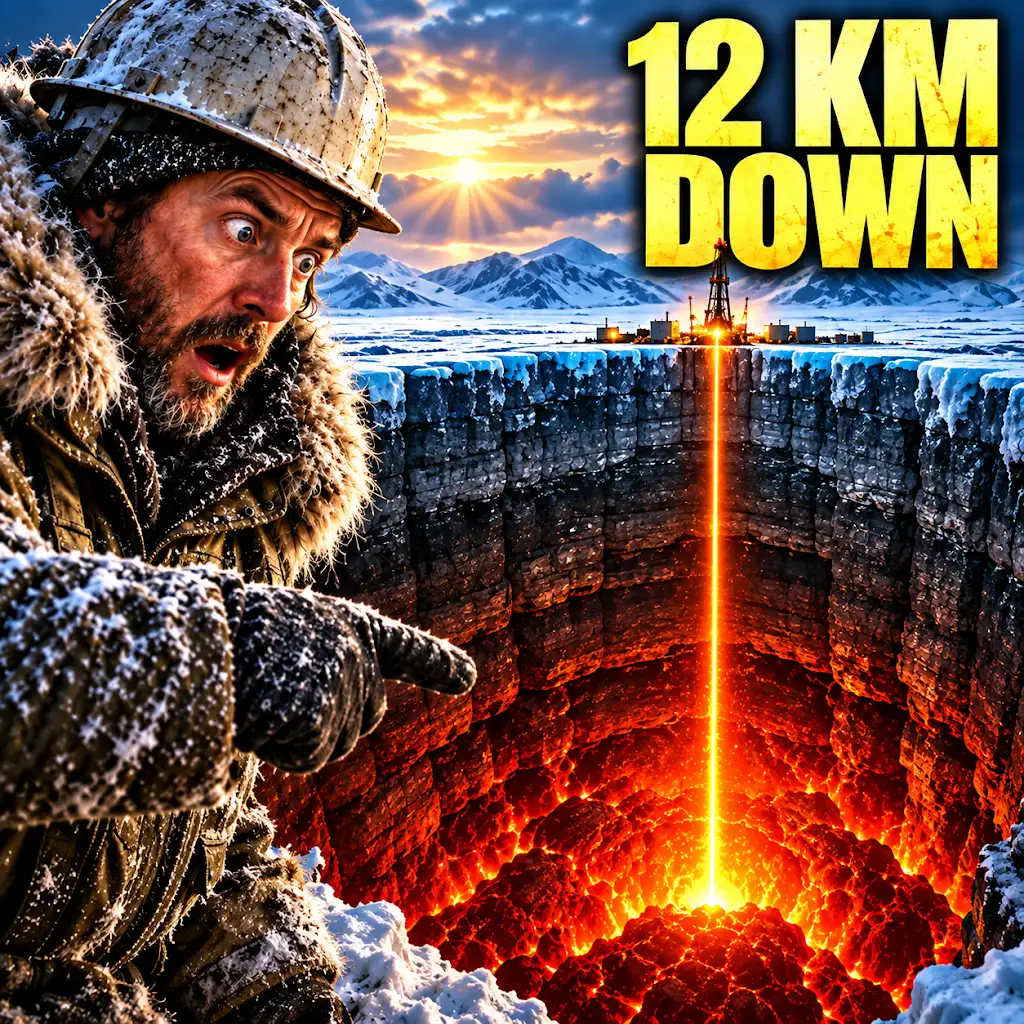
They Drilled 12 KM Into Earth — Then Everything Changed
FAQs
What is the hidden world beneath Earth’s surface?
The hidden world beneath Earth’s surface refers to the vast network of caves, tunnels, and underground rivers that exist below the Earth’s crust.
How are these underground features formed?
These underground features are typically formed through various geological processes such as erosion, dissolution of rocks, and volcanic activity over millions of years.
What kind of life exists in the hidden world beneath Earth’s surface?
Many unique species of plants, animals, and microorganisms have adapted to thrive in the darkness and extreme conditions of the underground world, including blind fish, cave-dwelling insects, and bacteria.
Why is the hidden world beneath Earth’s surface important?
The hidden world beneath Earth’s surface plays a crucial role in maintaining biodiversity, groundwater recharge, and providing valuable scientific insights into the Earth’s history and geology.
How can people explore the hidden world beneath Earth’s surface?
Exploring the hidden world beneath Earth’s surface often requires specialized equipment and training, such as caving gear, ropes, and knowledge of cave systems. It is important to always prioritize safety and conservation when exploring these fragile environments.