Kola’s Insights on Seismic Models
Kola’s contributions to the field of seismic modeling have been nothing short of revolutionary. His work, characterized by a profound understanding of wave propagation and a keen eye for detail, has not only advanced theoretical frameworks but also yielded practical tools that are reshaping how geoscientists interpret the Earth’s subsurface. This article delves into the multifaceted nature of Kola’s insights, exploring his groundbreaking methodologies and their far-reaching implications for seismic exploration, hazard assessment, and fundamental Earth science.
Kola’s seminal work is rooted in a deep appreciation for the fundamental physics governing seismic wave propagation. He recognized early on that many existing seismic models, while useful, often made simplifying assumptions that could lead to significant inaccuracies when applied to complex geological structures. His approach is therefore characterized by a relentless pursuit of more accurate and comprehensive representations of seismic wave phenomena.
Deconstructing the Wave Equation: Beyond Simplistic Assumptions
Kola’s initial breakthroughs often involved a rigorous re-examination of the classical wave equation. He understood that in heterogeneous Earth media, with varying velocities, densities, and attenuation, these equations become significantly more complex.
The Limitations of Homogeneous and Isotropic Models
One of Kola’s earliest and most impactful critiques targeted the widespread reliance on homogeneous and isotropic seismic models. These models, while computationally efficient, fail to capture the anisotropy and lateral variations inherent in most geological formations.
Impact on Velocity Analysis
Kola demonstrated how the use of isotropic velocity models could lead to systematic errors in seismic velocity analysis, particularly in areas with significant structural complexity or sedimentary layering. This, in turn, would result in distorted subsurface images, misinterpretations of reservoir properties, and ultimately, suboptimal exploration strategies.
Anisotropy’s Unseen Influence
His research extensively explored the influence of seismic anisotropy – the directional dependence of wave speed – on seismic data. Kola meticulously documented how ignoring anisotropy could lead to phenomena like velocity azimuthal anisotropy, where velocities vary depending on the direction of wave travel. This has crucial implications for techniques like Amplitude Variation with Offset (AVO) analysis, which are sensitive to variations in seismic reflectivity.
Incorporating Heterogeneity and Complexity
Rather than shying away from geological complexity, Kola embraced it as a central element of his modeling efforts. He recognized that accurate subsurface imaging and interpretation fundamentally depend on accurately representing the Earth’s heterogeneous nature.
Developing More Sophisticated Wave Propagation Techniques
To address the limitations of simpler models, Kola dedicated significant effort to developing and refining advanced wave propagation techniques. This involved exploring numerical methods that could handle the intricate wave interactions occurring within complex geological structures.
Finite-Difference Methods and Their Evolution
Kola’s work has significantly advanced the application of finite-difference methods for seismic wave propagation. He pioneered techniques to improve the stability and accuracy of these methods in the presence of highly irregular interfaces and rapid velocity changes, which are common in geological settings.
Stability and Accuracy in Complex Grids
His research has contributed to the development of algorithms that allow for the use of non-uniform grids, enabling higher resolution in geologically interesting zones without a prohibitive increase in computational cost. This has been crucial for modeling phenomena like diffractions and mode conversions, which are often poorly represented in simpler numerical schemes.
Spectral Element Methods: A New Frontier
More recently, Kola has been at the forefront of exploring the application of spectral element methods in seismic modeling. These methods offer a higher order of accuracy than finite-difference methods, particularly for capturing high-frequency seismic waves and complex wave phenomena.
Superior Resolution for Fine Structures
His insights have shown how spectral element methods can provide unprecedented resolution for imaging intricate geological features such as thin beds, faults, and karstic formations. This allows for a more nuanced understanding of subsurface architecture, which is vital for both exploration and geohazard assessment.
The Role of Attenuation and Dispersion
Kola’s understanding of seismic wave propagation extends beyond just velocity. He has consistently emphasized the importance of incorporating seismic attenuation and dispersion into his models, recognizing their critical impact on the seismic signal.
Modeling Energy Loss in Earth Materials
Seismic waves lose energy as they travel through the Earth due to various dissipative mechanisms. Kola’s research has focused on developing robust methods to model this attenuation, which is often frequency-dependent and spatially variable.
Viscoelasticity as a Realistic Representation
His work has highlighted the limitations of purely elastic models and the necessity of employing viscoelastic models to accurately represent the energy loss experienced by seismic waves. This has direct implications for predicting the signal strength at depth and understanding the limitations of seismic imaging in highly attenuating environments.
Frequency-Dependent Attenuation
Kola’s insights have demonstrated that neglecting the frequency dependence of attenuation can lead to significant distortions in the seismic waveform, particularly at higher frequencies. This impacts the resolution of seismic images and the ability to detect subtle geological features.
Dispersion’s Impact on Waveform Shape
Dispersion, the phenomenon where different frequency components of a wave travel at different speeds, also plays a crucial role in shaping seismic waveforms. Kola has provided significant insights into how dispersion affects seismic signals and how to account for it in modeling.
Wavefront Distortion and Temporal Smearing
His research has shown how dispersion can lead to wavefront distortion and temporal smearing of seismic pulses, making it more challenging to identify distinct geological boundaries. His modeling techniques aim to correct for these effects, leading to sharper and more interpretable seismic images.
Kola’s recent revelations about seismic models have significant implications for various fields, including supply chain management. Understanding seismic activity can help in predicting disruptions that may affect logistics and transportation routes. For further insights into how innovative approaches are reshaping industries, you can read the article on revolutionizing the North American supply chain at this link.
Revolutionizing Seismic Imaging: From Raw Data to Subsurface Truth
Kola’s insights have not remained confined to theoretical constructs; they have directly translated into enhanced seismic imaging techniques. His work has empowered geoscientists to extract more reliable and detailed information from seismic datasets.
Advanced Full Waveform Inversion (FWI)
Perhaps one of the most significant impacts of Kola’s work has been on the development and application of Full Waveform Inversion (FWI). FWI is a powerful technique that aims to build highly detailed subsurface velocity models by iteratively matching synthetic seismic waveforms with observed ones.
Overcoming Local Minima in FWI
A major challenge in FWI is the problem of local minima, where the inversion process can get stuck in suboptimal solutions. Kola’s research has introduced novel regularization techniques and objective functions that help to guide the inversion towards the global minimum, resulting in more robust and accurate velocity models.
Multi-Scale Inversion Strategies
His insights have advocated for multi-scale inversion strategies, starting with lower frequencies to establish a broad velocity structure and gradually incorporating higher frequencies to refine the details. This hierarchical approach has proven highly effective in overcoming local minima and achieving geologically realistic results.
Gradient Descent with Perturbations
Kola’s work has explored advanced gradient descent algorithms, often incorporating controlled perturbations, to effectively escape local minima and explore the parameter space more thoroughly during the inversion process.
Incorporating Realistic Earth Physics into FWI
Kola has been a staunch advocate for incorporating more realistic Earth physics into FWI, moving beyond purely acoustic assumptions.
Elastic and Viscoelastic FWI
His contributions have been instrumental in the development of elastic and viscoelastic FWI, which account for shear wave propagation, attenuation, and anisotropy. This has led to significantly more detailed and geologically meaningful subsurface models, particularly in complex tectonic settings.
Improved Resolution of Structural Features
By considering shear wave phenomena, Kola’s FWI methodologies have demonstrated improved resolution of subtle structural features, such as intricate fault networks and unconformities, which are often poorly imaged by acoustic FWI alone.
Challenges and Solutions for Full Waveform Inversion
Kola’s extensive experience has also led him to identify and address the practical challenges associated with FWI, including data noise, acquisition footprints, and computational demands.
Noise Attenuation and Data Conditioning
His research has explored advanced data conditioning and noise attenuation techniques that are crucial for the successful application of FWI, ensuring that the inversion process is driven by meaningful seismic signals.
Kola’s recent revelations about seismic models have sparked significant interest in the scientific community, particularly in how these models can enhance our understanding of geological processes. This topic is closely related to the findings discussed in a fascinating article that explores Greenland’s climate history through ice cores. The research highlights how ice core data can provide crucial insights into past climate conditions, which may complement Kola’s work in seismic analysis. For more details on this intriguing connection, you can read the full article here.
Migration Techniques: Illuminating the Subsurface
Kola’s insights have also profoundly impacted seismic migration, the process of moving seismic reflections back to their true subsurface locations.
Wave Equation Migration: Embracing Complexity
He has been a strong proponent of wave equation migration methods over simpler ray-based approaches, especially in areas with significant velocity gradients and complex structures.
Reverse Time Migration (RTM) and its Advancements
Kola’s work has been pivotal in the advancement of Reverse Time Migration (RTM), a highly accurate but computationally intensive migration technique. He has developed algorithms and strategies to improve the efficiency and robustness of RTM.
Source and Receiver Wavefield Reconstruction
His research has focused on more accurate methods for reconstructing the source and receiver wavefields in RTM, enabling the imaging of complex structures like subsalt and sub-basalt, which are notoriously difficult to image with traditional methods.
Handling Multiples and Diffractions
Kola’s contributions to RTM have also addressed the challenging issues of accurately handling seismic multiples (reflections that have reflected more than once) and diffractions (waves that scatter off sharp discontinuities), leading to cleaner and more interpretable images.
Kirchhoff Migration: Enhancements for Complex Geometries
While RTM is often considered the gold standard for complex media, Kola has also contributed to enhancing the applicability and accuracy of Kirchhoff migration, particularly for specific geological scenarios.
Incorporating Wavefront Curvature
His work has explored methods to incorporate wavefront curvature into Kirchhoff migration, allowing for more accurate imaging in areas with significant velocity variations and complex reflection geometries.
Improved Event Preservation
Kola’s enhancements have focused on preserving the fidelity of seismic events, ensuring that subtle geological features are not smeared or distorted during the migration process, thus preserving valuable exploration targets.
Understanding Earth’s Dynamics: Beyond Exploration
Kola’s influence extends far beyond the realm of hydrocarbon exploration. His seismic modeling insights are increasingly being applied to understand fundamental Earth processes and assess natural hazards.
Tectonic Studies and Crustal Structure
The ability to create high-resolution subsurface images is critical for understanding the Earth’s tectonic evolution and the structure of its crust. Kola’s models provide the foundation for these investigations.
Imaging Fault Systems and Strain Accumulation
His advanced imaging techniques allow for the detailed mapping of fault systems, including their geometry, connectivity, and potential for seismic rupture. This is crucial for understanding how tectonic forces accumulate and are released.
Fault Zone Characterization
Kola’s work has enabled a more precise characterization of fault zones, revealing their internal structure, the presence of damaged rock, and the potential for fluid flow within them. This has direct implications for seismic hazard assessment.
Geomechanical Modeling Integration
His insights have facilitated the integration of seismic imaging with geomechanical modeling, allowing for a more comprehensive understanding of how stresses are distributed within the crust and how faults might behave under different loading conditions.
Unveiling Subsurface Architecture
Kola’s modeling approaches have been instrumental in revealing the intricate subsurface architecture of continents and ocean basins, providing insights into their formation and evolution.
Sedimentary Basin Analysis
His ability to image complex sedimentary sequences and unconformities within basins has provided geoscientists with a more detailed understanding of depositional environments, tectonic controls on sedimentation, and the potential for resource accumulation.
Stratigraphic Reconstruction
Kola’s detailed velocity models derived from his FWI techniques allow for more accurate stratigraphic reconstruction, enabling the correlation of rock units across vast areas and the identification of paleogeographic features.
Seismic Hazard Assessment and Earthquake Prediction
The accurate understanding of subsurface structures and their properties is paramount for assessing seismic hazards and, in the long term, for improving earthquake prediction capabilities.
Characterizing Earthquake Sources
Kola’s modeling techniques can help to better characterize the potential earthquake sources within a region by identifying fault geometries, estimating stress accumulation, and understanding the properties of the surrounding rock.
Imaging Fault-Related Structures
His ability to image complex fault-related structures, including blind faults and thrust faults, is critical for identifying potential seismic hazards that might not be apparent at the surface.
Understanding Rupture Dynamics
While direct earthquake prediction remains a significant challenge, Kola’s models provide the foundational data for numerical simulations aimed at understanding earthquake rupture dynamics. By accurately modeling the subsurface properties, these simulations can explore how ruptures might propagate and the resulting ground motion.
Ground Motion Prediction
Accurate seismic models are essential for predicting how seismic waves will propagate and amplify in different geological settings, which is crucial for designing earthquake-resilient infrastructure.
Site Effects and Amplification Studies
Kola’s work has contributed to more accurate modeling of site effects, which describe how local geological conditions can amplify or de-amplify ground motion during an earthquake. His detailed velocity models allow for sophisticated simulations of wave propagation through surface layers.
Urban Planning and Infrastructure Design
The insights gained from Kola’s seismic models are invaluable for urban planners and civil engineers in designing earthquake-resistant buildings and infrastructure, especially in seismically active regions.
The Future of Seismic Modeling: Kola’s Enduring Legacy
Kola’s ongoing research and his profound influence on the field of seismic modeling suggest a bright future for the discipline. His commitment to pushing the boundaries of what is possible in subsurface imaging and understanding is leaving an indelible mark.
The Rise of Machine Learning and AI in Seismic Modeling
Kola has been an early adopter and proponent of integrating machine learning and artificial intelligence (AI) into seismic modeling workflows. He recognizes the potential of these technologies to accelerate and enhance various aspects of the modeling process.
AI-Assisted Data Interpretation
His insights have explored how AI can be used to automate the interpretation of seismic data, identifying patterns and features that might be missed by human interpreters, especially in large and complex datasets.
Feature Recognition and Anomaly Detection
Kola’s research has demonstrated the effectiveness of deep learning algorithms for recognizing complex geological features within seismic volumes and for detecting subtle anomalies that could indicate hydrocarbon reservoirs or potential hazards.
Supervised and Unsupervised Learning Applications
His work has highlighted the diverse applications of both supervised and unsupervised learning in seismic data processing and interpretation, ranging from salt body delineation to fault detection.
AI for Model Optimization and Uncertainty Quantification
Beyond interpretation, Kola’s work is exploring the use of AI to optimize seismic models themselves and to better quantify the uncertainties associated with these models.
Bayesian Optimization and Parameter Tuning
His research has investigated the use of Bayesian optimization techniques to efficiently explore the parameter space of seismic models and to find optimal parameters that best fit the observed data.
Uncertainty Propagation in Forward Models
Kola’s insights have also focused on developing AI-driven methods for propagating uncertainties from the seismic data and model parameters through the forward modeling process, providing a more robust assessment of subsurface model reliability.
Real-Time Seismic Monitoring and Hazard Response
The ultimate goal of many seismic modeling efforts is to contribute to real-time monitoring and rapid response to seismic events. Kola’s work is laying the groundwork for this ambitious objective.
Rapid Earth Model Updates
His research into efficient and robust inversion techniques aims to enable rapid updates of Earth models based on new seismic data, which is crucial for responding to changing geological conditions.
Incremental Inversion Strategies
Kola has advocated for incremental inversion strategies that allow for the progressive refinement of seismic models as new data becomes available, facilitating a more dynamic understanding of the subsurface.
Event-Driven Model Adjustments
His work is paving the way for event-driven model adjustments, where seismic models can be rapidly re-calibrated in the aftermath of an earthquake to better understand the event’s impact and to forecast potential aftershocks.
Integrated Geophysical and Geodetic Data Assimilation
Kola’s vision extends to the integration of diverse geophysical datasets, including seismic, GPS, and InSAR (Interferometric Synthetic Aperture Radar) data, to create a more comprehensive and real-time picture of Earth’s deformation and seismic activity.
Synergy between Seismic and Geodetic Signals
His research has highlighted the synergistic potential of combining seismic imaging with geodetic measurements, allowing for a more complete understanding of strain accumulation and release patterns in seismic zones.
Towards Predictive Modeling of Seismic Events
While true earthquake prediction remains a distant goal, Kola’s holistic approach to seismic modeling, integrating diverse data streams and advanced physics, is a critical step towards developing more sophisticated predictive models of seismic events and their impacts.
Kola’s legacy in seismic modeling is one of intellectual rigor, unwavering dedication to accuracy, and a visionary approach that bridges fundamental physics with practical application. His insights have not only transformed seismic exploration but have also opened new avenues for understanding our dynamic planet and mitigating its inherent hazards. His work continues to inspire a new generation of geoscientists, ensuring that the quest for knowledge about the Earth’s interior will remain at the forefront of scientific endeavor.
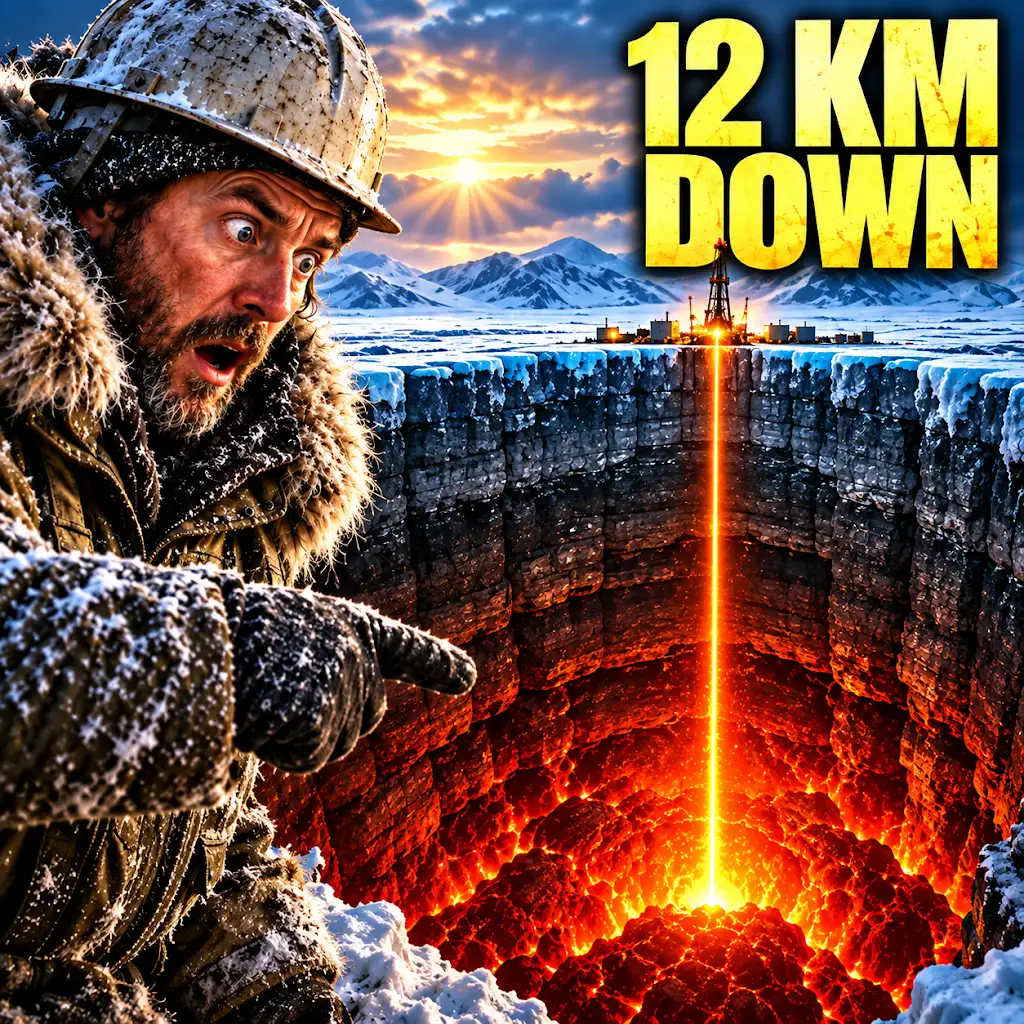
They Drilled 12 KM Into Earth — Then Everything Changed
FAQs
What did Kola reveal about seismic models?
Kola revealed that seismic models can be inaccurate and may not always accurately predict seismic activity.
How did Kola’s findings impact the field of seismology?
Kola’s findings highlighted the limitations of current seismic models and emphasized the need for further research and improvements in predicting seismic events.
What specific challenges did Kola encounter in studying seismic models?
Kola faced challenges such as data limitations, complex geological structures, and uncertainties in predicting seismic events accurately.
What are the implications of Kola’s research for earthquake preparedness?
Kola’s research underscores the importance of continuously improving seismic models to enhance earthquake preparedness and response strategies.
What recommendations did Kola make based on their findings?
Kola recommended investing in advanced technologies, increasing data collection efforts, and collaborating with experts in various fields to enhance the accuracy of seismic models.