
The ambitious undertaking of deep drilling, a venture aimed at probing the Earth’s innermost secrets, was abruptly halted, leaving a trail of unanswered questions and a palpable sense of scientific frustration. While the ultimate motivations behind such a project are often rooted in the pursuit of knowledge, the decision to cease operations brought to the forefront a complex web of scientific risks that had been, perhaps, underestimated or inadequately addressed. This article will delve into the multifaceted scientific hazards associated with aborted deep drilling projects, exploring the potential consequences for both the immediate scientific endeavor and the broader understanding of our planet.
The very act of drilling into the Earth’s crust, particularly at extreme depths, introduces perturbations to geological systems that are inherently difficult to predict. When drilling is aborted, these perturbations can manifest in a variety of ways, creating unforeseen geological instabilities that pose significant risks.
Induced Seismicity and Fluid Migration
Deep drilling often encounters zones of high pressure and temperature, with the potential presence of subsurface fluids. The introduction of a borehole, even if abandoned, can act as a conduit, altering the natural flow of these fluids.
Destabilization of Existing Faults
Subsurface fluid migration, driven by pressure gradients or the removal of drilling fluids, can lubricate pre-existing faults, significantly reducing the frictional resistance that keeps them locked. This lubrication can lead to an increased likelihood of seismic events, ranging from minor tremors to potentially damaging earthquakes. The precise location and magnitude of such induced seismicity are notoriously difficult to forecast, making abandoned boreholes potential sources of unexpected seismic activity.
Uncontrolled Groundwater Contamination
The deep subsurface often harbors ancient aquifers, isolated from surface contamination for millennia. The drilling process, by breaching these protective layers, creates pathways for surface pollutants to infiltrate. If a borehole is improperly sealed or abandoned, these pathways remain open, leading to the gradual but persistent contamination of vital groundwater resources. This contamination can be particularly insidious, as it may not be detected for years, by which time remediation becomes exponentially more challenging and costly.
Rock Mechanical Changes and Subsidence
The immense pressures within the Earth’s mantle and crust can be significantly altered by the creation of a borehole. The removal of rock material and the introduction of drilling fluids, followed by their eventual withdrawal or leakage, can lead to changes in the rock’s mechanical integrity.
Stress Redistribution and Microfracturing
As a borehole is drilled, the surrounding rock mass experiences a redistribution of stress. When drilling is abandoned, this stress field may not return to its original equilibrium. The remaining stress concentrations can lead to microfracturing of the rock, weakening its structure. These microfractures can propagate over time, potentially leading to localized subsidence or even rockfalls within the borehole itself, further complicating any future intervention or sealing efforts.
Alteration of Permeability and Porosity
The drilling process, with its high-pressure fluid circulation and mechanical disturbance, can alter the natural permeability and porosity of the surrounding rock formations. If left unaddressed, these alterations can create preferential flow paths for fluids or gases, potentially leading to unforeseen environmental consequences or complicating the scientific interpretation of any residual geological data.
Scientists halted their ambitious project to drill the deepest hole in the Earth due to a combination of technical challenges, high costs, and the unexpected geological conditions they encountered. The project, known as the Kola Superdeep Borehole, aimed to reach the Earth’s crust to gain insights into its composition and the processes occurring beneath the surface. However, as the drilling progressed, temperatures exceeded expectations, making it increasingly difficult to continue. For those interested in exploring innovative scientific endeavors, a related article discusses the potential of ancient solar furnace technology and its implications for modern energy solutions. You can read more about it here: Harnessing Ancient Solar Furnace Tech.
The Challenge of Wellbore Integrity and Abandonment
The success of any deep drilling project hinges on the meticulous sealing and abandonment of the wellbore once operations cease. When drilling is aborted, this critical phase often becomes a significant scientific risk due to the inherent complexities of ensuring long-term wellbore integrity.
Inadequate Sealing and Long-Term Containment Failure
The primary goal of wellbore abandonment is to prevent the uncontrolled migration of fluids and gases between different geological strata and to the surface. An aborted drilling operation often means that the full suite of abandonment procedures, designed for the specific geological conditions encountered, may not have been completed.
Compromised Cementing Operations
Cementing is a crucial step in wellbore abandonment, creating a seal that isolates different formations. In an aborted operation, the cementing process might be incomplete, inadequately mixed, or subject to premature setting due to unforeseen geological conditions. This can result in gaps, fractures, or weak points in the cement sheath, compromising its long-term sealing capability.
Mechanical Degradation of Casing and Liners
Steel casing and liners are used to support the wellbore and prevent its collapse. During drilling, these materials can be subjected to corrosive fluids, high temperatures, and mechanical stress. If drilling is aborted prematurely, the casing might not have been adequately protected or inspected for integrity issues. Over time, corrosion or stress-induced failures in the casing can create pathways for leakage, even if the cement sheath appears intact.
Contamination of Scientific Targets
Deep drilling projects often aim to study specific geological formations, such as hydrocarbon reservoirs, geothermal systems, or ancient rock sequences. An improperly abandoned borehole can inadvertently contaminate these valuable scientific targets.
Cross-Contamination Between Strata
When different geological formations are breached by a single borehole, uncontrolled fluid migration can lead to the cross-contamination of distinct geological environments. For instance, fluids from a shallow, potentially contaminated aquifer could migrate downwards into pristine deep-sea formations, rendering them unsuitable for scientific study or altering their original chemical composition.
Introduction of Drilling Fluids and Additives
Drilling fluids, often containing a complex mixture of chemicals, are essential for the drilling process. If not completely removed or neutralized, these fluids and their additives can persist within the borehole and migrate into surrounding formations, introducing anthropogenic contaminants that obscure natural geological signals and compromise the integrity of scientific samples.
The Loss of Irreplaceable Scientific Data and Samples

Perhaps the most immediate and profound scientific risk associated with aborted deep drilling is the irretrievable loss of invaluable data and geological samples. These projects represent immense investments of time, resources, and intellectual capital, and their premature termination can nullify years of effort.
Disrupted Stratigraphic and Geochemical Analysis
Deep drilling provides a unique opportunity to obtain continuous core samples from the Earth’s subsurface. These cores are the primary source of information for understanding stratigraphic sequences, depositional environments, and the geochemical history of our planet.
Incomplete or Contaminated Core Recovery
When drilling is aborted, the process of core recovery may be incomplete or compromised. Cores might be fractured, lost in the borehole, or contaminated by drilling fluids. This can lead to gaps in the stratigraphic record and render the remaining samples unreliable for detailed geochemical analysis, impacting our understanding of geological processes over vast timescales.
Disruption of Paleontological and Paleoclimatic Records
Deeper drilling can access ancient sedimentary layers that contain fossilized evidence of past life and climate. An aborted drilling operation can mean that these critical paleontological and paleoclimatic records are left undisturbed but inaccessible, or worse, damaged and unusable for future scientific investigation. The potential to reconstruct past ecosystems and climate change is thus lost.
Missed Opportunities for Geophysical and Geotechnical Understanding
Beyond the direct analysis of rock samples, deep drilling allows for in-situ measurements of various geophysical parameters. The premature cessation of drilling can halt these crucial data-gathering efforts.
Interrupted Downhole Logging and Measurement Campaigns
Geophysical logging tools are lowered into boreholes to measure properties like electrical resistivity, seismic velocity, and natural radioactivity. These measurements provide essential information for subsurface characterization. An aborted drilling operation can mean that these logging campaigns are incomplete or never even commenced, leaving significant gaps in our geophysical understanding of the subsurface.
Failure to Characterize Reservoir Properties
For projects focused on energy resources or groundwater management, deep drilling is essential for characterizing reservoir properties such as porosity, permeability, and fluid saturation. An aborted operation prevents the full characterization of these vital parameters, hindering the development of accurate predictive models and sustainable resource management strategies.
The Ethical and Environmental Considerations of Abandoned Boreholes
Beyond the purely scientific risks, aborted deep drilling projects also raise significant ethical and environmental considerations, particularly concerning the long-term legacy of improperly managed boreholes.
The “Poisoned Chalice” of Future Scientific Exploration
An abandoned borehole, especially one that has not been adequately sealed, can become a persistent environmental hazard. This presents a complex ethical dilemma for future scientific endeavors.
The Burden of Remediation on Future Generations
If an abandoned borehole poses a risk of contamination or instability, it falls upon future generations, and potentially future scientific projects, to bear the burden and cost of remediation. This can divert resources from other important scientific pursuits and create a negative legacy of past ambitious projects.
The Precedent of Unfinished Business
The existence of numerous abandoned boreholes, particularly those with known or suspected integrity issues, can create a precedent for incomplete scientific undertakings. This can lead to a general distrust of large-scale scientific projects and a reluctance to invest in future ventures of similar magnitude.
Potential for Unforeseen Environmental Impacts
While the immediate risks are often focused on geological stability and contamination, the long-term environmental impacts of abandoned boreholes can be subtle yet significant.
Alteration of Subsurface Ecosystems
Deep subsurface environments often harbor unique and poorly understood microbial ecosystems. The uncontrolled migration of fluids and chemicals through an abandoned borehole can disrupt these delicate ecosystems, leading to unforeseen ecological consequences.
Release of Geothermal or Other Hazardous Fluids
In some cases, deep drilling may encounter zones with high geothermal gradients or the presence of naturally occurring hazardous substances. An improperly abandoned borehole can create pathways for the uncontrolled release of these fluids or substances into the environment, posing risks to human health and ecosystems.
Scientists halted their ambitious project to drill the deepest hole in the Earth due to a combination of technical challenges and the unexpected geological conditions they encountered. The project, known as the Kola Superdeep Borehole, aimed to reach depths that would provide valuable insights into the Earth’s crust, but as they progressed, they faced extreme temperatures and pressures that made further drilling impractical. For those interested in exploring other intriguing scientific endeavors, a fascinating article discusses ancient technologies, such as the Baghdad Battery, which offers a glimpse into humanity’s quest for energy and innovation. You can read more about it in this related article.
The Financial and Reputational Ramifications for Scientific Institutions
| Reason | Description | Impact on Drilling |
|---|---|---|
| Extreme Temperatures | Temperatures at the deepest parts of the Kola Superdeep Borehole reached up to 180°C, much higher than expected. | Caused equipment failure and made drilling difficult to continue. |
| High Pressure | Increasing pressure at great depths made it challenging to maintain borehole stability. | Led to borehole collapse and operational hazards. |
| Technical Limitations | Existing drilling technology was not advanced enough to handle the extreme conditions at such depths. | Limited the ability to drill deeper safely and efficiently. |
| Cost Constraints | Drilling deeper required significantly more resources and funding. | Budget limitations led to project termination. |
| Scientific Priorities | After reaching 12,262 meters, the scientific goals were largely met. | Reduced motivation to continue drilling further. |
The decision to abort a deep drilling project, beyond the scientific risks, carries significant financial and reputational consequences for the institutions involved, often impacting future scientific endeavors.
The Opportunity Cost of Unfulfilled Research
Deep drilling projects are inherently expensive, requiring substantial investment in specialized equipment, personnel, and infrastructure. When such a project is aborted, the financial resources allocated are effectively lost, representing a significant opportunity cost.
Diversion of Funding from Other Critical Research Areas
The substantial sums of money tied up in an aborted deep drilling project could have been allocated to numerous other scientific research areas, potentially yielding significant breakthroughs in fields such as climate science, medicine, or material science. This diversion of funding can have a ripple effect across the scientific landscape.
The Difficulty of Securing Future Funding
Institutions that have experienced costly and unsuccessful deep drilling projects may face increased scrutiny from funding agencies and investors. Demonstrating the viability and potential return on investment for future, similarly ambitious projects can become significantly more challenging, potentially hindering the progress of scientific exploration.
The Impact on Institutional Reputation and Scientific Credibility
The successful execution of complex scientific projects is crucial for maintaining the reputation and credibility of research institutions. Aborted endeavors, particularly if perceived as poorly managed or executed, can have detrimental effects.
Erosion of Public Trust and Support
When large-scale scientific projects are abandoned, it can lead to public skepticism regarding the effectiveness and efficiency of scientific research. This erosion of trust can make it more difficult to garner public support and enthusiasm for future scientific initiatives.
Strained Relationships with Industry Partners and Governments
Deep drilling projects often involve collaborations with industry partners and government agencies. An aborted project can strain these relationships, potentially impacting future collaborative opportunities and the willingness of these entities to invest in scientific ventures. The perception of failure can lead to a reluctance to engage in future partnerships, thus limiting the scope and ambition of scientific exploration.
In conclusion, the aborted deep drilling project serves as a stark reminder of the inherent scientific risks associated with pushing the boundaries of our knowledge. From the destabilization of geological formations and the challenges of wellbore integrity to the irretrievable loss of scientific data and the ethical implications of abandoned boreholes, the consequences are far-reaching. Understanding and proactively mitigating these risks are paramount for ensuring that future endeavors in deep drilling and other frontier scientific pursuits can proceed with greater certainty and ultimately contribute to a more profound and sustainable understanding of our planet.
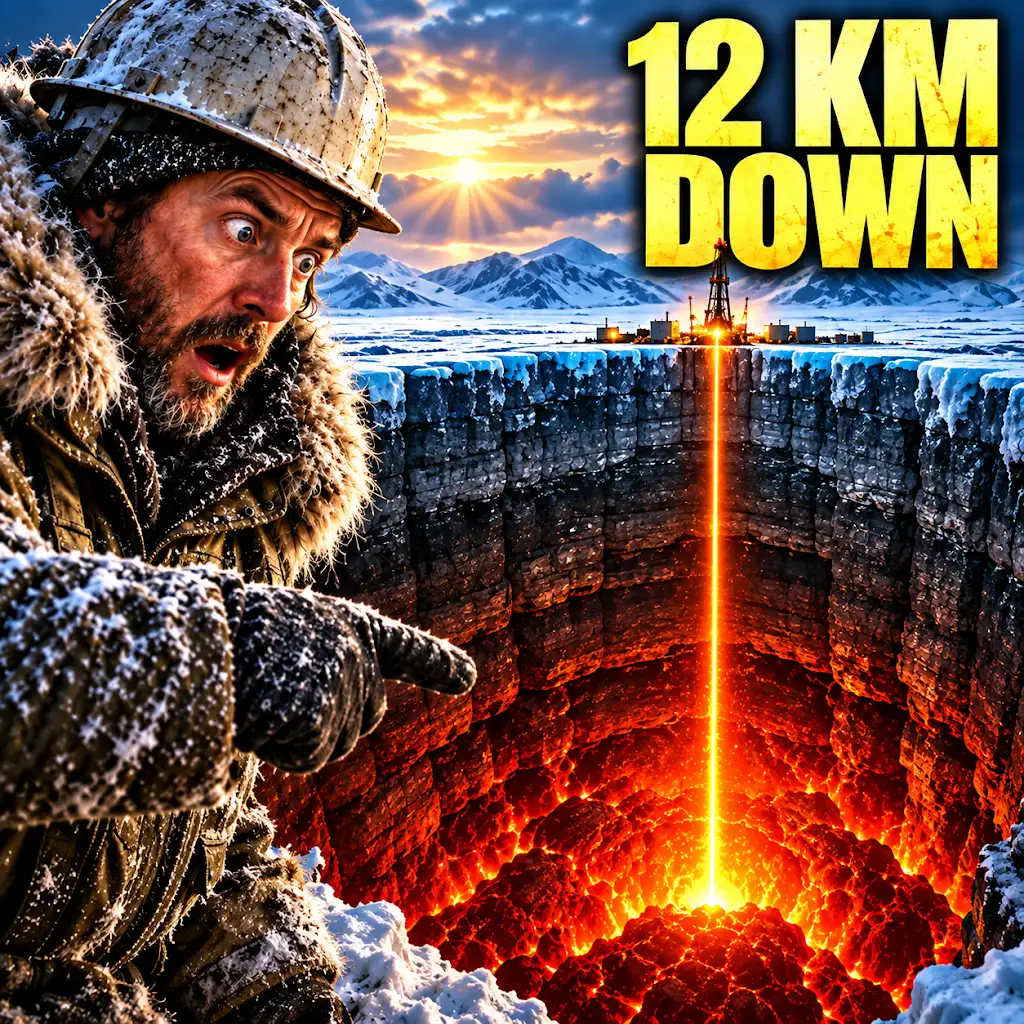
They Drilled 12 KM Into Earth — Then Everything Changed
FAQs
1. Why did scientists stop drilling the deepest hole?
Scientists stopped drilling the deepest hole, known as the Kola Superdeep Borehole, due to technical challenges and limitations. The extreme heat and pressure at such depths made it difficult to continue drilling further.
2. How deep was the Kola Superdeep Borehole?
The Kola Superdeep Borehole reached a depth of approximately 7.5 miles (12 kilometers) into the Earth’s crust, making it the deepest hole ever drilled by humans.
3. What were scientists hoping to achieve by drilling the deepest hole?
Scientists were hoping to study the Earth’s crust and mantle, as well as gain a better understanding of the planet’s geology and structure. They also aimed to explore the possibility of extracting geothermal energy from deep within the Earth.
4. What were some of the challenges faced during the drilling process?
Some of the challenges faced during the drilling process included extreme temperatures reaching up to 356 degrees Fahrenheit (180 degrees Celsius), high pressures, and difficulties in maintaining the structural integrity of the borehole at such depths.
5. Are there any plans to resume drilling the deepest hole in the future?
As of now, there are no immediate plans to resume drilling the deepest hole. However, advancements in technology and scientific research may lead to future attempts to drill even deeper into the Earth’s crust.