
The sun beats down on the fertile crescent, a land cradled between two mighty rivers, the Tigris and Euphrates. Here, millennia ago, human civilization took root, blossoming into complex societies, astonishing innovations, and rich mythologies. This is ancient Mesopotamia, a region that continues to fascinate and inspire. Its legacy is a tapestry woven from archaeological discoveries, deciphered cuneiform tablets, and enduring scholarly debate. Yet, alongside these established historical narratives, a parallel, more speculative, interpretation of Mesopotamian history has gained traction in popular culture – the Anunnaki theory. This article will delve into the established facts of ancient Mesopotamian civilization and contrast them with the tenets of the Anunnaki hypothesis, exploring the evidence, methodologies, and the fundamental differences in their approaches to understanding this pivotal period of human history.
Unearthing the Cradle of Civilization: Archaeological Foundations
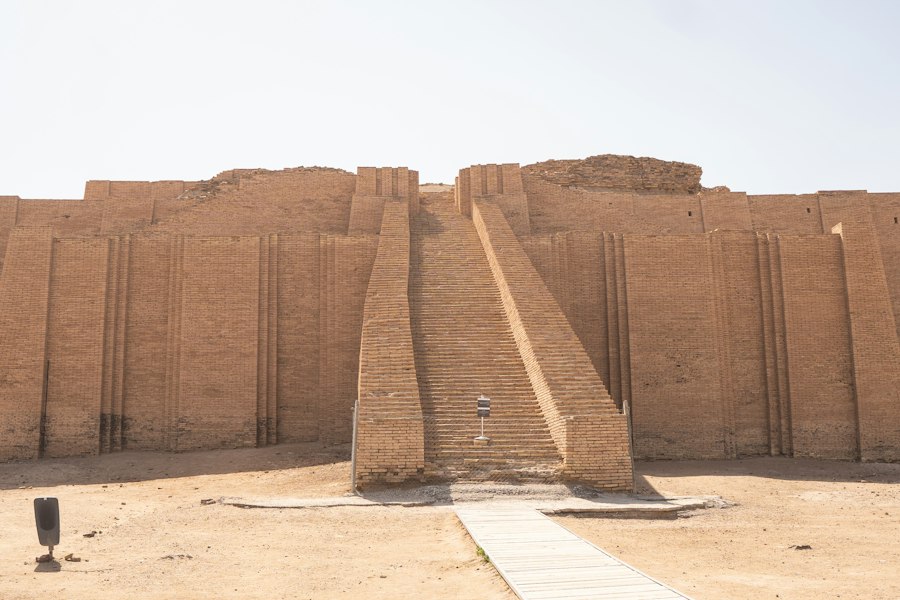
The understanding of ancient Mesopotamia is built upon the painstaking work of archaeologists and historians. For centuries, explorers and excavators have unearthed the physical remnants of Sumerian, Akkadian, Babylonian, and Assyrian cultures, providing tangible evidence of their existence, achievements, and daily lives. These discoveries range from grand ziggurats and intricately carved cylinder seals to humble pottery shards and administrative tablets. The sheer volume and detail of these findings allow scholars to reconstruct aspects of Mesopotamian society with a remarkable degree of certainty.
The Genesis of Urbanism and Statehood
The Mesopotamian landscape, particularly the southern region known as Sumer, witnessed some of the earliest developments of urban centers. Cities like Uruk, Ur, and Eridu emerged as hubs of population, trade, and governance. The transition from small agricultural settlements to complex urban environments was a gradual but transformative process. This urban revolution necessitated the development of new social structures, administrative systems, and infrastructure. The establishment of organized religion, with priesthoods overseeing monumental temples, played a significant role in city life and the consolidation of power. The rise of kingship, with rulers wielding both religious and secular authority, marked the emergence of state-level societies. Archaeological evidence, including city planning, defensive walls, and monumental architecture, clearly delineates this trajectory.
The Revolution of Writing and Record-Keeping
Perhaps one of Mesopotamia’s most profound contributions to human civilization is the invention of writing. The Sumerians developed cuneiform, a system of wedge-shaped marks impressed onto clay tablets. Initially used for accounting and administrative purposes, cuneiform evolved to record literature, law, history, and religious texts. The decipherment of cuneiform in the 19th century was a monumental achievement, unlocking a vast archive of Mesopotamian thought and experience. Thousands upon thousands of tablets have been recovered, offering direct insights into economic transactions, legal codes, royal decrees, mythological narratives, and even personal letters. This written record is the bedrock of our factual understanding of ancient Mesopotamia.
Technological Prowess and Societal Advancement
Ancient Mesopotamians were not merely builders and record-keepers; they were also innovators. Their technological advancements laid the groundwork for many future developments. They mastered irrigation techniques to harness the power of the Tigris and Euphrates, enabling large-scale agriculture and supporting dense populations. They developed the wheel, the plow, and sophisticated bronze metallurgy. Astronomy and mathematics were also areas of significant progress. The Mesopotamians developed a sexagesimal (base-60) number system, which influenced later calendrical systems and timekeeping. Their understanding of celestial movements led to early forms of astronomical observation and prediction. The archaeological record is replete with evidence of these practical and intellectual achievements.
Ancient Mesopotamia is often regarded as the cradle of civilization, rich with fascinating facts about its early societies, innovations, and contributions to human history. In contrast, the Anunnaki theory posits that extraterrestrial beings from ancient Sumerian mythology played a significant role in the development of human civilization. For those interested in exploring more about ancient mysteries and their implications, a related article can be found at this link, which delves into the enigmatic past of Antarctica and its connections to ancient civilizations.
The Anunnaki Hypothesis: A Paradigm Shift in Interpretation
In stark contrast to the scholarly consensus built upon archaeological and textual evidence, the Anunnaki theory proposes a radical reinterpretation of Mesopotamian history, suggesting that extraterrestrial beings, the Anunnaki, were the primary architects of human civilization. This theory, popularized by authors like Zecharia Sitchin, posits that ancient texts, particularly those from Sumer, are not merely mythical or allegorical accounts but literal historical records of encounters with advanced alien visitors.
The Anunnaki: Divine Overseers or Extraterrestrial Engineers?
At the core of the Anunnaki theory lies the belief that the Anunnaki were a race of technologically advanced beings from another planet, likely Nibiru, a hypothetical planet in our solar system. According to Sitchin’s interpretation, the Anunnaki came to Earth in search of gold, which they needed to repair their own planet’s atmosphere. To facilitate this mining operation, they genetically engineered early humans, the “Adamu,” from existing hominid species. This creation myth, distinct from the established scholarly understanding of Mesopotamian creation stories, places the Anunnaki as active participants in human evolution and societal development. Their role, as described in this theory, extends beyond mere observation to direct intervention and manipulation.
Reinterpreting Sacred Texts: A Literalistic Approach
Proponents of the Anunnaki theory claim that ancient Mesopotamian texts, particularly the Epic of Gilgamesh and various creation myths, provide “evidence” of the Anunnaki’s presence and influence. They interpret the gods and deities described in these texts not as supernatural beings but as extraterrestrial individuals or groups with advanced technology. The descriptions of flying chariots, powerful weapons, and long lifespans attributed to the gods are seen as literal descriptions of alien spacecraft, advanced weaponry, and the biological characteristics of the Anunnaki. This approach requires a highly literalistic reading of texts that scholars have traditionally understood within their cultural and mythological contexts.
The Missing Link: Gold Mining and Genetic Engineering
A central tenet of the Anunnaki hypothesis is the theory of extraterrestrial gold mining. Sitchin argued that the Mesopotamians were compelled to mine vast quantities of gold for the Anunnaki, a claim he derived from an interpretation of ancient texts describing large-scale gold extraction and offerings to the gods. Furthermore, the theory posits that the Anunnaki genetically engineered humans to serve as laborers for these mining operations. This explanation attempts to address the rapid advancement of early human civilization by attributing it to external intervention rather than indigenous innovation and gradual societal development.
Critical Examination of the Anunnaki Theory: Methodological Divergences

The Anunnaki theory stands in stark opposition to the established methodologies of archaeology, linguistics, and textual analysis that underpin our understanding of ancient Mesopotamia. While both approaches seek to explain the past, their foundational principles and interpretive frameworks are fundamentally different.
The Limitations of Literalism and Selective Interpretation
The Anunnaki theory’s primary methodological weakness lies in its insistence on a literalistic interpretation of ancient texts. Scholars of ancient languages and cultures recognize that myths, legends, and religious texts are often rich in metaphor, allegory, and symbolic meaning. They reflect the worldview, beliefs, and aspirations of the people who created them, rather than being objective historical accounts. The Anunnaki theory, conversely, often cherry-picks passages that can be twisted to fit its narrative, while ignoring contradictory evidence or more plausible interpretations. For instance, descriptions of divine power or celestial journeys are taken at face value as technological capabilities, disregarding the rich symbolic language prevalent in ancient Mesopotamian literature.
The Unsubstantiated Claims of Nibiru and Extraterrestrial Presence
A cornerstone of the Anunnaki theory is the existence of Nibiru, a planet allegedly inhabited by the Anunnaki. However, Nibiru has never been detected by astronomical observation, and its existence remains purely speculative. Furthermore, the theory lacks any direct archaeological or genetic evidence to support the claim of extraterrestrial intervention in human evolution or the presence of alien artifacts. While proponents point to certain ancient artifacts as potential evidence, these are invariably reinterpreted through the lens of the Anunnaki hypothesis, often overlooking simpler, terrestrial explanations. The absence of undeniable proof, such as alien technology or unequivocally non-human remains, significantly weakens the Anunnaki theory.
The Dismissal of Indigenous Innovation and Human Agency
Perhaps the most significant divergence is the Anunnaki theory’s dismissal of the ingenuity and agency of ancient Mesopotamians. It attributes their remarkable achievements in agriculture, architecture, writing, and governance to external manipulation rather than recognizing the inherent capacity for innovation and societal development within human populations. The theory inadvertently diminishes the intellectual and creative contributions of these early civilizations, portraying them as passive recipients of alien technology and direction. This overlooks the complex social, economic, and environmental factors that drove Mesopotamian progress, as well as the long, arduous process of discovery and refinement that characterizes human technological and societal evolution.
Scholarly Consensus vs. Alternative Narratives: A Clash of Evidence
The overwhelming consensus within the academic community, comprised of archaeologists, historians, linguists, and Assyriologists, supports the factual reconstruction of ancient Mesopotamian civilization based on rigorous scientific methods and meticulous analysis of physical and textual evidence. This consensus is not a monolithic dogma but rather a continually evolving understanding built upon decades of collaborative research and peer review.
The Rigor of Archaeological Methodology
Archaeological research in Mesopotamia adheres to established scientific principles. Excavations are conducted systematically, with meticulous recording of stratigraphy, artifact context, and environmental data. Radiocarbon dating, stratigraphic analysis, and comparative studies of pottery and tools help establish chronologies and understand cultural development. Artifacts are analyzed using scientific techniques, and their provenance and function are determined through careful study. This evidence-based approach allows for the reconstruction of daily life, economic systems, political structures, and religious practices, painting a detailed and nuanced picture of ancient societies.
The Power of Linguistic Decipherment and Textual Analysis
The decipherment of cuneiform script was a landmark achievement that opened a direct window into the Mesopotamian mind. Scholars have painstakingly translated millions of cuneiform texts, allowing for an in-depth understanding of their languages, literature, laws, history, and religious beliefs. Textual analysis involves critically examining these documents within their historical and cultural contexts, understanding their genre, intended audience, and potential biases. This sophisticated process allows for the reconstruction of complex Mesopotamian mythologies, which are understood as reflections of their worldview and attempts to explain the natural and supernatural realms, not as literal accounts of extraterrestrial visitation.
The Evidence for Human Ingenuity and Cultural Evolution
The cumulative weight of evidence from archaeology and textual analysis overwhelmingly points to the indigenous development of Mesopotamian civilization. The gradual evolution of tools, agricultural techniques, urban planning, and writing systems demonstrates a clear progression driven by human ingenuity and societal needs. The rich tapestry of Mesopotamian mythology, while filled with divine beings and supernatural events, is understood as a product of human imagination, cultural transmission, and attempts to grapple with the mysteries of existence. The theories of extraterrestrial intervention, while captivating to some, lack the substantiating evidence and rigorous methodology required for academic acceptance.
The fascinating world of ancient Mesopotamia has long captivated historians and enthusiasts alike, particularly when exploring the intriguing Anunnaki theory, which suggests that these deities played a significant role in human civilization’s development. For those interested in a broader context of ancient cultures and their contributions to our understanding of the world, an insightful article on Ottoman cartography can be found here. This piece delves into how mapping practices in the Ottoman Empire reflect the knowledge and influences of earlier civilizations, including those from Mesopotamia, enriching our comprehension of historical connections.
Conclusion: Embracing the Known and Acknowledging the Unknown
| Aspect | Ancient Mesopotamia Facts | Anunnaki Theory |
|---|---|---|
| Time Period | Circa 3500 BCE to 539 BCE | Claims of extraterrestrial visitors in ancient times, often linked to Sumerian texts |
| Geographical Location | Region between the Tigris and Euphrates rivers (modern-day Iraq) | Same region, with emphasis on ancient Sumer as the landing site |
| Primary Sources | Cuneiform tablets, archaeological artifacts, historical records | Interpretations of Sumerian texts, especially the Enuma Elish and other myths |
| Deities | Polytheistic gods such as Anu, Enlil, Inanna, and Enki | Anunnaki described as ancient astronauts or alien beings who influenced humanity |
| Purpose of Anunnaki | Mythological gods responsible for creation, natural forces, and governance | Creators or genetic engineers of humans, often linked to mining gold or controlling humanity |
| Evidence | Archaeological findings, historical documentation, linguistic studies | Speculative interpretations, no direct archaeological proof of extraterrestrial involvement |
| Scholarly Consensus | Widely accepted historical and archaeological understanding of Mesopotamian civilization | Considered pseudoscience or fringe theory by mainstream academia |
| Cultural Impact | Foundation of writing, law codes, urban civilization, and early science | Popular in alternative history, conspiracy theories, and some science fiction |
Ancient Mesopotamia stands as a testament to the extraordinary capacity of human beings to innovate, organize, and create. The archaeological sites, the clay tablets inscribed with cuneiform, and the enduring scholarly research paint a vivid and compelling picture of this foundational civilization. The factual understanding of Mesopotamian history is a robust edifice built on centuries of dedicated scientific inquiry and critical analysis.
The Anunnaki theory, while offering a compelling narrative of extraterrestrial intervention, operates outside the established framework of academic research. It relies on speculative interpretations, a literalistic reading of ancient texts, and the unsubstantiated assertion of alien presence. While the allure of cosmic visitors and ancient astronaut theories is understandable, it is crucial to distinguish between speculative hypotheses and evidence-based historical reconstruction.
The ongoing exploration of ancient Mesopotamia continues to reveal new insights and deepen our appreciation for the achievements of its people. By embracing the factual record, grounded in rigorous methodology, we can continue to learn from the past and celebrate the remarkable story of how human civilization first took flight in the fertile lands between the Tigris and Euphrates. The Anunnaki theory, while a popular discourse, remains a fascinating, albeit unproven, narrative in contrast to the well-documented realities of one of humanity’s most significant early societies.

The Anunnaki Origin Story Changes When You Read the Tablets
FAQs
What is ancient Mesopotamia?
Ancient Mesopotamia was a region located in the Middle East, known as the “cradle of civilization.” It was home to some of the earliest known human societies and advanced civilizations, including the Sumerians, Akkadians, Babylonians, and Assyrians.
What are some key facts about ancient Mesopotamia?
Some key facts about ancient Mesopotamia include its invention of writing (cuneiform), development of the wheel, creation of the first known legal code (the Code of Hammurabi), and construction of impressive ziggurats and irrigation systems.
What is the Anunnaki theory?
The Anunnaki theory is a controversial idea proposed by some alternative historians and conspiracy theorists that suggests ancient Mesopotamian myths and texts refer to an extraterrestrial race called the Anunnaki who visited Earth and influenced human civilization.
What evidence supports ancient Mesopotamia facts?
Evidence supporting ancient Mesopotamia facts includes archaeological discoveries such as artifacts, inscriptions, and ruins of ancient cities like Ur, Uruk, and Babylon. Additionally, historical texts like the Epic of Gilgamesh provide insights into Mesopotamian culture and beliefs.
How does the Anunnaki theory differ from ancient Mesopotamia facts?
The Anunnaki theory differs from ancient Mesopotamia facts in that it introduces a speculative and unproven element of extraterrestrial influence on human history. While ancient Mesopotamian texts do contain references to deities like the Anunnaki, mainstream scholars interpret them as mythological rather than literal accounts of alien visitors.