
The enduring fascination with the Anunnaki, a pantheon of Sumerian deities, sits at a curious crossroads between ancient history and modern speculation. For centuries, their tales, etched onto clay tablets in cuneiform script, have offered glimpses into a civilization that laid the foundations of much of our modern world. Yet, within these narratives, a particular theory has blossomed, proposing that these ancient gods were not merely figments of human imagination, but rather extraterrestrial visitors who profoundly shaped human civilization. This article delves into the origins of the Anunnaki in Sumerian mythology, examines the historical and archaeological evidence, and critically analyzes the popular “ancient astronaut” hypothesis that casts them as alien beings.
Echoes from Mesopotamia: The Sumerian Origins of the Anunnaki
The story of the Anunnaki begins in ancient Sumer, a land situated in the fertile crescent of Mesopotamia, roughly corresponding to modern-day Iraq. Sumerian civilization, which flourished from the 4th millennium BCE onwards, is widely recognized as one of the earliest complex societies, pioneering advancements in writing, agriculture, law, and urban planning. It is within this rich cultural tapestry that the Anunnaki first emerge in their original context as the supreme deities of the Sumerian pantheon.
The Heavenly Host: Defining the Anunnaki
The term “Anunnaki” itself is derived from Sumerian, meaning “those of royal blood” or “offspring of Anu.” Anu, in Sumerian cosmology, was the primordial sky god, the father of many of the other deities. The Anunnaki, therefore, represented the collective body of gods who resided in the heavens and were responsible for governing the cosmos and its inhabitants. Their lineage traced back to Anu and his consort Ki, the earth goddess, though their specific roles and relationships evolved over time within Sumerian and later Mesopotamian mythologies.
The Anunnaki were not a monolithic group; they comprised a hierarchy of gods, each with their own domains and responsibilities. Prominent among them were Enlil, the god of air, wind, and storms, who held immense power and was often seen as the chief deity in earthly affairs; Enki (later Ea in Akkadian), the god of wisdom, magic, and freshwater, whose cleverness and interventions were crucial in many myths; Utu (Shamash in Akkadian), the sun god and god of justice; Inanna (Ishtar in Akkadian), the goddess of love, beauty, war, and fertility; and Nergal, the god of the underworld. These, and many others, formed the divine council that governed the universe according to Sumerian beliefs.
Divine Narratives: Myths and Cosmology
The surviving Sumerian texts, primarily recovered from archaeological excavations and housed in museums worldwide, provide the primary source of information about the Anunnaki. These texts, often inscribed on clay tablets using the cuneiform script, include creation myths, epics, hymns, and wisdom literature. They describe the Anunnaki’s involvement in the creation of the world, their interactions with humans, and their celestial dramas.
One of the most significant creation narratives, such as the Enuma Elish (though this is an Akkadian text, it builds upon earlier Sumerian traditions), depicts the primordial struggle between chaotic forces and the emergence of order, with the Anunnaki playing a pivotal role. The myths often portray the gods as having human-like emotions and motivations, engaging in feuds, love affairs, and political maneuvering. This anthropomorphic depiction made them relatable to the human populations who worshipped them, seeking their favor and attempting to understand their often inscrutable will.
The Sumerians believed that the gods created humans to serve them, to perform the labor that the gods found arduous. This servitude often involved the construction of temples, the cultivation of land, and the offering of sacrifices. The relationship, while hierarchical, was not necessarily one of pure oppression; the gods were also seen as benevolent protectors who provided sustenance and guided humanity. The Anunnaki, in their original context, were integral to the Sumerian worldview, shaping their understanding of existence, morality, and the natural world.
The Anunnaki theory, which suggests that ancient extraterrestrial beings influenced human civilization, has captivated the imaginations of many. However, understanding the real history behind this theory requires a closer examination of ancient Mesopotamian texts and archaeological findings. For those interested in exploring the evolution of labor and its impact on society, a related article can be found at The Evolution of the American Factory Worker, which delves into how historical labor movements have shaped modern work environments, providing a broader context for understanding human development throughout history.
The Shift in Interpretation: Zecharia Sitchin and the “Naked Truth”
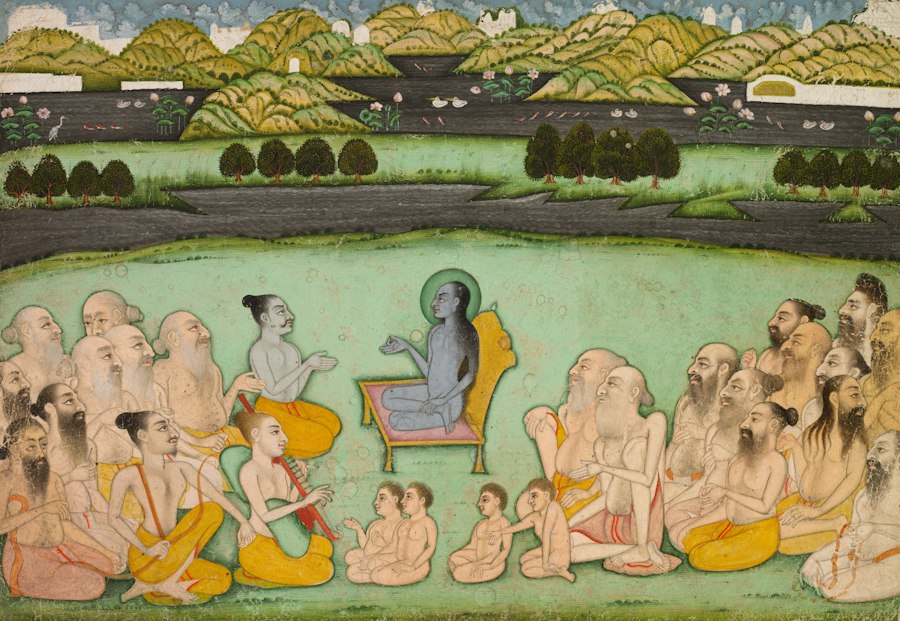
The transition from the academic understanding of the Anunnaki as mythological figures to their reinterpretation as extraterrestrial beings is largely attributed to the work of Zecharia Sitchin. Beginning in the late 1970s, Sitchin, a Russian-American author, proposed a radical and controversial theory that has since captivated a significant following. His core premise was that the Sumerian texts, when interpreted through his unique lens, revealed the presence of advanced alien beings from a planet called Nibiru.
The Nibiru Hypothesis: A New Cosmic Order
Sitchin’s groundbreaking work, notably his book The 12th Planet, presented his interpretation of Sumerian mythology as a literal historical account of an alien race known as the Anunnaki. He posited that these beings originated from a hypothetical planet within our solar system, Nibiru, which has a highly elliptical orbit and appears in our vicinity approximately every 3,600 years. According to Sitchin, the Anunnaki traveled to Earth in ancient times seeking gold, a precious resource vital for their planet’s survival due to atmospheric depletion.
His theory suggested that the Anunnaki, possessing advanced technology far beyond that of early humans, genetically engineered Homo sapiens by combining their own DNA with that of early hominids. This process, Sitchin argued, was undertaken to create a labor force capable of mining the vast quantities of gold required by the Anunnaki. He identified specific Sumerian texts and artifacts, which he believed provided irrefutable evidence of this alien intervention and their advanced technological capabilities. These interpretations often involved re-translating or re-contextualizing Akkadian and Sumerian texts, focusing on specific passages that he believed alluded to space travel, advanced machinery, and genetic manipulation.
Re-interpreting Ancient Texts: A Linguistic and Cultural Challenge
Sitchin’s approach to ancient texts was highly unconventional and has been widely criticized by mainstream scholars in Assyriology, archaeology, and linguistics. Critics point out that Sitchin’s translations are often selective, taken out of context, and rely on highly speculative interpretations of Sumerian and Akkadian words and phrases. They argue that he imposed his preconceived notions onto the texts, rather than allowing the ancient context and linguistic evidence to guide his understanding.
For instance, Sitchin’s interpretation of certain Sumerian terms for “gods” as referring to “those who came from the sky” or “those who descended” is not supported by the consensus of scholarly translations, which generally understand these terms within the framework of Mesopotamian religious beliefs. Similarly, his identification of “ships” or “aircraft” in ancient texts is often attributed to metaphorical language or symbolic representations within Sumerian art and literature. The notion of Nibiru itself is not supported by any astronomical observations or accepted scientific models of our solar system.
Despite the academic repudiation of his theories, Sitchin’s work resonated with a public already intrigued by the possibilities of ancient alien encounters. His books became bestsellers, spawning a dedicated following and influencing a significant subculture of “ancient astronaut” enthusiasts. His interpretations, though not scientifically or historically validated, have undeniably shaped the modern perception of the Anunnaki, transforming them from figures of ancient mythology into potential extraterrestrial architects of human history.
The Archaeological Record: Evidence or Absence?
The question of whether archaeological evidence supports the Anunnaki as physical beings, particularly as extraterrestrial visitors, is a crucial aspect of this debate. Proponents of the ancient astronaut theory often cite certain artifacts and structures as proof of alien intervention, while mainstream archaeology and history offer conventional explanations for these discoveries.
Monumental Architecture: Towers to the Heavens?
One of the most frequently cited examples of potential alien influence is the construction of monumental architecture in ancient civilizations. The pyramids of Egypt, Stonehenge, and various ziggurats in Mesopotamia are often presented as feats of engineering that would have been impossible for primitive humans to achieve without advanced assistance. The sheer scale, precision, and complexity of these structures, it is argued, point towards a technological understanding beyond the capabilities of the time.
The ziggurats, in particular, with their stepped pyramid forms, are often linked to the Anunnaki. These massive structures served religious and administrative purposes, acting as artificial mountains that connected the earthly realm with the heavens. Sitchin and others have suggested that their construction required technologies and knowledge that only advanced beings could have provided. The idea is that these were not just religious sites, but perhaps landing platforms or energy conduits for the Anunnaki.
However, archaeologists and historians have provided extensive evidence and explanations for the construction of these ancient marvels using human ingenuity and labor. Detailed studies of quarrying techniques, transportation methods, and construction methodologies demonstrate that these structures, while incredibly impressive, were achievable with the tools, resources, and organizational skills available in ancient times. The engineering prowess of ancient civilizations is, in itself, a testament to human capability, rather than a need for external intervention.
Enigmatic Artifacts: Symbols of Alien Presence?
Beyond monumental structures, proponents of the ancient astronaut theory point to various artifacts as evidence of alien contact. These include intricate carvings, unusual metallic objects, and depictions that are interpreted as spacecraft or advanced technology. For example, certain cylinder seals, which were used as personal signatures in Mesopotamia, have been interpreted by some as depicting Anunnaki in what appear to be spacesuits or interacting with alien craft.
Another common example is the supposed discovery of advanced metallurgical techniques or knowledge of materials not thought to be understood by ancient peoples. The “Baghdad Battery,” a set of terracotta jars containing copper cylinders and iron rods, has been suggested as an ancient electrical device, possibly used for electroplating or even medical purposes by the Anunnaki.
Mainstream interpretation, however, generally offers more grounded explanations for these artifacts. Cylinder seals are understood within the context of Sumerian religious and administrative iconography, with depictions often related to mythological scenes, divine beings, and daily life. The Baghdad Battery, while intriguing, is more widely interpreted by archaeologists as a potential component of religious rituals, perhaps used for perfuming or producing magical substances, rather than an advanced electrical generator. The possibility of electroplating, while not entirely dismissed, is also seen as a limited application, not necessarily indicative of a broader technological superiority.
The absence of any definitive, unambiguous artifact that could only be explained by extraterrestrial origin remains a significant challenge for the ancient astronaut theory. While many artifacts can be interpreted in multiple ways, the lack of a smoking gun—a piece of technology clearly alien in nature and origin—leaves the theory largely speculative.
The Scientific and Academic Consensus: A Skeptical Stance
The academic community, encompassing fields such as history, archaeology, linguistics, and astronomy, largely views the Anunnaki as figures of ancient mythology. The ancient astronaut hypothesis, particularly as popularized by Zecharia Sitchin, is generally met with skepticism and has been widely debunked by scholars.
Linguistic and Historical Disciplines: Debunking the Theories
Scholars specializing in ancient Near Eastern studies, known as Assyriologists, have consistently refuted Sitchin’s interpretations of Sumerian and Akkadian texts. They argue that his translations are flawed, his understanding of Mesopotamian cultural and religious contexts is superficial, and his conclusions are not supported by the vast body of linguistic and textual evidence. The complex grammatical structures and nuanced meanings of these ancient languages require years of dedicated study, and experts are confident in their established translations and interpretations.
The consensus among historians and archaeologists is that the advancements attributed to alien intervention can be explained by the inherent ingenuity and progressive development of human civilizations. Sumerian society, for example, was a sophisticated civilization that made significant breakthroughs in mathematics, astronomy, engineering, and social organization. The construction of their monumental buildings and the development of their complex writing system are testaments to human intellectual capacity, not necessarily the result of external guidance.
The Limits of Speculation: What Constitutes Evidence?
A fundamental aspect of scientific and academic inquiry is the reliance on empirical evidence and rigorous methodologies. The ancient astronaut theory, while often presenting intriguing possibilities, frequently relies on speculative interpretations, leaps of logic, and the interpretation of ambiguity as proof. When faced with phenomena that are not fully understood, rather than immediately attributing them to extraterrestrial intervention, the scientific approach involves seeking naturalistic explanations, even if those explanations are complex or still under investigation.
The burden of proof in asserting the existence of extraterrestrial visitors in ancient times lies with those making the claim. Without concrete, verifiable evidence that cannot be explained by conventional means, the hypothesis remains in the realm of speculation. While the idea of alien intervention is undeniably captivating, it does not meet the standards of evidence required for academic acceptance. The continued fascination with the Anunnaki as anything other than mythological deities is a testament to the allure of mystery and the human desire to explore the unknown, but it is not a reflection of historical or scientific fact.
The Anunnaki theory, which suggests that ancient extraterrestrial beings influenced human civilization, has intrigued many for years, but it is essential to explore the real historical context behind these claims. For a deeper understanding of how ancient cultures interacted with their environment, you might find it interesting to read about the impact of coastal erosion on shoreline stability in various civilizations. This article sheds light on how environmental factors shaped human development and societal structures, providing a more grounded perspective on historical narratives. You can read more about this topic in the article on coastal erosion.
The Enduring Allure: Myth, Mystery, and Modern Interpretations
| Aspect | Description | Historical Context | Source |
|---|---|---|---|
| Origin of Anunnaki | Deities in ancient Mesopotamian mythology, primarily Sumerian, Akkadian, Assyrian, and Babylonian cultures. | Dates back to at least 3rd millennium BCE in Sumerian texts. | Sumerian cuneiform tablets, such as the Enuma Elish and other mythological texts. |
| Meaning of Name | “Anunnaki” roughly translates to “those who from heaven came to earth” or “princely offspring.” | Derived from Sumerian language and mythology. | Scholarly interpretations of Sumerian language and texts. |
| Role in Mythology | Considered gods who decreed the fates of humanity and controlled natural forces. | Central figures in creation myths and epic tales like the Epic of Gilgamesh. | Ancient Mesopotamian religious texts. |
| Modern Anunnaki Theory | Popularized by Zecharia Sitchin, who claimed Anunnaki were ancient astronauts from another planet. | 20th century reinterpretation, not supported by mainstream archaeology or linguistics. | Books by Zecharia Sitchin, such as “The 12th Planet” (1976). |
| Academic Consensus | Scholars reject extraterrestrial interpretations; Anunnaki are mythological figures symbolizing divine powers. | Based on linguistic, archaeological, and historical evidence. | Peer-reviewed research in Assyriology and Near Eastern studies. |
| Impact on Popular Culture | Inspired numerous books, documentaries, and conspiracy theories about ancient aliens and human origins. | Late 20th and early 21st centuries. | Media, literature, and internet culture. |
Despite the lack of scientific or academic validation, the Anunnaki, particularly in their extraterrestrial guise, continue to hold a powerful sway over the public imagination. This enduring fascination can be attributed to a confluence of factors, ranging from the inherent mystique of ancient civilizations to the modern desire for answers to profound questions about our origins.
The Appeal of the Unknown: Human Curiosity and Existential Questions
The human race has always been driven by a profound curiosity about its origins and place in the universe. Questions about where we came from, how we became so advanced, and whether we are alone have echoed through millennia. The Anunnaki, as depicted by Sitchin and his followers, offer a compelling narrative that attempts to answer these fundamental questions. The idea that humanity was intentionally created or significantly influenced by advanced beings provides a sense of purpose and a grander cosmic story.
Moreover, the sheer mystery surrounding ancient civilizations like Sumer contributes to this allure. We have only partial records and fragmented understanding of their lives, beliefs, and achievements. This vacuum of knowledge is fertile ground for speculation, and the Anunnaki hypothesis fills that void with a dramatic and exciting explanation. The perceived advanced nature of ancient technologies and structures further fuels this fascination, prompting questions about how such feats were accomplished.
The “Ancient Astronaut” Phenomenon: Pop Culture and Online Communities
The concept of ancient astronauts has transcended academic circles and become a significant phenomenon in popular culture. Television shows, documentaries, books, and online forums are dedicated to exploring these theories. This widespread dissemination has introduced the Anunnaki, reimagined as aliens, to a global audience, fostering communities of believers and enthusiasts who actively share and discuss evidence and interpretations.
These platforms often present information in a compelling and accessible manner, appealing to a sense of wonder and rebellion against established narratives. The internet has played a particularly crucial role in the propagation of these ideas, allowing for rapid sharing and discussion, and creating echo chambers where alternative theories can flourish without constant academic scrutiny. While these communities provide a sense of belonging and shared interest, they also reinforce the speculative nature of the theories, often presenting interpretations as definitive truths without rigorous critical analysis.
The Anunnaki, therefore, represent more than just ancient Sumerian deities. They have become a modern cultural touchstone, embodying a persistent human desire to uncover the deepest mysteries of our past and our place in the cosmos. Whether they are viewed as divine beings from ancient myth or as extraterrestrial visitors from distant stars, their story continues to captivate, inviting us to ponder the possibilities that lie beyond the known.
The Anunnaki Origin Story Changes When You Read the Tablets
FAQs
What is the Anunnaki theory?
The Anunnaki theory is a belief that ancient astronauts from an extraterrestrial race called the Anunnaki visited Earth in the distant past and played a role in shaping human civilization.
Is there any evidence to support the Anunnaki theory?
There is no concrete evidence to support the Anunnaki theory. The claims are largely based on interpretations of ancient texts, myths, and archaeological findings.
Where did the Anunnaki theory originate?
The Anunnaki theory can be traced back to the writings of Zecharia Sitchin, an author who claimed to have translated ancient Sumerian texts that described the Anunnaki as a race of beings who came to Earth from the planet Nibiru.
Are there any mainstream scholars who support the Anunnaki theory?
The Anunnaki theory is not supported by mainstream scholars, historians, or archaeologists. It is considered a pseudoscientific and fringe belief.
What is the real history behind the Anunnaki theory?
The real history behind the Anunnaki theory is that it is a modern interpretation of ancient myths and texts, and there is no concrete evidence to support the claims of ancient astronauts visiting Earth.