
The whispers of an ancient, advanced civilization, the Anunnaki, often echo through discussions of prehistory and mythology. These enigmatic beings, whose name is believed to translate to “those who came from the heavens to Earth,” are central to the creation myths of the Sumerians, an ancient Mesopotamian civilization. While mainstream archaeology and history often relegate the Anunnaki to the realm of myth and allegory, proponents of the ancient astronaut theory posit that evidence for their existence, or at least their profound influence on early humanity, can be found within the very fabric of ancient texts. This exploration delves into the textual evidence, examining interpretations that suggest a literal, physical presence of these beings.
The Sumerian Tablets: A Foundation of Anunnaki Lore
The Sumerian civilization, flourishing in Mesopotamia (modern-day Iraq) from around the 4th millennium BCE, left behind a vast corpus of cuneiform tablets. These clay tablets, etched with wedge-shaped marks, have been a primary source for understanding their complex society, religious beliefs, and cosmology. It is within these ancient writings that the Anunnaki are most prominently featured, described as powerful deities who played a pivotal role in the creation of the world and humanity.
The Enuma Elish: A Cosmic Genesis
The Enuma Elish, the Babylonian creation epic, though a later text, draws heavily on Sumerian traditions. It narrates the cosmic struggle between the primordial god Tiamat and the younger gods, culminating in the creation of the heavens, the Earth, and humankind. While often interpreted metaphorically as a struggle between chaos and order, proponents of the Anunnaki theory see a more literal account of events. In this epic, the Anunnaki are depicted as a council of gods, instrumental in shaping the universe. Their actions are described with a detail that some argue transcends mere poetic license, suggesting an observer’s account of actual phenomena. The epic details the violent division of Tiamat’s body to form the sky and the earth, a narrative that, when viewed through an Anunnaki lens, could be interpreted as a sophisticated manipulation of planetary bodies or cosmic forces. The creation of humans is also a significant event, often described as being made from the blood of a slain god, intended to relieve the Anunnaki of labor. This act of creation, far from a simple divine whim, is presented as a practical solution to a perceived problem, hinting at a utilitarian and perhaps even biological motivation for their involvement with humanity.
The Atrahasis Epic: The Birth of Man and the Gods’ Labor
The Atrahasis Epic provides another crucial perspective on the Anunnaki and their relationship with early humans. This epic details the reasons for a series of devastating plagues and floods sent upon humanity by the gods. The primary motivation, as stated in the text, is the gods’ annoyance with the clamor and noise of humanity, which disturbed their rest. This anthropomorphic portrayal of divine beings being bothered by human noise is often interpreted by Anunnaki theorists as a metaphor for an advanced, perhaps technologically reliant civilization being disturbed by the burgeoning population of their creations. The epic further elaborates on the creation of humans, stating they were made by Enki (a key Anunnaki figure) and Ninhursag by mixing clay with the flesh and blood of a sacrificed god. This creation was specifically to bear the yoke of the gods, to perform their labor. The idea of humans being created as laborers for a superior race aligns with the ancient astronaut hypothesis, suggesting a deliberate biological engineering for servitude. The epic’s description of the gods’ discontent and their subsequent attempts to eradicate humanity, only to be thwarted by Enki’s wisdom, paints a picture of a structured, perhaps hierarchical, society of Anunnaki with internal disagreements and consequences for their actions.
The Role of Enki and Enlil: Leadership and Conflict
Within these texts, two prominent Anunnaki figures, Enki and Enlil, emerge as key players. Enlil is often portrayed as the more stern and authoritative leader, while Enki is depicted as the wise, often mischievous, inventor and protector of humanity. Their differing approaches to human existence, particularly during times of divine displeasure, highlight a potential internal dynamic within the Anunnaki. For instance, when Enlil decrees a devastating flood to wipe out humanity, it is Enki who secretly warns the human hero Atrahasis and instructs him to build an ark. This act of defiance against a fellow Anunnaki leader suggests not just divine disagreement but perhaps a conflict of interest or ideology between powerful individuals within their celestial hierarchy. This dynamic, according to some interpretations, mirrors the complex relationships and power struggles that might exist within any advanced civilization.
The concept of the Anunnaki, often associated with ancient Sumerian texts, has sparked considerable debate among historians and archaeologists regarding their potential influence on early human civilization. For those interested in exploring how ancient narratives may intersect with modern interpretations of history, a related article discusses the implications of infrastructure development in Mexico and its impact on nearshoring opportunities. This article can be found at Mexico’s Infrastructure Boosts Nearshoring Opportunities, providing a contemporary lens through which to view the evolution of civilization and trade, reminiscent of the ancient stories of the Anunnaki.
Extraterrestrial Interpretations of Anunnaki Descriptions
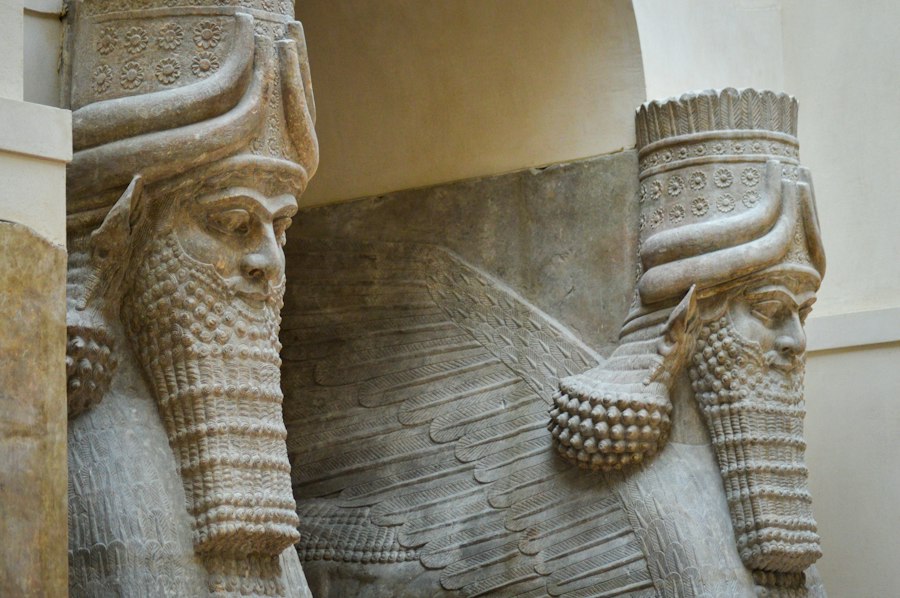
The descriptions of the Anunnaki in ancient texts are not always confined to the ethereal. Many scholars and researchers, particularly those within the ancient astronaut framework, point to specific passages that they believe indicate a physical, technological, and even biological presence of these beings.
“Gods” as Advanced Beings
The term “gods” used to describe the Anunnaki is a central point of contention. Mainstream scholarship views “gods” as anthropomorphic representations of natural forces or as spiritual entities. However, alternative interpretations suggest that the ancient peoples, lacking the vocabulary to describe advanced technology or alien physiology, used the term “gods” to describe beings who possessed knowledge, power, and capabilities far beyond their own comprehension. Their ability to seemingly traverse the heavens, manipulate the environment, and bestow knowledge would naturally lead primitive societies to perceive them as divine. The Anunnaki’s descriptions of their dwellings as “temples” or “palaces” could, in this view, be interpreted as sophisticated structures or even spacecraft.
The “Me”: Technology and Divine Knowledge
Sumerian texts refer to the Me, a collection of divine decrees, laws, and powers that were essential for civilization. These Me were believed to have been bestowed upon humanity by the gods. Proponents of the Anunnaki theory suggest that the Me represent advanced knowledge, scientific principles, and technological blueprints. The act of the Anunnaki imparting the Me to humans can be seen as a deliberate transfer of technology and understanding, akin to seeding knowledge in a developing civilization. This could range from agricultural techniques and metallurgy to astronomy and advanced engineering principles. The cryptic nature of the Me in the texts, where their exact nature is not fully elucidated, further fuels speculation that they represent concepts and technologies too complex for the Sumerians to fully articulate, but which they recognized as fundamental to their progress.
Descriptions of Physical Appearance and Abilities
While often depicted in anthropomorphic forms in their art, some textual descriptions of the Anunnaki hint at something beyond human. Their longevity, their apparent ability to influence natural phenomena, and their seemingly effortless control over immense power are attributes that, when detached from a purely mythological context, could suggest advanced biological or technological enhancements. The Sumerian King List, for example, enumerates rulers who reigned for impossibly long periods, attributing their long lives and wisdom to divine lineage. While this is traditionally understood as a literary device to emphasize regal authority, some interpret these extended lifespans as a biological characteristic of the Anunnaki themselves or their direct descendants. Furthermore, mentions of them descending from the sky in fiery chariots or possessing the ability to traverse vast distances in short periods are interpreted not as miracles but as descriptions of advanced transportation systems.
The Anunnaki in Other Ancient Cultures: Echoes and Parallels

The Anunnaki are not solely a Sumerian phenomenon. Proponents of the ancient astronaut theory argue that similar narratives and beings appear in the mythologies and ancient texts of various cultures across the globe, suggesting a widespread influence or a common source of information.
Egyptian Pantheon and Sky-Dwelling Deities
The ancient Egyptian civilization, contemporary to the Sumerians, also features a pantheon of powerful beings, many of whom are associated with the sky and celestial journeys. The concept of Osiris, a god who dies and is resurrected, and whose story involves a complex interplay with other deities like Isis and Seth, bears certain thematic similarities to the dramas of the Anunnaki. Egyptian texts, such as the Pyramid Texts and the Book of the Dead, describe rituals and beliefs surrounding the afterlife and the journey of the soul, often involving celestial voyages. While these are largely interpreted as religious beliefs, some see echoes of Anunnaki interactions in the Egyptians’ understanding of their rulers as divine intermediaries and their fascination with astronomy and the heavens. The concept of divine kingship, where pharaohs were seen as earthly embodiments of gods, could be seen as a direct legacy of the Anunnaki’s perceived role as creators and rulers of humanity.
Vedic Texts and the Devas
The ancient Indian Vedic literature, particularly the Rigveda, speaks of the Devas, who are often translated as “gods” but can also mean “celestial beings” or “shining ones.” These Devas are described as possessing immense power, living in celestial realms, and engaging in conflicts and interactions with both humans and other powerful entities like the Asuras. The descriptions of their abilities, their advanced knowledge, and their intervention in earthly affairs resonate with the Anunnaki narratives. For example, the Devas are credited with creating and manipulating various celestial phenomena, and their wisdom is sought after by humans. The concept of Vimanas, flying machines described in some later Vedic texts, further fuels speculation about a technological element to these ancient accounts, mirroring the Anunnaki’s supposed aerial capabilities. The intricate genealogies and cosmic battles described in the Vedas, when viewed through a non-mythological lens, could be reinterpreted as accounts of advanced beings and their societal dynamics.
Mesoamerican Civilizations and Serpent Gods
Across the Atlantic, Mesoamerican civilizations like the Maya and the Aztec possessed rich mythologies that also feature celestial beings and creators. The feathered serpent deity, Quetzalcoatl for the Aztecs and Kukulkan for the Maya, is a recurring figure associated with wisdom, civilization, and the heavens. These serpent deities are often depicted as arriving from the stars or as bringing advanced knowledge and culture to humanity. The detailed astronomical observations and sophisticated calendar systems developed by these cultures are seen by some as evidence of a shared, advanced heritage, possibly influenced by the Anunnaki. The meticulous records and intricate cosmologies of these civilizations, when juxtaposed with Sumerian accounts, reveal a surprising degree of thematic consistency in the belief of sky-dwelling, knowledgeable beings who shaped human civilization.
Linguistic and Etymological Clues
Beyond narrative content, proponents of the Anunnaki theory also point to linguistic and etymological evidence that they believe supports a non-mythological interpretation of these ancient texts.
The Name “Anunnaki” and its Possible Meanings
The name “Anunnaki” itself is a subject of much debate. While commonly translated as “those who came from the heavens to Earth,” alternative interpretations suggest deeper, possibly more technical meanings. Some scholars propose that “Anu” may refer to a specific celestial body or a high-ranking leader, and “Naki” could denote a specific action or group. For instance, if “Anu” refers to a specific star system or planet, and “Naki” relates to arrival or descent, the name could be a direct descriptor of their origin and action. This type of linguistic analysis, when divorced from a purely religious context, offers a framework for understanding the Anunnaki as a specific, identifiable group rather than a generalized concept of divinity. The careful etymological dissection of ancient names and terms is a cornerstone of historical research, and proponents of the Anunnaki theory apply this same rigor to their interpretations.
Linguistic Parallels and the “Language of the Gods”
The idea of a “language of the gods” or a universal language spoken by these advanced beings is also explored. Some researchers posit that certain linguistic structures or recurring phrases found in ancient texts across different cultures might point to a common, original source of information. The possibility that the Anunnaki introduced a foundational language or linguistic principles to early humans is a compelling idea for those who believe in their physical intervention. This would explain the apparent shared concepts and mythic motifs found in disparate ancient cultures. The meticulous study of ancient languages and their relationships has revealed surprising connections throughout history, and this line of inquiry is extended to encompass the potential influence of an even more ancient, advanced source.
The Concept of “Word” and Creation
In many ancient cosmologies, the power of the spoken word is paramount in creation. The Anunnaki’s ability to “speak” and have their pronouncements manifest as reality is a recurring theme. This concept, often seen as a metaphor for divine will, is interpreted by some as a veiled reference to advanced communication technologies or even reality-shaping principles. The power of the word, in this context, could represent the manipulation of fundamental forces through sophisticated means, rather than mere divine decree. The consistent emphasis on speech and decree in creation myths across various cultures, when examined for underlying principles, could hint at a shared understanding of how existence is brought forth, potentially through technological means.
The concept of the Anunnaki, often linked to ancient Sumerian texts, has sparked considerable interest among researchers and enthusiasts alike. These ancient deities are believed to have played a significant role in the creation myths and societal structures of early civilizations. For those looking to explore the broader implications of ancient knowledge and its impact on literacy, a related article discusses the decline of literacy after the Dark Ages and its various factors and consequences. You can read more about this intriguing topic here.
Critiques and Alternative Perspectives
| Source | Text/Artifact | Reference to Anunnaki | Type of Evidence | Notes |
|---|---|---|---|---|
| Mesopotamian Mythology | Enuma Elish | Describes Anunnaki as gods who created humans | Mythological Text | One of the earliest creation myths mentioning Anunnaki |
| Sumerian King List | Ancient Clay Tablets | Mentions Anunnaki as divine beings who bestowed kingship | Historical Record | Lists rulers said to be chosen by Anunnaki |
| Akkadian Texts | Epic of Gilgamesh | References gods associated with Anunnaki | Epic Poem | Shows Anunnaki as powerful deities influencing human fate |
| Assyrian Inscriptions | Royal Inscriptions | Invoke Anunnaki for divine protection and legitimacy | Inscriptions | Used by kings to legitimize rule |
| Modern Interpretations | Ancient Astronaut Theories | Claim Anunnaki were extraterrestrial visitors | Theoretical Hypothesis | Not supported by mainstream archaeology |
It is crucial to acknowledge that the Anunnaki theory and its interpretation of ancient texts are not universally accepted. Mainstream archaeology, linguistics, and religious studies offer alternative explanations for these phenomena.
Mythological and Allegorical Interpretations
The prevailing academic view is that the Anunnaki, as described in Sumerian and Babylonian texts, are mythical figures representing fundamental human concepts, natural forces, and societal structures. The creation myths are seen as allegorical explanations for the origins of the universe and humanity, reflecting the cultural and philosophical understanding of the time. The “gods” are anthropomorphic personifications of natural phenomena like the sun, rain, and earth, or they embody abstract concepts like justice, wisdom, and order. The actions described in the epics are understood as symbolic narratives intended to teach moral lessons or to explain the world within the framework of their religious beliefs. This perspective emphasizes the human capacity for storytelling and abstract thought in constructing their understanding of existence.
Psychological and Sociological Explanations
Another line of critique suggests that the human tendency to invent gods and ascribe supernatural powers to them stems from fundamental psychological needs. The desire for explanations, the fear of the unknown, and the need for comfort and guidance all contribute to the creation of divine beings. From a sociological standpoint, the concept of gods and an afterlife can serve to reinforce social order and provide a framework for morality. The Anunnaki, in this view, are simply the product of early humans’ attempts to make sense of their world and their place within it, projecting their own desires and anxieties onto the cosmos. The stories of gods’ interventions are seen as a reflection of humanity’s own aspirations and struggles, amplified and attributed to external, powerful entities.
The Problem of Evidence and Confirmation Bias
A significant challenge for the Anunnaki theory is the lack of independently verifiable physical evidence. While textual interpretations can be compelling, they remain open to subjective interpretation. Critics argue that proponents often engage in confirmation bias, selectively extracting passages that support their pre-existing beliefs while overlooking or reinterpreting those that contradict them. The absence of any undisputed artifacts, technology, or biological remains that can be definitively linked to the Anunnaki leaves their existence in the realm of speculation. The reliance on textual interpretation alone, without corroborating material evidence, makes it difficult to move beyond hypothesis. The scientific method demands empirical evidence, and in this regard, the Anunnaki hypothesis faces significant hurdles.
In conclusion, the evidence for Anunnaki in ancient texts is a complex tapestry woven from textual interpretations, linguistic analyses, and comparative mythology. While mainstream scholarship largely views these narratives through a mythological and allegorical lens, proponents of the ancient astronaut theory present a compelling case for a more literal understanding, suggesting that these ancient texts may hold the keys to a forgotten chapter of human history, one marked by the presence and influence of beings from the stars. Whether myth or memory, the Anunnaki continue to spark curiosity and challenge our understanding of our origins.
The Anunnaki Origin Story Changes When You Read the Tablets
FAQs
What is the Anunnaki?
The Anunnaki are a group of deities in ancient Mesopotamian cultures, particularly in Sumerian, Akkadian, Assyrian, and Babylonian texts.
What evidence is there for the Anunnaki in ancient texts?
Ancient texts such as the Sumerian creation myth, the Enuma Elish, and the Epic of Gilgamesh mention the Anunnaki as gods who came to Earth from the heavens.
Are there any physical artifacts that support the existence of the Anunnaki?
There is no concrete physical evidence such as artifacts that directly prove the existence of the Anunnaki. However, some researchers believe that certain ancient structures and texts may indirectly point to their presence.
What role did the Anunnaki play in ancient Mesopotamian society?
The Anunnaki were believed to have created humans to serve as their labor force and were seen as powerful beings who influenced various aspects of human civilization.
Is there any scientific consensus on the existence of the Anunnaki?
Mainstream scholars and scientists do not recognize the Anunnaki as real beings but rather as mythological figures from ancient Mesopotamian religions. The idea of the Anunnaki is mainly popular in fringe theories and pseudoscience.