Whispers from the Dawn of Civilization: The Enigmatic Sumerians
The story of human civilization, as we understand it, begins in Mesopotamia, the fertile crescent nestled between the Tigris and Euphrates rivers. It was here, around the 4th millennium BCE, that the Sumerians emerged, a people whose innovations laid the groundwork for so much that followed. They developed cuneiform, the world’s earliest known writing system, invented the wheel, established sophisticated irrigation systems, and built impressive ziggurats that scraped the sky. Yet, alongside these undeniable achievements, a persistent and controversial thread weaves through discussions of Sumerian culture: the perplexing idea that their creation myths, recorded on countless clay tablets, might hint at an extraterrestrial influence in the very genesis of humanity. This article will delve into the ancient Sumerian texts, the interpretations that have propelled the alien creation theory, and the critical perspectives that challenge such extraordinary claims.
The intriguing theory that Sumerian tablets suggest aliens played a role in the creation of humans has sparked considerable debate among researchers and enthusiasts alike. These ancient texts, often regarded as some of the earliest written records, contain references that some interpret as evidence of extraterrestrial involvement in human evolution. For a deeper exploration of how international cooperation can help prevent conflicts over space exploration, which may include discussions about extraterrestrial life, you can read a related article at Preventing Space Arms Race: International Cooperation.
Decoding the Cradle of Knowledge: The Cuneiform Conundrum
The key to unlocking Sumerian thought lies in the decipherment of their cuneiform script. For centuries, these wedge-shaped impressions etched into clay remained a silent mystery. It wasn’t until the 19th century that scholars, like Henry Rawlinson, began to crack the code, painstakingly comparing inscriptions on multilingual stelae. This monumental task revealed a rich tapestry of myths, epics, administrative records, and legal codes. Among these texts, the Sumerian creation myths stand out, offering a narrative that diverges significantly from later traditions.
The Enuma Elish and the Primordial Waters
While often attributed to the Babylonians, the earlier Sumerian versions of the creation story provide the foundational elements. These myths generally begin with a primordial watery abyss, from which the first gods emerge. Figures like An (sky god) and Ki (earth goddess) are born, and their union gives rise to other deities, including Enlil, the god of wind and storms, who plays a crucial role in separating the heavens and the earth and in the creation of humankind. The concept of humans being created from clay, often mixed with divine blood or spittle, is a recurring theme.
The Anunnaki: A Pantheon of Cosmic Significance
Central to the controversial interpretations of Sumerian texts is the concept of the Anunnaki. This group of deities, often described as “those who came from heaven to earth,” are portrayed as powerful, influential beings who descended from the heavens to govern and interact with the nascent human population. Their descriptions, particularly in later Akkadian and Babylonian texts that drew heavily from Sumerian traditions, often speak of their advanced capabilities and their deep involvement in earthly affairs.
Zecharia Sitchin and the Extraterrestrial Hypothesis
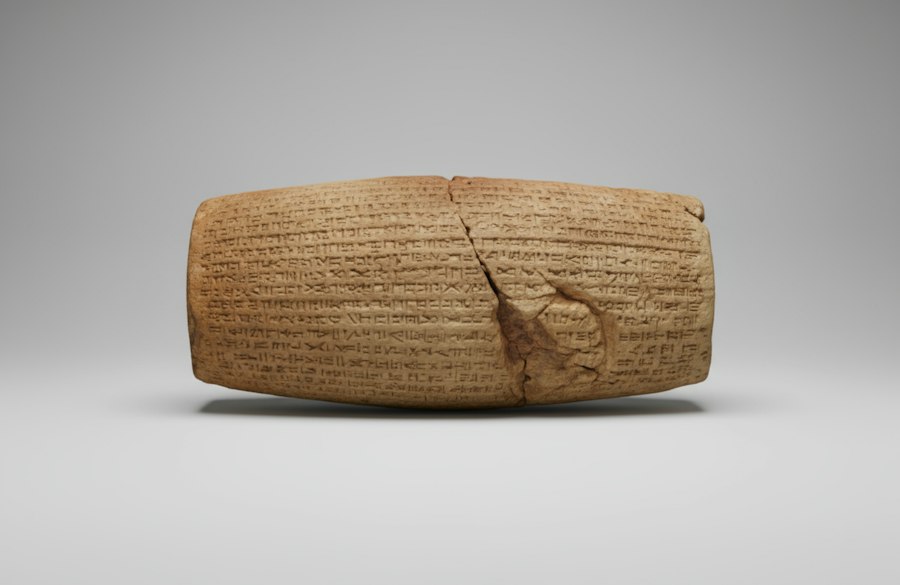
The most prominent proponent of the alien creation theory is Zecharia Sitchin, a Russian-American author and researcher. Sitchin’s work, beginning with his 1976 book “The 12th Planet,” proposed a radical interpretation of Sumerian texts. He argued that the Anunnaki were not mythical gods but technologically advanced extraterrestrials from a distant planet called Nibiru, which he claimed had a highly elliptical orbit and passed through our solar system every 3,600 years.
Nibiru and the Gold Rush in Ancient Earth
According to Sitchin’s theory, the Anunnaki came to Earth in antiquity in search of gold, a precious metal they allegedly needed to repair the atmosphere of their home planet. Sitchin interpreted certain Sumerian texts as describing the Anunnaki establishing mining operations in Africa and utilizing humans, who were genetically engineered to be their laborers, to extract this precious resource. He believed that the Sumerian gods, far from being divine entities, were advanced beings who genetically modified existing hominids to create a more robust workforce.
The “Adapa” and the Blueprint for Humanity
Sitchin pointed to specific myths, such as the story of Adapa, a wise man who was granted wisdom by the gods. Sitchin interpreted Adapa’s story not as a tale of spiritual enlightenment but as a narrative about the genetic engineering of humans. He suggested that the “food of wisdom” or “water of life” offered to Adapa was symbolic of a genetic upgrade, bestowing upon humanity enhanced intelligence and cognitive abilities. The Sumerians, in this view, were merely the recipients of advanced knowledge and biological manipulation from their extraterrestrial overlords.
Critiques and Counterarguments: The Scientific and Scholarly Rebuttal
While Sitchin’s theories have gained a significant following in certain circles, they have been overwhelmingly rejected by mainstream archaeologists, historians, linguists, and scientists. The academic community has raised numerous objections to his interpretations, citing flawed methodology, mistranslations, and a disregard for established scientific and historical principles.
Linguistic Gymnastics and Textual Selectivity
One of the primary criticisms leveled against Sitchin is his approach to translating and interpreting Sumerian and Akkadian texts. Critics argue that he often takes words out of context, assigns them meanings that are not supported by linguistic scholarship, and selectively uses passages that fit his narrative while ignoring contradictory evidence. For instance, the word “Anunnaki” is generally understood by scholars to refer to a group of deities in the Sumerian pantheon, not a distinct alien race. The concept of Nibiru as a planet is also not supported by astronomical observations or known planetary science.
The Absence of Empirical Evidence
The alien creation hypothesis, by its very nature, lacks empirical evidence. There are no artifacts that definitively point to extraterrestrial technology or intervention in the creation of humans. The genetic evidence for human evolution clearly indicates a gradual process of natural selection and adaptation over millions of years, not a sudden genetic engineering event orchestrated by an alien species. The fossil record and the study of DNA provide a robust and well-supported evolutionary timeline that does not require the introduction of extraterrestrial actors.
The Power of Myth and Human Ingenuity
Scholarly interpretations of Sumerian creation myths tend to view them as sophisticated attempts by early humans to understand their origins and their place in the cosmos. These myths, like those found in other ancient cultures, reflect a deep human need for explanation and a desire to make sense of the world around them. The creation of humans from clay, for example, can be seen as a metaphor for our earthly origins and our connection to the soil from which sustenance is derived. The concept of powerful deities can be understood as the personification of natural forces and the aspiration for order and control in a chaotic world. The Sumerians were remarkably innovative, and attributing their advancements solely to alien intervention diminishes their own remarkable ingenuity and intellectual prowess.
The intriguing theory that Sumerian tablets suggest aliens played a role in the creation of humans has captivated many researchers and enthusiasts alike. This idea posits that ancient texts may contain evidence of extraterrestrial influence on early human civilization. For those interested in exploring the implications of ancient knowledge and its connection to modern understanding, a related article discusses the balance between resource exploitation and conservation in Antarctica, which can be found here. This exploration of humanity’s relationship with the environment echoes the themes of our origins and the potential influences that shaped our development.
The Enduring Appeal of the Unknown: Why the Alien Theory Persists
| Aspect | Details |
|---|---|
| Source | Sumerian Tablets (cuneiform inscriptions from ancient Mesopotamia) |
| Claim | Some interpretations suggest aliens created humans |
| Scholarly Consensus | No credible evidence supports the claim; mainstream scholars interpret tablets as mythological stories about gods |
| Key Texts Referenced | Enuma Elish, Epic of Gilgamesh, Atrahasis |
| Interpretation of “Anunnaki” | Ancient deities or mythological beings, not extraterrestrials |
| Popular Culture Influence | Modern alien theories (e.g., Zecharia Sitchin’s works) popularized the idea |
| Evidence for Alien Creation | None found in original tablets; claims based on modern reinterpretations and speculation |
| Conclusion | Sumerian tablets do not explicitly say aliens created humans; this is a modern myth |
Despite the strong scientific and scholarly consensus against the alien creation hypothesis, the idea continues to capture the public imagination. Several factors contribute to its enduring appeal, tapping into fundamental human desires and curiosities.
The Quest for Meaning and Origins
Humanity has always been fascinated by its origins. The question “Where did we come from?” is a fundamental one that has driven philosophical inquiry, religious thought, and scientific exploration for millennia. The alien creation theory offers a dramatic and seemingly profound answer to this question, providing a narrative that is both awe-inspiring and perhaps, for some, more palatable than the complexities of evolutionary biology or the randomness of existence.
The Allure of the “Ancient Astronaut” Narrative
The “ancient astronaut” genre, of which Sitchin’s work is a cornerstone, thrives on the idea that ancient civilizations possessed knowledge and capabilities far beyond what is typically attributed to them. This narrative often suggests that the pyramids, Stonehenge, and other megalithic structures were built with the help of extraterrestrial technology, or that ancient texts contain hidden prophecies or scientific insights that were passed down by alien visitors. This perspective often positions ancient humans as passive recipients rather than active innovators, and it can be appealing to those who feel that modern society has lost a connection to a more profound or advanced past.
The Suspicion of Official Narratives
For some, the persistent rejection of the alien creation theory by mainstream academia fuels suspicion. They may feel that official narratives are being suppressed or that there is a concerted effort to hide the “truth” about humanity’s origins. This distrust can lead individuals to seek alternative explanations and to embrace theories that challenge established paradigms, even in the absence of concrete evidence. The idea of a grand cosmic secret being revealed can be a powerful motivator.
A Legacy of Wonder and Speculation: The Sumerian Contribution
Regardless of whether one entertains the notion of extraterrestrial intervention, the Sumerian civilization remains an object of profound fascination. Their contributions to writing, governance, agriculture, and the arts are undeniable and continue to shape the world in countless ways. The intricate cuneiform tablets, unearthed from the sands of Mesopotamia, offer us a window into the minds of a people who, in their own time, grappled with the same fundamental questions about life, the universe, and humanity’s place within it.
The debate surrounding the interpretation of Sumerian texts serves as a potent reminder of the power of storytelling and the human propensity for speculation. While the scientific community overwhelmingly favors evolutionary explanations for human origins, the allure of the extraordinary and the persistent quest for answers to life’s biggest mysteries ensure that the whispers from the dawn of civilization, particularly those that speak of cosmic visitors, will likely continue to resonate, fueling both academic discourse and popular imagination for generations to come. The Sumerians, in their enduring legacy, invite us to explore the depths of human knowledge and the boundless reaches of our imagination.
The Anunnaki Origin Story Changes When You Read the Tablets
FAQs
1. Are there Sumerian tablets that suggest aliens created humans?
No, there is no concrete evidence in Sumerian tablets that explicitly state aliens created humans.
2. What do Sumerian tablets primarily focus on?
Sumerian tablets primarily focus on recording historical events, religious beliefs, and daily life in ancient Mesopotamia.
3. Is there any scientific evidence to support the claim that aliens created humans?
There is no scientific evidence to support the claim that aliens created humans. The theory is not supported by mainstream science.
4. What are some common themes found in Sumerian mythology?
Common themes found in Sumerian mythology include the creation of the world, the relationships between gods and humans, and the afterlife.
5. How should claims about aliens creating humans in Sumerian tablets be approached?
Claims about aliens creating humans in Sumerian tablets should be approached with skepticism and critical thinking. It is important to rely on credible sources and evidence-based research when evaluating such claims.