
The allure of the ancient world, with its enigmatic civilizations and burgeoning mysteries, has long captivated the human imagination. Among these, the Sumerians stand out as a particularly compelling case. Flourishing in Mesopotamia thousands of years ago, they left behind a rich legacy of cuneiform tablets, intricate art, and foundational advancements in areas like agriculture, law, and writing. However, it is within the deciphered texts of these ancient scribes that a particularly persistent and provocative theory finds its fuel: the ancient astronaut hypothesis, or more colloquially, the ancient aliens theory. This perspective suggests that the Sumerians, or their civilization, were not solely the product of indigenous development but received crucial technological and intellectual impetus from extraterrestrial visitors. The following exploration will delve into the core tenets of this theory, examining the specific Sumerian artifacts and texts that proponents point to, while also considering the mainstream archaeological and historical interpretations.
The Sumerian Enigma and the Genesis of the Theory
The discovery and subsequent decipherment of Sumerian cuneiform tablets in the 19th and 20th centuries opened a window into a world previously unknown. These clay impressions, meticulously inscribed with a wedge-shaped stylus, revealed a sophisticated society with a complex pantheon of gods, detailed administrative records, epic poems, and scientific observations. The sheer scope of their achievements, particularly for a civilization emerging so early in human history, has led some to question the conventional narrative of gradual human innovation.
The ancient aliens theory, as popularized by authors like Zecharia Sitchin, posits that these achievements were not organic but rather a gift from advanced extraterrestrial beings, whom Sitchin identified as the Anunnaki. According to Sitchin’s interpretations of Sumerian mythology, the Anunnaki descended from a celestial body called Nibiru and came to Earth in search of gold, which they needed to repair their own planet’s atmosphere. To facilitate this mining operation, they genetically engineered humans, or “primitive workers,” to serve as their labor force. This narrative, drawing heavily on specific passages from Sumerian texts and astronomical interpretations, suggests a direct intervention in human evolution and the foundational stages of civilization.
The appeal of this theory lies in its ability to offer seemingly simple explanations for complex phenomena. It bypasses the often-messy and slow process of historical development and innovation, instead proposing a dramatic and decisive external influence. For proponents, the advanced knowledge evident in Sumerian society – their understanding of astronomy, mathematics, and complex city-building – seems too sophisticated to have emerged solely from the capabilities of early humans. They posit that the Anunnaki, with their superior technology and knowledge, provided the blueprints for Sumerian civilization, including their sophisticated irrigation systems, their early forms of governance, and even their religious beliefs, which they interpret as records of encounters with these alien beings.
Seeds of Doubt: Unpacking the Anunnaki Narrative
Zecharia Sitchin’s work, while influential in popularizing the ancient aliens theory, has been met with significant criticism from the academic community. His translations and interpretations of Sumerian cuneiform are widely contested by Sumerologists and linguists. Critics argue that Sitchin frequently takes words out of context, misinterprets grammatical structures, and imposes his preconceived notions onto the texts. For instance, the term “Anunnaki” is generally understood by scholars to refer to a group of deities in the Sumerian pantheon, not literal extraterrestrials. Their role in mythology often involves ruling, judging, and overseeing the affairs of humankind and the underworld, but this is understood within the framework of ancient religious beliefs, not as literal accounts of alien visitation.
Furthermore, Sitchin’s claim about Nibiru, a supposed twelfth planet in our solar system, is not supported by any astronomical evidence. His assertions are based on a reinterpretation of ancient astronomical concepts and a speculative calculation of planetary orbits. Mainstream astronomy has not detected any celestial body matching Sitchin’s description. The scientific community largely dismisses these claims as pseudoscience, citing a lack of empirical evidence and reliance on speculative interpretations of ancient texts.
The core of the academic counter-argument rests on the principle of Occam’s Razor, which suggests that the simplest explanation is often the best. Archaeologists and historians point to the extensive evidence of gradual human innovation and cultural diffusion as the most parsimonious explanation for Sumerian achievements. They highlight the slow but steady development of agriculture, tool-making, and social structures across various early human societies. While the Sumerians were undeniably advanced for their time, their accomplishments can be understood as a remarkable culmination of human ingenuity, adaptation, and intergenerational knowledge transfer, rather than an alien intervention.
The ancient aliens theory has captivated the imagination of many, particularly in relation to the Sumerian tablets, which are often cited as evidence of extraterrestrial influence on early human civilization. These ancient artifacts contain cuneiform writings that some theorists believe hint at advanced knowledge and technology imparted by alien visitors. For those interested in exploring the implications of extraterrestrial encounters further, a related article titled “The End of Peaceful Space Exploration: A New Era Begins” can be found at this link.
Artifacts and Iconography: Whispers of the Cosmic
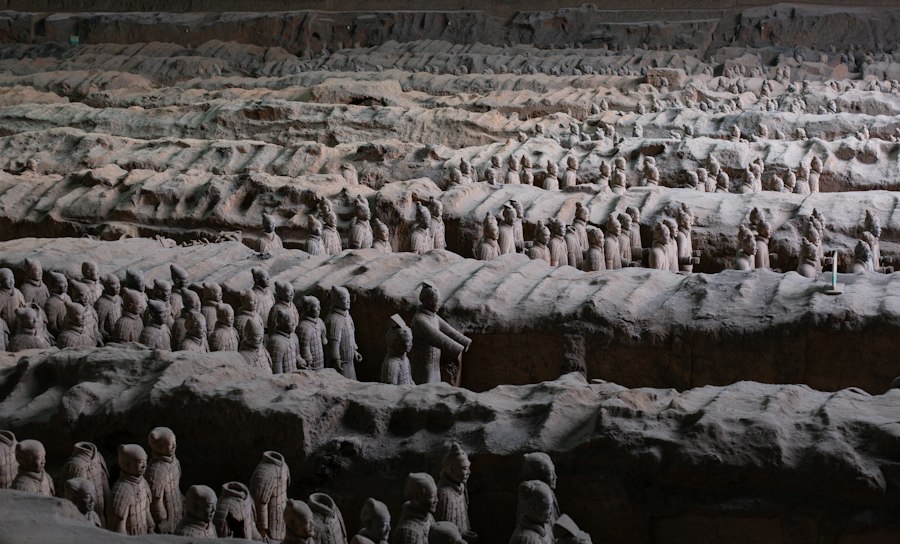
The ancient aliens theory often draws its most compelling visual evidence from specific Sumerian artifacts and artistic depictions that appear to deviate from conventional interpretations. These artifacts, when viewed through the lens of extraterrestrial influence, are seen as direct representations of alien beings, their technology, or their interactions with humans. Examining these objects and the proposed interpretations offers a fascinating glimpse into how the theory seeks to reinterpret the past.
One of the most frequently cited examples is the Sumerian “cylinder seal” imagery. These small, cylindrical objects, often made of stone, were rolled onto clay to create repeating impressions. Many seals depict mythological scenes, religious rituals, or daily life. Proponents of the ancient aliens theory often point to seals showing figures with large, almond-shaped eyes, elongated heads, or unusual attire, interpreting these as depictions of extraterrestrials. Some seals also show figures interacting with what appear to be technological devices or flying objects. For instance, certain depictions of winged figures are interpreted not as angels or divine messengers in the traditional sense, but as beings with advanced propulsion systems.
Another area of focus is the Sumerian “gods.” The Sumerian pantheon is vast and complex, with gods associated with various natural phenomena, human activities, and abstract concepts. The theory suggests that these deities were not supernatural beings but rather advanced extraterrestrials. Figures like Enki, often depicted with flowing water and a beard, are sometimes reinterpreted as brilliant scientists or engineers. The concept of the “gods” having distinct roles and hierarchies is seen as mirroring the structure of an advanced alien civilization. The stories of their interactions with humans, their creation myths, and their interventions in human affairs are then viewed as historical records of alien activity.
Challenging Conventional Interpretations: A Deeper Look
Mainstream archaeology and art history offer alternative explanations for these same artifacts. The characteristic large eyes on Sumerian artwork are often attributed to artistic conventions of the time, emphasizing the importance and divinity of the figures depicted. In many ancient cultures, exaggerated features were used to convey spiritual or political power. The elongated heads, when they appear, are sometimes linked to specific artistic styles, burial practices (though this is less common for Sumerian art), or even depictions of deities with symbolic attributes rather than literal physical characteristics.
The “winged figures” are typically understood within the context of ancient Mesopotamian iconography. Winged symbolism in ancient cultures often represents divine favor, protection, or the ability to transcend the earthly realm. These could be divine messengers, guardian spirits, or representations of the power of the gods. The interpretation of these as advanced flying machines or extraterrestrial beings with wings is a significant departure from established scholarly understanding.
Regarding the “technological devices,” scholars generally interpret these as symbolic representations of divine power or tools used in rituals. For example, objects that appear to be tools might actually represent symbols of authority, fertility symbols, or elements of religious ceremony. The interpretation of these as advanced machinery is a speculative leap, not supported by the contextual evidence within the broader corpus of Sumerian art and literature. The Sumerian pantheon itself is understood by scholars as a complex product of human societal development, reflecting early attempts to explain the natural world and establish social order through anthropomorphic deities. The narrative of the gods is seen as a cultural and religious evolution, not a direct recounting of alien encounters.
Astronomical Insights and Celestial Clues
The Sumerians possessed a remarkable understanding of astronomy for their era. They meticulously observed the stars, charted planetary movements, and developed sophisticated calendars. Their knowledge of celestial cycles was crucial for their agricultural practices and religious observances. The ancient aliens theory seizes upon this advanced knowledge, suggesting it could not have been developed independently by early humans and must have been imparted by extraterrestrial visitors.
Proponents of the theory point to the Sumerian creation epic, the Enuma Elish, and other cosmological texts as containing detailed astronomical information that predates known scientific discoveries. They argue that the Sumerians’ understanding of the solar system, including the concept of planets orbiting the sun, and their calculations of celestial events, such as eclipses, were far too advanced for their time. This advanced knowledge is seen as evidence that the Sumerians were either directly taught by extraterrestrials or were influenced by beings who possessed this understanding.
The Nibiru Hypothesis and its Astronomical Underpinnings
At the heart of the ancient aliens theory’s astronomical claims lies Zecharia Sitchin’s concept of Nibiru. Sitchin proposed that the Sumerians knew of a tenth planet (he considered the Sun as planet 1, Moon as planet 2 etc, thus making Nibiru the 12th body in his count) in our solar system, which he called Nibiru. According to his interpretation, Nibiru has a highly elliptical orbit, taking it through the inner solar system every 3,600 years. He suggested that the Anunnaki, the inhabitants of Nibiru, visited Earth in ancient times, leading to their involvement in human history.
Sitchin’s interpretations of Sumerian texts, such as the Epic of Gilgamesh and various administrative tablets, are presented as evidence for Nibiru’s existence and the Anunnaki’s visits. He claimed that certain Sumerian texts referred to a “twelfth planet” or a celestial body that periodically approached Earth. These interpretations are often based on the phonetic resemblances of Sumerian words to modern astronomical terms or his own unique linguistic reconstructions. He also argued that Sumerian depictions of a winged sun disk could be a representation of Nibiru or a spacecraft from Nibiru.
Critiques and Alternative Explanations: A Scientific Perspective
The astronomical claims made by proponents of the ancient aliens theory are widely rejected by the scientific community. Astronomers and astrophysicists have extensively studied our solar system, and there is no observational evidence for a planet like Nibiru. The gravitational effects of such a large planet would be readily apparent in the orbits of other planets and celestial bodies, yet none have been detected. The idea of a planet with a 3,600-year orbit that periodically causes disruptions on Earth is considered scientifically implausible.
Sumerologists and historians of science also contest Sitchin’s interpretations of Sumerian astronomical texts. They argue that the Sumerians’ astronomical knowledge, while impressive for its time, was the result of careful observation and sophisticated mathematical development within the context of their society. Their understanding of celestial cycles was primarily focused on observable phenomena and was crucial for their agrarian economy and religious beliefs. For example, their detailed observations of the moon and its phases were essential for creating their lunar calendar.
The concept of planets orbiting the sun was not definitively established in the ancient world. While some ancient civilizations had cosmological models that involved celestial bodies, the heliocentric model as we understand it today was a product of later scientific inquiry, notably by Copernicus and Galileo. The Sumerians’ astronomical observations were likely within the framework of a geocentric or observational-based system, not a modern heliocentric one.
Furthermore, critics point out that Sitchin’s linguistic interpretations are often forced and lack the rigor of established philological methods. The phonetic similarities he draws between Sumerian words and modern terms are frequently coincidental or based on selective evidence. The “winged sun disk” is a common motif in ancient Near Eastern art and is generally interpreted as a symbol of the sun god Shamash, not as a representation of an alien spacecraft or a planet. In essence, the scientific and academic consensus is that Sumerian astronomical achievements, while remarkable, can be explained by human ingenuity and the systematic observation of the natural world, without recourse to extraterrestrial intervention.
The ancient aliens theory has long fascinated researchers and enthusiasts alike, particularly in relation to the enigmatic Sumerian tablets that contain some of the earliest known writings. These ancient artifacts have sparked discussions about potential extraterrestrial influences on early human civilization. For those interested in exploring more about ancient navigation and the mysteries of early mariners, you might find this article on navigating the seas particularly intriguing, as it delves into the lost wayfinding techniques that could have been used by ancient cultures.
The Enduring Appeal: Why Ancient Aliens Persist
| Aspect | Description | Related Sumerian Tablet | Significance |
|---|---|---|---|
| Ancient Aliens Theory | The hypothesis that extraterrestrial beings visited Earth in ancient times and influenced human civilization. | N/A | Popularized by authors like Erich von Däniken; suggests advanced technology in ancient times. |
| Enki and Anunnaki | Deities described in Sumerian mythology, often interpreted by ancient alien theorists as extraterrestrial visitors. | Enki Myth (Sumerian creation texts) | Central figures in theories linking Sumerian gods to alien beings who created or guided humanity. |
| Creation of Humans | Sumerian tablets describe gods creating humans from clay, interpreted as genetic engineering by aliens. | Eridu Genesis | Supports the idea that humans were engineered by advanced beings rather than evolving naturally. |
| Technological Descriptions | Descriptions of flying machines and advanced technology in some tablets, seen as evidence of alien technology. | Epic of Gilgamesh (references to “flying chariots”) | Used to argue that ancient civilizations had contact with advanced extraterrestrial technology. |
| Historical Dating | Sumerian civilization dates back to around 4500 BCE, making it one of the oldest known civilizations. | Various cuneiform tablets | Provides a timeline for when alleged alien contact might have occurred according to the theory. |
Despite the significant scholarly consensus that refutes the ancient aliens theory, its appeal remains remarkably persistent in popular culture. Several factors contribute to its enduring fascination, making it a topic of continuous discussion and speculation. The theory offers a compelling narrative that taps into fundamental human desires: the quest for meaning, the fascination with the unknown, and a yearning for a grander, more mysterious past.
One of the primary drivers of the theory’s popularity is its ability to provide seemingly straightforward answers to complex questions. The slow, often arduous, process of archaeological and historical research can be seen as less engaging than a dramatic story of alien intervention. The ancient aliens theory presents a concise narrative of a sudden leap in human capability, attributing it to a sophisticated, external force. This bypasses the need to grapple with the intricate details of human societal evolution and innovation.
Furthermore, the theory often plays on a sense of wonder and the unknown. The vastness of the cosmos and the possibility of life beyond Earth are inherently intriguing. The ancient aliens theory bridges this gap by suggesting that extraterrestrials have already visited us, leaving behind tangible evidence in the ruins of ancient civilizations. This offers a compelling narrative that blends science fiction with historical mystery. The very act of deciphering ancient texts and interpreting enigmatic artifacts becomes an adventure, with the alien theory providing a pre-defined, albeit speculative, framework for understanding.
The role of media, particularly documentaries and books that present these theories without rigorous academic scrutiny, cannot be overstated. These platforms often sensationalize the evidence, framing controversial interpretations as established facts and creating a compelling, albeit often misleading, narrative. The accessible nature of these presentations allows a broad audience to engage with the ideas without requiring extensive background knowledge in archaeology or linguistics. This accessibility, combined with the inherent intrigue of the subject matter, ensures that the ancient aliens theory continues to capture the public imagination, even as it remains on the fringes of academic discourse. The allure of a hidden history, a secret past shaped by cosmic visitors, continues to resonate, promising a glimpse into a more extraordinary and perhaps more understandable origin for human civilization.
The Anunnaki Origin Story Changes When You Read the Tablets
FAQs
What is the ancient aliens theory?
The ancient aliens theory suggests that extraterrestrial beings visited Earth in ancient times and influenced human civilizations.
What are Sumerian tablets?
Sumerian tablets are ancient clay tablets inscribed with cuneiform writing, the earliest known form of writing, created by the Sumerians in ancient Mesopotamia.
How are Sumerian tablets related to the ancient aliens theory?
Proponents of the ancient aliens theory point to certain Sumerian texts, such as the Epic of Gilgamesh, as evidence of extraterrestrial contact and advanced knowledge being passed down to humans by alien beings.
What evidence supports the ancient aliens theory in relation to Sumerian tablets?
Some researchers believe that depictions of beings with elongated heads and large eyes found on Sumerian artifacts could be representations of extraterrestrial visitors, supporting the ancient aliens theory.
Is the ancient aliens theory widely accepted by mainstream scholars?
The ancient aliens theory is considered a pseudoscience by mainstream scholars and archaeologists, who argue that there is no concrete evidence to support the idea of extraterrestrial contact in ancient civilizations.