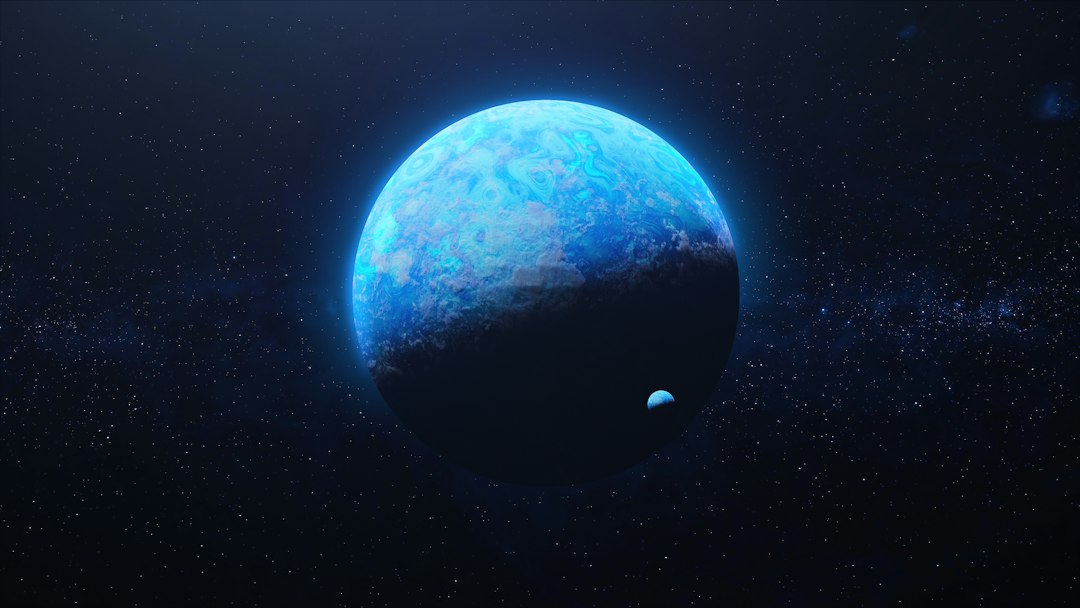
The tantalizing concept of a “12th Planet” has long captured the imagination, a celestial body whispered about in ancient texts and modern conspiracy theories. This idea, often linked to a hypothetical planet named Nibiru or Planet X, posits a massive object within our solar system, undetected by mainstream astronomy. Its potential influence ranges from benign orbital cycles to catastrophic events for Earth. This exploration delves into the origins of the 12th Planet theory, examines the evidence proponents cite, scrutinizes the scientific counterarguments, and considers the enduring allure of such grand cosmic narratives.
The Ancient Roots of Celestial Wanderers
The notion of a hidden planet is not a new phenomenon. Throughout history, cultures have observed the heavens, cataloging celestial bodies and weaving myths around them. The prominent planets visible to the naked eye – Mercury, Venus, Mars, Jupiter, and Saturn – were often imbued with divine significance and associated with specific deities and their influences. However, the idea of a ninth planet, let alone a twelfth, began to emerge with the advent of telescopic observation and the burgeoning understanding of orbital mechanics.
The Discovery of Neptune and the Hunt for Planet X
The discovery of Neptune in 1846 marked a significant turning point. Astronomers noticed anomalies in the orbit of Uranus, suggesting the gravitational pull of an unseen celestial body. The subsequent calculations and observations led to Neptune’s identification, validating the predictive power of Newtonian physics. This success fueled a new era of astronomical exploration, where the search for planets based on gravitational perturbations became a driving force.
In the early 20th century, after Pluto was discovered in 1930, some astronomers continued to believe that its mass was insufficient to fully account for the observed irregularities in Uranus’s and Neptune’s orbits. This led to the hypothesis of “Planet X,” a larger, undiscovered planet that was thought to be responsible for these orbital disturbances. Percival Lowell, the founder of the Lowell Observatory, was a prominent proponent of the Planet X theory, dedicating significant resources to its search. While his observatory’s photographic plates eventually led to the discovery of Pluto, Pluto itself was later found to be too small to be the influential Planet X that had been theorized. However, the idea of a significant undiscovered planet beyond Neptune persisted in some circles.
The 12th Planet theory, proposed by Zecharia Sitchin, suggests that ancient Sumerian texts describe a mysterious planet called Nibiru that influences human history and evolution. For those interested in exploring more about the implications of this theory and its connections to ancient astronaut theories, you can read a related article on the topic at Real Lore and Order. This article delves into the historical context and the ongoing debates surrounding Sitchin’s interpretations, providing a comprehensive overview for enthusiasts and skeptics alike.
Proponents and Their Celestial Arguments
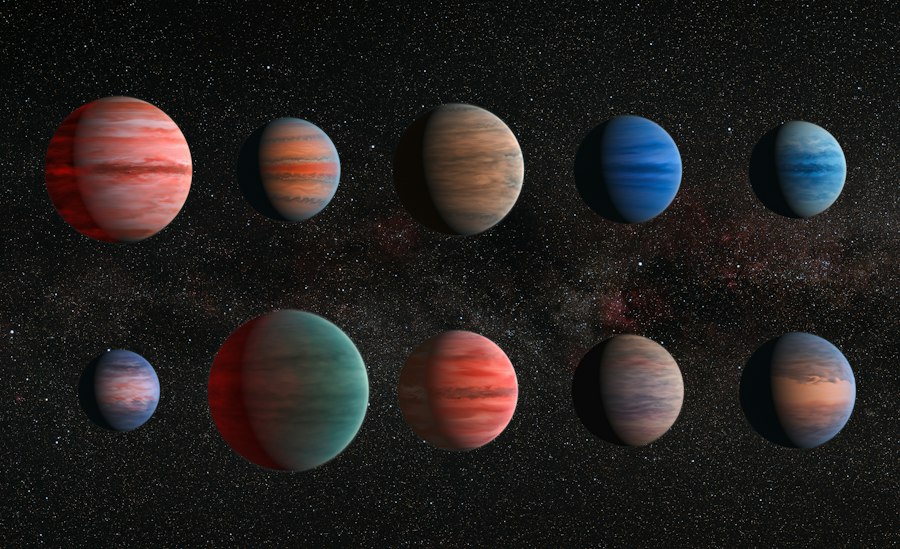
The modern incarnation of the 12th Planet theory often centers on the idea of Nibiru, a colossal planet said to orbit our sun in a highly elliptical path, entering the inner solar system at irregular intervals. This concept, largely popularized by Zecharia Sitchin and his interpretations of ancient Sumerian texts, suggests that Nibiru is not just a celestial body but a home to an advanced extraterrestrial civilization known as the Anunnaki.
Zecharia Sitchin’s Interpretations of Ancient Texts
Zecharia Sitchin, a Russian-American author, proposed that ancient Sumerian cuneiform tablets described a twelfth planet in our solar system, which he named Nibiru. According to Sitchin’s controversial translations and interpretations, the Anunnaki, inhabitants of Nibiru, visited Earth in antiquity and played a role in human civilization, even potentially engineering humanity. He claimed that Nibiru’s long, eccentric orbit brings it close to Earth every 3,600 years, causing seismic and environmental disruptions due to its gravitational influence. His books, such as “The 12th Planet,” have been instrumental in disseminating this idea to a wider audience, sparking significant debate and fascination. Sitchin’s interpretations, however, are widely rejected by mainstream historians, linguists, and archaeologists, who consider his translations to be inaccurate and his conclusions to be speculative.
The “Planet X” Hypothesis and Modern Claims
The “Planet X” hypothesis, distinct from Sitchin’s Nibiru, has seen a resurgence in more recent times, albeit with different proponents and proposed observational evidence. Some fringe astronomers and amateur researchers have suggested that gravitational anomalies observed in the outer solar system, particularly in the Kuiper Belt, could indicate the presence of a large, undiscovered planet. These anomalies, such as the clustering of the orbits of some trans-Neptunian objects, have been interpreted as evidence for a significant gravitational perturber. While mainstream astronomers acknowledge potential discrepancies in outer solar system dynamics, they generally attribute these to statistical variations or the cumulative gravitational effects of known objects, rather than a single, massive planet.
Scientific Scrutiny and Astronomical Counterarguments
The astronomical community largely dismisses the 12th Planet theory, citing a lack of credible observational evidence and fundamental conflicts with established physics. The vastness of space, coupled with the precision of modern astronomical tools, makes the undetected presence of a massive planet highly improbable.
The Absence of Direct Observational Evidence
Despite numerous dedicated sky surveys and advanced telescopic capabilities, no object fitting the description of a large, hidden planet has ever been directly observed. Telescopes like Hubble, James Webb Space Telescope, and ground-based observatories scan the cosmos with unprecedented detail. If a planet as massive as proponents claim Nibiru or Planet X to be existed, it would be readily detectable through its reflected sunlight or its thermal signature. The sheer volume of data collected from these surveys makes the argument for an undetected giant planet increasingly untenable. Furthermore, any object with a significant gravitational influence on the outer solar system would likely have observable effects on the orbits of comets and other small bodies that have been meticulously tracked.
Orbital Mechanics and Gravitational Perturbations
The core of the 12th Planet theory rests on the idea of gravitational influence. However, the precise tracking of planetary orbits within our solar system is a cornerstone of celestial mechanics. Astronomers have observed and modeled the orbits of all known planets with remarkable accuracy. If a massive object like Nibiru were present, its gravitational pull would create noticeable, predictable disturbances in the orbits of the known planets. While minor discrepancies and areas for further research exist in the dynamics of the outer solar system, these are generally explained by the complex gravitational interactions of known objects, including dwarf planets and comets, or are within the margins of observational error. The predicted 3,600-year orbit of Nibiru, in particular, would exert a significant and easily detectable gravitational tug on the known planets, a phenomenon that has not been observed.
The “Planet Nine” Hypothesis: A Mainstream Interpretation
It is important to distinguish the 12th Planet theory from the more recent scientific hypothesis of “Planet Nine.” In 2016, astronomers Konstantin Batygin and Michael Brown proposed the existence of a large planet in the far outer solar system, based on the peculiar orbital alignment of several extreme trans-Neptunian objects. This hypothesis, unlike the Nibiru theory, is grounded in sophisticated mathematical modeling and statistical analysis of observed data. Planet Nine is theorized to be a gas giant, several times the mass of Earth, with an orbit that is far more distant and less eccentric than that proposed for Nibiru. While still hypothetical, Planet Nine is a subject of active scientific investigation, with astronomers actively searching for direct observational evidence. This scientific pursuit highlights the difference between speculative theories based on fringe interpretations and hypotheses derived from rigorous scientific inquiry, even if those hypotheses remain unconfirmed.
The Enduring Appeal of Cosmic Mysteries
Despite the lack of scientific validation, the 12th Planet theory continues to captivate the public imagination. Its appeal lies in its ability to offer grand, often apocalyptic, narratives that tap into primal fears and a desire for extraordinary explanations.
Explaining the Unexplained and Seeking Meaning
For some, the 12th Planet theory provides an explanation for inexplicable phenomena, from historical disasters to perceived societal ills. The idea of an external force influencing Earth’s destiny offers a sense of order, albeit a chaotic one, in a world that can often feel unpredictable. It allows for a cosmic perspective that transcends everyday concerns, connecting humanity to ancient prophecies and a grander cosmic drama. This yearning for meaning and explanation is a fundamental human trait, and the 12th Planet theory, with its blend of ancient lore and potential cataclysm, fulfills this need for some.
The Allure of the Unknown and Conspiracy Theories
The allure of the unknown is a powerful force, and the 12th Planet theory taps into this by suggesting a hidden reality, a celestial secret deliberately kept from the public. This resonates with the broader appeal of conspiracy theories, which often posit secret cabals or suppressed knowledge. The idea that there is something significant lurking just beyond our current detection capabilities fuels intrigue and a sense of discovery, even if that discovery is purely speculative. The narrative of a hidden planet and its potential impact on Earth offers a compelling story that is both alarming and fascinating, a potent combination for sustained interest.
The 12th Planet theory, proposed by Zecharia Sitchin, suggests that ancient Sumerian texts reference a mysterious planet that influences human civilization. This intriguing concept has sparked much debate and curiosity among scholars and enthusiasts alike. For those interested in exploring more about ancient civilizations and their secrets, you might find the article on uncovering ancient secrets in a recent documentary particularly enlightening. You can read it here.
Conclusion: Separating Speculation from Scientific Inquiry
| Aspect | Description | Key Figures | Supporting Evidence | Criticism |
|---|---|---|---|---|
| Theory Origin | Proposes existence of a 12th planet beyond Neptune influencing Earth’s history | Zecharia Sitchin | Ancient Sumerian texts interpreted as references to Nibiru | Lack of empirical astronomical evidence; misinterpretation of texts |
| Planet Name | Nibiru or Planet X | N/A | Mythological references in Mesopotamian literature | No confirmed sightings or orbital data |
| Orbital Period | Approximately 3,600 years | Sitchin’s calculations | Based on ancient calendar cycles | Inconsistent with known celestial mechanics |
| Influence on Earth | Claims of ancient alien intervention and genetic manipulation | Sitchin and proponents of ancient astronaut theories | Interpretation of mythological stories as historical events | Considered pseudoscience by mainstream scholars |
| Scientific Consensus | Rejected by mainstream astronomy and archaeology | Scientific community | Extensive astronomical surveys find no evidence | Theory lacks testable predictions and credible data |
The 12th Planet theory, in its various forms, represents a fascinating intersection of ancient beliefs, speculative interpretations, and a persistent human fascination with the unknown. While the concept of Nibiru, as popularized by Zecharia Sitchin, is widely considered to be pseudoscience, the scientific exploration of potential undiscovered planets in the outer solar system, such as the “Planet Nine” hypothesis, continues.
The scientific method, with its emphasis on empirical evidence, falsifiability, and rigorous testing, is the bedrock of our understanding of the cosmos. While the imagination can soar and explore fantastical possibilities, it is through careful observation, mathematical modeling, and peer-reviewed research that genuine scientific discoveries are made. The distinction between speculative theories that lack evidence and hypotheses that are subjects of ongoing scientific investigation is crucial. The cosmos holds many wonders yet to be discovered, and the continued exploration of space, driven by scientific curiosity, promises to reveal them, one observation at a time. The 12th Planet theory, while an engaging narrative, ultimately serves as a reminder of the vast difference between captivating stories and scientifically validated facts.

The Anunnaki Origin Story Changes When You Read the Tablets
FAQs
What is the 12th Planet theory?
The 12th Planet theory, proposed by author Zecharia Sitchin, suggests that there is an additional planet in our solar system beyond Pluto, which has an elliptical orbit that brings it close to Earth every 3,600 years.
What evidence supports the 12th Planet theory?
Proponents of the 12th Planet theory point to ancient Sumerian texts that mention a planet called Nibiru, which is said to be the home of an advanced alien race known as the Anunnaki. They believe that these texts provide evidence of a 12th planet in our solar system.
Has the existence of the 12th Planet been confirmed by astronomers?
Mainstream astronomers have not confirmed the existence of a 12th planet in our solar system. The search for a hypothetical Planet X or Nibiru has not yielded any concrete evidence to support the claims made by proponents of the 12th Planet theory.
What are some criticisms of the 12th Planet theory?
Critics of the 12th Planet theory argue that the interpretations of ancient texts by Zecharia Sitchin are not supported by linguistic or archaeological evidence. They also point out that the gravitational effects of a large planet like Nibiru would have significant impacts on the orbits of other planets in our solar system.
Is there any ongoing research or exploration related to the 12th Planet theory?
While the 12th Planet theory remains a topic of interest for some researchers and enthusiasts, mainstream scientific communities do not consider it a valid scientific theory. There is no current research or exploration specifically focused on proving the existence of a 12th planet in our solar system.