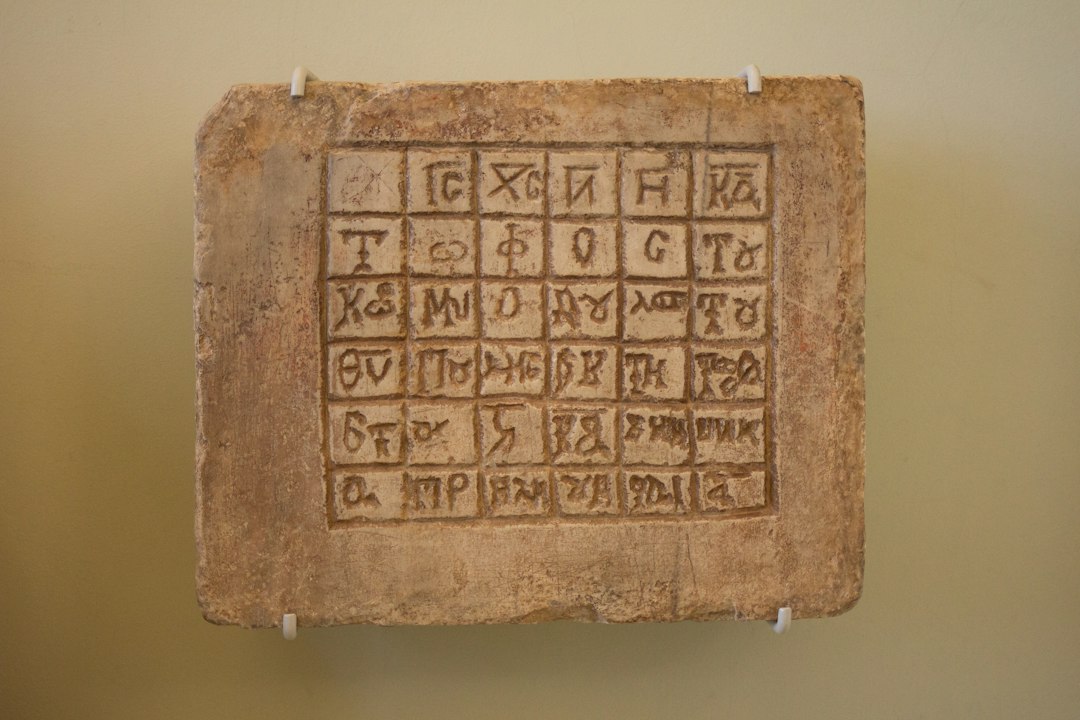
The dust of millennia has a way of obscuring, of fading the vibrant hues of ancient lives into a uniform, earthy brown. Yet, sometimes, within the hushed halls of archaeology, a shard of pottery or a crumbling fragment of stone speaks not of grand pronouncements or kingly decrees, but of the peculiar, the unexpected, the utterly bizarre. Among these whispers from the past, the humble clay tablet, a medium so ubiquitous it often feels mundane, has yielded some of the most startlingly strange tales, offering glimpses into the anxieties, curiosities, and perhaps even the dark humor of long-vanished civilizations. These are not the epic poems or the meticulous trade records; these are the scribblings that hint at beliefs, practices, and perceptions so alien to our modern sensibilities that they leave us scratching our heads, wondering about the true breadth of human experience.
Whispers from the Underworld: Unconventional Demonic Encounters
The concept of the divine and the infernal is as old as civilization itself, but the ancient world’s interpretation of these forces often diverges dramatically from our contemporary understanding. Clay tablets, unearthed from various Mesopotamian sites, reveal a surprisingly nuanced and, at times, almost domestic approach to dealing with malevolent entities. Far from the fire-and-brimstone pronouncements, these texts suggest a world where demons were not merely abstract evils, but tangible, often pesky, presences that could be negotiated with, tricked, or even, in a deeply unsettling way, understood.
The Pesky Household Demon: More Annoyance Than Terror
One recurring theme in these tablets is the portrayal of demons as less like terrifying archfiends and more like intrusive, unwelcome guests. Imagine a Sumerian scribe, meticulously detailing his day, not with tales of battles or harvests, but with a lament about a persistent demon that keeps knocking over his ink pots or stealing his favorite dates. While the potential consequences of demonic possession or wrath were undoubtedly serious, many incantations and charms on clay suggest a focus on mitigating everyday annoyances. These weren’t necessarily spells to banish the devil himself, but rather to prevent a specific demon, perhaps named something akin to “the Sleepless One” or “the Shadow That Bites,” from disrupting sleep, causing indigestion, or making livestock inexplicably ill. The sheer ordinariness of these complaints, etched in cuneiform, is what lends them their bizarre quality. It implies a certain level of acceptance, a pragmatic approach to a supernatural world that was simply part of the fabric of existence, like dealing with a stubborn neighbor.
Rituals of Appeasement: Bargaining with the Bizarre
The tablets also detail a fascinating array of rituals aimed at appeasing or warding off these entities, some of which are strikingly peculiar. While sacrifices and offerings were common, the specific nature of what was offered and how it was presented often raises eyebrows. There are instances of detailed instructions for preparing specific concoctions, not necessarily of potent poisons, but of seemingly innocuous ingredients combined in particular ways, meant to lure or distract the demons. One fragment describes a ritual involving a doll made of leavened bread, sprinkled with flour and honey, and then placed at a crossroads with specific incantations. The logic behind such a practice, from our modern perspective, remains elusive. Was the bread meant to represent sustenance, a tempting offering? Was the leavening symbolic of life, a counterpoint to the demonic presence? The specificity of these instructions, the meticulous descriptions of gestures and utterances, suggest a deep-seated belief system where even the most seemingly absurd acts held profound meaning. The sheer variety of these appeasement strategies, some involving elaborate dances, others simple mutterings of protective phrases, paints a picture of a society deeply engaged with its supernatural environment, employing a wide and often strange arsenal of tools to maintain a fragile balance.
Ancient clay tablets have long fascinated historians and archaeologists, revealing strange stories and insights into the lives of early civilizations. One particularly intriguing aspect of ancient societies is their advanced engineering techniques, especially in water management. For a deeper understanding of these remarkable achievements, you can explore the article on ancient hydraulic engineering marvels, which highlights the masterpieces of water management that were crucial for sustaining life in arid regions. To read more about this fascinating topic, visit this article.
Prophetic Visions and Preposterous Predictions: The Oracle’s Oddities
The desire to glimpse the future, to understand the will of the gods, and to navigate the uncertainties of life has always driven humanity. Ancient civilizations, much like our own, relied on oracles and divinatory practices. However, the methods and pronouncements recorded on clay tablets often stretch the bounds of our modern understanding of prophecy, revealing a world where the future was read in the entrails of birds, the patterns of smoke, and the unsettling twitching of a sacrificed animal.
The Omen of the Unexpected: Reading the World’s Quirks
The Mesopotamians, in particular, were prolific chroniclers of omens, meticulously recording every unusual occurrence and its supposed consequence. While some omens are straightforward – a falling star portends ill fortune – many others are extraordinarily specific and, frankly, bizarre. Imagine a tablet detailing the prediction that if a man’s left ear itches incessantly for three days, his favorite goat will fall sick. Or if a bird flies into the house and lands on the head of a sleeping child, a distant relative will bring unwelcome news. These aren’t grand pronouncements about kings or empires, but rather anxieties about the minutiae of daily life, imbued with prophetic significance. The sheer volume of these micro-omens, meticulously categorized and cross-referenced, suggests a society constantly on alert, interpreting the world through a lens of hyper-vigilance, where even the most trivial of events could be a harbinger of something significant. The bizarre nature lies in the seemingly arbitrary connections drawn between mundane occurrences and future events, forcing us to question the underlying logic or perhaps the deeply ingrained cultural anxieties that gave rise to such beliefs.
Astronomical Anomalies and Astrological Absurdities
While astronomy and astrology are often intertwined, ancient tablet records reveal some truly unique interpretations of celestial phenomena. Beyond the standard predictions of eclipses or planetary conjunctions, there are instances of tablets attempting to divine the future from more peculiar astronomical events. One text, for example, discusses the implications of a comet that appears to wink at the earth, while another speculates on the meaning of a star that seems to hum or vibrate. These are not merely observations; they are attempts to imbue celestial bodies with personality and intent, to read deliberate messages in cosmic oddities. The idea of a “winking comet” or a “humming star” is deeply anthropomorphic and speaks to a worldview where the cosmos was alive and interactive, capable of expressing itself through unsettling and unexpected ways. Furthermore, some astrological interpretations found on these tablets seem to assign significance to seemingly random celestial alignments, predicting not just significant historical events but also the success of specific cooking endeavors or the likelihood of a successful game of senet. This infusion of the cosmic into the utterly mundane is a testament to the pervasive nature of divination in ancient life and, from our perspective, adds a layer of delightful absurdity to their astronomical musings.
Love, Loss, and Loathing: Intimate Tablets of the Ancient Heart
Beyond the grand pronouncements of gods and kings, clay tablets offer a remarkably intimate window into the personal lives, desires, and heartbreaks of ordinary people. While we might expect such personal documents to be rare, the archaeological record has yielded a surprising number of clay fragments that speak of love, jealousy, anger, and the everyday struggles of relationships, often with a raw and unexpectedly modern emotional resonance, albeit expressed through ancient idioms.
The Enduring Power of Affection: Ancient Love Poems and Promises
The universality of love transcends millennia, and clay tablets bear witness to this enduring truth. Among the unearthed fragments are love poems and letters that, despite their age, speak with a familiar passion. They describe longing gazes, whispered endearments, and the exquisite pain of separation. One tablet, for instance, details a lover’s plea to their beloved, comparing their absence to the parching of the land during a drought, a vivid and relatable metaphor for the intensity of their desire. These aren’t dry declarations; they are filled with imagery, hyperbole, and a vulnerability that feels remarkably modern. The surprise, and indeed the bizarre element from our perspective, lies in the persistence of these deeply personal expressions across such a vast gulf of time. The very act of etching such tender sentiments onto impermanent clay, meant to last for ages, speaks to the profound importance they placed on these emotions. Some tablets even record the vows and promises exchanged between lovers, meticulously detailing commitments that, while couched in ancient language, echo the promises of fidelity and devotion we still make today.
The Sting of Betrayal: Accusations and Animosity in Cuneiform
Conversely, the darker side of human emotion also finds its voice on these ancient clay surfaces. Accusations of infidelity, expressions of profound betrayal, and the bitter sting of a broken heart are all present. One fragmented tablet details a wife’s furious accusations against her husband, listing his supposed transgressions with a vivid, almost venomous, detail. Another speaks of a scorned lover’s curse, invoking deities to inflict misfortune upon their faithless paramour. The bluntness and the raw emotion conveyed in these tablets are startling. They reveal a world where interpersonal conflicts could be just as intense and devastating as any grand political struggle. The bizarre aspect here is the directness and the almost therapeutic act of etching one’s grievances onto clay for posterity, or perhaps as a form of catharsis. It suggests that the need to record and articulate pain, to bear witness to injustice, is a fundamental human impulse, regardless of the medium or the era. These are not just historical documents; they are raw, emotional outpourings that connect us to the enduring human capacity for both great love and profound animosity.
Curious Crafts and Peculiar Practices: The Everyday Oddities of Ancient Life
Beyond the realms of religion, prophecy, and personal relationships, clay tablets offer a unique and often perplexing glimpse into the daily lives and the seemingly peculiar practices of ancient civilizations. These are not the grand architectural feats or the intricate artworks that often dominate our understanding of these cultures, but rather the smaller, stranger details that hint at their everyday realities and their unique approaches to the world.
The Accidental Inventions: Unforeseen Discoveries Etched in Clay
Sometimes, the most profound insights come from the most unexpected places. Clay tablets have revealed instances where individuals, likely scribes or artisans, inadvertently stumbled upon or meticulously documented discoveries that, from our modern perspective, seem remarkably prescient or simply odd. For example, there are fragments that describe early attempts at what appear to be rudimentary chemical experiments, involving the mixing of substances and observing their reactions, not for any grand alchemical purpose, but perhaps for the creation of pigments or glazes. The peculiar aspect is the seemingly casual recording of these experiments, as if they were mere personal notes, rather than the groundbreaking scientific endeavors they might represent. One tablet details the accidental discovery that a particular mixture of minerals produced a surprisingly resilient and vibrant blue color, a discovery that, while perhaps not revolutionary in its time, hints at a level of empirical observation that is fascinating. The sheer unceremoniousness with which these potential breakthroughs are documented is what makes them so intriguing. They suggest a culture where curiosity and experimentation, even in its nascent forms, were part of the fabric of daily life, leading to discoveries that might have been overlooked by later, more formalized scientific inquiry.
The Rituals of the Mundane: Everyday Actions Elevated to the Sacred
Perhaps one of the most striking and bizarre aspects of these unearthed tablets is the way in which seemingly ordinary, everyday actions were imbued with ritualistic significance. While we might associate rituals with grand ceremonies, ancient cultures often integrated them into the fabric of their daily routines. For instance, tablets have been found detailing specific, almost prescriptive, ways of performing simple tasks like preparing a meal, cleaning a dwelling, or even combing one’s hair, all accompanied by incantations or specific gestures meant to ensure good fortune or ward off ill spirits. The strangeness lies in the meticulous nature of these instructions for the mundane. It suggests a worldview where every action, no matter how small, had the potential to influence the cosmic order. The act of brewing beer, for example, might not just be about sustenance, but also a ritualistic offering to ensure prosperity, accompanied by specific prayers and the stirring of the brew in a precise, counter-clockwise direction. This elevates the everyday to a level of sacred importance that is alien to much of our modern secular existence, forcing us to reconsider what constitutes “religious” or “spiritual” practice. The sheer variety of these seemingly minor rituals, recorded on clay, paints a picture of a society deeply interconnected with its environment and its spiritual beliefs, where even the most ordinary moments were opportunities for interaction with the divine.
Strange stories found on ancient clay tablets provide fascinating insights into the beliefs and practices of early civilizations, often intertwining mythology with historical events. These artifacts not only reveal the narratives of gods and heroes but also hint at advanced knowledge of astronomy and the cosmos. For those interested in exploring this topic further, an intriguing article discusses how ancient cultures understood celestial phenomena and their significance in daily life. You can read more about these discoveries in the article on ancient astronomy secrets.
The Unexplained and the Unsettling: Mysteries Etched in Clay
| Tablet Name | Origin | Estimated Age (Years) | Story Theme | Notable Feature |
|---|---|---|---|---|
| Enuma Elish | Babylon | ~3,700 | Creation Myth | Cosmic battle between gods |
| Epic of Gilgamesh | Mesopotamia | ~4,000 | Heroic Quest | Search for immortality |
| Ugaritic Tablets | Ugarit (Syria) | ~3,200 | Mythology and Rituals | Stories of gods and demons |
| Hittite Mythological Texts | Hattusa (Turkey) | ~3,400 | Divine Conflicts | Strange creatures and gods |
| Enki and Ninmah | Sumer | ~4,000 | Creation and Humanity | Creation of humans from clay |
Despite the wealth of information preserved on clay tablets, some inscriptions remain stubbornly enigmatic, resisting even the most dedicated efforts of scholars to decipher their meaning. These are the true oddities, the fragments that hint at lost knowledge, peculiar beliefs, or perhaps even practical jokes played by the ancients themselves. They serve as a potent reminder that even with thousands of years of excavation and study, the past still holds its secrets, whispering them in a language we are still struggling to fully comprehend.
The Cryptic Codes: Uncrackable Ciphers and Undeciphered Scripts
Among the most baffling discoveries are clay tablets inscribed with scripts or codes that remain entirely indecipherable. While many ancient languages have been painstakingly reconstructed, there exist certain tablets where the symbols or their arrangement defy all known linguistic patterns. These might be deliberate attempts at secrecy, perhaps the records of a clandestine society, or simply the remnants of a lost dialect or writing system that has left no other trace. The sheer frustration of encountering such a tablet, meticulously crafted yet ultimately unreadable, is palpable. The bizarre element lies in the idea that a society possessed the technology and the will to create written records, yet chose to do so in a way that renders them permanently inaccessible to future generations, or perhaps even their contemporaries. Scholars have proposed various theories, from secret military communications to magical incantations intended only for those initiated into their secrets, but the truth remains buried with the clay. The enduring mystery of these uncrackable codes is a testament to the limits of our understanding and the enduring power of the unknown.
The ‘What Ifs’ of Antiquity: Speculative Tales and Fantastical Narratives
Beyond established myths and legends, some clay tablets contain narratives that veer into the truly speculative and even fantastical, challenging our perceptions of what ancient peoples might have envisioned. These are not always cautionary tales or heroic epics, but rather imaginative flights of fancy that seem to have no clear purpose or moral lesson. One tablet describes a journey to a land where gravity works in reverse, with people walking on ceilings and rain falling upwards. Another details a conversation with a sentient rock that offers cryptic advice. These stories are so far removed from the practical concerns typically associated with ancient record-keeping that they raise a multitude of questions. Were these the product of elaborate storytelling sessions, perhaps like ancient forms of science fiction or fantasy? Were they intended as philosophical thought experiments, exploring abstract concepts in narrative form? Or perhaps they were simply the ramblings of individuals whose minds wandered into truly extraordinary territories. The sheer creativity and the outlandish nature of these narratives, etched in clay, make them some of the most bizarre and captivating discoveries from the ancient world, hinting at a richness of imagination that often goes unseen in the more conventional historical accounts. These tales remind us that the ancient mind was not a monolithic entity, but a vast and varied landscape, capable of conjuring wonders and oddities that continue to surprise and intrigue us.

The Anunnaki Origin Story Changes When You Read the Tablets
FAQs
What are ancient clay tablets?
Ancient clay tablets are small, flat pieces of clay that were used in various ancient civilizations as a medium for writing and recording information.
What kind of strange stories have been found on ancient clay tablets?
Some of the strange stories found on ancient clay tablets include myths, legends, religious texts, and even accounts of supernatural beings and events.
Where have these ancient clay tablets been discovered?
Ancient clay tablets have been discovered in various regions around the world, including Mesopotamia, Egypt, Greece, and the Indus Valley.
How are ancient clay tablets deciphered and translated?
Ancient clay tablets are deciphered and translated by experts known as epigraphists who study the ancient languages and scripts in which the tablets are written, such as cuneiform or hieroglyphics.
What can we learn from the strange stories found on ancient clay tablets?
The strange stories found on ancient clay tablets provide valuable insights into the beliefs, customs, and daily life of ancient civilizations, as well as shedding light on their cultural and religious practices.