
Whispers from the Stars: Unpacking the Anunnaki Hypothesis
For millennia, humanity has gazed at the cosmos, seeking answers to its origins. Amidst the scientific pursuit of understanding, a captivating, albeit controversial, narrative has emerged from ancient Sumerian texts: the Anunnaki hypothesis. This theory posits that humanity’s genesis was not solely a product of natural evolution, but rather a deliberate creation orchestrated by an extraterrestrial race from a distant planet, known as Nibiru. These beings, the Anunnaki, are said to have come to Earth in search of gold, a precious element crucial for repairing their dying atmosphere. Faced with the arduous task of mining, they allegedly genetically engineered Homo sapiens from existing hominids to serve as laborers, bestowing upon them intelligence and consciousness.
The cornerstone of this theory lies in the interpretation of ancient Sumerian cuneiform tablets, predating even Egyptian hieroglyphs. These texts, meticulously preserved on clay, describe a complex pantheon of gods, their celestial origins, their interactions with early humans, and their technological prowess. Proponents of the Anunnaki hypothesis argue that these ancient accounts are not mere mythology but a literal historical record of an extraterrestrial civilization’s intervention in human affairs. They point to the advanced knowledge seemingly possessed by the Sumerians – their understanding of astronomy, mathematics, and sophisticated engineering – as evidence of extraterrestrial influence. From the epic of Gilgamesh, which speaks of divine beings and their earthly sojourns, to detailed descriptions of celestial events, these ancient writings are seen as a testament to a time when gods walked among mortals, shaping their destiny.
However, it is crucial to acknowledge the significant skepticism surrounding this interpretation. Mainstream archaeology and academia largely view the Anunnaki narratives as metaphorical, allegorical, or symbolic representations of the human experience, the natural world, and the development of early civilizations. They emphasize that attributing these stories to literal extraterrestrial intervention is an extrapolation not supported by concrete, verifiable evidence. The interpretations of ancient texts can be subjective, and the lack of universally accepted empirical proof leaves the Anunnaki hypothesis firmly in the realm of speculative conjecture. Nevertheless, the enduring allure of these ancient tales, coupled with humanity’s innate curiosity about its place in the universe, ensures that the Anunnaki continue to capture imaginations and fuel ongoing debate.
The Anunnaki, often associated with ancient Sumerian mythology, have sparked numerous theories regarding their influence on humanity’s development and civilization. For those interested in exploring how historical narratives and perceptions of the world have evolved, a related article can be found at Why World Maps Change: Common Reasons. This article delves into the reasons behind the shifting representations of our world, paralleling the way interpretations of ancient myths, like those surrounding the Anunnaki, can change over time based on cultural and historical contexts.
The Sumerian Chronicles and Their Extraterrestrial Echoes

The narrative of the Anunnaki finds its most potent expression in the rich tapestry of Sumerian mythology. These ancient texts, unearthed from the cradle of civilization in Mesopotamia, offer a tantalizing glimpse into a worldview where gods descended from the heavens to shape the fate of humanity. At the heart of this narrative lies the concept of the Anunnaki, a collective of powerful beings whose interactions with early humans are depicted with remarkable detail. They are described as beings of immense power, capable of feats far beyond the comprehension of their mortal subjects. Their arrival on Earth, according to these interpretations, was not a casual visit, but a mission driven by necessity – the urgent need for gold to sustain their dying world, Nibiru.
Nibiru: The Wandering Planet and Its Celestial Benefactors
Central to the Anunnaki story is the planet Nibiru, often described as a celestial wanderer that periodically enters our solar system. This planet, according to proponents of the theory, is the ancestral home of the Anunnaki. It is portrayed as a world facing an environmental crisis, its atmosphere depleted, and its survival threatened. The quest for gold on Earth is presented as a desperate measure to salvage their civilization, with the precious metal being used as a crucial component in atmospheric repair technologies. The Anunnaki’s arrival is thus framed not as an act of conquest or benevolent intervention in its purest sense, but as a pragmatic solution to an existential threat. Their sophisticated technology, far surpassing anything known to ancient humans, allowed them to traverse the vastness of space and establish mining operations on Earth.
The Genesis of Man: A Divine Experiment in Labor
The most profound claim attributed to the Anunnaki hypothesis concerns the very creation of humanity. The ancient Sumerian texts, when interpreted through this lens, suggest that humans were not the result of a purely natural evolutionary process. Instead, the Anunnaki, finding the manual labor of gold extraction to be too strenuous for themselves, genetically engineered a subservient species. This process involved the manipulation of existing hominid DNA, infusing it with traits that would make them capable of complex thought, language, and, crucially, the ability to follow commands and perform arduous tasks. This creation myth fundamentally alters our understanding of human origins, positioning us as a deliberately crafted species, a testament to the ingenuity and perhaps the desperation of an advanced alien civilization. The Sumerian texts speak of the “enki” and “ninmah,” figures who are often identified with the Anunnaki, undertaking this genetic engineering, a process that sounds remarkably like a form of biological manipulation.
The Gods Among Us: Anunnaki Influence on Ancient Civilizations
Beyond their role in human creation, the Anunnaki are depicted as actively governing and influencing early human societies. They are said to have established cities, imparted knowledge of agriculture, astronomy, and governance, and dictated laws and societal structures. Their presence is interwoven with the rise of civilization itself, with the Sumerian civilization, in particular, being seen as a direct beneficiary of their guidance. This “golden age” of Sumer, with its monumental architecture, intricate writing system, and complex social organization, is often cited as evidence of the Anunnaki’s influence. The divine kingship, the concept of rulers appointed by the gods, is interpreted as a reflection of the Anunnaki’s direct oversight and control over human affairs. They were not just creators; they were also rulers, mentors, and, at times, seemingly capricious overseers of their earthly charges.
Challenging the Orthodoxies: Skepticism and Scientific Scrutiny
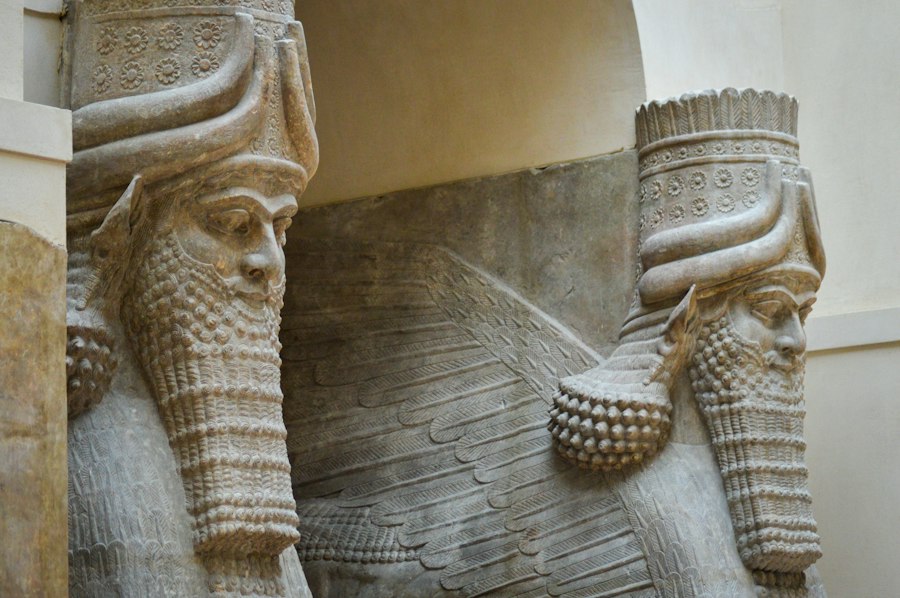
While the Anunnaki hypothesis presents a compelling narrative for many, it faces considerable resistance from the established scientific and archaeological communities. The prevailing view among academics is that the Sumerian texts are best understood as complex mythological narratives, rich with symbolism and allegory, rather than literal historical accounts of extraterrestrial visits. The interpretations that lend themselves to an extraterrestrial explanation are often seen as selective readings, focusing on specific passages while downplaying or reinterpreting those that align with more conventional understandings of ancient history and religion.
The Allegory of the Gods: Myth vs. Literal Truth
The core of the academic skepticism lies in the interpretation of religious and mythological texts. Scholars argue that ancient civilizations, lacking the scientific understanding we possess today, used anthropomorphic deities and cosmic tales to explain the mysteries of existence, the workings of nature, and the establishment of social order. The “gods” in these narratives are seen as personifications of natural forces, societal ideals, or the powerful individuals who shaped early societies. The descriptions of advanced technology or celestial journeys are often interpreted as metaphorical representations of shamanic experiences, spiritual journeys, or the awe inspired by natural phenomena. For example, a “flying chariot” might represent a vision, a dream, or a sophisticated but earthly form of transport. The inherent human tendency to create narratives and imbue them with spiritual significance is a well-documented phenomenon that predates any notion of extraterrestrial intervention.
The Absence of Undeniable Evidence: The Burden of Proof
A fundamental tenet of scientific inquiry is the requirement for empirical, verifiable evidence. In the case of the Anunnaki hypothesis, critics argue that such evidence is conspicuously absent. While proponents point to ancient texts and artifacts, skeptics maintain that these can be explained through known historical, archaeological, and anthropological frameworks. The lack of unambiguous extraterrestrial artifacts, advanced technology demonstrably beyond the capabilities of the time, or genetic evidence that definitively points to an alien origin for humanity, are significant hurdles for the hypothesis. While ancient Sumerians possessed remarkable knowledge for their era, attributing this solely to extraterrestrial impartation overlooks the gradual development of human intellect and ingenuity over millennia. The “out-of-place artifacts” sometimes cited by proponents often have more mundane explanations or are misinterpretations of existing objects.
Reinterpreting the Past: A Human-Centric Lens
The scientific and historical consensus favors a human-centric interpretation of history. This perspective posits that human civilization, with all its achievements and complexities, arose from the inherent capabilities and social dynamics of Homo sapiens. The development of agriculture, writing, cities, and complex governance are seen as the natural progression of human societies adapting to their environments and developing increasingly sophisticated ways of organizing themselves. While acknowledging the potential for inspiration from various sources, the dominant view is that the primary drivers of human progress have been internal to the species itself, rather than external, extraterrestrial intervention. The emphasis is on the human capacity for innovation, learning, and cultural evolution.
The Anunnaki Legacy: Enduring Fascination and Modern Interpretations
Despite the prevailing skepticism, the Anunnaki hypothesis continues to resonate with a significant segment of the population. This enduring fascination can be attributed to a confluence of factors, including the inherent mystery of our origins, the allure of extraterrestrial life, and the potential for alternative narratives that challenge established norms. The modern interpretations of the Anunnaki often extend beyond the literal translation of ancient texts, weaving in elements of science fiction, conspiracy theories, and New Age philosophies.
The Seeds of Ancient Astronaut Theory: Von Däniken’s Influence
The popularization of the Anunnaki hypothesis owes a considerable debt to Erich von Däniken. His groundbreaking book, “Chariots of the Gods?”, published in 1968, ignited the “ancient astronaut theory” movement. Von Däniken posited that ancient myths, artifacts, and structures around the world were evidence of extraterrestrial visitation in the distant past. He interpreted ancient texts, including those of Sumer, as literal accounts of alien encounters, and he pointed to phenomena like the pyramids of Egypt and the Nazca Lines as proof of advanced alien technology. While his work has been widely criticized by academics for its speculative nature and lack of rigorous evidence, it undeniably opened the door for widespread public interest in the idea that our history might be more complex and extraordinary than conventionally understood. Von Däniken’s influence paved the way for subsequent theories, including those that specifically focus on the Anunnaki.
The Anunnaki in Popular Culture and Esoteric Circles
The Anunnaki have become a prominent theme in contemporary popular culture and esoteric belief systems. They appear in books, documentaries, online forums, and even video games, often portrayed as ancient star travelers, alien gods, or even as malevolent entities that continue to influence human affairs from the shadows. In certain New Age circles, the Anunnaki are seen not just as historical figures but as beings with ongoing spiritual or energetic significance, whose wisdom can be accessed through meditation or channeled messages. These interpretations often blend ancient lore with modern spiritual concepts, creating a rich tapestry of belief that appeals to those seeking deeper meaning and alternative perspectives on reality. The idea of extraterrestrial creators offers a compelling narrative for those who feel a disconnect with traditional religious explanations or scientific materialism.
The Search for Meaning: An Extraterrestrial Solution?
For some, the Anunnaki hypothesis provides a powerful framework for understanding humanity’s perceived shortcomings and aspirations. The idea that humans were created by a more advanced race can, paradoxically, be seen as both humbling and empowering. It suggests that humanity might possess an innate potential, a divine spark, that has been dormant or suppressed. The Anunnaki’s supposed departure from Earth, leaving humanity to its own devices, can be interpreted as a test or a lesson, urging humanity to rediscover its latent abilities and strive for a higher state of consciousness. This narrative offers a sense of cosmic purpose and a justification for the pursuit of knowledge, spiritual growth, and the betterment of the human condition. It taps into a deep-seated human desire to believe that we are part of something larger and more significant than ourselves, even if that “something larger” originates from the stars.
The Anunnaki, often depicted in ancient Sumerian texts as powerful deities, have sparked numerous theories regarding their influence on humanity’s development. Many researchers delve into the connection between these ancient beings and the evolution of human civilization, suggesting that their presence may have shaped our history in profound ways. For those interested in exploring more about the implications of ancient civilizations on modern society, a related article discusses the urgent need for international aid in Yemen, highlighting how historical contexts can impact current humanitarian crises. You can read more about this pressing issue here.
Unanswered Questions and the Future of the Hypothesis
| Aspect | Description | Source/Origin | Scientific Consensus |
|---|---|---|---|
| Anunnaki | Deities in ancient Mesopotamian mythology, often described as gods of the Sumerians, Akkadians, Assyrians, and Babylonians. | Ancient Mesopotamian texts such as the Enuma Elish and Sumerian King List | Recognized as mythological figures with no evidence of extraterrestrial origin. |
| Human Origins | Modern humans (Homo sapiens) evolved approximately 300,000 years ago in Africa through natural evolutionary processes. | Fossil records, genetic studies, and paleoanthropology | Widely accepted by the scientific community based on extensive evidence. |
| Anunnaki-Human Connection Theory | Claims that Anunnaki were ancient astronauts who genetically engineered humans for labor or other purposes. | Popularized by authors like Zecharia Sitchin in the 20th century | Lacks credible archaeological or genetic evidence; considered pseudoscience. |
| Archaeological Evidence | No verified artifacts or inscriptions support the existence of Anunnaki as extraterrestrial beings. | Excavations in Mesopotamian sites | Supports mythological interpretation rather than literal extraterrestrial beings. |
| Impact on Culture | Anunnaki myths influenced Mesopotamian religion, literature, and art. | Ancient texts and artifacts | Recognized as important cultural and religious symbols of ancient civilizations. |
The Anunnaki hypothesis, while speculative, continues to pose intriguing questions that fuel ongoing research and debate. Whether viewed as literal history or rich metaphor, the interpretation of ancient texts and the human drive to understand our origins remain potent forces. The future of the hypothesis likely lies in a continued interplay between rigorous academic scrutiny and the persistent curiosity of the public.
The Limits of Interpretation: Bridging Ancient Texts and Modern Science
A key challenge for the Anunnaki hypothesis is the inherent ambiguity and subjective nature of interpreting ancient texts. While proponents focus on specific passages that seem to support an extraterrestrial narrative, skeptics argue that these interpretations are often forced or selective. The scientific method demands verifiable evidence, and without concrete proof, the Anunnaki hypothesis remains firmly in the realm of speculation. Future advancements in linguistic analysis, archaeology, and even genetics might offer new perspectives, but they are unlikely to definitively prove or disprove the existence of the Anunnaki without direct, undeniable evidence. The ongoing work of archaeologists and linguists will continue to shed light on Sumerian culture, but the leap from human societal development to extraterrestrial intervention remains a significant one.
The Evolving Landscape of Extraterrestrial Discovery
The ongoing search for extraterrestrial life, through initiatives like SETI and the exploration of exoplanets, could, in theory, provide context for the Anunnaki hypothesis. If evidence of intelligent alien civilizations is found, it might lend greater credibility to the idea that ancient Earth could have been visited by such beings. However, even the discovery of extraterrestrial life would not automatically validate the Anunnaki narrative as described in Sumerian texts. The specific claims of genetic engineering and celestial mining would still require their own unique lines of evidence. The discovery of alien life elsewhere in the cosmos would simply open up the possibility of alien contact throughout history.
The Enduring Quest for Our Cosmic Identity
Ultimately, the Anunnaki hypothesis, in its various forms, speaks to a fundamental human yearning to understand our place in the vastness of the universe. Whether we are the product of a divine creator, natural evolution, or, as some propose, extraterrestrial intervention, the quest for our cosmic identity is an ongoing and deeply human endeavor. The Anunnaki narrative, with its ancient echoes and modern interpretations, serves as a potent reminder of our enduring fascination with the unknown, our desire to connect with something beyond ourselves, and the persistent questions that have driven humanity’s gaze towards the stars since the dawn of consciousness. The ongoing debate highlights the power of storytelling and the human need for narrative, especially when confronting the profound mystery of our own existence.

The Anunnaki Origin Story Changes When You Read the Tablets
FAQs
What is the Anunnaki?
The Anunnaki are a group of deities in ancient Mesopotamian cultures, particularly in Sumerian, Akkadian, Assyrian, and Babylonian mythologies. They were believed to be a group of gods who came to Earth from the heavens.
What is the relationship between the Anunnaki and humanity?
According to ancient astronaut theories, the Anunnaki are believed to have genetically engineered or influenced the development of early human civilizations. Some theories suggest that they may have played a role in shaping human history and culture.
Is there any evidence to support the existence of the Anunnaki?
There is no concrete scientific evidence to prove the existence of the Anunnaki as actual extraterrestrial beings who visited Earth. Most of the information about the Anunnaki comes from ancient texts and myths, which are open to interpretation.
What are some popular theories about the Anunnaki and their influence on humanity?
Some popular theories suggest that the Anunnaki were involved in creating humans as a slave species to mine gold, while others propose that they shared knowledge and technology with early civilizations. These theories are often based on interpretations of ancient texts and artifacts.
What is the consensus among scholars and experts regarding the Anunnaki?
Mainstream scholars and experts generally do not support the idea that the Anunnaki were real extraterrestrial beings who visited Earth. They view the stories about the Anunnaki as mythological or symbolic in nature, rather than literal accounts of ancient astronauts.