
The earliest known civilizations to grace the fertile crescent of Mesopotamia, the Sumerians, left behind a legacy etched in clay. Their cuneiform tablets, meticulously inscribed by scribes over millennia, offer a tantalizing glimpse into their worldview, including profound narratives concerning the origins of humanity. These ancient texts, predating much of what is considered foundational in Western thought, present a cosmology and a theological framework that deeply influenced later Mesopotamian cultures and, by extension, possibly even Abrahamic traditions. Examining these Sumerian accounts is not merely an exercise in archaeological curiosity; it is an exploration of humanity’s perennial quest to understand its place in the universe, a quest undertaken by a people whose ingenuity and complexity continue to astound scholars.
The Cosmic Setting: Before Humanity’s Dawn
Before the emergence of humankind, the Sumerian cosmos was a realm of primordial forces and divine beings. The creation narratives do not begin with a void, but rather with a fertile, watery chaos, often personified by the goddess Nammu. This primeval ocean was the source from which all existence sprang, and from it, the celestial and terrestrial realms were separated. The separation of heaven and earth, typically attributed to Enlil, the god of wind and air, marked a crucial step in establishing order. This act of divine separation laid the groundwork for the emergence of life and, subsequently, humanity. The Sumerian pantheon, a complex web of deities with distinct roles and relationships, was already established, operating within this divinely ordained structure. The gods, much like humans, were depicted as having desires, rivalries, and even physical forms. Their interactions and decisions ultimately shaped the fate of the nascent universe and all that would inhabit it. The cosmic order was not static; it was a dynamic interplay of divine wills, and the creation of humans would become an integral part of this ongoing cosmic drama. The concept of a pre-existing divine order, even before the creation of humanity, is a recurring theme in Sumerian thought, emphasizing the gods’ ultimate authority and the universe’s inherently divine nature.
Primordial Waters and the Birth of Gods
The Sumerian creation myths frequently commence with the concept of a boundless, watery abyss. This primeval state, often referred to as “the great below” or a cosmic ocean, was the singular source of all things. The goddess Nammu is frequently invoked as the mother of the gods, emerging from this primordial water. She is the ultimate originator, the fertile womb of existence. From her, the heavens and the earth were born, or rather, coaxed into being. This is not a creation ex nihilo in the modern sense, but rather a process of organization and differentiation from pre-existing matter. The watery element is intrinsically linked to fertility and potential, a potent symbol of the generative power of the divine. The initial separation of heaven and earth was a monumental act that brought structure to the formless. This separation allowed for the creation of distinct realms, each with its own inhabitants and functions. Without this division, the world as the Sumerians understood it, with its celestial canopy and earthly plains, could not have existed. The gods themselves were born into this ordered, albeit still nascent, universe, their existence inextricably tied to the very fabric of creation.
The Pantheon Takes Shape
The emergence of the gods from the primordial waters was not a singular event but a process of lineage and hierarchy. The early deities, often associated with fundamental aspects of the cosmos, established their domains. Enlil, the god of wind, air, and storms, rose to prominence, often depicted as the chief god who brought order through his powerful pronouncements and actions. An, the god of the sky, and Enki (or Ea in Akkadian), the god of water, wisdom, and magic, were also central figures in the early pantheon. These deities were not distant, abstract beings; they were actively involved in the creation and governance of the world. Their relationships, alliances, and conflicts played a significant role in shaping the cosmic narrative. The Sumerian pantheon was a vibrant and often tumultuous assembly, reflecting the complexities of human society and the unpredictable nature of the world. Understanding their early configurations is crucial to grasping the context in which humanity’s creation was conceived.
The Sumerian tablets provide fascinating insights into human origins, suggesting that ancient civilizations had a profound understanding of their beginnings. For those interested in exploring this topic further, a related article titled “Unearthing Pre-Flood Civilization Clues” delves into the evidence and theories surrounding ancient societies and their connections to the Sumerian narratives. You can read more about it by following this link: Unearthing Pre-Flood Civilization Clues.
The Labor of the Gods: Why Create Humans?
The Sumerian tablets provide a compelling, and somewhat surprising, answer to the age-old question of “why were we made?” Unlike many creation myths that emphasize humanity’s divine spark or a benevolent creator’s gift, the Sumerian accounts highlight a very practical, even pragmatic, motivation: the gods were tired and needed servants. The early deities, having established the cosmos, found themselves burdened with the immense labor of maintaining it. They were responsible for the constant work of sustaining the heavens and the earth, a task that proved to be arduous. It was in response to this divine exhaustion that the decision was made to create beings who could alleviate their workload. This perspective underscores a crucial aspect of Sumerian theology: the gods were not perfect, all-powerful beings in the absolute sense. They experienced fatigue, they had needs, and they required assistance. This anthropomorphic portrayal of the divine made them relatable, yet also placed humanity in a role of essential service.
Divine Fatigue and the Need for Laborers
The sheer effort involved in maintaining the cosmic order, as understood by the Sumerians, was immense. The gods were responsible for the flow of rivers, the cycles of the moon and sun, the growth of crops, and the general functioning of the universe. These were not passive processes but active responsibilities that demanded constant divine attention and energy. The sheer scale of this divine labor eventually led to a collective weariness among the gods. They longed for a respite from their duties, a way to delegate the more mundane and strenuous tasks that consumed their divine energies. This desire for relief became the primary catalyst for the creation of humanity. It was a pragmatic solution to a divine problem, a decision driven by necessity rather than purely altruistic motives.
Enki’s Role in the Creation of Humanity
While the decision to create humans was a collective one, the execution of this monumental task often fell to Enki, the god of wisdom and crafts. Enki, known for his intelligence and ingenuity, was the master craftsman and the orchestrator of divine projects. He is frequently depicted as the one who devised the method for creating humans, often involving the mixing of divine blood with clay. His involvement signifies the importance of intellect and skillful execution in realizing the gods’ plans. Enki’s role highlights the Sumerian appreciation for problem-solving and the application of knowledge to achieve desired outcomes, even in the realm of divine creation. He was not just a dreamer but a doer, the one who translated the divine desire into tangible reality.
The Genesis of Man: Clay, Blood, and Divine Essence
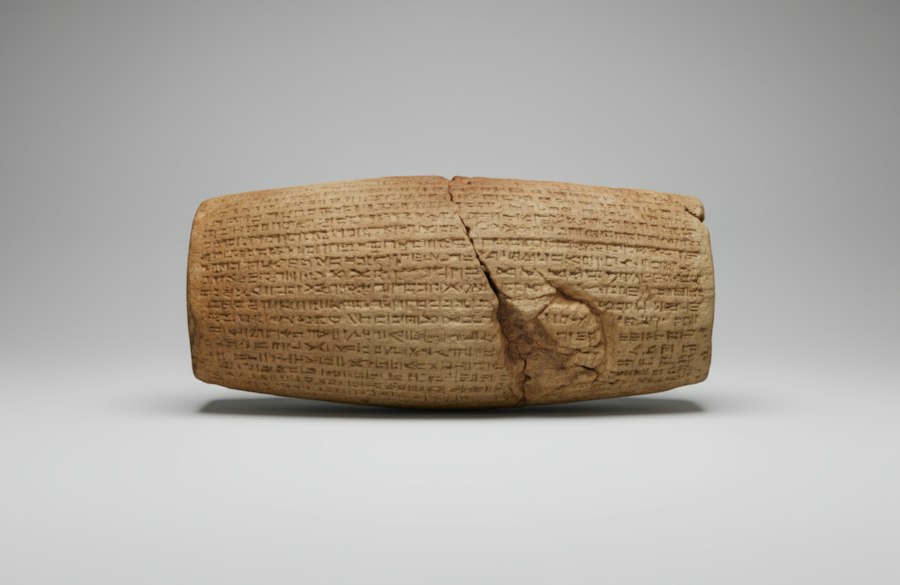
The most striking and frequently cited aspect of the Sumerian creation of humanity lies in its material origins. The tablets describe a process that is both remarkably physical and deeply symbolic. Humans were not spontaneously generated or evolved; they were crafted. The primary ingredients for this creation were earthly clay and the blood of a slain god. This combination was not arbitrary; it imbued the nascent humans with both earthly substance and a fragment of divine essence, a potent duality that defined their existence. The meticulous description of this process speaks to the Sumerians’ understanding of the body as a vessel and the importance of combining different elements to achieve a desired outcome.
The Mixing of Blood and Clay
According to prominent Sumerian myths, particularly the Atra-Hasis epic (though primarily Akkadian, it draws heavily on Sumerian traditions), the creation of humans involved a ritualistic mixing. A god was sacrificed, and his blood was blended with clay. This mixture was then molded into the form of the first humans. The clay represented the earthly, physical component, grounding humanity in the material world. The divine blood, on the other hand, provided the vital spark, the animating force, and a connection to the divine realm. This duality meant that humans were inherently earthly beings, subject to mortality and physical limitations, yet also possessed of a divine spark that distinguished them from mere animals. This concept of divine blood flowing through human veins is a powerful metaphor for the inherent potential and connection to the sacred that humanity possessed.
The Naming of the First Humans and Their Purpose
Once fashioned, the first humans were given names, signifying their individual existence and their integration into the cosmic order. The texts often mention the role of the goddess Ninhursag in fashioning and shaping these beings, giving them form and life. The purpose for which they were created was clear: to perform labor for the gods. They were to cultivate the land, build temples, and attend to the gods’ needs, thereby freeing the divine beings from their arduous tasks. This utilitarian origin story emphasizes the reciprocal relationship between gods and humans. Humans were created to serve, and in turn, the gods provided the framework for existence and sustenance. The act of naming also conferred a sense of identity and purpose, signifying that these beings were not simply animated objects but individuals with a designated role in the grand cosmic scheme.
The Role of the First Humans: Toil and Devotion
The life of the first humans, as depicted in Sumerian texts, was characterized by unrelenting labor and a profound sense of obligation towards their divine creators. Their existence was largely defined by their duty to serve the gods, a duty that was both their purpose and their burden. This servitude was not depicted as a benevolent stewardship but as a fundamental requirement of their being, the very reason for their creation. The Sumerians understood that the gods required constant attention, offerings, and the completion of tasks that maintained cosmic order and divine well-being. Thus, the lives of early humans were consumed by this service, a cycle of toil that was meant to appease and support the divine realm.
Agricultural Labor and Temple Building
The primary occupations of early humans involved agricultural pursuits and the construction of temples. They were tasked with tilling the soil, sowing seeds, and harvesting crops, ensuring that the gods received their share of sustenance through offerings. The fertile lands of Mesopotamia, watered by the Tigris and Euphrates rivers, were the stage for this ceaseless agricultural activity. Beyond the fields, humans were also instrumental in building monumental structures dedicated to the gods. These temples were not merely places of worship but were seen as earthly dwelling places for the deities, requiring constant maintenance and expansion. The construction of ziggurats and other religious edifices was a testament to human labor, a tangible manifestation of their devotion and their role in housing and honoring the divine. This dual focus on agriculture and construction highlights the fundamental needs of both the gods and the society that sustained them.
Offerings, Rituals, and Divine Appeasement
The relationship between humans and gods was cemented through a constant stream of offerings and rituals. The Sumerians believed that the gods required not only physical sustenance but also appeasement and adoration. Therefore, a significant portion of human endeavor was dedicated to ensuring the gods were satisfied and their wrath was averted. This involved presenting food, drink, precious goods, and even performing elaborate ceremonies and sacrifices. The regular performance of these rituals was essential for maintaining the cosmic balance and ensuring the continued favor of the gods. Failure to do so could result in divine displeasure, leading to floods, famines, or other calamities. The emphasis on appeasement underscores the inherent power imbalance and the precariousness of human existence in the face of divine will.
The Sumerian tablets provide fascinating insights into human origins, suggesting that ancient civilizations held complex beliefs about the creation of humanity. For those interested in exploring how these ancient narratives intersect with modern interpretations of human history, a related article can be found here. This piece delves into the broader implications of historical narratives and their influence on contemporary society, offering a unique perspective on how our understanding of the past shapes our present.
The Legacy and the Echoes: Sumerian Influence on Later Thought
| Aspect | Sumerian Tablet Description | Interpretation |
|---|---|---|
| Creation of Humans | Humans were created by the gods from clay mixed with the blood of a slain god. | Humans are a divine creation, combining earthly material and divine essence. |
| Purpose of Humans | Humans were made to serve the gods by performing labor and rituals. | Human existence is tied to serving divine beings and maintaining cosmic order. |
| Origin of Life | Life began in a primeval sea or freshwater abyss called the Apsu. | Life emerged from a chaotic watery abyss, symbolizing the start of creation. |
| Divine Ancestry | Humans descended from gods and demi-gods who interacted with mortals. | Human origins are linked to divine beings, suggesting a semi-divine lineage. |
| Mythological Figures | Figures like Enki and Enlil play key roles in human creation and civilization. | These gods represent forces of wisdom, water, and order influencing humanity. |
While the Sumerian civilization eventually faded, its profound narratives and cosmological perspectives did not disappear into the mists of time. The sophisticated cuneiform texts, painstakingly preserved in the archaeological record, have had a lasting impact on our understanding of ancient thought and, potentially, on the very foundations of later religious and philosophical traditions. The creation myths, the pantheon, and the concept of humanity’s place in the cosmos, as articulated by the Sumerians, provided a blueprint for subsequent Mesopotamian cultures, most notably the Babylonians and Assyrians. The echoes of these ancient stories can be discerned in later epic poems, religious texts, and even in the oral traditions that shaped the early development of monotheistic faiths. Studying Sumerian origins is therefore not just about excavating ancient history; it is about tracing the deep roots of human intellectual and spiritual evolution.
The Babylonian and Assyrian Continuations
The Babylonians and Assyrians, inheritors of Sumerian civilization, adopted and adapted many of their predecessors’ foundational myths and theological concepts. The Babylonian Epic of Gilgamesh, for instance, contains flood narratives that bear striking resemblances to earlier Sumerian accounts. The Enuma Elish, the Babylonian creation epic, while featuring its own distinct pantheon and narrative arc, still draws upon the fundamental Sumerian understanding of a cosmic struggle and the creation of humanity from divine elements. The names of deities might have changed, and the emphasis on certain aspects might have shifted, but the core framework of creation, the role of the gods, and the purpose of humanity often remained consistent. These later cultures acted as conduits, preserving and transmitting Sumerian ideas to future generations.
Potential Links to Abrahamic Traditions
The possibility of Sumerian influence on Abrahamic religions—Judaism, Christianity, and Islam—is a subject of ongoing scholarly debate and fascination. The parallels between Sumerian flood myths and the biblical story of Noah’s Ark are particularly striking, suggesting a common ancestral source or a significant transmission of narrative elements. Similarly, the concept of a divine creator fashioning humanity from earth, while presented differently in each tradition, finds a resonant precursor in the Sumerian accounts. The idea of humanity being created in the “image of God,” while a distinct theological concept, might find a distant echo in the Sumerian notion of humans possessing a divine spark derived from the blood of a god. While direct causal links are difficult to definitively prove, the shared motifs and thematic resonances suggest that the fertile ground of Mesopotamian thought, pioneered by the Sumerians, may have indirectly nourished the intellectual and spiritual soil from which later monotheistic traditions grew. The exploration of these potential connections continues to enrich our understanding of the complex tapestry of human religious history.

The Anunnaki Origin Story Changes When You Read the Tablets
FAQs
What do Sumerian tablets say about human origins?
Sumerian tablets suggest that humans were created by the gods as a labor force to help with tasks such as farming and building.
Who were the Anunnaki according to Sumerian tablets?
The Anunnaki were a group of deities in Sumerian mythology who were believed to have created humans and played a significant role in shaping human civilization.
What role did Enki and Enlil play in human origins according to Sumerian tablets?
Enki and Enlil were two prominent Anunnaki gods who were involved in the creation of humans. Enki was believed to have been responsible for creating humans, while Enlil was seen as a more authoritative figure who oversaw human affairs.
Are there any similarities between Sumerian creation myths and other ancient creation stories?
Yes, there are similarities between Sumerian creation myths and other ancient creation stories from cultures such as the Babylonians, Akkadians, and Egyptians. Many of these stories involve gods creating humans and playing a role in shaping the world.
How do Sumerian tablets contribute to our understanding of human origins?
Sumerian tablets provide valuable insights into ancient beliefs about human origins and the role of gods in creating and shaping human civilization. Studying these texts helps us better understand the cultural and religious beliefs of the ancient Sumerians.